

Introduction
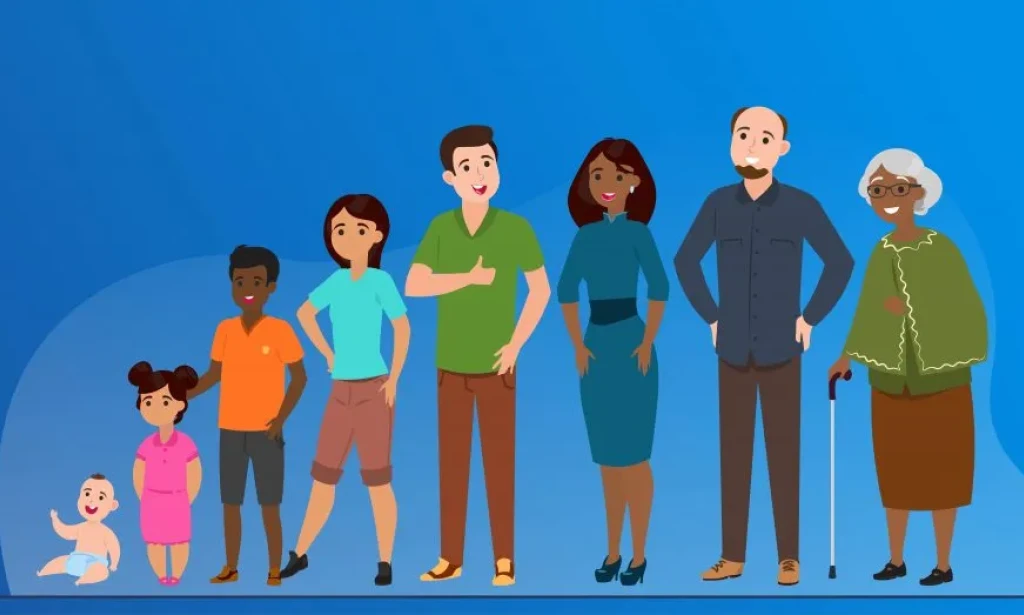
Human life is a beautiful journey filled with different experiences, challenges, responsibilities, and opportunities. From birth to old age, every individual passes through several stages of life. Each stage brings physical, emotional, mental, and social changes that influence personality and behaviour.
Understanding the different stages of human life helps us recognise how people grow, learn, develop relationships, and become responsible members of society. Every stage has its own importance, and each experience contributes to personal development. Although people may experience life differently, the general stages of human development provide a useful way to understand the human journey.
1. Infancy: The Beginning of Life
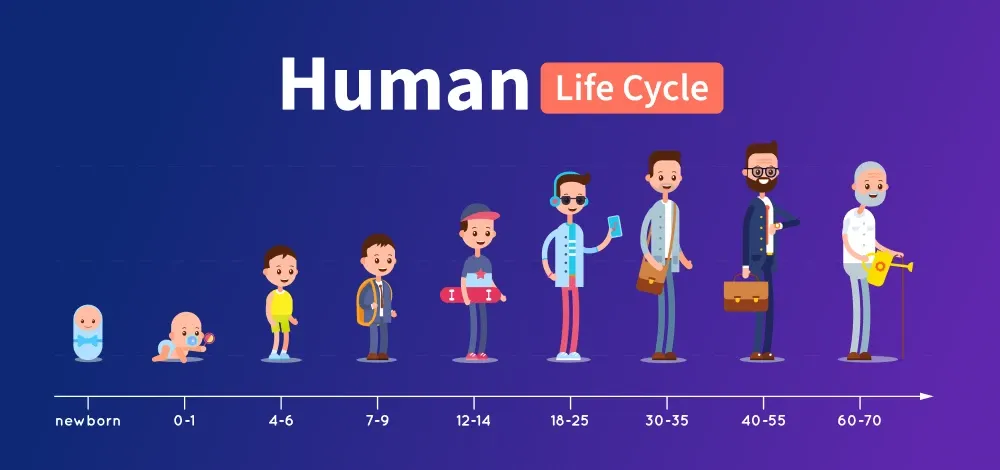
Infancy is the first stage of human life, beginning at birth and generally continuing until around two years of age.
During this period, babies experience rapid physical and mental development. They gradually learn to recognise familiar faces, respond to sounds, move their bodies, and communicate through crying and early sounds.
Parents and caregivers play an important role during infancy. Babies need proper nutrition, medical care, safety, love, and attention.
This stage creates the foundation for future growth. Early experiences and caring relationships help children develop a sense of security and trust.
2. Early Childhood: Learning About the World
Early childhood generally covers the ages of two to six years. It is an important period of exploration, communication, and learning.
Children begin developing language skills, improving physical coordination, and understanding their surroundings.
They enjoy playing, asking questions, recognising objects, and interacting with other people.
Family members and teachers help children develop basic habits, including sharing, listening, speaking politely, and following simple instructions.
Play-based learning is especially valuable during this stage because it supports creativity, imagination, and social development.
3. Middle Childhood: Developing Knowledge and Skills
Middle childhood generally includes the ages of six to eleven years. During this stage, children spend more time in schools and participate in different educational and social activities.
They develop reading, writing, mathematical, communication, and problem-solving skills.
Friendships also become increasingly important. Children learn cooperation, teamwork, responsibility, and respect for others.
Parents and teachers should encourage positive behaviour and provide opportunities for children to discover their interests.
This stage helps develop academic abilities, confidence, and important social relationships.
4. Adolescence: The Journey Towards Adulthood
Adolescence is a significant stage that generally occurs between the ages of ten and nineteen, although individual development varies.
During this period, individuals experience physical, emotional, psychological, and social changes.
Teenagers begin developing their personal identities, interests, opinions, and future ambitions.
They may also experience academic pressure, emotional challenges, and questions about their identities and relationships.
Support from parents, teachers, and trusted adults is important. Young people need guidance, understanding, education, and opportunities to make responsible decisions.
Adolescence prepares individuals for greater independence and adult responsibilities.
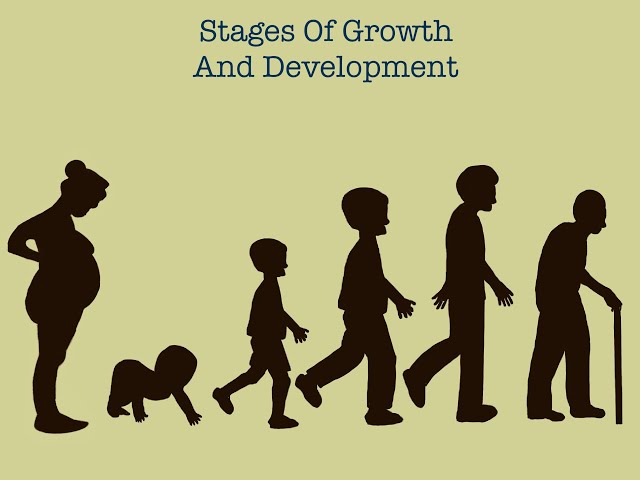
5. Early Adulthood: Building an Independent Life
Early adulthood commonly includes the ages of twenty to forty years.
During this stage, individuals often focus on higher education, professional careers, relationships, family responsibilities, and personal ambitions.
Many people begin working, developing financial independence, and making important life decisions.
This period also provides opportunities to explore new interests, improve professional skills, and establish long-term goals.
However, early adulthood can involve challenges such as career uncertainty, financial pressure, and balancing personal and professional responsibilities.
Good planning, patience, and continuous learning can help individuals manage these challenges.
6. Middle Adulthood: Responsibility and Experience
Middle adulthood generally covers the ages of forty to sixty-five years.
People often have greater professional and personal experience during this stage. Many individuals focus on career development, family responsibilities, financial planning, and community involvement.
They may also guide younger generations through their knowledge and experiences.
Physical changes can gradually occur, making healthy habits and regular medical care important.
Middle adulthood provides opportunities for reflection, personal growth, and strengthening family and social relationships.
7. Late Adulthood: Wisdom and Reflection
Late adulthood generally begins around the age of sixty-five years and continues throughout the later years of life.
During this stage, individuals may experience changes in physical strength, mobility, and health.
Retirement can also bring changes in daily routines and social activities.
However, old age is not simply a period of physical decline. Older adults possess valuable knowledge, memories, skills, and life experiences.
Family support, social connections, regular physical activity, and appropriate healthcare can improve their quality of life.
Society should treat older people with dignity, kindness, and respect.
8. Physical Development Across Life Stages
Physical development refers to changes in the human body throughout life.
During infancy and childhood, the body grows rapidly. Adolescence brings major physical changes, while adulthood generally involves greater physical maturity.
As people grow older, some physical abilities may gradually decrease.
Nutrition, exercise, sleep, healthcare, and lifestyle choices influence physical well-being at different stages.
Maintaining healthy habits throughout life supports overall development and quality of life.
9. Emotional and Social Development
Human development is not limited to physical growth. Emotional and social development are equally important.
Children learn to recognise emotions, express feelings, and build relationships with family members and friends.
Teenagers develop a stronger sense of identity and become more aware of social relationships.
Adults manage personal, family, and professional responsibilities, while older people may focus more on relationships, reflection, and emotional well-being.
Positive relationships, communication, empathy, and social support contribute to healthy development throughout life.
10. The Importance of Understanding Life Stages
Understanding life stages helps families, teachers, healthcare professionals, and communities recognise people's changing needs.
For example, young children require guidance and learning opportunities, teenagers need emotional support and responsible direction, and older adults may need additional healthcare and social assistance.
This understanding also helps individuals prepare for future responsibilities and appreciate the experiences of different generations.
Every stage of life has its own opportunities and challenges. Respecting these differences creates a more supportive society.
11 End of Life (Final Stage): This is the final stage of human life. It may involve serious illness, natural ageing, or the gradual ending of life. Comfort, dignity, love, and family support are very important.
Conclusion
Human life is a continuous journey of growth, learning, change, and experience. From infancy and childhood to adolescence, adulthood, and old age, every stage contributes to human development.
Each period brings different physical, emotional, mental, and social experiences. Understanding these changes helps individuals make better decisions and develop stronger relationships.
Life should not be measured only by age or achievements. Every stage has its own value, lessons, and opportunities.
By respecting every generation and supporting people according to their needs, we can create a caring and understanding society. Every stage of life is an important part of the journey that makes us who we are.






Comments 0
Sign in to join the conversation.
No comments yet. Be the first to say something.