

Heart vs Brain: The Shocking Battle That Secretly Controls Every Decision You Make
Introduction
Have you ever faced a moment where your heart told you one thing while your brain insisted on another? Perhaps you felt a strong emotional pull toward a decision, but your logical mind warned you to stop and think carefully. This internal struggle is something nearly every human experiences.
The conflict between emotion and logic, often described as the battle between the heart and the brain, plays a powerful role in shaping the decisions we make every day. From choosing a career and building relationships to spending money or taking risks, this hidden psychological tug-of-war constantly influences our lives.
Many people believe decisions are mostly logical. However, modern neuroscience reveals something surprising: our emotions often make decisions first, and logic tries to justify them later. In other words, the heart frequently moves faster than the brain.
Scientists studying human behavior have discovered that the brain processes information through two major systems:
The emotional system (fast, instinctive, and powerful)
The rational system (slow, analytical, and controlled)
These systems often cooperate—but sometimes they clash dramatically. When they do, we feel confusion, stress, hesitation, or even regret.
Understanding this hidden battle can transform the way you make choices. It can help you recognize emotional bias, improve your judgment, strengthen relationships, and avoid costly mistakes.
In this article, we will explore:
The science behind emotional vs rational decision-making
Why your heart sometimes wins over logic
What neuroscience says about this internal battle
How emotions secretly influence everyday choices
Ways to balance heart and brain for better decisions
Prepare to discover the surprising truth about the invisible war inside your mind.
The Science Behind Decision-Making
How the Brain Actually Makes Decisions
For centuries, philosophers believed humans made decisions mainly through rational thinking. But modern neuroscience has uncovered a more complex reality.
Decision-making involves multiple brain regions working together. The most important include:
The prefrontal cortex – responsible for logic, reasoning, and planning
The limbic system – the emotional center of the brain
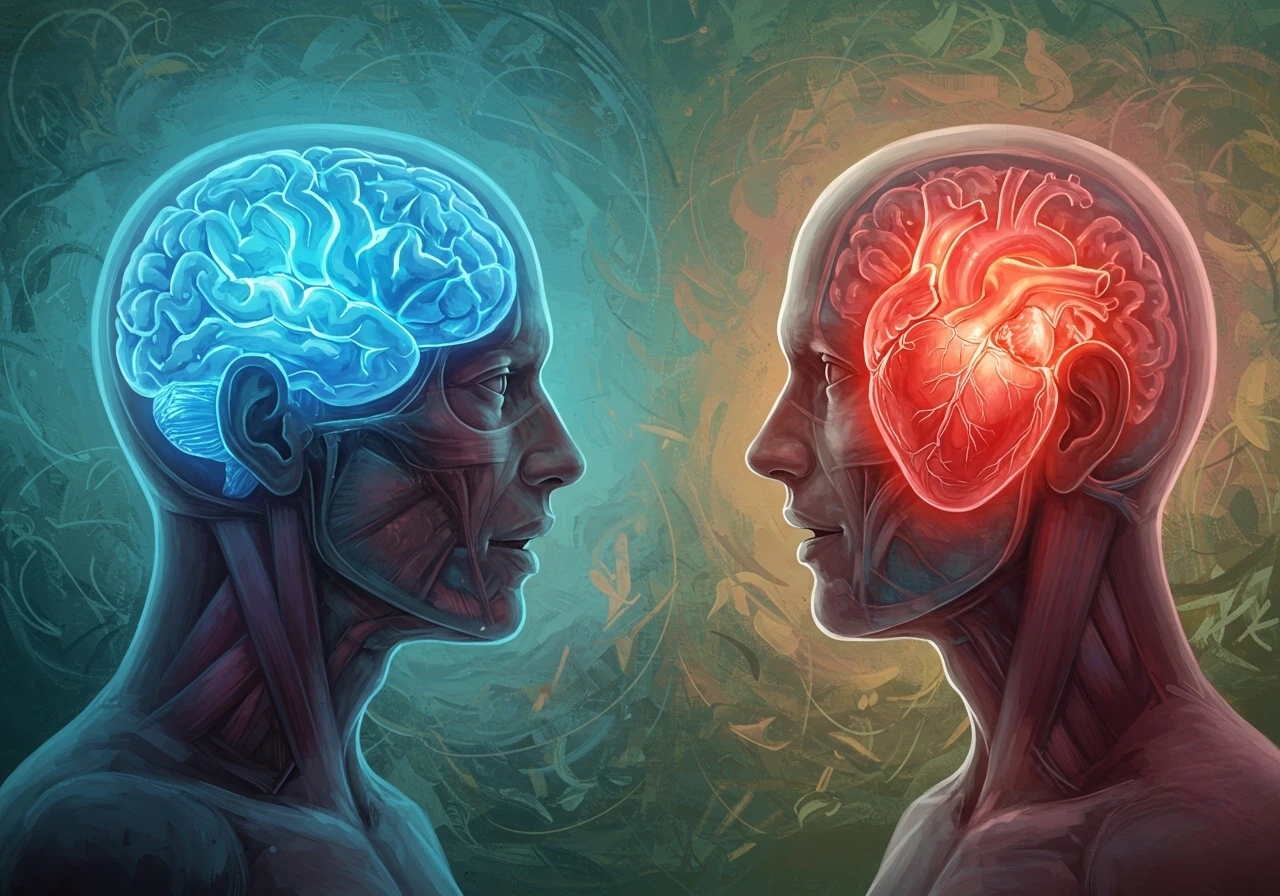
The amygdala – processes fear and emotional reactions
The hippocampus – stores memories that influence decisions
These areas constantly communicate with each other.
However, the emotional brain often reacts much faster than the logical brain.
This is why people sometimes:
Buy something impulsively
Fall in love unexpectedly
React emotionally during arguments
Make snap judgments about people
The emotional brain is designed for speed and survival, while the logical brain focuses on analysis and long-term thinking.
Why the Heart Feels Like It Makes Decisions
The Emotional Brain’s Powerful Influence
When people say they are "following their heart," they are usually referring to emotional signals produced by the brain’s limbic system.
Emotions evolved to help humans survive dangerous situations quickly. For example:
Fear triggers instant escape
Love builds social bonds
Anger prepares the body for defense
Joy encourages rewarding behavior
Because emotions are so powerful, they can override logical thinking.
Common Emotional Decision Triggers
Many everyday decisions are strongly influenced by emotions such as:
Attraction
Fear
Desire
Curiosity
Empathy
Excitement
These emotional responses can push people toward choices that may not always be rational.
The Brain’s Logical Defense System
The Role of Rational Thinking
While emotions act quickly, the brain's rational system works more slowly and carefully.
The prefrontal cortex analyzes situations by:
Evaluating risks
Comparing options
Predicting consequences
Applying past knowledge
This part of the brain helps prevent impulsive behavior.
For example, logical thinking might stop someone from:
Spending money they cannot afford
Sending an angry message
Trusting a suspicious offer
Making a risky investment
However, rational thinking requires time and mental energy, which is why people sometimes ignore it.
The Two Systems of Thinking
Psychologists often describe human decision-making using the dual-process theory, which divides thinking into two systems.
System 1: Fast Emotional Thinking
This system is:
Automatic
Intuitive
Emotional
Quick
Examples include:
Instantly recognizing a friend's face
Feeling nervous during danger
Laughing at a joke
Trusting or distrusting someone immediately
System 2: Slow Logical Thinking
This system is:
Analytical
Deliberate
Controlled
Effortful
Examples include:
Solving math problems
Planning a budget
Comparing job offers
Analyzing risks before investing
The battle between these two systems forms the heart vs brain conflict.
Why Emotions Often Win
The Brain Is Wired for Emotional Survival
Although humans value logic, the brain evolved primarily for survival, not perfect reasoning.
Emotions evolved long before complex reasoning abilities. As a result:
Emotional responses happen faster
Logical thinking comes later
The brain sometimes justifies emotional decisions afterward
This explains why people may defend choices that were originally emotional.
Real-Life Examples of Heart vs Brain Decisions
Love and Relationships
One of the clearest examples of emotional decision-making is romantic attraction.
People often:
Ignore red flags in relationships
Stay with incompatible partners
Fall in love quickly
These choices are strongly influenced by emotional chemistry in the brain.
Money and Spending
Financial decisions also reveal the heart vs brain battle.
Many people:
Buy products impulsively
Spend more during emotional stress
Choose instant rewards over long-term savings
Retail companies understand this psychological behavior and design marketing strategies that trigger emotional responses.
Fear-Based Decisions
Fear can cause people to make irrational choices.
For example:
Avoiding opportunities due to anxiety
Overreacting to small risks
Making panic decisions in emergencies
Fear activates the amygdala, which can temporarily overpower logical reasoning.
The Hidden Influence of Emotions on Everyday Choices
You may believe your decisions are logical, but emotions influence more choices than you realize.
Examples of Emotion-Driven Decisions
Choosing food based on cravings
Trusting someone based on intuition
Accepting or rejecting job offers
Voting for political leaders
Choosing friends or partners
In many cases, logic simply explains decisions already made emotionally.
Can the Heart and Brain Work Together?
The Power of Emotional Intelligence
The goal is not to eliminate emotions from decision-making. Emotions actually provide valuable information.
What matters is balance.
People with strong emotional intelligence learn how to:
Recognize emotional reactions
Pause before reacting
Analyze situations logically
Combine intuition with reasoning
This balance leads to better choices.
How to Balance Emotion and Logic
Practical Strategies for Better Decisions
Here are effective ways to prevent emotional decisions from causing regret.
1. Pause Before Acting
Strong emotions can create urgency. Taking a short pause helps logical thinking activate.
2. Ask Logical Questions
Consider questions such as:
What are the risks?
What are the long-term consequences?
Am I reacting emotionally?
3. Sleep on Important Decisions
Sleep helps the brain process information and reduce emotional intensity.
4. Write Down Pros and Cons
Listing advantages and disadvantages activates analytical thinking.
5. Seek Outside Perspectives
Talking to trusted friends or mentors can reveal emotional bias.
The Surprising Role of Gut Feelings
When Intuition Is Actually Helpful
Not all emotional decisions are wrong.
In fact, intuition can be extremely useful when based on experience and knowledge.
Experts in many fields rely on intuition because their brains have processed thousands of similar situations.
Examples include:
Doctors diagnosing illness
Athletes reacting quickly in sports
Entrepreneurs spotting business opportunities
In these cases, intuition is fast expertise, not random emotion.
The Danger of Ignoring Either Side
When Emotions Are Ignored
People who rely only on logic may struggle with:
Relationships
Empathy
Creativity
Social connections
Emotions help humans build meaningful lives.
When Logic Is Ignored
On the other hand, people who rely only on emotions may face:
Financial problems
Risky decisions
Relationship instability
Impulsive behavior
True wisdom comes from balancing both systems.
What Neuroscience Reveals About the Future of Decision-Making
Advances in neuroscience and psychology are helping researchers understand decision-making more deeply.
Scientists are studying:
Emotional brain networks
Cognitive biases
Behavioral economics
Artificial intelligence decision models
These discoveries may help people improve decision-making in areas like:
Business
Health
Education
Personal relationships
Understanding the heart vs brain dynamic could help individuals avoid mistakes and make wiser choices.
Conclusion
The battle between the heart and the brain is not just a metaphor—it is a real neurological process happening inside your mind every day.
Your emotional brain reacts quickly, guiding instinctive responses and shaping many of your choices. Meanwhile, your logical brain analyzes information carefully and helps protect you from impulsive mistakes.
Sometimes emotions win. Sometimes logic takes control.
But the most successful decisions happen when both systems work together.
By understanding how emotions influence behavior and learning to pause before reacting, you can gain greater control over your choices.
In the end, the goal is not to silence the heart or ignore the brain.
The goal is to let them collaborate—so your decisions become wiser, more balanced, and ultimately more rewarding.

You must be logged in to post a comment.