


Blockchain technology has emerged as a disruptive force across multiple industries, including e-commerce. By offering a decentralized and secure way to manage transactions and data, blockchain is poised to revolutionize e-commerce supply chains. This article explores how blockchain is transforming e-commerce supply chains, improving transparency, security, efficiency, and customer trust.

1. Introduction to Blockchain Technology
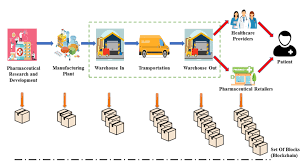
Blockchain is a distributed ledger technology that ensures data integrity and transparency by recording transactions across a network of computers. Each block in the chain contains a set of transactions, and once a block is added, it cannot be altered. This makes blockchain inherently secure and transparent. In the context of e-commerce, blockchain can be used to track products, streamline logistics, and ensure secure payment processing.
2. Enhancing Transparency in the Supply Chain
Blockchain’s Role:
One of the most significant advantages of blockchain is its ability to provide transparency across the entire supply chain. By recording every step of a product’s journey from manufacturer to consumer on an immutable ledger, all stakeholders—manufacturers, suppliers, distributors, and consumers—can track and verify product movement in real-time.
Benefits:
- Traceability: Customers can trace the origin of products, ensuring they are ethically sourced and manufactured.
- Reduced Fraud: Blockchain reduces the risk of fraud by providing a clear, auditable record of every transaction.
- Real-Time Visibility: Supply chain managers can monitor product status in real-time, reducing delays and improving decision-making.
Example:
In industries like food and pharmaceuticals, blockchain can help trace the origin and journey of goods to ensure they meet safety and quality standards. For example, a consumer could scan a product’s QR code and view the entire supply chain history.
3. Strengthening Security and Reducing Fraud
Blockchain’s Role:
Security is a top concern for e-commerce businesses, especially when handling sensitive customer data and financial transactions. Blockchain’s decentralized nature makes it more difficult for hackers to manipulate or steal data. By using cryptographic encryption, blockchain ensures that transaction records are tamper-proof and secure.
Benefits:
- Secure Transactions: Blockchain encrypts transactions, reducing the risk of fraud and cyberattacks.
- Data Integrity: As each transaction is verified by multiple nodes on the network, the chances of data manipulation are minimized.
- Authentication: Blockchain can provide a reliable method of verifying the authenticity of products, reducing the risks associated with counterfeit goods.
Example:
For high-value items such as luxury goods, blockchain can verify the authenticity of each item in the supply chain, helping prevent counterfeiting and ensuring that consumers receive genuine products.
4. Improving Efficiency and Reducing Costs
Blockchain’s Role:
Blockchain can streamline supply chain processes by automating many of the manual tasks currently required. For example, it can be used to automate payment processing, invoice reconciliation, and shipment tracking. This reduces the need for intermediaries, which can decrease administrative costs and delays.
Benefits:
- Automated Smart Contracts: Blockchain-enabled smart contracts automatically execute agreements when conditions are met, reducing the need for intermediaries and ensuring faster transactions.
- Faster Payment Processing: Blockchain can enable quicker payments and settlements, improving cash flow and reducing the time spent on payment processing.
- Reduced Paperwork: Blockchain eliminates the need for paper-based records, reducing administrative costs and the risk of human error.
Example:
Smart contracts on the blockchain could automatically trigger payments once a product is delivered, reducing delays caused by manual payment approvals and speeding up the overall process.
5. Enhancing Customer Trust and Satisfaction
Blockchain’s Role:
Consumer trust is vital in e-commerce, and blockchain can play a critical role in building that trust. The transparency and security provided by blockchain help customers feel more confident in their purchases. With verifiable product histories and secure transactions, blockchain helps foster a positive customer experience.
Benefits:
- Authenticity Verification: Consumers can verify the authenticity and quality of products, enhancing their confidence in what they are buying.
- Increased Accountability: Because blockchain records every action taken in the supply chain, businesses are held accountable for the quality of products and services.
- Dispute Resolution: If issues arise with products or services, the transparent record on the blockchain can help resolve disputes by providing clear evidence of the transaction history.
Example:
Blockchain can help e-commerce companies provide greater transparency around sustainability practices. For example, customers can verify that their purchased products were ethically sourced, environmentally friendly, or certified fair trade.
6. Optimizing Inventory Management
Blockchain’s Role:
Blockchain technology can help e-commerce businesses optimize inventory management by providing real-time data on stock levels, product movements, and demand forecasting. This ensures that businesses are better prepared to meet consumer demands and minimize excess inventory.
Benefits:
- Real-Time Stock Tracking: Blockchain allows businesses to track inventory in real-time, improving accuracy and reducing stockouts or overstocking.
- Better Demand Forecasting: With blockchain's transparent data, businesses can analyze sales trends and adjust stock levels accordingly.
- Minimized Wastage: By ensuring products are available when needed, blockchain helps minimize waste in perishable goods and other inventory.
Example:
A retailer could use blockchain to track the movement of products across various warehouses, ensuring that the right items are in the right place at the right time, improving efficiency and reducing waste.
7. Blockchain in Payment Processing
Blockchain’s Role:
Blockchain is already being used to enhance payment systems in e-commerce. By using cryptocurrency or blockchain-based payment solutions, businesses can offer faster, cheaper, and more secure payment options compared to traditional payment methods.
Benefits:
- Lower Transaction Fees: Blockchain payments can significantly reduce transaction fees compared to credit card or bank transfers.
- Cross-Border Payments: Blockchain enables faster and cheaper cross-border payments, eliminating the need for currency conversions and the associated fees.
- Secure Transactions: Blockchain’s encryption ensures that payments are secure, reducing the risks of fraud or chargebacks.
Example:
Cryptocurrencies like Bitcoin or Ethereum are increasingly accepted by e-commerce platforms as a payment method, allowing for instant, low-cost international payments.

8. Overcoming Challenges and Barriers
Challenges:
- Scalability: Blockchain technology still faces scalability issues, particularly when processing large volumes of transactions quickly.
- Integration with Existing Systems: Integrating blockchain with legacy supply chain systems can be complex and require significant investment.
- Regulatory Concerns: The decentralized nature of blockchain may raise regulatory concerns, particularly regarding data privacy and financial reporting.
Solutions:
- Ongoing development of more scalable blockchain solutions and improvements in smart contract technology can address some of these challenges.
- Collaboration between blockchain providers and existing supply chain software developers can ease the integration process.
9. Future Outlook: Blockchain in E-Commerce Supply Chains
The potential of blockchain in e-commerce supply chains is vast. As the technology matures, we can expect greater adoption of blockchain for transparency, security, and efficiency. Moreover, as blockchain becomes more integrated with the Internet of Things (IoT) and Artificial Intelligence (AI), the automation and real-time capabilities of e-commerce supply chains will continue to improve.
The Future:
- Greater Transparency: Expect more industries to adopt blockchain for end-to-end visibility in the supply chain.
- More Secure Transactions: Blockchain will continue to evolve, providing even more robust security for e-commerce businesses and customers.
- Smart Supply Chains: The combination of blockchain, IoT, and AI will create intelligent supply chains capable of autonomous decision-making and optimization.
Conclusion
Blockchain is set to play a pivotal role in transforming e-commerce supply chains by improving transparency, security, efficiency, and customer satisfaction. As businesses increasingly embrace blockchain technology, the potential for reducing fraud, streamlining operations, and enhancing consumer trust will drive the future of e-commerce. For businesses, adopting blockchain is not just an opportunity to innovate but a critical step in staying competitive in an increasingly digital marketplace.







Comments 0
Sign in to join the conversation.
No comments yet. Be the first to say something.