

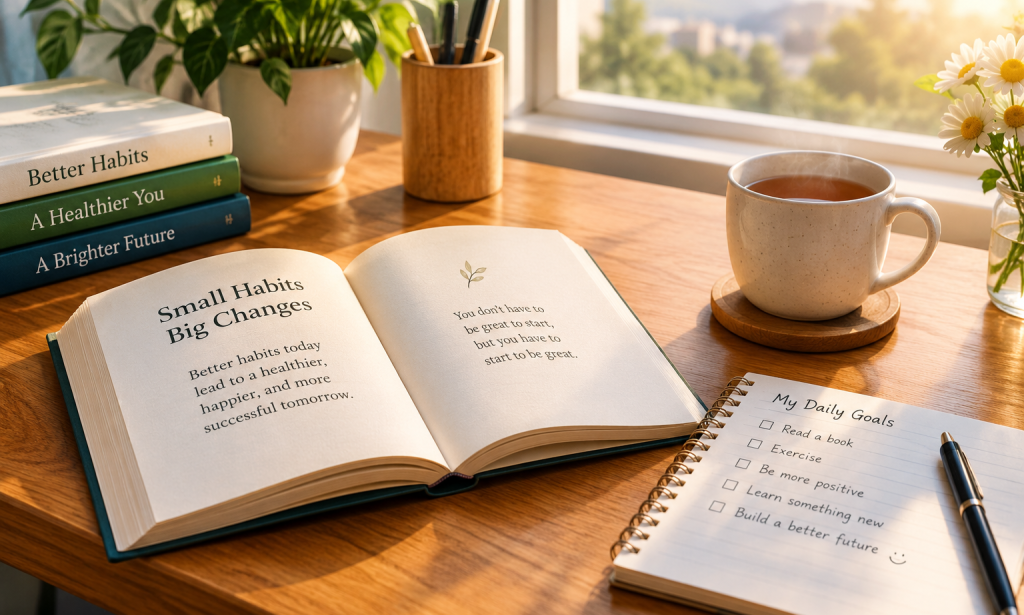
Introduction: Small Actions, Big Results
Have you ever wondered why some people seem to improve their lives every day while others struggle to make progress? The secret is not always talent, intelligence, or luck. Often, the difference comes from small habits repeated consistently over time.
Many people believe that changing their lives requires making huge decisions or taking dramatic actions. They wait for the perfect moment to start exercising, learning a new skill, reading books, or working toward their dreams. Unfortunately, waiting for the perfect moment can prevent them from making any progress at all.
The truth is that meaningful change often begins with something surprisingly simple. Reading two pages of a book, walking for ten minutes, saving a small amount of money, or spending five minutes planning the day can gradually create powerful results.
Small habits may not seem important at first, but their real strength lies in repetition. When we perform positive actions consistently, they become part of our daily routine. Over time, these actions can influence our health, confidence, relationships, productivity, and overall happiness.
Understanding the power of small habits can help us stop feeling overwhelmed and start building a better life one step at a time.
Why Small Habits Matter
Small habits matter because they make personal improvement easier to manage. When we set enormous goals, we sometimes feel overwhelmed before we even begin.
For example, someone who has never exercised regularly might decide to work out for two hours every day. Although the intention is positive, the goal may be too difficult to maintain. After a few days, tiredness, a busy schedule, or a lack of motivation may cause the person to quit.
Now imagine starting with just five or ten minutes of movement each day. This small commitment requires less effort and feels much easier to complete. Once the habit becomes comfortable, the person can gradually increase the duration.
The same principle applies to almost every area of life. Someone who wants to become a better reader can begin with a few pages each evening. A person who wants to improve their finances can start by recording daily expenses. Someone who wants to learn a language can practice five new words every day.
These actions may appear insignificant, but they establish consistency. Instead of depending entirely on motivation, we begin creating routines that support our goals.
The important lesson is simple: you do not have to change everything today. You only need to take one manageable step in the right direction.
Consistency Is More Important Than Perfection
One of the biggest obstacles to personal growth is the desire to do everything perfectly.
People often begin a new routine with great enthusiasm. They create ambitious schedules, set strict rules, and expect immediate results. However, real life rarely follows a perfect plan. Unexpected responsibilities, tiredness, and difficult days can interrupt even the best intentions.
When people miss one day, they sometimes believe they have failed completely. They abandon their goals because they cannot follow their original plan perfectly.
A healthier approach is to focus on consistency rather than perfection.
If you planned to read for thirty minutes but only have time for five, read for five minutes. If you cannot complete your usual workout, take a short walk. If your day becomes unusually busy, choose one small action that keeps you connected to your goal.
Small efforts still count.
Of course, one short session will not transform your life overnight. The benefit comes from repeatedly returning to the habit. Each time you continue despite an imperfect day, you strengthen your ability to remain committed.
Remember that progress does not require every day to be successful. It requires you to keep moving forward, even when your progress is slower than expected.
Build Habits That Support Your Goals
Before developing a new habit, ask yourself what you genuinely want to improve.
Perhaps you want to feel healthier, become more confident, manage your time better, improve your education, or spend more meaningful time with your family. Once you understand your goal, choose a small daily action that supports it.
For better health, you might drink water regularly, take the stairs when practical, or include a short walk in your routine.
For personal development, you could read a few pages, write down something you learned, or spend ten minutes practicing a useful skill.
For better time management, try writing down your three most important tasks before starting your day.
For stronger relationships, make a habit of listening carefully when someone speaks or checking in with a family member.
The key is to connect your daily actions with something that matters to you. When a habit has a clear purpose, it becomes easier to understand why you should continue practicing it.
Avoid creating too many new habits at once. Choose one or two actions and give yourself time to establish them. Once they become part of your routine, you can introduce another small improvement.
Building a better life is not a race. It is a process of making thoughtful decisions and repeating them until they become natural.

Suggested image: A person reading a book beside a notebook and a cup of tea in a peaceful morning setting.
Make Good Habits Easy to Follow
A useful way to develop a positive habit is to make it as easy as possible to begin.
Sometimes, the biggest challenge is not performing an activity but overcoming the effort required to start it.
For example, if you want to read more, place a book beside your bed or on your desk. If you want to exercise in the morning, prepare your clothes the night before. If you want to practice a language, keep your notebook somewhere you can easily reach it.
These small changes make the desired action more convenient.
You can also connect a new habit to something you already do regularly. For instance, after drinking your morning tea, spend five minutes reading. After lunch, take a short walk. Before going to sleep, write down one thing you learned that day.
This technique helps you remember your new habit because it becomes connected to an existing routine.
It is equally important to reduce distractions that encourage unwanted behaviors. If you spend too much time scrolling through your phone, consider placing it away from your workspace while studying or working.
You do not always need stronger willpower. Sometimes, you simply need an environment that makes good choices easier.
Small Habits Improve Confidence
Confidence does not always come from achieving something extraordinary. It can also develop when we repeatedly keep the promises we make to ourselves.
Imagine deciding to walk for ten minutes every morning. You complete the activity today, repeat it tomorrow, and continue throughout the week. Gradually, you begin to see yourself as someone who can follow through on a commitment.
This experience can create a positive sense of self-trust.
The same thing happens when you finish a small task, practice a new skill, or save a little money toward an important goal. Every completed action provides an opportunity to recognize your own effort.
However, confidence should not depend on never making mistakes. Everyone experiences setbacks, and circumstances sometimes prevent us from following our plans.
What matters is learning to respond constructively.
Instead of saying, "I can never do anything consistently," ask yourself, "What made this difficult, and how can I make it easier next time?"
This change in perspective turns mistakes into opportunities to learn.
Over time, small achievements can help you become more patient, resilient, and confident in your ability to improve.
Track Your Progress and Celebrate Small Wins
When working toward a long-term goal, progress may sometimes feel invisible. You might practice a skill for several days without noticing a major improvement. You might save money for weeks before reaching a meaningful amount.
Tracking your actions can help you recognize the effort you are making.
A simple notebook or calendar is enough. Each day you complete your habit, place a check mark beside the date. You can also write a short note about what went well or what you would like to improve.
This practice provides a visible record of your consistency.
Celebrating small wins can also make the process more enjoyable. After completing a week of regular reading, take a moment to appreciate your commitment. After following your study routine, acknowledge the time and attention you invested.
Celebration does not need to involve spending money or rewarding yourself with something extravagant. Sometimes, recognizing your progress is enough.
At the same time, do not become discouraged if you miss a day. A calendar is a tool for understanding your progress, not a reason to criticize yourself.
Use it to identify patterns, adjust your routine, and keep moving toward your goals.
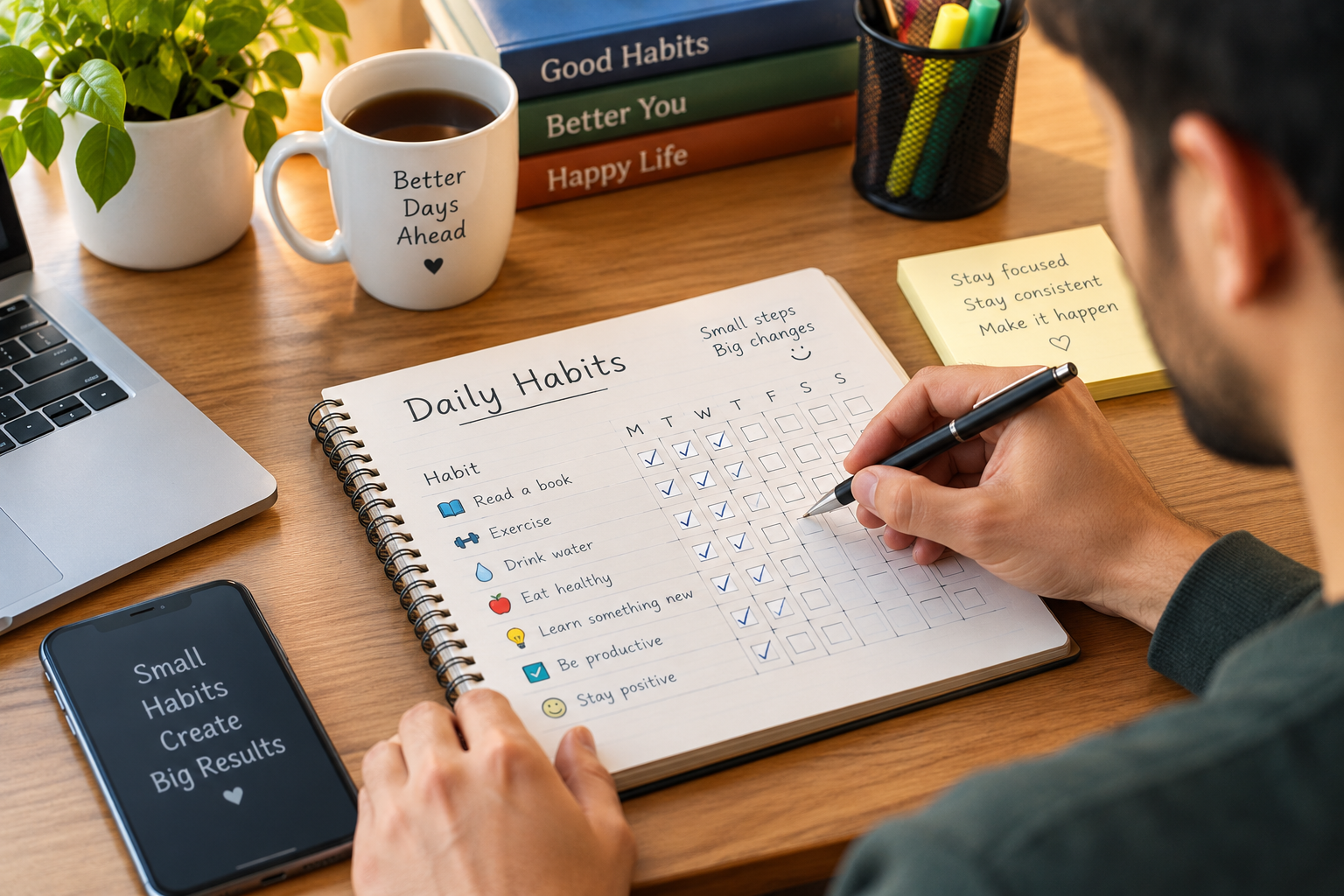
Suggested image: A person marking completed daily habits in a planner or journal at a tidy desk.
Be Patient With the Process
One reason people abandon positive habits is that they expect immediate results.
Modern life often encourages us to look for quick solutions. We want instant improvement, rapid success, and visible achievements. But many meaningful changes require patience.
Learning a language takes practice. Developing physical fitness requires regular movement and appropriate recovery. Improving financial stability involves thoughtful decisions over time. Building healthy relationships requires continued care and communication.
There is no universal timeline for developing a habit or achieving a goal. Different habits require different levels of effort, and every person has different circumstances.
Instead of asking, "How quickly will I see results?" try asking, "Can I make this action part of my everyday life?"
This question shifts your attention from immediate rewards to sustainable progress.
It also helps you recognize that a difficult day does not erase the effort you have already made. You can begin again tomorrow, adjust your approach, and continue learning.
Patience does not mean doing nothing while waiting for success. It means continuing to take practical steps without demanding instant perfection.
When you accept that growth takes time, you can enjoy the process instead of constantly worrying about the destination.
Start Today With One Small Change
You do not need to wait until Monday, the beginning of a new month, or the start of a new year to improve your life.
Choose one small habit that you can realistically practice today.
If you want to read more, read two pages before bed. If you want to improve your health, take a short walk. If you want to learn something useful, spend five minutes practicing. If you want to feel more organized, write down the tasks you need to complete tomorrow.
Make your first step so manageable that you can begin without feeling overwhelmed.
Then decide when and where you will repeat the action. A clear plan makes it easier to remember what you intend to do.
You might also tell a trusted friend or family member about your goal. Encouragement from others can sometimes help you stay motivated, although your routine should remain realistic for your own circumstances.
Most importantly, do not underestimate a small beginning.
You may not notice a dramatic difference after one day, and that is perfectly normal. Your purpose is not to change your entire life in twenty-four hours. Your purpose is to begin creating a pattern that supports the person you want to become.

Suggested image: A person walking along a peaceful path in the morning, representing steady progress and personal growth.
Conclusion: Your Future Is Built on Today's Actions
The power of small habits lies in their simplicity. They remind us that personal growth does not always require dramatic decisions, extraordinary talent, or perfect circumstances.
Often, it begins with ordinary actions performed with patience and consistency.
A few minutes of reading can encourage a lifelong love of learning. A short daily walk can become part of a healthier lifestyle. A simple planning routine can help you use your time more thoughtfully. Small acts of kindness can strengthen the relationships that make life meaningful.
Not every habit will produce immediate or dramatic results, and not every day will go according to plan. What matters is choosing actions that support your goals and returning to them whenever possible.
Start small. Make your routine practical. Notice your progress. Be patient with yourself when challenges arise.
You do not have to become a completely different person overnight. You only need to begin taking steps toward a better version of yourself.

Your future is shaped not only by the big decisions you make, but also by the small actions you choose to repeat every day.
Frequently Asked Questions
1. Why are small habits important?
Small habits are important because they help us make progress toward our goals through simple daily actions. Over time, these small actions can improve our productivity, confidence, and personal growth.
2. How can I start building better habits?
Start with one small habit that supports your goal. For example, read one page of a book every day, walk for ten minutes, or spend five minutes planning your day. Keep it simple and practice consistently.
3. How long does it take to develop a new habit?
There is no fixed amount of time required to develop a new habit. It depends on the person, the type of habit, and how regularly they practice it. The important thing is to remain consistent and patient.
4. What should I do if I miss a day?
Do not become discouraged if you miss a day. Instead of giving up, return to your routine as soon as possible. Remember that one missed day does not erase the progress you have already made.
5. Can small habits really change my life?
Yes, small habits can make a meaningful difference over time. Daily actions such as reading, exercising, learning new skills, and planning your goals can gradually improve your lifestyle and help you achieve long-term success.







Comments 0
Sign in to join the conversation.
No comments yet. Be the first to say something.