

Introduction
Communication is an essential part of human life. Every day, people communicate with family members, friends, teachers, colleagues, and other members of society. It allows individuals to share information, express feelings, exchange ideas, and develop meaningful relationships. Good communication skills are important for personal development, education, and professional success.
In the modern world, communication takes place through different methods, including face-to-face conversations, telephone calls, emails, text messages, and social media platforms. Although technology has made communication faster, the ability to express thoughts clearly and understand others remains extremely important.
Developing effective communication skills helps individuals become more confident, improve relationships, solve problems, and achieve their goals.
1. What Are Communication Skills?
Communication skills refer to the abilities people use to share information and understand messages from others.
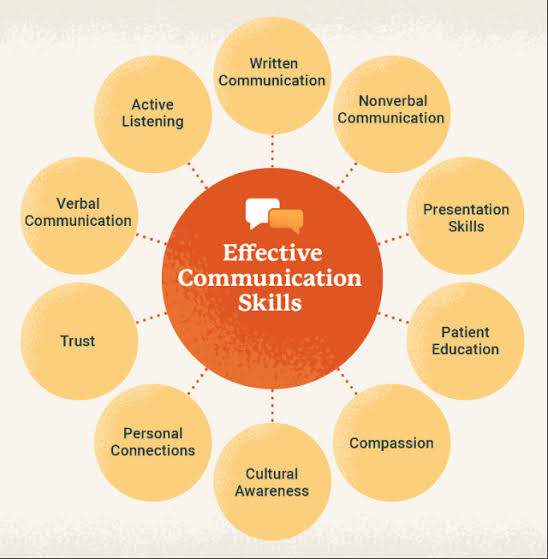
These skills include speaking, listening, reading, writing, body language, and expressing ideas clearly.
For example, a teacher uses communication skills to explain lessons, while a student uses them to ask questions and participate in classroom discussions.
Effective communication requires clear language, confidence, patience, and respect for other people's opinions.
2. Importance of Communication in Daily Life
Communication plays an important role in everyday activities. People use it to express their needs, share experiences, and understand different situations.
Good communication helps families discuss problems, friends maintain relationships, and communities work together.
It also reduces misunderstandings because people can explain their thoughts and listen carefully to others.
Whether communicating at home, in educational institutions, or in professional environments, clear expression makes interactions more effective.
3. Verbal Communication Skills
Verbal communication involves sharing information through spoken words.
It is commonly used in conversations, classroom discussions, meetings, interviews, and presentations.
Good verbal communication requires appropriate vocabulary, clear pronunciation, a suitable tone, and confidence.
People should organise their thoughts before speaking and use language that their listeners can understand.
Practising everyday conversations, reading aloud, and participating in discussions can improve speaking abilities.
4. Non-Verbal Communication
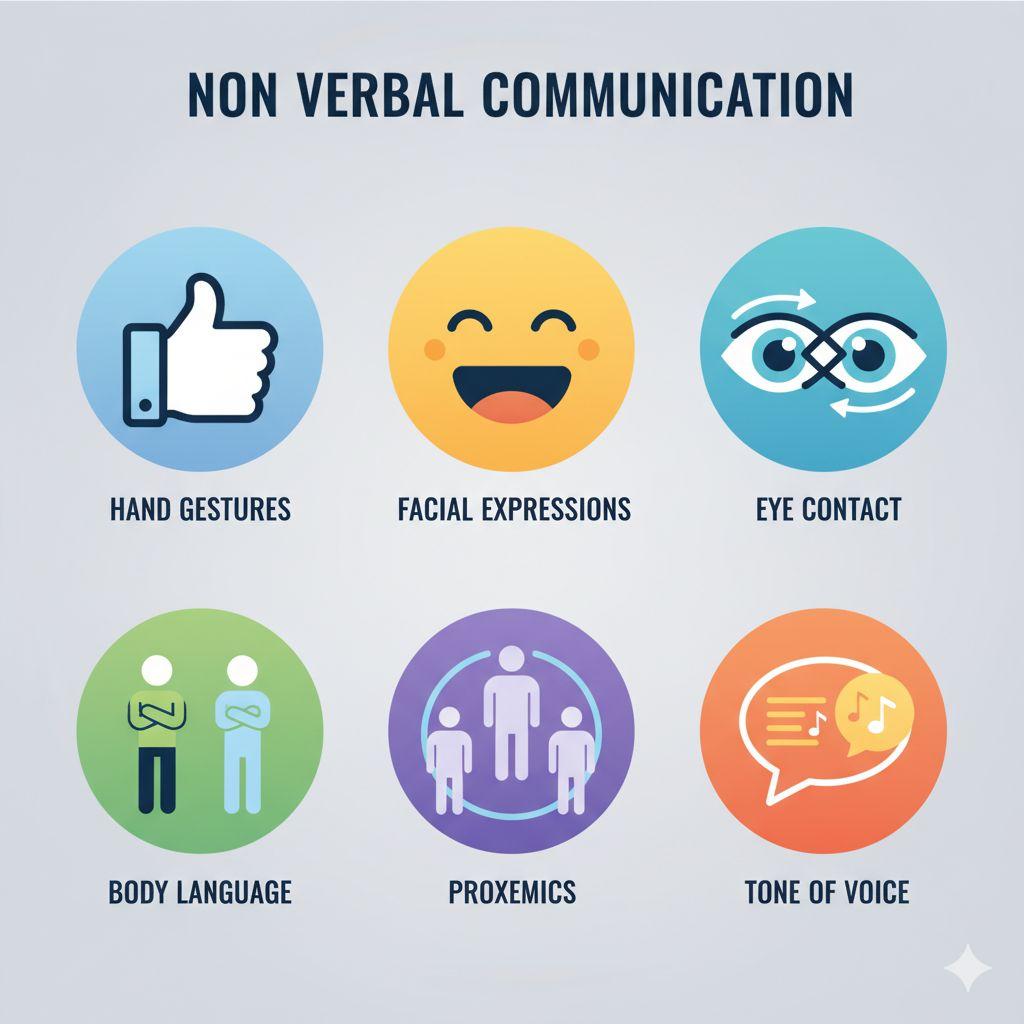
Non-verbal communication refers to expressing messages without using spoken words.
It includes facial expressions, eye contact, gestures, posture, and body movements.
For example, smiling can communicate friendliness, while maintaining appropriate eye contact can demonstrate attention during a conversation.
Body language can influence how people understand a message.
However, non-verbal expressions may have different meanings in different cultures, so people should be respectful and considerate.
5. The Importance of Listening Skills
Listening is one of the most important parts of effective communication.
Good listeners pay attention to speakers, understand their messages, and respond thoughtfully.
Poor listening can create misunderstandings and unnecessary arguments.
People can improve listening skills by avoiding interruptions, maintaining attention, asking relevant questions, and allowing others to complete their thoughts.
Active listening is especially important for teachers, students, managers, and professionals because it improves understanding and cooperation.
6. Communication Skills in Education
Communication is essential in educational institutions because teachers and students depend on it for effective learning.
Teachers explain concepts, provide instructions, ask questions, and give feedback through communication.
Students use communication skills to participate in discussions, complete presentations, ask for clarification, and share their ideas.
Strong communication also creates a positive classroom environment where students feel comfortable expressing themselves.
Educational institutions should encourage speaking activities, group discussions, debates, and presentations to develop students' communication abilities.
7. Communication Skills in Professional Life
Professional success depends on more than academic qualifications and technical knowledge. Communication skills are also important in almost every workplace.
Employees need to communicate with managers, customers, colleagues, and business partners.
Clear communication helps teams understand responsibilities, complete projects, and solve workplace problems.
During job interviews, candidates must explain their qualifications, experience, and abilities confidently.
Developing professional communication skills can improve career opportunities and workplace relationships.
8. The Role of English Communication Skills
English is widely used in international education, business, technology, and professional communication.
Learning English can help individuals access educational resources, communicate with international clients, and explore career opportunities.
However, effective communication is not limited to speaking complicated English.
The main purpose is to express ideas clearly and understand other people.
People can improve their English through daily speaking practice, vocabulary development, reading, listening exercises, and writing activities.
Regular practice gradually builds confidence and fluency.
9. Communication in the Digital World
Modern technology has changed the way people communicate.
Emails, messaging applications, video meetings, and social media platforms allow individuals to connect across different locations.
Digital communication is useful for education, remote work, business activities, and maintaining relationships.
However, online communication also requires responsibility.
People should use respectful language, check information before sharing it, protect personal details, and avoid unnecessary arguments.
Writing clear messages and professional emails is particularly important in educational and workplace environments.
10. Common Communication Problems
Many people experience difficulties when communicating with others.
Some common problems include:
Lack of confidence while speaking.
Poor listening habits.
Limited vocabulary.
Fear of making mistakes.
Unclear pronunciation.
Misunderstanding body language.
Using inappropriate language.
Interrupting others during conversations.
These problems can improve through regular practice, patience, and positive feedback.
People should understand that communication is a skill that develops over time.
11. Practical Ways to Improve Communication Skills
Anyone can improve communication abilities by following simple daily habits.
Practise speaking for a few minutes every day.
Read books, newspapers, and educational articles.
Learn new vocabulary and use it in sentences.
Listen carefully when others are speaking.
Participate in group discussions.
Improve pronunciation through listening exercises.
Maintain appropriate eye contact.
Write clear and professional messages.
Ask questions when something is unclear.
Accept feedback and learn from mistakes.
Consistent practice helps individuals become more confident and effective communicators.
Conclusion
Communication skills are essential for personal growth, educational achievement, and professional development. They help people express ideas, understand others, build relationships, and solve problems effectively.
Speaking, listening, writing, reading, and non-verbal communication all contribute to successful interactions.
In today's connected world, individuals should develop both traditional and digital communication skills.
By practising regularly, listening carefully, and respecting different opinions, everyone can become a better communicator.
Good communication is not simply about speaking well; it is also about understanding others and creating meaningful connections.









Comments 0
Sign in to join the conversation.
No comments yet. Be the first to say something.