

A practical plan for taking back your attention without quitting your phone, your apps, or your life.
You pick up your phone to check the time. Ten minutes later you're deep in a video about restoring a rusty knife, and you can't remember what you wanted in the first place.
If that sounds familiar, you're not weak, and you're not alone.
Here's the good news. You don't need a dramatic digital detox. You need a week of small, slightly boring changes that turn your phone back into a tool instead of a habit.
Why most detoxes fail
The usual advice is to go all in: delete every app, switch to a basic phone, disappear for a month. It sounds powerful. It also tends to collapse by day four.
The reason is simple. Your phone is also your map, your bank, your alarm, your camera, and sometimes your job. You can't quit it the way you do quit sugar. You have to live with it.
So the real problem isn't the phone. It's the automatic reach, the moment your hand grabs it before you've decided anything. Apps are built to make that reach easy: endless scrolling, red badges, notifications that pull you back. The plan below doesn't fight the phone. It puts a small pause between the reach and the tap.
Before you start: get one honest number
Open your phone's screen-time tool. On iPhone it's called Screen Time, and on most Android phones it's Digital Well being.
Write down three things: your daily average, your top three apps, and how many times you pick the phone up each day. Don't judge them. This is only your starting line, and you'll compare against it on day seven.
The 7-day plan
Do one step per day and keep the earlier ones going. By day seven you'll have a full system, built slowly enough that it sticks.
Day 1: Silence everything that isn't a person
Go through your notification settings and turn off anything that isn't a call or a message from a real human. Shopping offers, news alerts, game reminders, "someone liked your post": all of it.
Notifications are other people's priorities arriving in your pocket. After today, only your own priorities get to interrupt you.
Day 2: Add a little friction
Move social media and video apps off your home screen and into a folder on your last page. Better still, log out after each use, so opening the app takes a few extra seconds.
It sounds too small to matter. But most mindless scrolling happens because it takes zero effort. Add a few seconds of effort, and a good share of those visits quietly disappear.
Day 3: Send the phone to bed somewhere else
Charge your phone outside the bedroom. If you rely on it as an alarm, a cheap alarm clock solves that.
The first and last half hour of your day shape everything in between. Spending them with a book, a stretch, a prayer, or just your own thoughts is a quiet upgrade. If your phone is the first thing you touch and the last, it sets the tone for the whole day.
Day 4: Replace, don't just remove
For a day, notice when you reach for your phone. Most people find the triggers are few: boredom, waiting in line, an awkward silence, or putting off something difficult.
Pick a replacement for each trigger. Keep a paperback in your bag for waiting. Take one slow breath before opening anything when you feel awkward. Write down the first tiny step of the dreaded task before you allow yourself a break. A habit you remove without replacing will simply grow back.
Day 5: Set one limit on your worst app
Look at the top app from your starting numbers. Use the built-in app timer to set a daily limit slightly below your current average.
When the limit hits, treat it as a question: "Do I really want more of this?" Sometimes the answer is yes, and that's fine. The point is that it becomes a choice instead of a drift.
Day 6: Take one phone-free block
Choose 60 to 90 minutes, perhaps a meal, a walk, or an afternoon task, and leave the phone in another room.
Watch what your hands try to do. You'll probably feel a pull to check something that doesn't need checking. That itch is the habit showing itself, and noticing it is half the work.
Day 7: Review and keep three rules
Open the screen-time tool again. Compare your daily average, top apps, and pickups with your starting numbers.
Then choose the three changes that helped most and keep only those. Three rules you actually follow beat ten you abandon.
What to expect (the honest version)
Days two and three are usually the strangest. You'll reach for your phone for no reason, open an app, and realise you have nothing to do there. That feeling is normal, and it fades.
Don't expect your life to transform in a week. What you can expect is a little more calm, a bit more time, and a clearer sense of when you're choosing your phone and when it's choosing you. Many people also find that keeping the phone away at night makes mornings feel less rushed, though results differ from person to person.

Mistakes that quietly ruin the plan
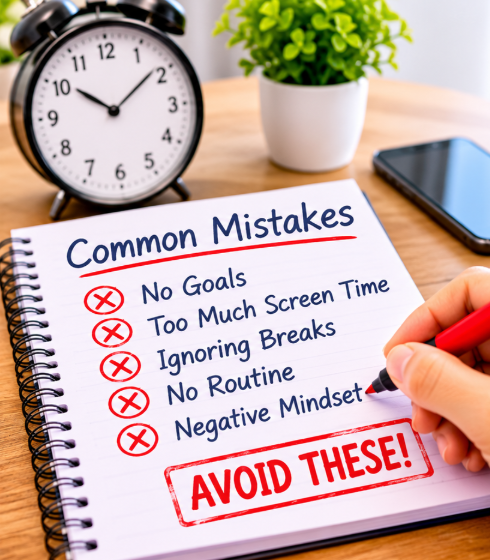
Changing everything at once. A big overhaul feels productive and burns out fast. Stick to one step a day.
Using the phone to fight the phone. Downloading five new "focus" apps just adds more screen time. The built-in tools are enough.
Treating one slip as failure. You will scroll for an hour at some point. Close the app and carry on with the next step. One bad evening doesn't cancel a good week.
Ignoring what you genuinely need. If your job depends on a messaging app, keep its notifications on. The goal isn't purity. It's intention.
Keeping the habit going
Once a week, spend two minutes looking at your screen time. Once a month, ask which apps have earned their place on your home screen.
And before you open anything, try one small question: "What am I here to do?" If you have an answer, go ahead. If you don't, put the phone down. That single pause is the whole reset in one sentence.







Comments 0
Sign in to join the conversation.
No comments yet. Be the first to say something.