

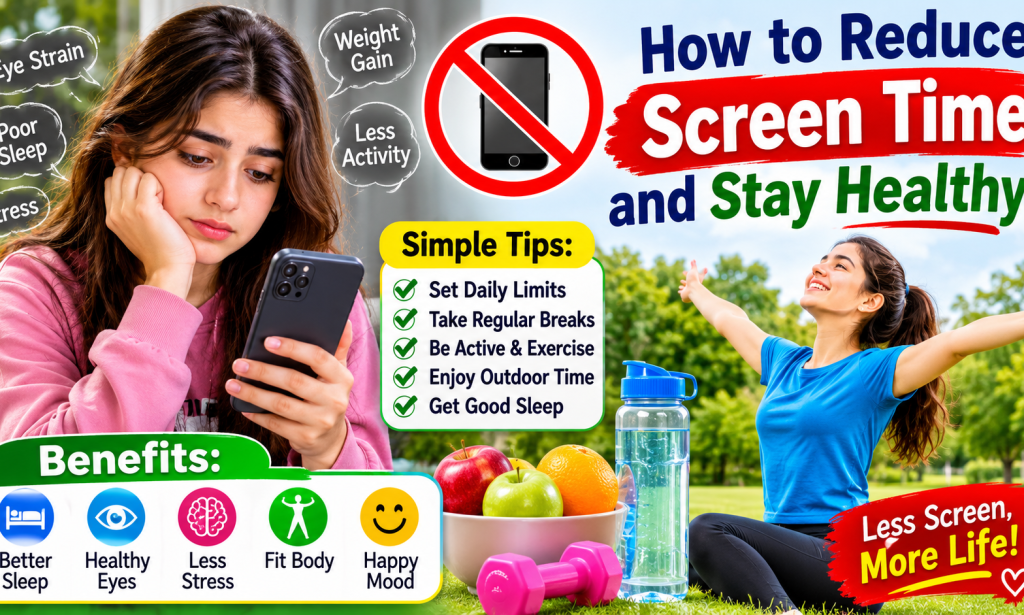
How to Reduce Screen Time and Stay Healthy: 10 Simple Tips
Introduction
Smartphones, computers, tablets, and televisions have become an important part of modern life. We use digital devices to study, work, communicate, shop, and enjoy entertainment. Technology makes many tasks easier, but spending too much time in front of screens can affect our health and daily routines. Long hours of screen use may contribute to eye discomfort, poor sleep, less physical activity, and difficulty concentrating.
Reducing screen time does not mean avoiding technology completely. Digital devices are useful when we use them wisely. The goal is to create a healthy balance between online activities and real-life experiences. With a few simple changes, people of all ages can build better habits and enjoy life beyond a screen.
1. Set Daily Screen-Time Limits
The first step is to understand how much time you spend using your devices. Most smartphones have screen-time or digital-wellbeing settings that show daily usage and app activity.
Set realistic limits for entertainment apps and social media. Instead of checking your phone every few minutes, choose specific times to use these applications. Start with small changes and gradually improve your routine. A practical limit is easier to maintain than a strict rule that feels impossible.
2. Take Regular Breaks to Rest Your Eyes
Looking at a screen for a long time can cause tired or dry eyes, blurred vision, headaches, and discomfort. A helpful habit is the 20-20-20 rule: after every 20 minutes of screen use, look at something about 20 feet away for at least 20 seconds.
Remember to blink regularly, adjust screen brightness, and avoid glare. Keep your screen at a comfortable distance and position it slightly below eye level. If eye discomfort or vision changes continue, consult an eye-care professional.

3. Avoid Screens Before Bedtime
Using a phone late at night can delay bedtime and make it harder to relax. Notifications, exciting videos, and endless scrolling can keep the mind alert when the body needs rest.
Try creating a screen-free period before sleep. Put your phone away, lower the lights, and choose a calming activity such as reading a printed book or listening to quiet audio. Keep your bedroom comfortable and avoid using your bed for long scrolling sessio
4. Make Time for Physical Activity
Long periods of sitting can reduce the time available for movement. Regular physical activity supports heart health, muscle strength, mood, and general fitness.
You do not need an expensive gym membership to become more active. Take a short walk, stretch between tasks, dance to music, ride a bicycle, or play an outdoor game. If you study or work at a desk, stand up and move around regularly. Choose activities you enjoy so that exercise becomes a lasting habit.
5. Keep Mealtimes Screen-Free
Watching videos or scrolling through social media while eating can distract you from your meal. You may pay less attention to hunger and fullness signals and spend less time talking with family members.
Try keeping phones and tablets away from the dining table. Eat slowly, notice the taste of your food, and enjoy conversations with the people around you. Screen-free meals can support mindful eating and create a positive family routine.
6. Turn Off Unnecessary Notifications
Constant alerts can interrupt work, study, rest, and conversations. Each notification may encourage you to pick up your phone, even when you have no important reason to use it.
Review your notification settings and turn off alerts from apps that are not essential. You can also use Do Not Disturb or Focus modes during study time, meals, and bedtime. Fewer interruptions make it easier to concentrate on one task at a time.
7. Replace Scrolling with Healthy Hobbies
Reducing screen time becomes easier when you have enjoyable alternatives. Choose activities that help you relax, learn something new, or connect with other people.
You could read books, cook a healthy meal, grow plants, draw, write in a journal, play a sport, or spend time outdoors. Families can plan board games, walks, or creative activities together. These hobbies provide a refreshing break from digital entertainment and make free time more meaningful.
8. Create Screen-Free Zones at Home
Designate certain places or times in your home as screen-free. For example, keep phones away from the dining table and avoid television during family conversations. Charging devices outside the bedroom can also reduce late-night checking.
Parents can support children by setting age-appropriate boundaries and following the same rules themselves. When adults demonstrate balanced technology use, children have a positive example to follow.
9. Use Technology with a Purpose
Not all screen time is harmful or unnecessary. Online lessons, work tasks, video calls, and useful information can make life better. The important difference is between intentional use and automatic scrolling.
Before opening an app, ask yourself what you want to do. Complete that task and then put the device away. Avoid switching repeatedly between apps without a clear reason. Organize your home screen so useful tools are easy to find and distracting apps are less visible.
10. Review Your Progress Every Week
Healthy habits develop through consistency, not perfection. At the end of each week, check your screen-time report and notice what has improved. Are you sleeping earlier, taking more walks, or spending more time with family?
If you have not reached your goal, do not feel discouraged. Choose one realistic adjustment for the next week. You might reduce one app's usage, add a daily walk, or keep your phone away during meals. Gradual progress is valuable.
Benefits of Reducing Screen Time
A balanced approach to technology creates more opportunities for healthy daily habits. Taking breaks may reduce digital eye discomfort, while avoiding late-night scrolling can support a more regular sleep routine. More movement can improve fitness, and screen-free conversations can strengthen family connections.
People may also find it easier to focus when unnecessary notifications and distractions are reduced. Results differ from person to person, but small lifestyle changes can make a positive difference.
Conclusion
Technology is a valuable part of modern life, but it should not control every moment of our day. Learning how to reduce screen time and stay healthy is about making thoughtful choices, not giving up smartphones or the internet.
Set reasonable limits, take eye breaks, protect your sleep, move your body, and make time for hobbies and relationships. Start with one small change today and build on it each week.
A healthier relationship with technology can help you use digital devices more effectively while making more room for the activities that matter most. Remember: use your screen when it helps you, and put it away when real life needs your attention.
Frequently Asked Questions
1. How many hours of screen time are healthy?
There is no single limit that suits every adult. Healthy screen use depends on age, work, study, sleep, physical activity, and the type of content.
2. Does screen time affect sleep?
Late-night device use can delay bedtime and interfere with a relaxing sleep routine. Reducing screen use before bed may help support better sleep habits.
3. What is the easiest way to reduce phone use?
Begin by checking your daily screen-time report, turning off unnecessary notifications, and setting specific times for social media. Replace some scrolling time with walking or reading.








Comments 0
Sign in to join the conversation.
No comments yet. Be the first to say something.