


The Power of Small Habits: How Little Changes Can Transform Your Life
Have you ever wondered why some people achieve their goals while others struggle to make progress? The secret is not always talent, money, or luck. Sometimes, the biggest difference comes from small habits that people follow every day.
Many of us think that changing our lives requires making big decisions or taking huge steps. We want to become successful overnight, improve our health in a few days, or completely change our routines in one week. However, real change does not happen like that. It begins with small actions that we repeat regularly.
A little improvement every day may not seem important at first, but with time, it can create amazing results.
What Are Small Habits?
Small habits are simple activities that we perform regularly. They do not require a lot of time, money, or effort. Some examples include:
Reading a few pages of a book every day.
Drinking enough water.
Waking up a little earlier.
Keeping your room clean.
Spending ten minutes learning something new.
Planning your tasks before starting the day.
These activities may look ordinary, but they can make our lives more organized and productive.
The important thing is consistency. Doing something small every day is often more helpful than doing something big once and then forgetting about it.
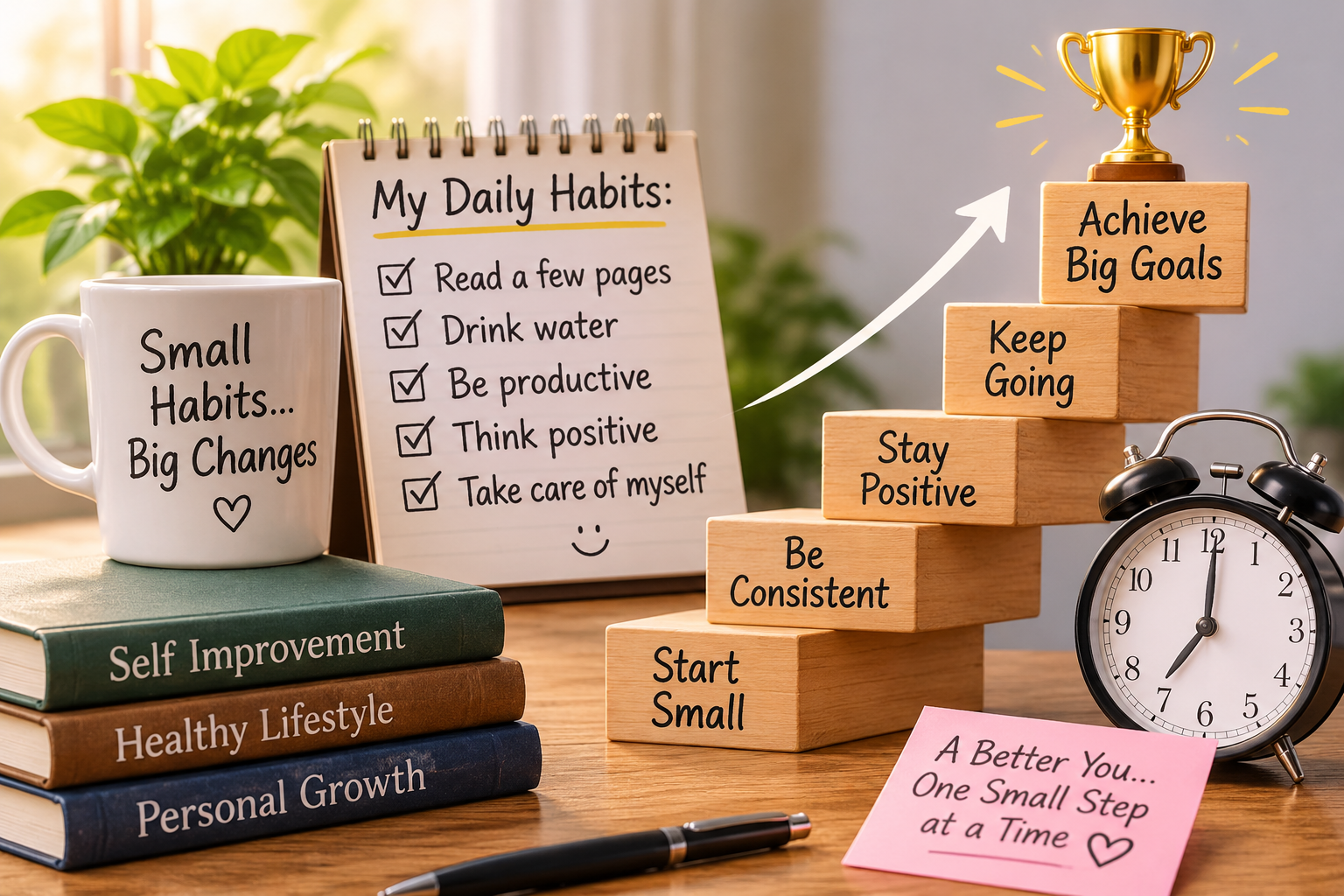
Small Steps Lead to Big Achievements
One common mistake people make is expecting quick results. When they start something new, they want to see improvement immediately. If they do not notice any difference, they sometimes lose motivation.
For example, a student who wants better marks cannot expect excellent results after studying for just one day. However, studying for thirty minutes every day, revising important topics, and completing homework on time can gradually improve performance.
The same principle applies to almost everything in life. Learning a new skill, improving communication, developing confidence, or becoming more organized requires patience.
Remember:
"Great things are not done by impulse, but by a series of small things brought together."
The Importance of a Healthy Daily Routine
A healthy routine can make a positive difference in our physical and mental well-being. Many people spend their days feeling tired because they do not have a balanced schedule.
Simple habits can help us feel more energetic and organized.
For example, starting the morning with a glass of water, eating a balanced breakfast, and preparing a list of daily tasks can make the day easier. Taking short breaks between activities also helps us stay focused.
Getting enough sleep is another important habit. Staying awake late every night can affect concentration and make daily activities more difficult.
A good routine does not mean following a strict timetable every minute. It means creating a lifestyle that supports your needs and responsibilities.
How Small Habits Improve Confidence
Confidence does not always come naturally. Sometimes, it develops when we start trusting ourselves.
Imagine setting a small goal to read five pages every day. At first, it may seem like a very simple task. But when you complete it regularly, you begin to feel that you can keep your promises to yourself.
This feeling can encourage you to take on bigger challenges.
You can also improve your confidence by speaking positively, learning from mistakes, asking questions, and trying new things.
Instead of comparing your progress with others, focus on becoming a little better than you were yesterday.
Everyone has a different journey, and there is no need to rush.
Breaking Bad Habits Takes Time
Just as good habits improve our lives, some negative habits can make everyday life more difficult.
Spending too much time scrolling through social media, delaying important tasks, avoiding responsibilities, and following an irregular sleep schedule are common examples.
However, changing these habits does not happen in one day.
The best approach is to start with one small change. For example, if you spend too much time on your phone, try keeping it away while studying or working.
If you regularly delay important tasks, begin by completing the easiest task first.
Do not try to change everything at once. Focus on one improvement, make it part of your routine, and then move towards another.
The Role of Consistency and Patience
Consistency is one of the most important parts of personal growth.
There will be days when you feel tired, busy, or unmotivated. You may miss a day or fail to complete your plans. That does not mean you have failed.
What matters is starting again instead of giving up.
For example, someone who wants to develop a reading habit may forget to read for two days. Instead of abandoning the goal, they can simply continue reading the next day.
Progress is not always perfect. Some days will be productive, while others may be difficult.
Patience helps us understand that meaningful improvements take time.
Small Habits and Personal Growth
Personal growth is not only about earning money or achieving professional success. It also includes becoming a better person, improving knowledge, developing good relationships, and learning how to handle difficult situations.
A person who spends a few minutes learning something new every day can gradually develop useful knowledge.
Similarly, listening carefully when others speak can improve communication and relationships.
Being thankful for little things, helping family members, respecting others, and managing emotions are also valuable habits.
These simple actions can make everyday life more positive.
How to Start Building Better Habits
If you want to improve your lifestyle, you do not need a complicated plan. Start with a few realistic steps.
1. Choose One Habit
Do not try to change your entire lifestyle in one day. Select one habit that you genuinely want to develop.
2. Start Small
If you want to read more, begin with five pages. If you want to become organized, spend five minutes planning your day.
3. Set a Daily Reminder
A simple reminder can help you remember your new habit until it becomes part of your routine.
4. Track Your Progress
Write down your daily achievements. Even small improvements deserve recognition.
5. Stay Patient
Do not expect immediate results. Give yourself enough time to adjust and improve.
Conclusion
The power of small habits lies in their simplicity. We often underestimate little actions because they do not produce immediate results. However, when we repeat positive activities regularly, they gradually become part of our lifestyle.
You do not need to be perfect, and you do not need to change everything overnight. Start with something simple, stay consistent, and allow yourself to grow at your own pace.
Whether your goal is to improve your education, develop confidence, maintain a healthy lifestyle, or achieve professional success, small steps can help you move in the right direction.
Your future is not built in a single day. It is shaped by the little things you do every day.







Comments 0
Sign in to join the conversation.
No comments yet. Be the first to say something.