

Iran–Israel Tensions Explode: Is the Middle East on the Brink of a Wider War in 2026?
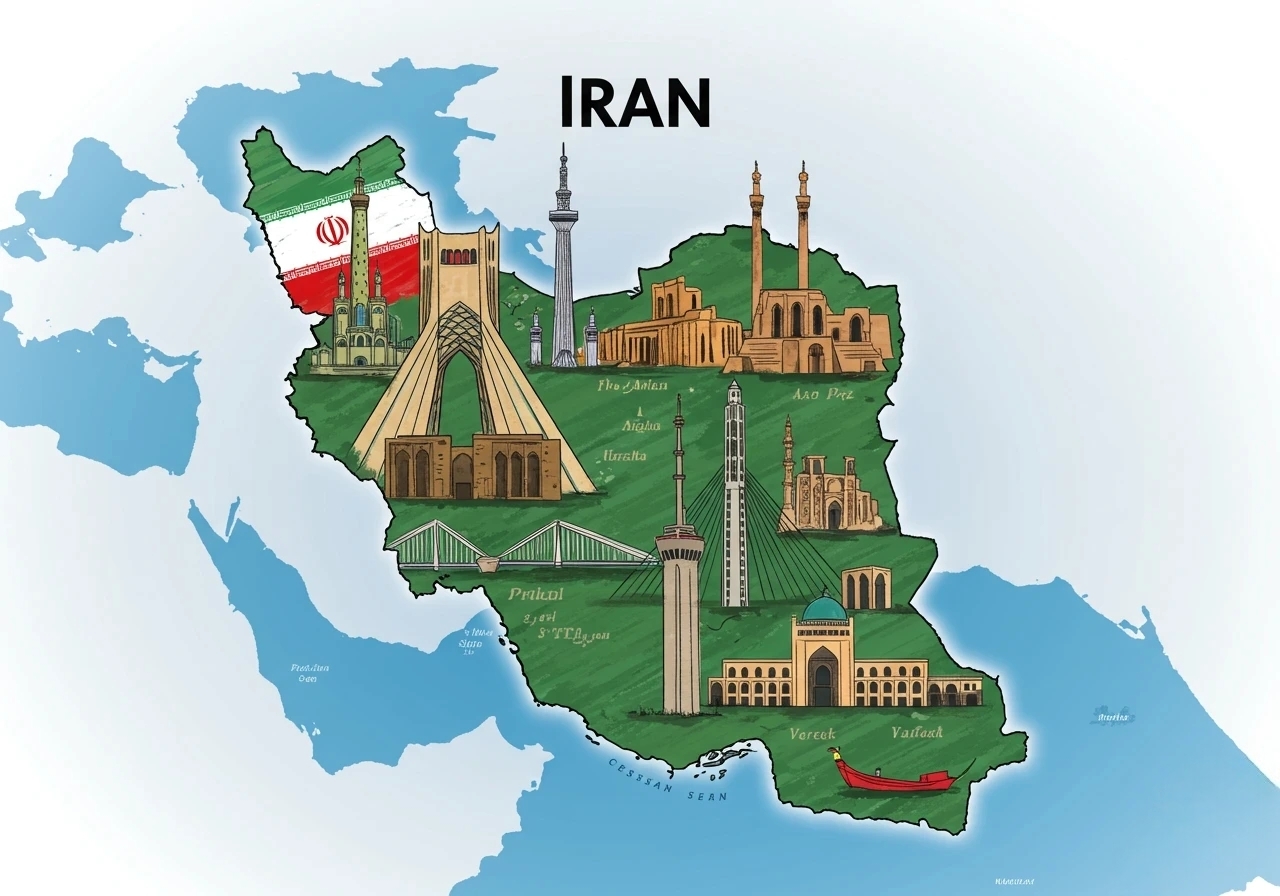
Introduction
The Middle East has entered one of the most volatile periods in its modern history. Long-standing tensions between Iran and Israel have erupted into direct military confrontation, raising fears that the region could slide into a devastating wider war.
What began as targeted military operations and proxy conflicts has escalated into missile strikes, drone attacks, cyber warfare, and retaliatory threats across multiple countries. Airstrikes on Iranian military and nuclear facilities, followed by Iran’s retaliatory missile launches against Israel and U.S. bases, have pushed the region closer to a full-scale war scenario.
This escalation is not limited to the two countries alone. The conflict is already spreading through allied groups and regional actors such as Hezbollah in Lebanon, while attacks and military incidents have been reported in the Gulf, Cyprus, and neighboring states.
Global powers, including the United States, Russia, and European nations, are watching closely as markets fluctuate, oil prices surge, and international security analysts warn of a conflict that could reshape the geopolitical landscape.
This article explores:
The origins of the Iran–Israel conflict
The dramatic escalation in 2026
The role of global powers and regional alliances
The risk of a wider Middle East war
The global consequences if the conflict continues
The Historical Roots of Iran–Israel Hostility
The Birth of a Strategic Rivalry
The hostility between Iran and Israel did not begin overnight. It developed gradually over decades due to ideological, political, and strategic differences.
Before the 1979 Iranian Revolution, Iran and Israel maintained relatively normal relations. However, when Iran’s Islamic Republic emerged under Ayatollah Khomeini, the new leadership adopted a strong anti-Israel stance.
Iran began supporting anti-Israel movements across the Middle East, including militant groups in:
Lebanon
Gaza
Syria
Iraq
Israel, meanwhile, viewed Iran’s expanding influence and nuclear ambitions as existential threats.
Key Sources of Conflict
Several major issues continue to drive the confrontation:
Iran’s nuclear program
Regional proxy wars
Military build-ups
Ideological hostility
Cyber warfare and intelligence operations
Over time, the rivalry evolved into what analysts call a “shadow war”—a covert conflict fought through cyberattacks, assassinations, sabotage operations, and proxy forces.
The 2026 Turning Point: Direct Military Confrontation
Operation Lion’s Roar
The crisis dramatically escalated in February 2026 when Israel launched a coordinated military operation against Iranian targets.
The operation, reportedly conducted with U.S. support, targeted Iranian military and nuclear facilities across multiple cities.
The campaign aimed to weaken Iran’s:
missile capabilities
nuclear infrastructure
military leadership
The strikes triggered immediate retaliation from Iran.
Iran’s Retaliatory Attacks
Iran responded with a massive barrage of missiles and drones targeting Israeli territory and U.S. military bases across the region.
Reports indicate:
missile strikes on Israeli cities
attacks on Gulf states hosting U.S. bases
drone strikes against military facilities and shipping routes
The attacks spread beyond Israel, reaching the United Arab Emirates and Oman, causing casualties and damage to infrastructure.
This marked the largest direct confrontation between Iran and Israel in decades.
A Shock to the Region: The Death of Iran’s Supreme Leader
One of the most dramatic developments came when Iran’s Supreme Leader Ayatollah Ali Khamenei was reportedly killed in a major airstrike during the conflict.
His death created enormous political uncertainty inside Iran and intensified anger against Israel and its allies.
Shortly afterward, Iran’s Assembly of Experts selected Mojtaba Khamenei, his son, as the country’s new Supreme Leader.
This controversial succession raised fears of:
increased radicalization
harsher military retaliation
internal power struggles within Iran
Israel warned that any new leadership continuing Iran’s military strategy could remain a target.
The Expansion of the Conflict Across the Middle East
Hezbollah Enters the War
Soon after the initial attacks, Hezbollah, Iran’s powerful ally in Lebanon, launched strikes against Israel.
Israel responded with airstrikes in Beirut and southern Lebanon, triggering what analysts now describe as the 2026 Hezbollah–Israel war.
The conflict has already resulted in:
hundreds of casualties
large-scale displacement
destruction in border areas
More than 500,000 people have reportedly been displaced in Lebanon.
Attacks Spread Beyond the Battlefield
The crisis quickly expanded into a regional conflict zone.
Key incidents include:
1. Drone and missile attacks
Iran and its allies have launched attacks across the region, including:
Israel
U.S. bases in the Gulf
European military facilities
2. Maritime attacks
Oil tankers and shipping routes have been targeted in the Persian Gulf.
3. Cyber warfare
Both sides are engaging in major cyber operations targeting infrastructure and communications networks.
Nuclear Fears and Strategic Red Lines
One of the most alarming aspects of the crisis is the potential involvement of nuclear facilities.
Iranian officials recently warned that Israel’s Dimona nuclear reactor could become a target if military escalation continues.
Such threats represent a dangerous shift.
Why Dimona Matters
The Dimona facility is widely believed to be central to Israel’s nuclear capability.
An attack on it could:
trigger global nuclear panic
lead to catastrophic retaliation
escalate into an unprecedented regional war
Global Powers and the Risk of Superpower Involvement
The Role of the United States
The United States has long been Israel’s strongest ally.
In the current conflict:
U.S. forces have reportedly participated in strikes on Iran
American bases across the Middle East have become targets
Several U.S. troops have already been killed in retaliatory attacks.
Washington faces a difficult dilemma:
defend Iran
avoid triggering a full regional war
Russia and China
Russia and China are watching closely.
While they have not directly entered the conflict, both countries maintain strategic ties with Iran.
Their involvement could include:
diplomatic support
intelligence sharing
weapons transfers
economic backing
Any deeper involvement could transform the conflict into a major global confrontation.
Economic Shockwaves Across the World
The Iran–Israel conflict is not just a regional crisis—it is shaking the global economy.
Immediate economic impacts include:
rising oil prices
stock market volatility
disruptions in shipping routes
airline cancellations and airspace closures
The Middle East supplies roughly one-third of global oil exports, meaning any prolonged conflict could trigger a worldwide energy crisis.
Markets have already reacted sharply to the escalation.
Humanitarian Consequences
Beyond geopolitics and economics, the human cost of the conflict is rapidly increasing.
Thousands of civilians have been killed or injured across several countries.
Major humanitarian concerns include:
refugee displacement
destroyed infrastructure
shortages of food and medicine
damaged hospitals and power systems
In Lebanon alone, hundreds of thousands of people have fled their homes as fighting intensifies.
Could This Become World War III?
Many analysts are now asking a troubling question:
Could the Iran–Israel conflict trigger a global war?
While a world war remains unlikely, several risk factors are raising alarm.
Key escalation risks
direct U.S.–Iran war
Hezbollah and regional militias expanding attacks
attacks on nuclear facilities
closure of the Strait of Hormuz
involvement of Russia or NATO
If multiple countries become directly involved, the conflict could rapidly spiral out of control.
Possible Paths to De-Escalation
Despite the dangerous situation, diplomatic solutions remain possible.
International actors are pushing for:
ceasefire negotiations
United Nations mediation
renewed nuclear talks
regional security agreements
Countries such as Turkey, Qatar, and Oman may play key roles in mediation efforts.
However, trust between Iran and Israel remains extremely low.
What Happens Next?
The next few months could determine whether the Middle East moves toward peace or deeper conflict.
Several scenarios are possible:
Scenario 1: Controlled conflict
Limited strikes continue but major powers prevent wider war.
Scenario 2: Regional war
Multiple Middle Eastern countries become directly involved.
Scenario 3: Diplomatic breakthrough
International negotiations reduce tensions.
Scenario 4: Global escalation
Major powers become militarily involved.
Conclusion
The explosion of tensions between Iran and Israel in 2026 represents one of the most dangerous geopolitical crises of the 21st century.
What began as a long-running shadow war has transformed into direct military confrontation with global consequences.
Missile strikes, leadership assassinations, proxy warfare, and nuclear threats have pushed the Middle East dangerously close to a broader regional conflict.
Yet history shows that even the most severe crises can eventually lead to diplomacy.
Whether the region descends into a devastating war—or finds a path toward stability—will depend on the decisions made by world leaders in the coming weeks.
For now, the world watches anxiously as events continue to unfold.

You must be logged in to post a comment.