
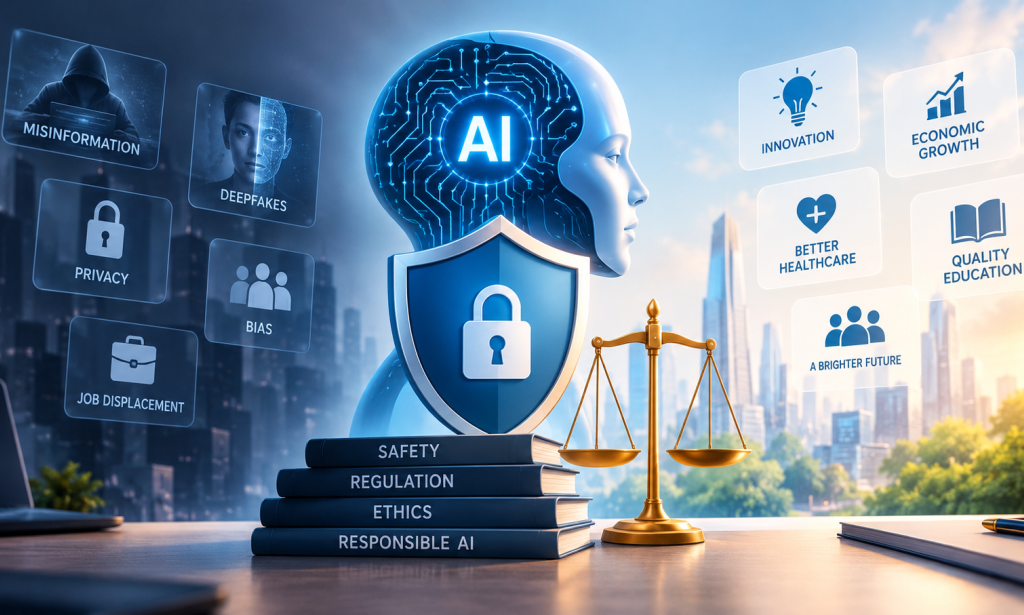
Does AI Need Stricter Rules? The Growing Debate Over AI Safety
Artificial intelligence is transforming the world faster than many people expected. From chatbots and AI writing assistants to self driving technologies and advanced medical tools, AI is becoming an important part of everyday life. Businesses use it to improve productivity, students rely on it for learning, and developers use it to build applications that once required significant time and resources. While these developments offer exciting opportunities, they also raise an important question: does AI need stricter rules to ensure it remains safe and beneficial for society?
The debate over AI safety has become increasingly important as artificial intelligence systems grow more capable. Supporters of stricter regulations believe governments and technology companies must establish clear boundaries to prevent misuse, protect personal information, and reduce the risk of harmful outcomes. Others argue that excessive regulation could slow innovation, increase development costs, and prevent smaller companies from competing with major technology firms.
Both sides raise valid concerns. The real challenge is finding a balance between encouraging technological progress and protecting people from potential risks. Understanding this debate is essential as AI continues to influence the future of work, education, healthcare, communication, and decision making.
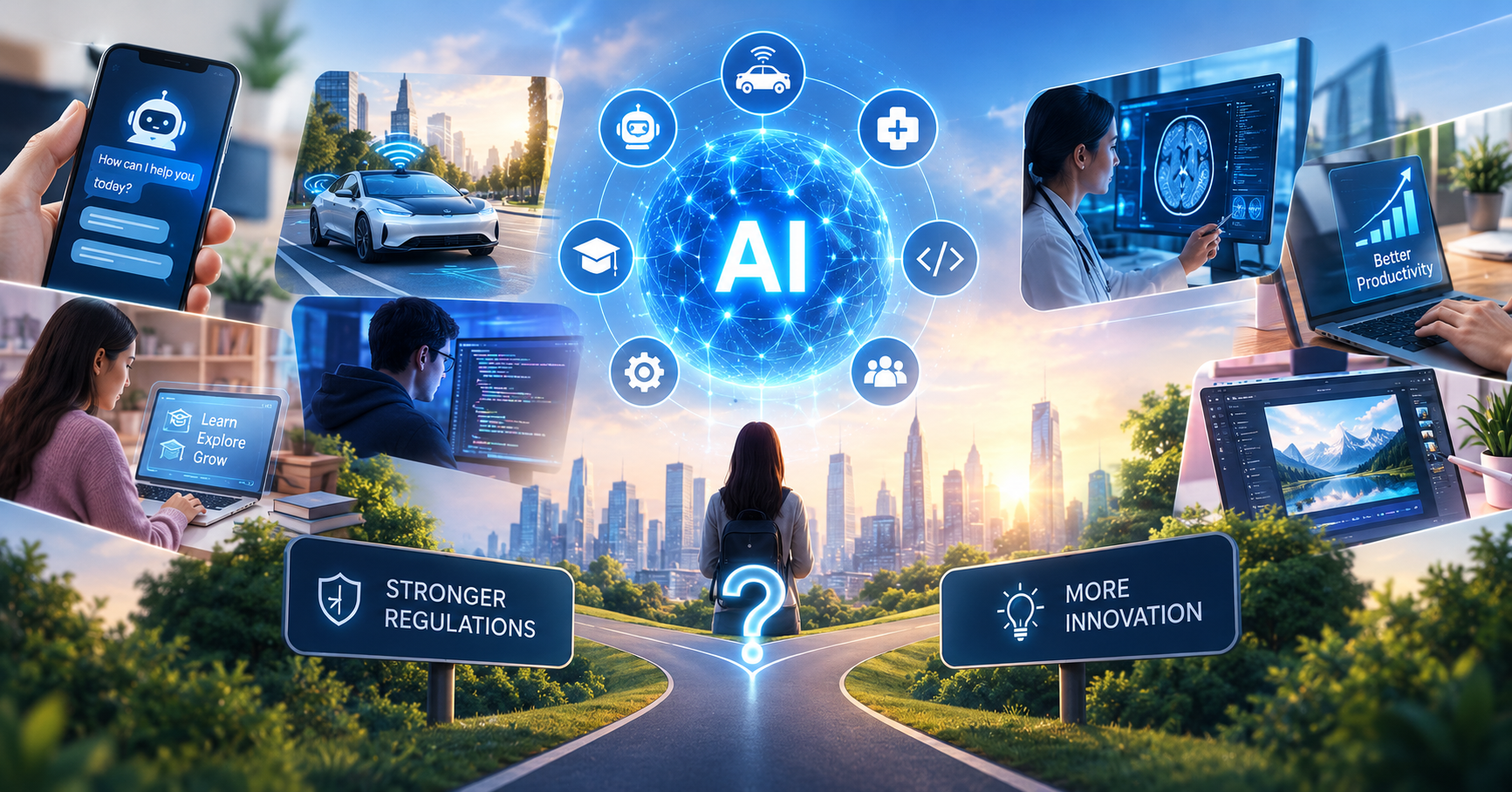
Why Is AI Safety Becoming a Major Concern?
Artificial intelligence is no longer limited to answering simple questions or performing basic automated tasks. Modern AI systems can generate realistic images and videos, write computer code, analyze large amounts of information, and assist with complex professional work. As these capabilities expand, the consequences of using AI irresponsibly can become more serious.
One major concern is the spread of misinformation. AI tools can produce convincing fake images, videos, and audio recordings that make it difficult to distinguish genuine information from fabricated content. Such material can damage reputations, mislead the public, and influence important decisions.
Privacy is another growing concern. AI systems often process large amounts of data, including personal information. If this information is collected without proper consent, stored insecurely, or used for purposes people do not understand, it can create significant privacy risks.
There are also questions about accountability. If an AI system makes a harmful recommendation or produces a discriminatory decision, who should be responsible? The developer, the company using the system, or the person who relied on its output? These questions demonstrate why AI safety requires more than technical improvements. It also requires clear policies, responsible development practices, and effective oversight.
The Biggest Risks of Artificial Intelligence
To understand whether AI needs stricter rules, it is important to examine the risks that researchers, governments, businesses, and the public are discussing.
1. AI Generated Misinformation and Deepfakes
Generative AI has made it easier to create realistic content in seconds. Although this technology can support filmmaking, marketing, education, and entertainment, it can also be used to produce misleading information.
For example, someone could create a fake video showing a public figure making statements they never actually made. Fraudsters could also imitate a person's voice to deceive family members, employees, or customers.
Stronger safeguards could help address these problems. Technology companies can improve content detection systems, introduce provenance tools that identify where digital content originated, and make it easier for users to report manipulated material. Clear rules against deceptive impersonation and fraudulent uses of AI could provide additional protection.
However, detection tools are not perfect. Public awareness, media literacy, and responsible platform policies are also necessary.
2. Privacy and Personal Data Protection
AI assistants and automated services can process information that people consider private. Depending on how a service operates, this information might include personal conversations, documents, financial details, or workplace communications.
The main concern is not simply that AI uses data. It is whether that data is collected lawfully, handled securely, and used transparently.
Stricter privacy requirements could encourage companies to collect only the information they need, explain how data is used, and provide meaningful options for users to control their information. Independent security assessments could also help identify weaknesses before they lead to serious problems.
Responsible AI development should make privacy a central design consideration rather than an afterthought.
3. Bias and Unfair Decisions
AI systems learn patterns from data, and that data can reflect existing social inequalities or historical biases. As a result, an AI system may produce unfair outcomes even when its developers do not intend to discriminate.
This becomes particularly concerning when AI is used in recruitment, lending, education, healthcare, or other areas that affect people's opportunities.
For instance, an automated recruitment tool trained on biased historical hiring data might favor certain applicants while unfairly disadvantaging others. If companies rely on such systems without proper evaluation, discriminatory patterns can become harder to identify.
AI regulations should encourage regular testing, representative data, transparent decision making, and meaningful human review in high impact situations. People should also have a way to challenge consequential decisions when automated systems contribute to them.
4. Job Displacement and Economic Inequality
AI is changing the nature of work by automating repetitive tasks and assisting with activities that previously required human expertise. While this can improve productivity, it also creates uncertainty for workers in affected industries.
Some jobs may become less common, while others will evolve or emerge. Workers who have limited access to training could find it difficult to adapt to these changes.
AI safety discussions should therefore extend beyond preventing technical failures. Policymakers and employers should consider investments in education, digital skills, professional training, and support for workers whose responsibilities are changing.
The goal should not be to stop useful automation. It should be to help people benefit from technological progress rather than leaving them unprepared for it.
Why Do Some People Oppose Stricter AI Regulations?
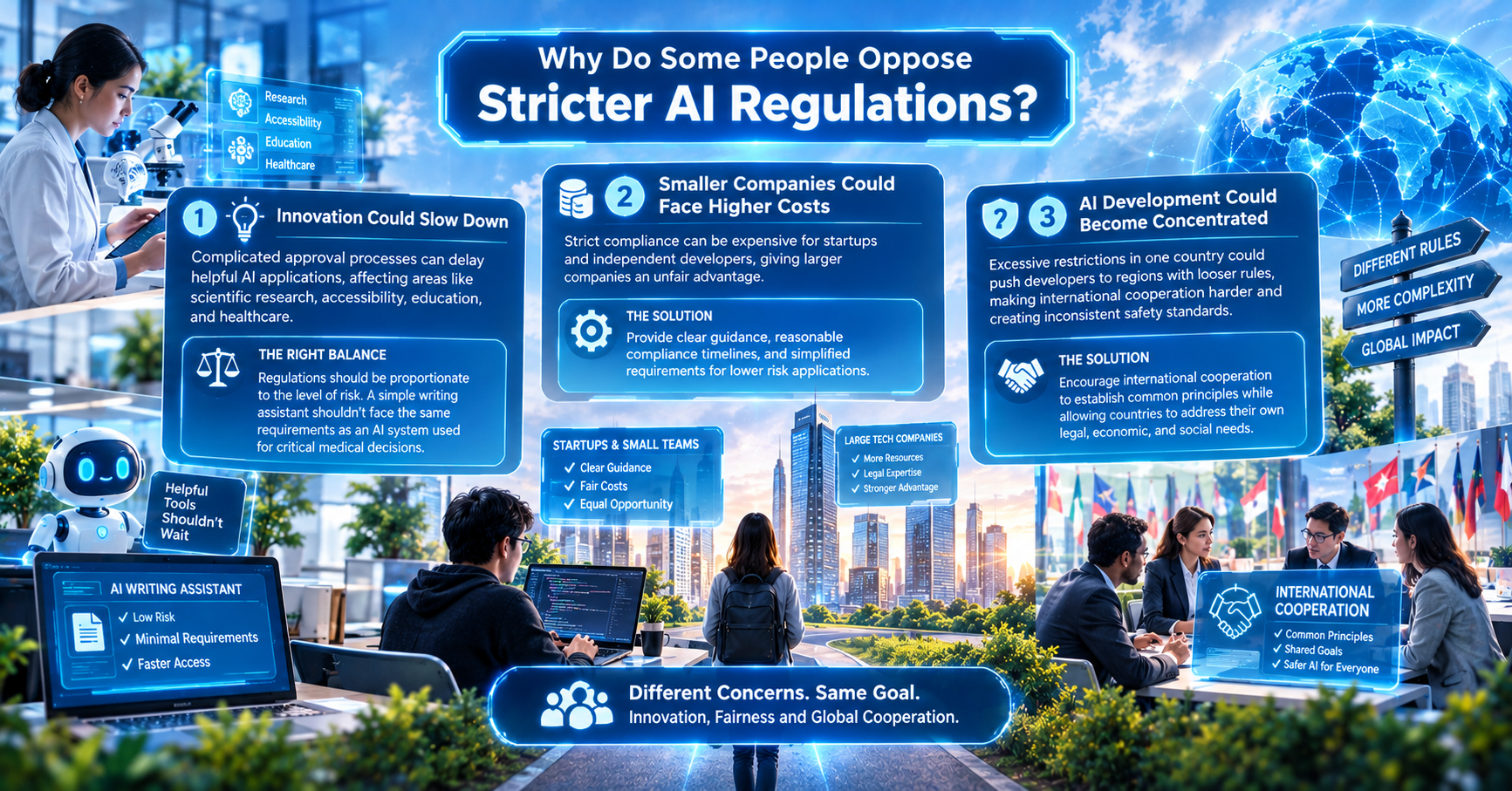
Although the risks are real, not everyone believes stronger AI regulations are the best solution. Critics argue that poorly designed rules could create problems of their own.
Innovation Could Slow Down
Artificial intelligence is developing rapidly, and new applications often emerge from experimentation. If developers must navigate complicated approval processes before releasing even low risk tools, useful innovations could take longer to reach the public.
This could affect areas such as scientific research, accessibility technology, education, and healthcare, where AI may help solve important problems.
Regulations should therefore be proportionate to the level of risk. A simple writing assistant should not necessarily face the same requirements as an AI system used to support critical medical decisions.
Smaller Companies Could Face Higher Costs
Large technology companies often have more money, legal expertise, and technical resources than startups or independent developers. Strict compliance requirements could place a disproportionate burden on smaller organizations.
If meeting regulatory obligations becomes too expensive, established companies could gain an even stronger competitive advantage.
Governments can reduce this risk by providing clear guidance, reasonable compliance timelines, and simplified requirements for lower risk applications. The objective should be to improve safety without making responsible innovation accessible only to the largest businesses.
AI Development Could Become Concentrated
Another concern is that excessive restrictions in one country could encourage developers to move their work to regions with less demanding rules. This could make international cooperation more difficult and create inconsistent safety standards.
Because AI technology operates across borders, governments need to consider how their policies interact with regulations in other countries.
International cooperation can help establish common principles while allowing countries to address their own legal, economic, and social needs.
What Are Governments Doing About AI Safety?
Governments are already taking steps to address the risks associated with artificial intelligence. Their approaches differ, but many focus on transparency, accountability, privacy, and the management of high risk systems.
The European Union's AI Act introduces a risk based regulatory framework. It establishes different requirements depending on how an AI system is used and the level of risk it presents. Certain applications face stricter obligations, while some lower risk uses are subject to fewer requirements. The law is being implemented in stages.
In the United States, AI governance involves a combination of federal and state initiatives, existing consumer protection laws, sector specific rules, and changing policy priorities. The regulatory approach continues to evolve as policymakers debate how to encourage innovation while addressing potential harms.
Other countries are also developing AI governance frameworks, issuing guidance, and considering rules for particular applications.
These efforts demonstrate that AI regulation is not simply a debate about whether governments should intervene. It is increasingly a discussion about which rules are necessary, how they should be enforced, and how they can adapt as the technology changes.
How Can AI Companies Make Their Technology Safer?
Government regulation is only one part of the solution. Technology companies also have a responsibility to identify and reduce risks before their products reach users.
Several practical measures can improve AI safety.
Risk assessments before release: Developers should evaluate how their systems might be misused, where they could fail, and who might be affected.
Human oversight: AI should not make every consequential decision independently. In high impact situations, qualified people should be able to review outputs, intervene when necessary, and take responsibility for decisions.
Transparent policies: Companies should explain important limitations, communicate how their systems are intended to be used, and avoid misleading claims about AI capabilities.
Independent testing: External researchers and qualified auditors can help identify weaknesses that internal teams may overlook. Appropriate access to systems and safeguards for sensitive information are important for effective testing.
Ongoing monitoring: AI safety does not end when a product launches. Companies should monitor performance, investigate reported problems, and update safeguards as new risks emerge.
These measures can help build public trust while allowing developers to continue improving their products.
Can AI Be Both Innovative and Safe?
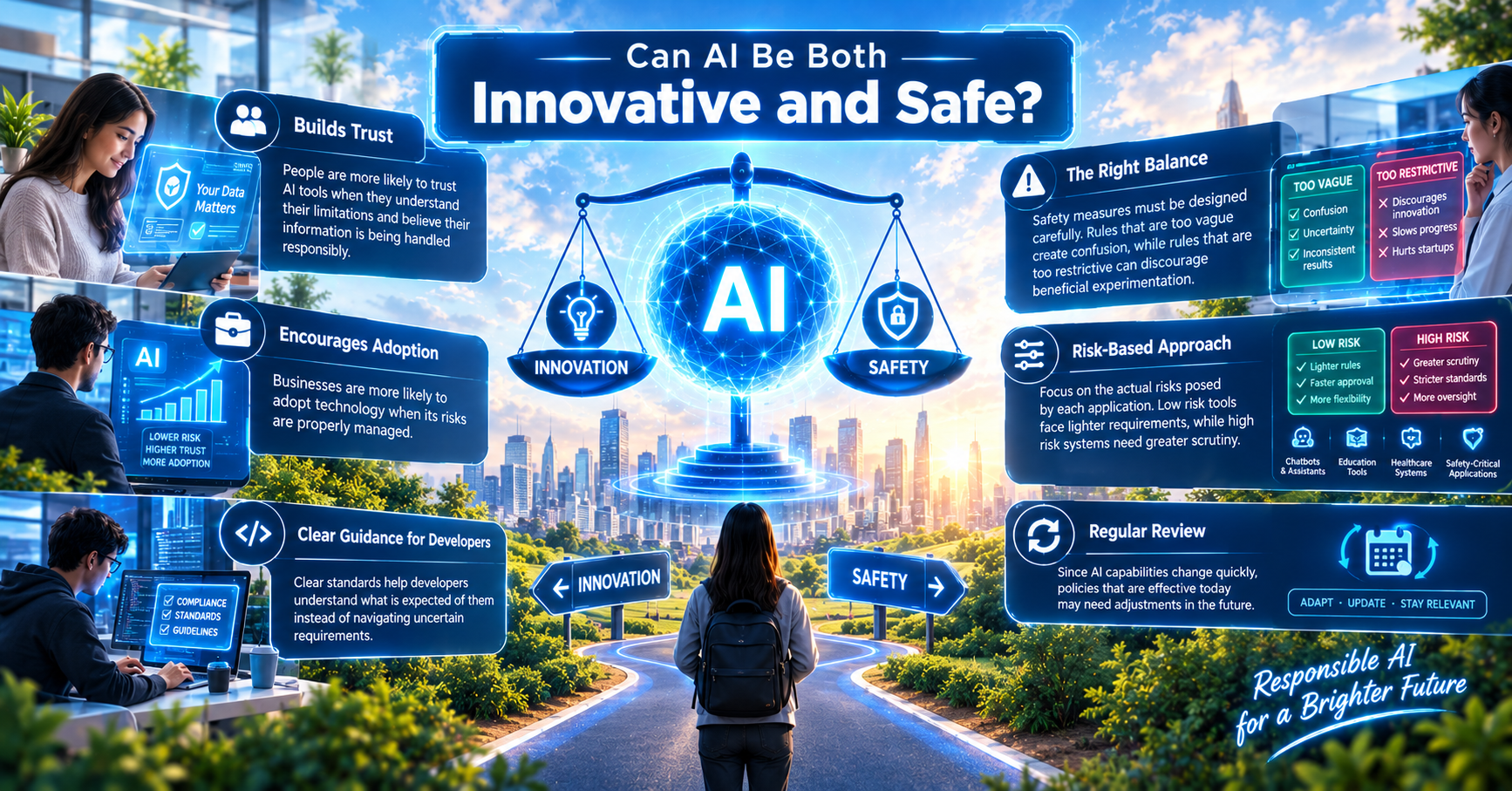
One of the biggest misconceptions in the AI regulation debate is that innovation and safety must always compete with each other. In practice, responsible development can support both goals.
People are more likely to trust AI tools when they understand their limitations and believe their information is being handled responsibly. Businesses are more likely to adopt technology when its risks are properly managed. Clear standards can also help developers understand what is expected of them instead of navigating uncertain requirements.
However, safety measures must be designed carefully. Rules that are too vague can create confusion, while rules that are too restrictive can discourage beneficial experimentation.
A balanced approach would focus on the actual risks posed by each application. Low risk tools should generally face lighter requirements, while systems that could seriously affect health, safety, fundamental rights, or access to essential services should receive greater scrutiny.
Regulations should also be reviewed periodically. Since AI capabilities change quickly, policies that are effective today may need adjustments in the future.
What Does the Future of AI Regulation Look Like?
The future of AI safety will likely involve a combination of government regulation, industry standards, independent research, and public participation.
As AI becomes more integrated into everyday life, expectations around transparency and accountability will probably increase. Users may demand clearer explanations of how AI systems operate, businesses may seek stronger evidence that their tools are reliable, and governments may introduce additional requirements for sensitive applications.
Another important development will be the growth of international cooperation. Shared safety principles could help reduce inconsistencies between countries, although differences in laws, political priorities, and economic interests may make agreement difficult.
Education will also play an essential role. People need to understand how to evaluate AI generated information, protect their personal data, recognize potential manipulation, and use automated tools responsibly.
Ultimately, the success of AI governance should not be measured by the number of regulations introduced. It should be measured by whether those rules reduce meaningful risks, protect people's rights, and allow useful technology to develop.
Conclusion: Does AI Need Stricter Rules?
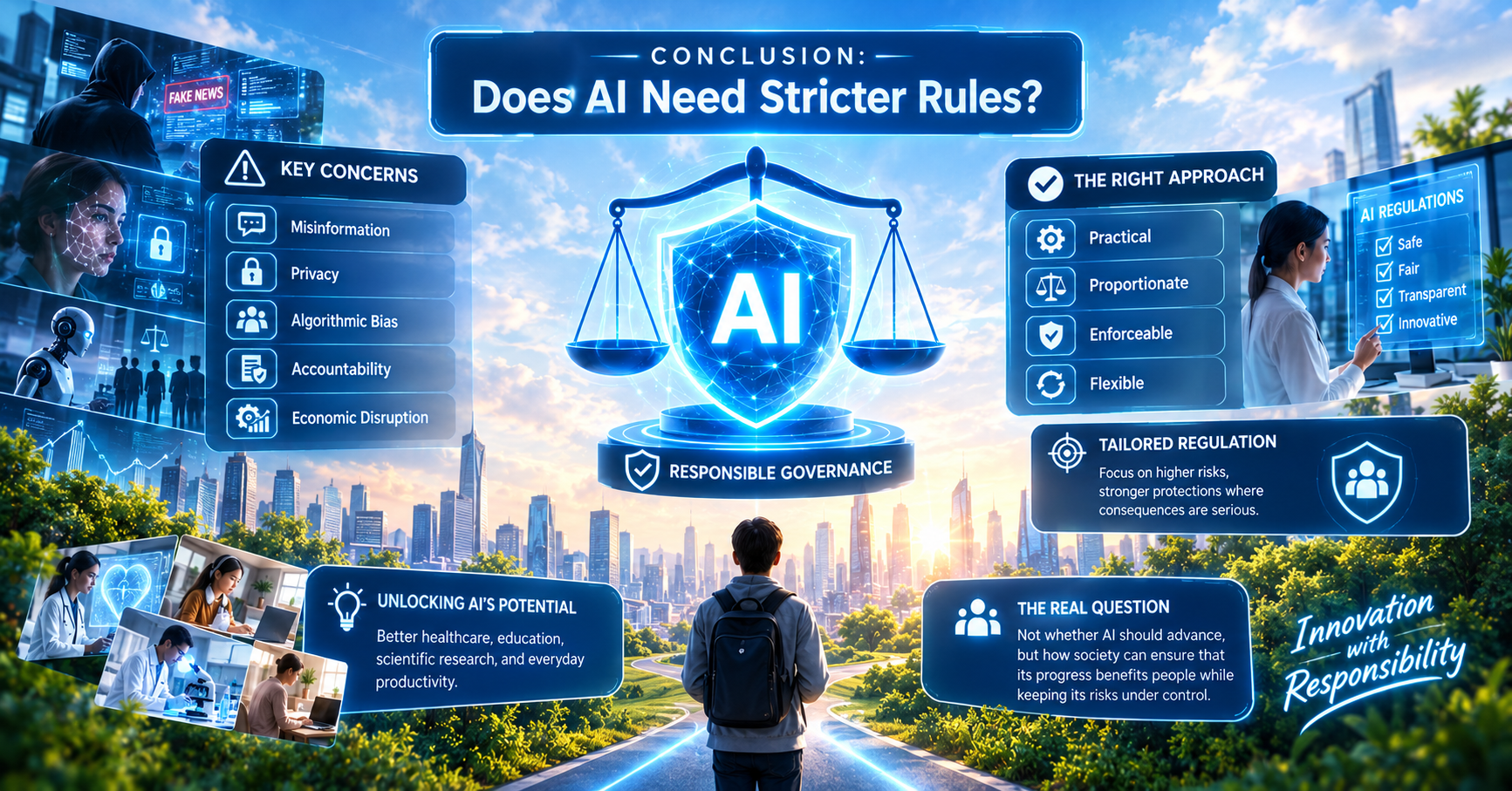
Yes, artificial intelligence needs effective safeguards and, in certain high risk areas, stricter regulations. The growing concerns surrounding misinformation, privacy, algorithmic bias, accountability, and economic disruption make responsible AI governance increasingly important.
However, stricter rules alone will not solve every problem. Regulations must be practical, proportionate, enforceable, and flexible enough to keep pace with technological progress. Excessive restrictions could slow innovation and place unnecessary pressure on smaller developers, while weak oversight could leave people exposed to preventable harm.
The best approach is to regulate AI according to its potential impact, require stronger protections where the consequences are serious, and encourage companies to prioritize safety throughout the development process.
Artificial intelligence has the potential to improve healthcare, education, scientific research, and everyday productivity. Protecting that potential requires more than rapid innovation. It requires responsibility, transparency, and public trust.
The real question is not whether AI should be allowed to advance. It is how society can ensure that its progress benefits people while keeping its risks under control.

You must be logged in to post a comment.