

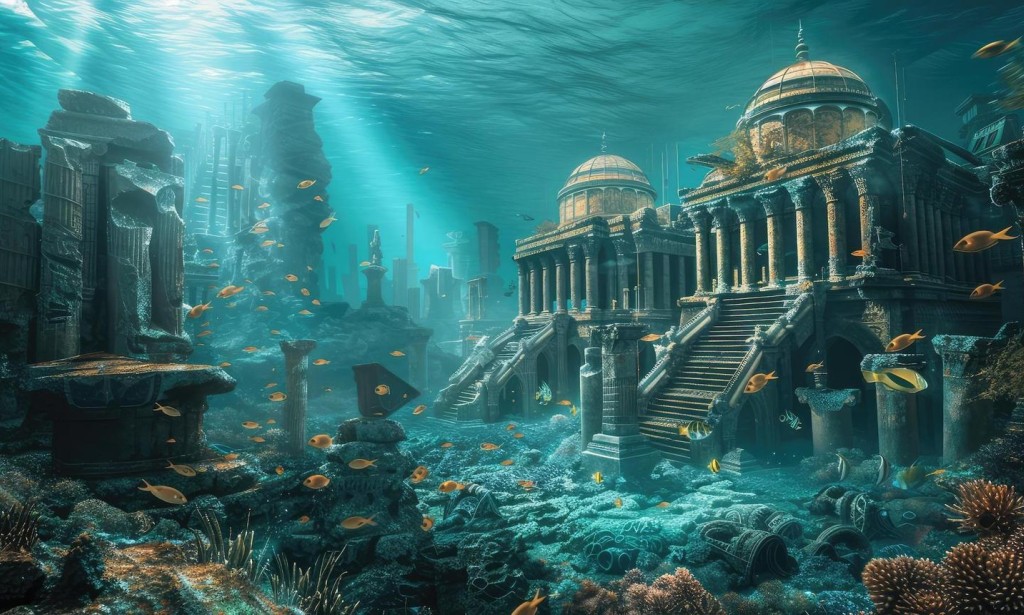
An ancient mystery that has fascinated historians, explorers, and researchers for more than 2,000 years.
Introduction: A Civilization Lost in Time
Imagine a magnificent city filled with golden buildings, enormous temples, advanced engineering, and beautiful waterways. Its people lived in extraordinary comfort, possessed great wealth, and controlled powerful armies and ships.
Now imagine that this entire civilization disappeared beneath the ocean, leaving behind nothing that archaeologists have been able to identify as its remains.
This is the mysterious story of Atlantis.
For centuries, people have wondered whether Atlantis was a real civilization or simply an imaginative story created by an ancient philosopher. Some believe it was an advanced society destroyed by a natural disaster, while others consider it one of history's most fascinating legends.
But where did the story begin, and why does Atlantis continue to capture the world's imagination?
The First Story of Atlantis
The earliest known written account of Atlantis comes from the ancient Greek philosopher Plato.
Around 360 BC, Plato described Atlantis in two of his philosophical dialogues, Timaeus and Critias.
According to the story, Atlantis was a powerful island civilization located beyond the Pillars of Heracles, generally associated with the Strait of Gibraltar.
Plato's account describes a society that existed thousands of years before his own time.
The story was presented through a chain of narration involving an Egyptian priest, the Greek lawgiver Solon, and members of an Athenian family.
According to this account, the Egyptian priest told Solon about an ancient civilization that had once possessed extraordinary power.
That civilization was Atlantis.
A City More Beautiful Than Any Other
According to Plato, Atlantis was not an ordinary island.
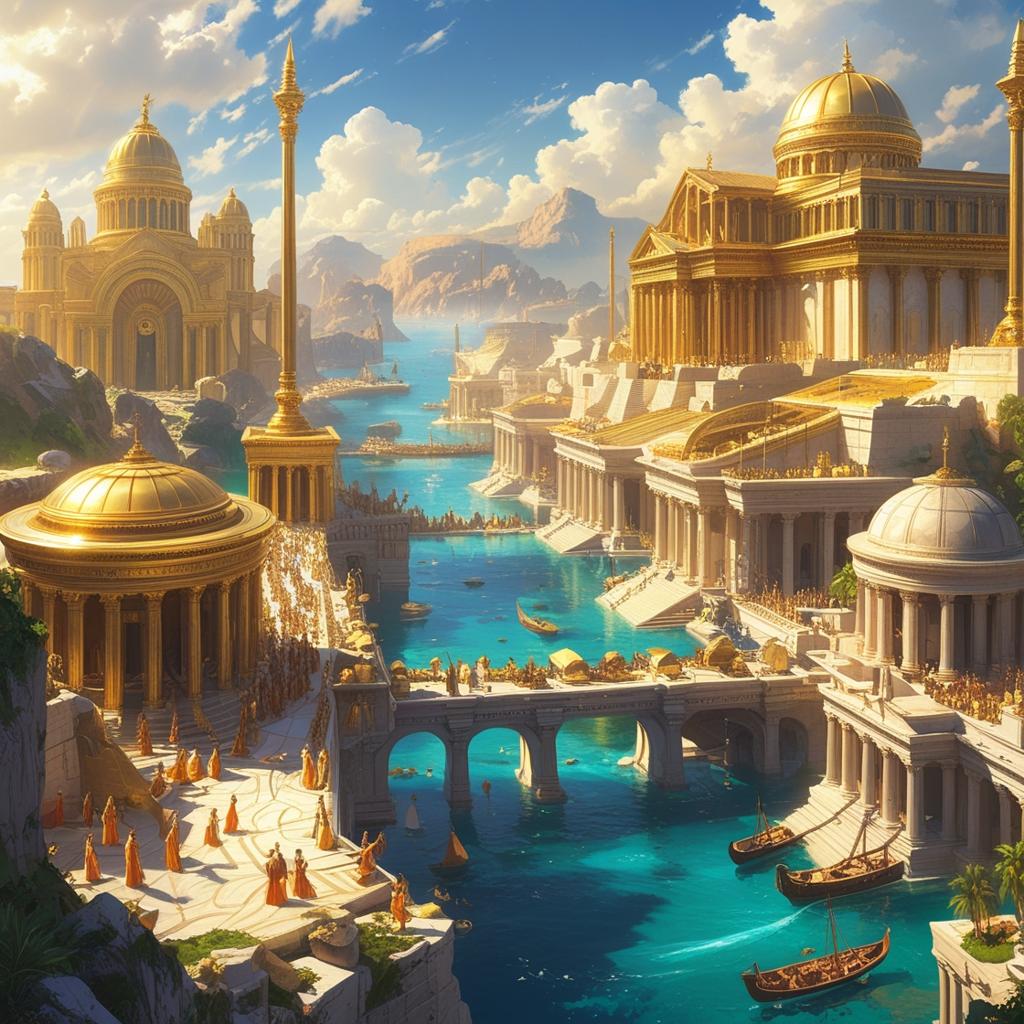
It was a magnificent kingdom surrounded by water and organized around a series of circular channels and land areas.
At its center stood an impressive royal complex containing temples, palaces, and buildings decorated with precious materials.
The people of Atlantis were described as wealthy and powerful. Their island had fertile land, valuable natural resources, and a strong maritime presence.
They constructed impressive buildings and developed a sophisticated system of transportation and communication.
One of the most fascinating details in Plato's description is the city's unusual design.
The capital contained alternating rings of land and water, connected through channels. Ships could travel through these waterways toward the central area.
Whether this description represented a real place or a philosophical imagination, it created one of the most memorable images of an ancient civilization.
The Rise of an Extraordinary Empire
Plato described Atlantis as a kingdom ruled by descendants of the god Poseidon.
According to the story, Poseidon divided the island among his ten sons, with Atlas becoming the first and most powerful king.
The island was named Atlantis after Atlas.
Under the early rulers, the civilization became increasingly wealthy and powerful.
Its people possessed large fleets and controlled territories beyond their homeland.
Atlantis eventually became a major military and political power.
However, the story also contains an important warning.
As generations passed, the people of Atlantis gradually became more interested in wealth, power, and domination.
Their original values began to disappear.
The civilization that had once been described as prosperous and well-organized started to become ambitious and aggressive.
The Great War Against Ancient Athens
According to Plato, Atlantis eventually attempted to expand its influence over other lands.
Its powerful forces moved against several territories, including ancient Athens.
However, the Athenians resisted.
In Plato's account, ancient Athens represented courage, discipline, and justice, while Atlantis increasingly represented ambition and excessive power.
Despite facing a much stronger empire, Athens managed to resist the invasion.
This conflict became one of the central events in the Atlantis story.
The account presents a powerful message: even the wealthiest and strongest civilization can become vulnerable when its people abandon their values.
The Mysterious Destruction of Atlantis
Perhaps the most fascinating part of the Atlantis legend is its sudden disappearance.
Plato described a catastrophic event involving earthquakes and floods.
According to his account, Atlantis was destroyed and sank beneath the sea in a single terrible period.
The disaster was described as happening within one day and one night.
Afterward, the surrounding waters became difficult to navigate because of mud and shallow areas.
The powerful kingdom that had once controlled enormous territories disappeared from the story.
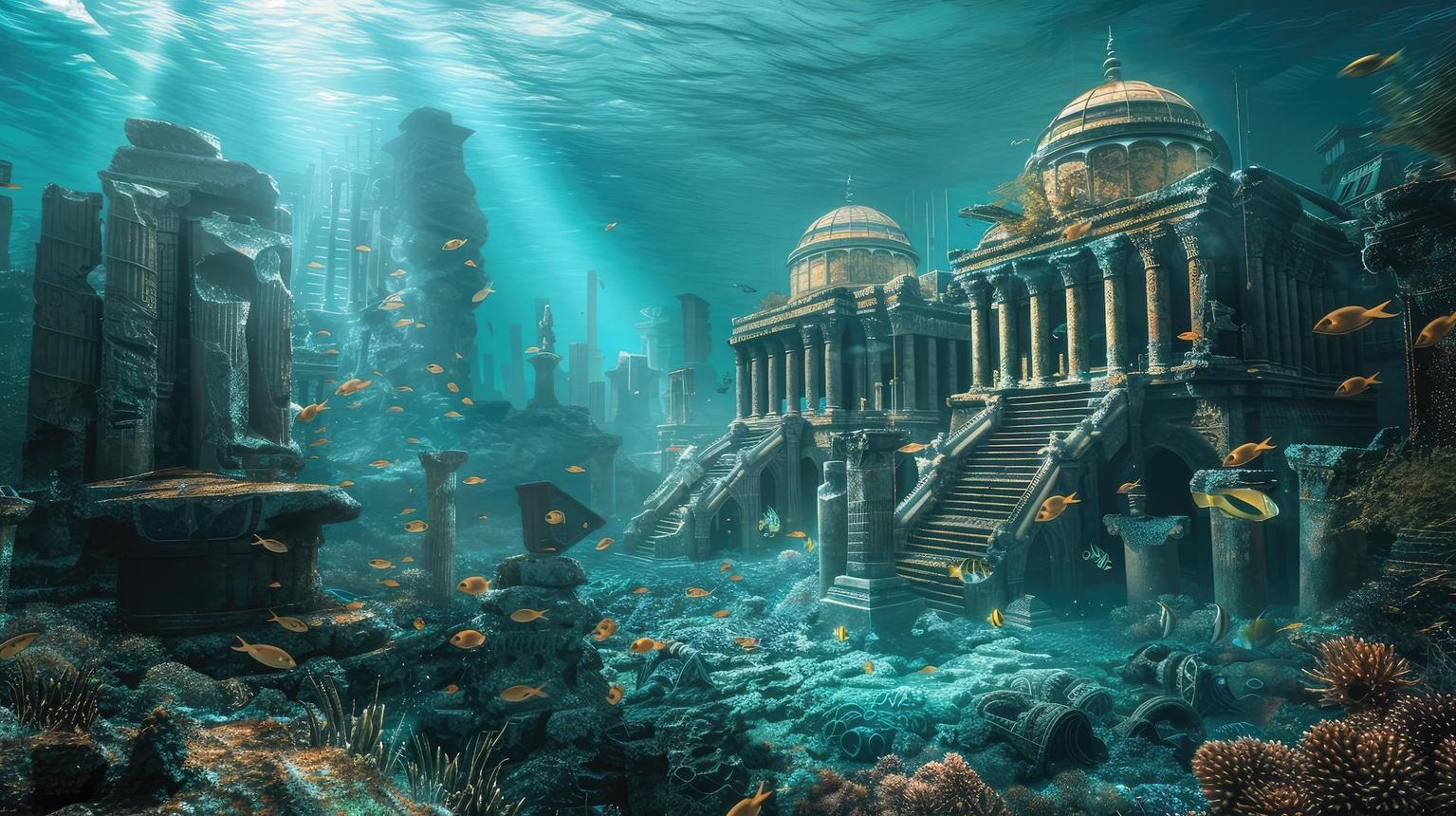
Its magnificent buildings, royal palaces, and impressive waterways were supposedly lost beneath the ocean.
But one important question remains:
Was Atlantis actually destroyed by a natural disaster, or was this simply part of Plato's philosophical story?
Where Could Atlantis Have Been Located?
Over the centuries, explorers and researchers have suggested many possible locations for Atlantis.
No location has been confirmed, but several theories have attracted attention.
1. The Atlantic Ocean
The traditional interpretation places Atlantis somewhere beyond the Strait of Gibraltar, in the Atlantic Ocean.
This idea comes from Plato's description of an island located beyond the Pillars of Heracles.
However, no confirmed archaeological remains of Atlantis have been discovered there.
2. The Island of Santorini
Another popular theory connects Atlantis with the Greek island of Santorini.
Thousands of years ago, a massive volcanic eruption destroyed much of the ancient settlement of Akrotiri.
The eruption caused widespread destruction and affected communities throughout the eastern Mediterranean.
Some researchers have suggested that memories of this disaster may have contributed to the Atlantis legend.
However, Santorini has not been proven to be Atlantis.
3. The Mediterranean Region
Some theories suggest that Plato's description may have been inspired by ancient Mediterranean civilizations and historical disasters.
These suggestions are interesting, but none has established the existence of the legendary island.
The truth is that Atlantis remains an unresolved mystery rather than a confirmed archaeological discovery.
Was Atlantis More Advanced Than Modern Civilizations?
One of the most popular ideas about Atlantis is that its people possessed technology far beyond what ancient societies should have been capable of developing.
Some modern stories describe flying machines, mysterious energy sources, advanced weapons, and extraordinary scientific knowledge.
However, these claims do not come from reliable archaeological evidence.
Plato described impressive engineering, architecture, ships, and waterways, but he did not provide scientific proof of modern-style technology.
The distinction matters because imagination and historical evidence are not the same thing.
Atlantis may be fascinating without needing to be described as a technologically superior civilization.
Why Has the Mystery Survived for So Long?
More than two thousand years have passed since Plato introduced Atlantis, yet people continue to discuss it.
The reason is simple: Atlantis combines several powerful elements.
It contains the mystery of an unknown civilization, the possibility of a forgotten history, the destruction of a powerful kingdom, and the unanswered question of whether an ancient story could contain memories of real events.
Books, documentaries, films, and archaeological discussions have kept the legend alive.
Every generation seems to discover Atlantis in a new way.
Some people search for it beneath the ocean, while others investigate ancient texts and historical disasters.
The mystery continues because there is no final answer.
What Does History Actually Tell Us?
Despite centuries of speculation, there is currently no reliable archaeological evidence proving that Atlantis existed as the powerful island civilization described by Plato.
The two dialogues of Plato remain the principal ancient sources for the story.
Many scholars interpret Atlantis as a philosophical narrative designed to explore political power, justice, ambition, and the downfall of societies.
Others have explored whether the account may have been influenced by real ancient events.
The possibility of historical inspiration is interesting, but it should not be confused with proof.
This is what makes Atlantis such an unusual subject: the legend is well documented as a story, but the civilization itself remains unverified.
Conclusion: The Civilization That Never Stops Fascinating Us
Atlantis remains one of the greatest mysteries in the history of ancient storytelling.
Was it a real island kingdom destroyed by a catastrophic natural disaster?
Was it inspired by memories of an ancient civilization?
Or was it a powerful philosophical story created by Plato to warn future generations about greed, pride, and the misuse of power?
At present, nobody can provide a definitive answer.
Perhaps the greatest mystery of Atlantis is not simply where the city disappeared, but why humanity remains so fascinated by the possibility of a lost world.
Until reliable evidence is discovered, Atlantis will remain between history and legend.
One final question remains: If Atlantis was only a story, why has it captured the imagination of humanity for more than two thousand years?
History may forget civilizations, but some mysteries refuse to disappear.
Author's Note: This article distinguishes between Plato's ancient account, modern theories, and established archaeological evidence. Atlantis has not been scientifically confirmed as a real lost civilization.








Comments 0
Sign in to join the conversation.
No comments yet. Be the first to say something.