


Introduction: How AI and Blockchain Are Changing the World
Technology is rapidly transforming the way people communicate, work, learn, and manage information. Among the most influential developments today are Artificial Intelligence (AI) and Blockchain. Artificial Intelligence enables computers to perform tasks that normally require human intelligence—such as learning from data, recognizing patterns, and making predictions. Blockchain, on the other hand, provides a decentralized digital ledger for recording and verifying information across a secure network.
Although these two technologies serve different purposes, combining them creates smarter, more transparent, and more reliable digital systems. Their integration holds major potential across banking, healthcare, education, agriculture, and cybersecurity. Let's explore how AI and Blockchain work, their real-world applications, the challenges they face, and the opportunities they offer—particularly in Pakistan.
1. What Is Artificial Intelligence (AI)?
Artificial Intelligence is a branch of computer science focused on building systems capable of performing tasks that typically require human reasoning. Modern AI systems process vast amounts of information, recognize complex patterns, understand natural language, and generate content.
Today, AI powers many everyday digital services, including:
Search engines and personalized recommendation systems
Virtual assistants and customer support chatbots
Real-time language translation tools
Facial and image recognition software
Automated fraud detection systems
AI-assisted writing, coding, and design tools
Core Areas of Artificial Intelligence
Machine Learning (ML): Allows computers to learn patterns from historical data and improve predictions without being explicitly programmed for every rule.
Deep Learning (DL): Uses multi-layered artificial neural networks to process complex inputs such as images, speech, and massive datasets.
Natural Language Processing (NLP): Enables machines to understand, interpret, and generate human language, powering chatbots and voice assistants.
Generative AI: Refers to models capable of creating original text, images, audio, video, and software code based on user prompts.
2. What Is Blockchain Technology?
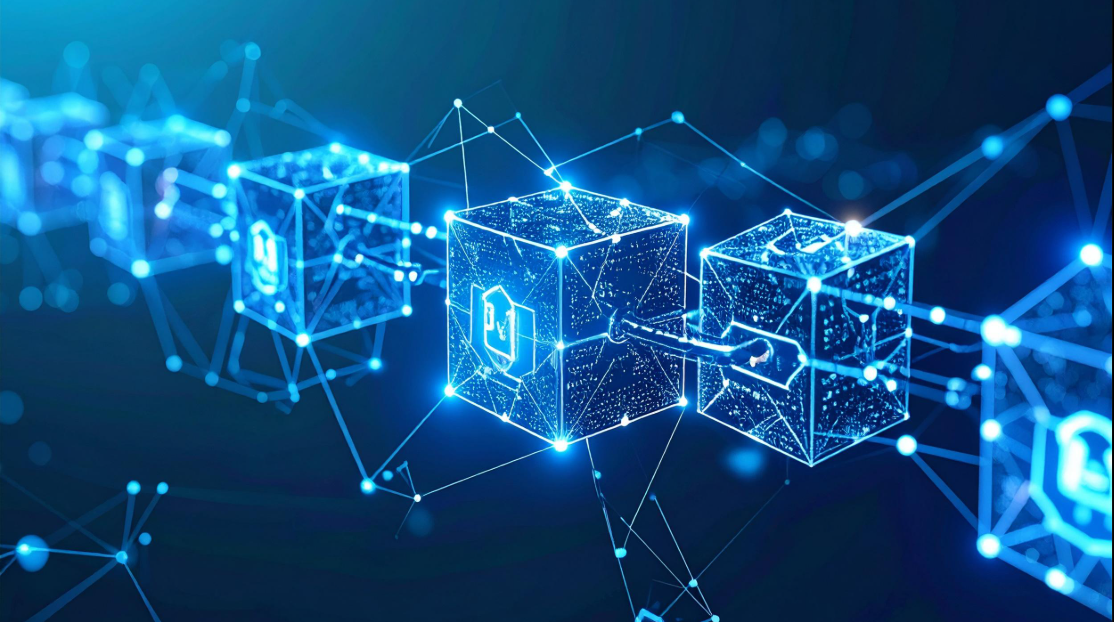
Blockchain is a distributed digital ledger that records data in connected groups called blocks. Each block contains a batch of records and is linked to the previous block using cryptography, forming a secure chain that can be shared and verified across a network. Instead of relying on a single central server, many Blockchain networks maintain synchronized copies of the ledger across multiple computers known as nodes. When a new transaction is submitted, the network validates it through an agreed consensus process before adding it to the chain.
Key Features of Blockchain
Decentralization: Record maintenance is distributed among network participants rather than controlled by a single central authority.
Transparency: Public Blockchains allow anyone on the network to view and verify transactions, while private Blockchains restrict access to authorized participants.
Cryptographic Security: Advanced encryption links records together, making unauthorized tampering immediately detectable.
Immutability: Once data is confirmed and added to the ledger, altering or deleting it becomes practically impossible depending on the network's architecture.
Smart Contracts: Self-executing programs stored on supported Blockchains that automatically carry out predefined actions once specific conditions are met.
While Blockchain is most widely known for powering cryptocurrencies like Bitcoin, its real-world utility extends to digital identity verification, supply chain tracking, and tamper-evident record management.
3. AI vs Blockchain: Key Differences
Although AI and Blockchain complement each other well, they are built to solve fundamentally different technical problems:
Feature | Artificial Intelligence (AI) | Blockchain |
Core Function | Analyzes data and generates insights | Records, stores, and verifies data |
Primary Strength | Pattern recognition and prediction | Transparency and data integrity |
Core Technology | Machine Learning and neural networks | Cryptography and distributed ledgers |
Automation Style | Automates complex cognitive decisions | Automates rule-based smart contracts |
Data Approach | Requires large datasets to learn | Secures records across distributed nodes |
In short, AI acts as the analytical brain that interprets information, while Blockchain serves as the trusted vault that keeps records secure and verifiable.
4. How Do AI and Blockchain Work Together?
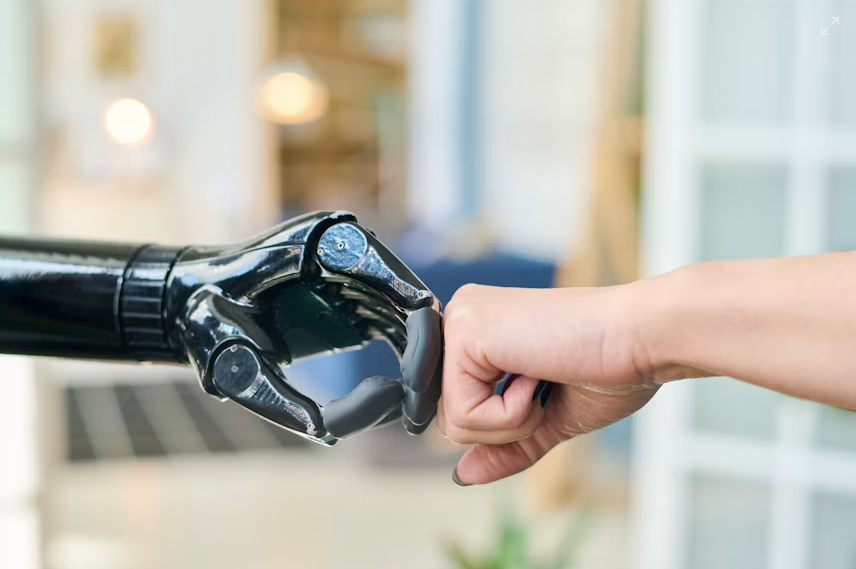
Combining AI and Blockchain bridges the gap between intelligent decision-making and trustworthy data management. Consider a company transporting fresh agricultural produce from farms to supermarkets. An AI system can analyze weather forecasts, traffic routes, and warehouse inventory to predict potential delivery delays. Simultaneously, a Blockchain network logs every milestone—when crops leave the farm, pass through cold storage, and reach retail shelves—allowing retailers and consumers to verify product origin and freshness.
Five Ways They Complement Each Other
Verifiable Training Data: Blockchain tracks the origin and history of datasets, helping ensure AI models train on authentic, untampered information.
Smarter Data Insights: AI processes complex data stored across decentralized networks to uncover actionable business patterns.
Automated Execution: AI insights can trigger smart contracts to execute payments, logistics updates, or compliance checks automatically.
AI Audit Trails: Recording AI decisions on a Blockchain makes automated systems easier to audit and trace.
Enhanced Fraud Prevention: AI flags suspicious transaction anomalies in real time, while Blockchain provides an immutable audit trail for investigation.
However, neither technology is foolproof. AI accuracy depends heavily on training data quality, and Blockchain cannot verify whether off-chain data was truthful before it was first entered into the system.
5. Real-World Applications Across Industries
Organizations worldwide are actively adopting combined AI and Blockchain solutions across several critical sectors:
Banking and Financial Services
Financial institutions process millions of transactions daily. AI monitors transaction streams to detect unusual spending behavior and prevent fraud, while Blockchain enables faster cross-border settlements and transparent ledger auditing.
Healthcare
Hospitals manage highly sensitive patient histories and diagnostic reports. AI assists doctors by analyzing medical imaging and identifying early disease markers, while Blockchain-based access logs ensure patient records are shared only with authorized medical providers—preserving privacy and compliance.
Supply Chain Management
Modern supply chains span manufacturers, shipping carriers, warehouses, and retailers. AI forecasts consumer demand and optimizes stock levels, while Blockchain tracks goods from raw material to final delivery, reducing counterfeiting and shipping disputes.
Education
AI powers adaptive tutoring platforms that tailor lessons to each student's pace. Meanwhile, universities use Blockchain to issue tamper-proof digital degrees and certificates that employers can verify instantly without manual background checks.
Cybersecurity
As digital infrastructure expands, cyber threats grow more sophisticated. AI detects unusual network traffic and emerging malware patterns in real time, while Blockchain strengthens identity management and protects critical system logs from unauthorized alteration.
6. AI and Blockchain in Pakistan
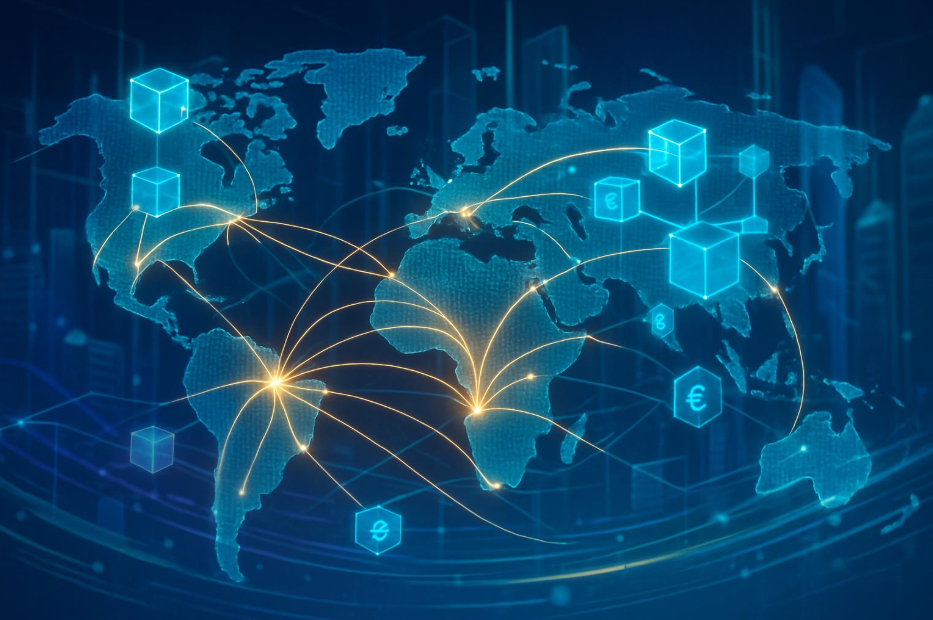
Pakistan is steadily building momentum in its digital technology sector, with growing focus on software exports, AI education, and digital public infrastructure. A major milestone is Pakistan's National Artificial Intelligence Policy 2025, approved on July 31, 2025, by the Ministry of Information Technology and Telecommunication. The policy outlines plans to build AI talent, support local research and startups, upgrade computing infrastructure, and promote ethical AI adoption.
Following this, the Islamabad AI Declaration, adopted on February 9, 2026, during Indus AI Week, reinforced Pakistan's commitment to developing sovereign, responsible, and capability-driven AI solutions.
Key Opportunities for Pakistan
FinTech and Digital Banking: AI-driven credit scoring and fraud detection paired with transparent digital payment ledgers can expand financial inclusion for unbanked populations.
Agriculture: AI tools can analyze satellite imagery, soil health, and weather trends to guide farmers, while Blockchain tracking can boost export credibility for Pakistani produce.
Tech Education and Freelancing: Students and developers who master Python, Machine Learning, and smart contract development can tap into high-demand global remote work and freelance markets.
Startups and Digital Services: Local entrepreneurs can build specialized SaaS platforms, automated logistics tools, and digital verification services tailored to regional businesses.
E-Governance: Public institutions can use Blockchain to secure land registries, academic credentials, and procurement records while using AI to streamline citizen support services.
To turn these opportunities into sustainable growth, Pakistan will need continued investment in reliable internet infrastructure, technical training, and clear regulatory frameworks.
7. Key Benefits of Integrating AI and Blockchain
When implemented thoughtfully, combining these two technologies delivers practical advantages for organizations:
Higher Data Trustworthiness: Verifiable records reduce disputes between business partners and increase confidence in automated analytics.
End-to-End Automation: Pairing AI predictions with smart contracts reduces manual paperwork and speeds up routine operations.
Stronger Accountability: Clear audit trails make it easier to trace how automated decisions were made and who accessed sensitive data.
Faster Fraud Detection: Real-time pattern recognition combined with immutable transaction histories helps catch financial and operational anomalies early.
Innovation in Digital Services: Businesses can launch new decentralized applications, automated escrow platforms, and transparent supply chain solutions
8. Challenges and Limitations
Despite their promise, adopting AI and Blockchain comes with technical and operational hurdles that organizations must plan for:

High Implementation Costs: Building and maintaining AI models and Blockchain infrastructure requires significant investment in hardware, cloud computing, and specialized talent.
Data Privacy Constraints: Because public Blockchain records are permanent, storing personal user data directly on-chain can conflict with privacy laws; sensitive data must remain encrypted off-chain.
Energy and Compute Demands: Large AI models and certain Blockchain consensus mechanisms consume substantial electricity and computing power.
Scalability Bottlenecks: High transaction volumes can slow down certain Blockchain networks, while real-time AI inference requires optimized server architecture.
AI Bias and Hallucinations: If training data contains biases or errors, AI systems will produce flawed outputs—a problem Blockchain storage alone cannot fix.
Evolving Regulations: Businesses must navigate shifting rules around data protection, digital assets, and AI governance.
Talent Shortage: Combining both fields requires multidisciplinary expertise across data science, cryptography, cybersecurity, and software architecture.
9. Essential Skills for Beginners
Students and aspiring developers interested in AI and Blockchain do not need to master everything at once. Building a strong foundation step by step is the most effective approach:
Programming Fundamentals: Start with Python (the primary language for AI and data science) and JavaScript or Solidity for Blockchain development.
Mathematics and Data Analysis: Learn basic statistics, linear algebra, and data manipulation using tools like Pandas and SQL.
Core AI Concepts: Study Machine Learning algorithms, neural networks, and prompt engineering before moving to deep learning frameworks.
Blockchain Architecture: Understand how cryptographic hashing, consensus mechanisms, digital wallets, and smart contracts work under the hood.
Security and Databases: Learn relational/NoSQL databases and basic cybersecurity principles to build safe, production-ready applications.
10. The Future of Artificial Intelligence and Blockchain
Looking ahead, the convergence of AI and Blockchain is driving research into decentralized AI networks, privacy-preserving Machine Learning, and verifiable AI-generated content. As generative media becomes widespread, Blockchain-backed digital signatures could play a vital role in proving whether images, videos, or documents are authentic.
At the same time, long-term success depends on responsible governance. Ensuring fairness, transparency, data privacy, and human oversight will remain just as important as technical breakthroughs.
Conclusion: Building a Smarter Digital Future
Artificial Intelligence and Blockchain are two foundational pillars of modern digital transformation. While AI empowers systems to analyze complex data and make intelligent predictions, Blockchain ensures that critical records remain transparent, secure, and verifiable. Together, they offer meaningful solutions across finance, healthcare, education, supply chains, and cybersecurity.
For Pakistan, embracing these technologies presents a timely opportunity to upskill young talent, empower local startups, and modernize digital services. By pairing technical innovation with reliable data, strong security, and responsible policies, businesses and individuals alike can help build a more trustworthy and connected digital future.
Recommended Reading: Beginners can start with Artificial Intelligence: A Guide for Thinking Humans by Melanie Mitchell and Blockchain Basics by Daniel Drescher to build a clear conceptual foundation before diving into coding tutorials.
References and Further Reading
Ministry of Information Technology and Telecommunication, Pakistan – https://moitt.gov.pk/
National Institute of Standards and Technology (NIST) – https://www.nist.gov/
IBM – What Is Blockchain Technology? – https://www.ibm.com/topics/blockchain





Comments 0
Sign in to join the conversation.
No comments yet. Be the first to say something.