

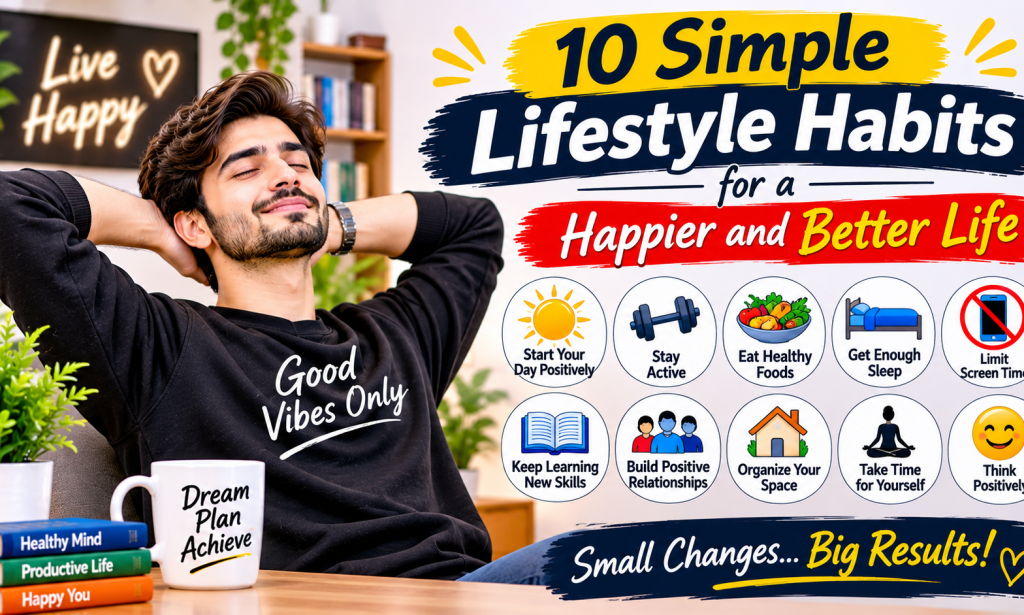
10 Simple Lifestyle Habits for a Happier and Better Life
Introduction
A good lifestyle is not always about having expensive things, visiting beautiful places, or living a luxurious life. It is about making positive choices every day and creating habits that support happiness, personal growth, and well-being.
In today's busy world, many people struggle to balance work, family, education, and personal time. Developing simple daily habits can make life more organized and enjoyable. Small improvements may seem unimportant at first, but consistent efforts can create meaningful changes over time.
Here are ten simple lifestyle habits that can help you build a more balanced and positive daily routine.
1. Start Your Day With a Positive Routine

The way you begin your morning can influence the rest of your day. Instead of immediately checking social media or rushing into daily responsibilities, take a few minutes to prepare yourself.
Wake up at a consistent time, organize your tasks, and think about what you want to accomplish. A peaceful morning routine can help you feel more prepared and focused.
You do not need an expensive planner or complicated schedule. Even a simple list of three important tasks can make your morning more productive.
2. Maintain a Balanced Daily Schedule
Time management is an important part of a healthy lifestyle. When your day is organized, it becomes easier to manage responsibilities without feeling overwhelmed.
Try to divide your time between work, education, family, hobbies, and relaxation. Avoid filling every hour with activities because personal time is also important.
A balanced schedule should be realistic and flexible. Unexpected situations can happen, so allow yourself enough time to adjust your plans.
3. Make Time for Physical Activity
Physical activity can support overall health and improve your mood. You do not necessarily need expensive gym equipment or a gym membership to stay active.
Walking, cycling, dancing, gardening, and playing outdoor games are enjoyable ways to include movement in your routine.
Choose activities that you enjoy and that suit your abilities. The goal is to make physical activity a regular and positive part of everyday life.
4. Eat a Variety of Nutritious Foods
Food plays an important role in daily energy and general well-being. A balanced eating routine includes a variety of fruits, vegetables, grains, protein sources, and other nutritious foods.
Try different homemade meals and explore healthy recipes. Drinking enough water throughout the day is also important.
Instead of following extreme food trends, focus on variety, balance, and habits that are suitable for your personal needs.
Cooking at home can also be an enjoyable activity. It allows you to learn new skills, explore different flavours, and spend quality time with family.
5. Get Enough Quality Sleep
Sleep is an important part of everyday life. A regular sleep schedule can support concentration, mood, learning, and general well-being.
Try to create a peaceful sleeping environment. Keeping your room comfortable, following a consistent bedtime, and reducing screen use before sleeping may help you relax.
Avoid staying awake unnecessarily late when you have important responsibilities the following day.
Good sleep habits can make your daily routine more manageable.
6. Reduce Unnecessary Screen Time
Technology makes communication, learning, and entertainment easier. However, spending too much time on screens can reduce the time available for other activities.
Try to use your phone with a clear purpose. Set aside time for studying, reading, outdoor activities, and conversations with family members.
You can also turn off unnecessary notifications to avoid distractions.
Social media can be useful for learning and connecting with others, but maintaining a healthy balance is important.
7. Keep Learning New Skills

Personal growth is a continuous journey. Learning something new can improve confidence, creativity, and problem-solving abilities.
You can learn graphic designing, photography, cooking, communication, video editing, or a new language.
Many free educational resources are available online. Choose a skill that matches your interests and practise regularly.
Learning does not always require a classroom. Reading books, watching educational videos, and trying new activities can also provide valuable knowledge.
8. Build Positive Relationships
Family members, friends, teachers, and colleagues can play an important role in our lives.
Good relationships are built through respect, honesty, communication, and understanding.
Make time to talk with people who matter to you. Listen carefully when others share their thoughts and avoid making quick judgments.
Supporting others and appreciating small moments can make everyday life more meaningful.
Healthy relationships also require boundaries. Respecting your own time and the needs of others helps create better connections.
9. Organize Your Living Space
Your surroundings can influence how comfortable and productive you feel.
Keeping your room, study table, and workplace organized can make everyday tasks easier. You do not need expensive furniture or decorations to create a pleasant environment.
Start with simple steps such as arranging books, cleaning your desk, organizing clothes, and removing unnecessary items.
Adding a small plant, improving lighting, or keeping your favourite items nearby can make a space more welcoming.
A clean and organized environment can also help you focus on important activities.
10. Make Time for Yourself
A busy lifestyle should not mean forgetting your personal interests.
Set aside time for activities that help you relax and enjoy life. You might read a book, listen to music, paint, explore nature, or spend time on a favourite hobby.
Personal time allows you to understand your interests and appreciate activities outside your daily responsibilities.
You should also remember that personal growth is not a competition. Everyone has different goals, responsibilities, and circumstances.
Focus on making progress at your own pace rather than constantly comparing yourself with others.
Conclusion
Building a better lifestyle does not require dramatic changes or expensive purchases. It begins with simple habits that support a balanced and meaningful daily routine.
Starting your morning positively, managing time, staying active, eating a variety of nutritious foods, getting enough sleep, learning new skills, and maintaining positive relationships can all contribute to a more enjoyable life.
Remember that consistency matters more than perfection. Choose a few habits, practise them regularly, and gradually introduce other positive changes.
A better lifestyle is created through everyday decisions. Small steps taken today can help build a happier and more organized future.






Comments 0
Sign in to join the conversation.
No comments yet. Be the first to say something.