

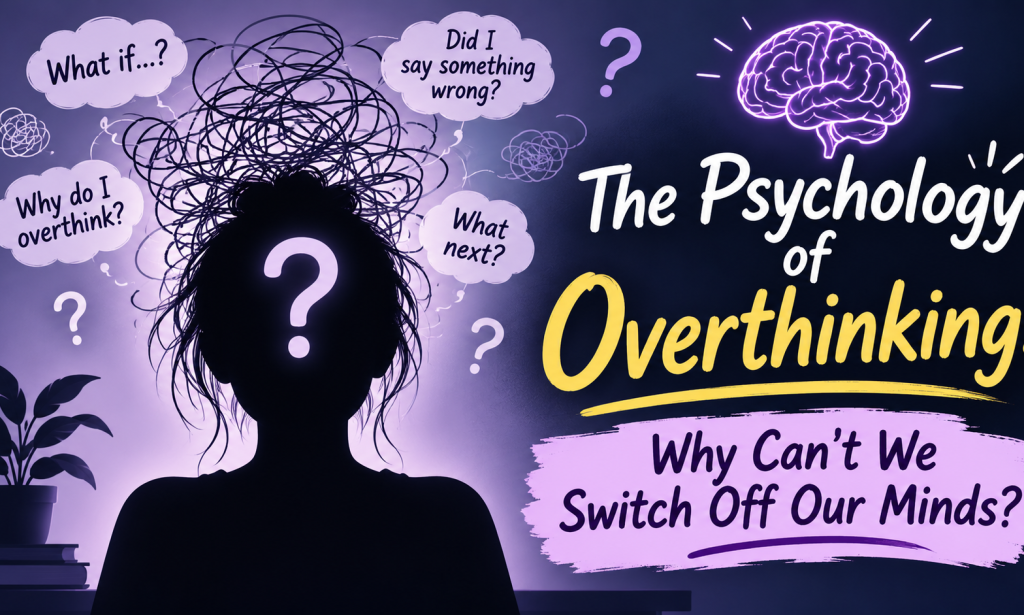
Why do we keep replaying conversations in our minds long after they end? Have you ever laid down in bed at night, replaying a conversation and wondering whether you said something wrong? Or have you ever worried about a future situation that hasn't even happened yet? If so, you're not alone. Sometimes, our minds turn the smallest thoughts into endless questions, making it difficult to relax and enjoy the present moment.
Overthinking is more than just thinking too much. It can involve repeatedly analysing past experiences, worrying about the future, and imagining situations that may never happen. Although thinking carefully can help us make better decisions, getting trapped in a cycle of repetitive thoughts can leave us feeling mentally exhausted.
But why does our brain sometimes refuse to switch off? Why do we keep thinking about things we cannot change or control? In this article, we'll explore the psychology of overthinking, understand why it happens, and discover practical ways to calm our minds and find greater peace in everyday life.
What Is Overthinking?
Overthinking happens when we think about something repeatedly without finding a solution. Instead of helping us make a decision, our thoughts keep going around in circles. We may replay past conversations, worry about making mistakes, or imagine the worst possible outcomes of future situations.
For example, imagine that you send a message to a friend, but they don't reply for several hours. You might start asking yourself questions like, "Did I say something wrong?" "Are they upset with me?" or "Have I done something to hurt them?" Before you know it, a simple situation has turned into hours of unnecessary worry.
Overthinking can happen to anyone. Sometimes, reflecting on a situation helps us understand it better. However, when repetitive thinking becomes a habit, it can make everyday life stressful. We may struggle to concentrate, make decisions, sleep peacefully, or enjoy the moments happening around us.
The important thing to remember is that not every thought deserves our attention. We cannot control every situation in life, but we can learn to respond to our thoughts in healthier ways.

The Difference Between Planning and Overthinking
Planning and overthinking may seem similar because both involve thinking about the future. However, there is an important difference between them: planning helps us find solutions, while overthinking often keeps us trapped in our worries.
When we plan, we think about what we want to achieve and the steps we need to take to reach our goals. We focus on possible solutions and prepare ourselves for different situations. Planning gives us a sense of direction and helps us feel more confident about our decisions.
Overthinking, on the other hand, happens when we repeatedly think about the same situation without making progress. Instead of finding solutions, we create more questions, imagine negative outcomes, and worry about things that may never happen.
For example, imagine that you have an important exam next week. Planning means creating a study timetable, dividing your subjects into manageable sections, and preparing for the exam step by step. Overthinking means constantly worrying about failing, imagining disappointing results, and feeling stressed without actually studying.
The difference becomes clearer when we look at how these two habits affect us. Planning encourages action, while overthinking can leave us feeling confused, anxious, and mentally exhausted.

A simple way to tell the difference is to ask yourself: "Is my thinking helping me take action, or is it making me more worried?"
If your thoughts are helping you find solutions and move forward, you are probably planning. But if you keep repeating the same worries without reaching a solution, you may be overthinking.
Remember, the goal is not to stop thinking about the future. It is to learn how to prepare for it without allowing fear and worry to control the present.
How Uncertainty Affects Our Thoughts
Have you ever felt worried about something simply because you didn't know what was going to happen? Perhaps you were waiting for an important message, thinking about your future, or wondering whether you had made the right decision. Sometimes, not knowing the answer can be more stressful than facing the situation itself.
Uncertainty is one of the reasons our minds can become trapped in a cycle of overthinking. When we don't know what will happen next, our brains may try to fill in the missing information. We begin imagining different possibilities, searching for answers, and preparing ourselves for outcomes that may never happen.
For example, imagine that you have applied for a job and are waiting for a response. You might start wondering, "Will I get selected?" "What if they reject me?" "Was my interview good enough?" or "What will I do if I don't get the job?" These questions can continue running through your mind, even when there is nothing more you can do at that moment.
Sometimes, our minds focus on negative possibilities because we want to protect ourselves from disappointment. However, thinking about every possible outcome cannot guarantee that everything will go according to our plans.
Uncertainty can also make decision-making difficult. We may keep comparing our options, worrying about making the wrong choice, or waiting until we feel completely confident before taking the next step. As a result, we can become mentally exhausted without moving forward.

So, how can we deal with uncertainty?
The first step is to accept that we cannot know everything in advance. Life will always include situations that are beyond our control. Instead of trying to predict every outcome, we can focus on what we know, what we can do today, and what we need to leave for the future.
You don't need to have all the answers to take the next step.Sometimes, peace begins when we stop demanding certainty from situations that cannot provide it.
Why Can't We Switch Off Our Minds?

Have you ever tried to sleep, only to find yourself thinking about everything that happened during the day? You might remember an awkward conversation, worry about tomorrow's responsibilities, or imagine situations that may never happen. Even when your body is tired, your mind seems unwilling to rest. But why does this happen?
The human brain constantly processes information, solves problems, remembers experiences, and prepares for the future. Thinking is a natural part of being human. However, sometimes our thoughts become repetitive, making it difficult to relax and focus on the present moment.
1. Our Brain Wants to Protect Us
One reason we overthink is that our brains try to identify possible problems before they happen. This can help us prepare for challenges, but sometimes we become too focused on potential dangers.
For example, before an important interview, you might imagine forgetting your answers, making mistakes, or being rejected. You may believe that thinking about every possible problem will help you avoid failure. Instead, it can leave you feeling anxious before the interview even begins.
2. We Struggle With Uncertainty
Not knowing what will happen next can make us uncomfortable. When we cannot find clear answers, we may repeatedly analyse situations in an attempt to gain a sense of control.
We might ask ourselves, "What if things go wrong?" "What if I make the wrong decision?" or "What if people misunderstand me?" Unfortunately, thinking about these questions repeatedly does not always bring us closer to an answer.
Sometimes, accepting that we cannot control every outcome is more helpful than trying to predict the future.
3. Past Experiences Influence Our Thoughts
Our past experiences can also influence how we think about the present and future. If we have experienced disappointment, rejection, or failure, we may become more cautious about similar situations.
For instance, someone who has been hurt by a friend might constantly worry about losing other friendships. They may analyse every message, conversation, or change in behaviour, searching for signs that something is wrong.
Although these thoughts may come from a desire to protect ourselves, constantly revisiting painful experiences can make it harder to enjoy our present relationships.
4. Stress Makes It Difficult to Relax
When we experience stress, our minds may keep returning to the problems that concern us. Work, studies, family responsibilities, financial worries, and personal expectations can all contribute to mental pressure.
Even when we finally have time to rest, our thoughts may continue moving from one concern to another. This can affect our concentration, mood, and ability to fall asleep.
Taking breaks, maintaining a regular sleep routine, and talking to someone we trust may help us manage stress more effectively.
5. We Mistake Thinking for Solving Problems
Sometimes, we believe that if we think about a problem long enough, we will eventually find the perfect solution. We replay conversations, reconsider decisions, and imagine different outcomes, hoping to feel completely certain.
However, there is a difference between useful reflection and repetitive thinking. Reflection helps us learn from our experiences, while overthinking can keep us focused on the same questions without helping us move forward.
Instead of asking the same question repeatedly, try asking yourself, "Is there anything useful I can do about this situation right now?"
If the answer is yes, take one small step. If the answer is no, practice allowing the thought to pass without giving it more attention.
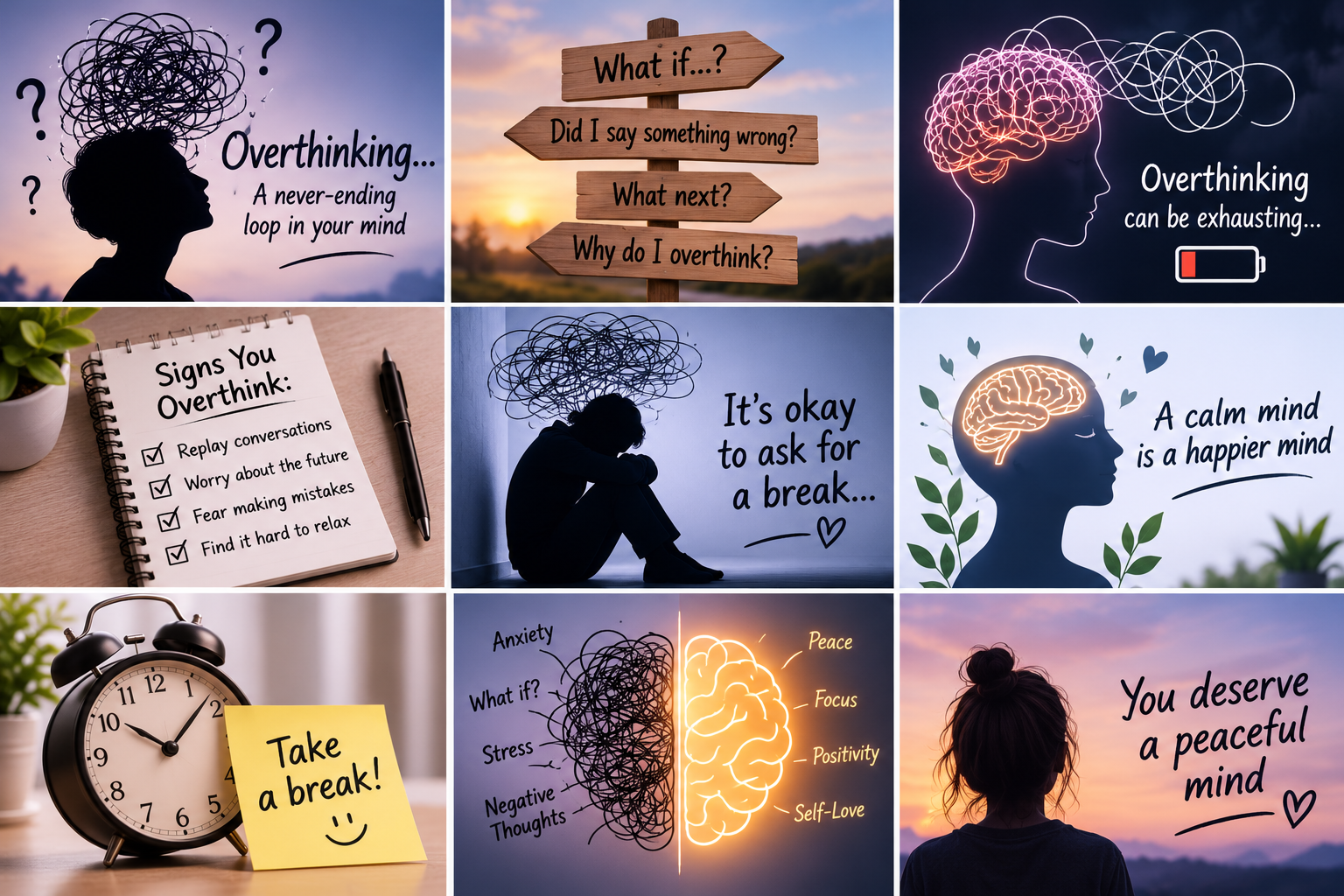
Learning to Give Your Mind a Break
The truth is that we cannot completely switch off our brains, nor do we need to. Our goal is to develop a healthier relationship with our thoughts.
We can learn to notice our worries without automatically believing every thought, accept that some questions have no immediate answers, and bring our attention back to what is happening around us.
Sometimes, the solution is not to think harder but to recognize when we have thought enough.
Practical Ways to Manage Repetitive Thinking
Repetitive thinking can make even simple situations feel complicated. We may find ourselves replaying conversations, worrying about future events, or asking the same questions without finding any answers. Although we cannot control every thought that enters our minds, we can learn to respond to our thoughts in healthier ways.
The goal is not to stop thinking completely. Instead, it is to prevent repetitive thoughts from controlling our time, emotions, and daily lives. Here are five practical ways to begin.
1. Recognize When Your Thoughts Become Repetitive
The first step is to notice when you are thinking about the same situation again and again. Ask yourself whether your thoughts are helping you find a solution or simply increasing your worries.
For example, thinking about how to improve your performance after a job interview can be useful. However, repeatedly analysing every word you said without learning anything new may leave you feeling exhausted.
When you notice this pattern, gently remind yourself that you have already thought about the situation and do not need to solve it again right now.
2. Focus on What You Can Control
Many worries come from situations we cannot fully control, such as other people's opinions, future events, or decisions that have already been made.
Instead of spending hours imagining different outcomes, divide your concerns into two categories: things you can control and things you cannot.
You may not be able to control whether you get a job, but you can prepare for an interview, improve your skills, and apply for other opportunities.
When you shift your attention from what might happen to what you can do, you give yourself a chance to move forward.
3. Write Your Thoughts Down
Sometimes, our minds feel crowded because we are trying to remember too many worries at once. Writing your thoughts on paper or in your phone's notes app can help you organize them.
Write down what is worrying you, why it concerns you, and whether there is any action you can take.
For example, if you are worried about an upcoming exam, you can write down the subjects you need to revise and create a simple study plan. This turns a general worry into a task you can manage.
If there is no immediate solution, remind yourself that you can return to the concern later rather than thinking about it all day.
4. Bring Your Attention Back to the Present
Overthinking often pulls us into the past or future. We replay things that have already happened or imagine situations that have not happened yet.
One way to interrupt this pattern is to focus on the present moment.
Try taking a few slow, comfortable breaths. Notice the sounds around you, feel your feet touching the floor, or observe the objects in the room. You can also take a short walk, prepare a meal, or do another activity that requires your attention.
These simple practices can help redirect your focus when your mind becomes caught in repetitive thoughts. You do not have to force every thought away; simply practice returning your attention to what you are doing.
5. Learn to Accept That You Cannot Know Everything
One of the biggest challenges for people who overthink is accepting uncertainty. We often want guarantees that our decisions will be right, our relationships will remain strong, and our future will turn out as planned.
Unfortunately, life does not always provide clear answers.
Instead of repeatedly asking, "What if something goes wrong?" try asking, "If something unexpected happens, how can I handle it?"
This small change can help you focus on your ability to respond to challenges rather than trying to predict every possible outcome.
Remember, you do not need to understand everything today or prepare for every possibility to move forward with your life.
Give Yourself Permission to Pause
Managing repetitive thinking takes practice. Some days, you may find it easier to redirect your thoughts, while on other days, worries may return again and again. This does not mean you have failed.
Be patient with yourself and celebrate small improvements. If repetitive thoughts regularly interfere with your sleep, relationships, work, or daily activities, consider speaking with a qualified mental health professional for additional support.
You may not be able to control every thought that enters your mind, but you can gradually learn which thoughts deserve your attention and which ones you can let pass.

Conclusion: Learning to Make Peace With Your Mind
Our minds are powerful, but sometimes we become so lost in our thoughts that we forget to enjoy the life happening around us. We replay the past, worry about the future, and spend hours searching for answers to questions that may not even have solutions.
The psychology of overthinking reminds us that thinking more does not always mean understanding more. Sometimes, the harder we try to control every situation, the more mentally exhausted we become.
Learning to manage overthinking does not happen overnight. It begins with small steps: recognizing repetitive thoughts, focusing on what we can control, accepting uncertainty, and allowing ourselves to take a break from constant worry.
We must also remember that not every thought reflects reality, and not every fear will come true. We can acknowledge our worries without allowing them to make every decision for us.
Life will always bring unanswered questions, unexpected changes, and moments of uncertainty. We cannot predict everything that will happen tomorrow, but we can choose to give today the attention it deserves.
Sometimes, peace of mind begins when we stop trying to figure everything out and start allowing ourselves to live.
You do not need to have everything figured out to move forward. Take a breath, trust yourself to handle life's challenges one step at a time, and remember that your mind deserves rest just as much as your body does.







Comments 0
Sign in to join the conversation.
No comments yet. Be the first to say something.