

1. What is a Second Brain?
A second brain is a personal knowledge management system that stores and organizes information digitally, allowing individuals to access their notes, ideas, and resources anytime. Coined by productivity expert Tiago Forte, the concept emphasizes leveraging technology to augment human memory and cognition.
In essence, a second brain acts as an external repository where you can capture everything from meeting notes and project plans to articles and random ideas. This digital brain helps you declutter your mind, ensuring that important information is never lost and is easily accessible when needed.
With the exponential growth of digital content, managing information has become a challenge. A second brain provides a structured approach to handle this influx, ensuring that you can focus on creativity and execution rather than information retrieval.
2. Why You Need a Second Brain in the Digital Age.
In today’s fast-paced digital world, information overload is a common challenge. Emails, social media, articles, and meetings bombard us with data daily. A second brain helps manage this information efficiently, reducing stress and enhancing productivity.
By offloading information to a digital system, you free up mental space for critical thinking and creativity. This system also ensures that you have a well-organized archive of knowledge, making it easier to reference past work, ideas, and research.
Furthermore, a second brain promotes continuous learning and development. By systematically capturing and reviewing information, you can build on your knowledge, generate new insights, and improve decision-making processes.
3. Key Tools to Build Your Second Brain.
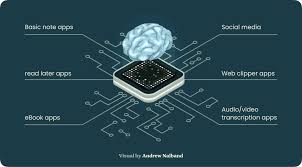
Several digital tools can help you build an effective second brain, each offering unique features to capture, organize, and retrieve information seamlessly.
- Notion: A versatile tool that combines note-taking, project management, and database functionalities. Its customizable templates make it ideal for creating a personalized second brain system.
- Evernote: Known for its powerful note-taking and organization capabilities, Evernote allows users to capture notes, web clippings, and documents efficiently.
- Roam Research: A favorite among knowledge workers for its bidirectional linking, enabling users to connect ideas and build a networked thought system.
- Obsidian: Offers a local-first approach with markdown files, providing flexibility and control over your data, along with excellent linking and graph visualization features.
- Google Drive: A simple yet effective tool for storing documents, spreadsheets, and other files, with easy accessibility and sharing options.
Choosing the right tool depends on your workflow, preferences, and the complexity of your second brain system.
4. Steps to Create Your Second Brain System.
Building a second brain involves several steps to ensure that the system is functional, scalable, and tailored to your needs.
- Capture: Collect information from various sources, including articles, books, meetings, and personal thoughts. Use tools like web clippers, voice memos, and quick notes to ensure nothing is missed.
- Organize: Structure your captured information using categories, tags, or folders. The PARA method (Projects, Areas, Resources, Archives) is a popular framework for organizing digital content efficiently.
- Process: Review and refine your captured information regularly. Highlight key points, summarize articles, and connect related ideas to build a cohesive knowledge base.
- Retrieve: Ensure that your second brain allows for quick and easy retrieval of information. Utilize search functionalities, tags, and links to access data when needed.
- Review: Schedule regular reviews to update and clean your second brain. Weekly reviews help maintain the system’s relevance and usability, ensuring that your digital brain evolves with your needs.
5. Benefits of Using a Second Brain.
A well-maintained second brain offers numerous benefits, transforming the way you work, learn, and create.
- Enhanced Productivity: By organizing information efficiently, you spend less time searching for data and more time focusing on critical tasks.
- Improved Creativity: Access to a rich repository of ideas and references fosters creativity, allowing you to generate innovative solutions and content.
- Better Knowledge Retention: Regularly capturing and reviewing information helps reinforce learning, improving memory retention and understanding.
- Stress Reduction: With a reliable system to manage information, you experience less mental clutter and stress, leading to better mental health and focus.
- Scalable Growth: As your knowledge base grows, a second brain scales with you, providing a sustainable solution for managing increasing amounts of information.

You must be logged in to post a comment.