


In an era where mobile commerce dominates the digital marketplace, Progressive Web Apps (PWAs) are emerging as a game-changing solution for e-commerce businesses. Combining the best of web and mobile applications, PWAs deliver seamless, fast, and engaging experiences that can significantly boost user satisfaction and sales. This article explores how PWAs are revolutionizing e-commerce and why they represent the future of mobile engagement.

1. What Are Progressive Web Apps (PWAs)?
PWAs are web applications that offer a native app-like experience directly through a browser. Built using modern web technologies such as HTML, CSS, and JavaScript, PWAs bridge the gap between traditional websites and mobile apps.
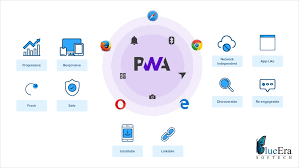
Key Features of PWAs:
- Responsive Design: Optimized for any device and screen size.
- Offline Functionality: Accessible even without an internet connection.
- App-Like Performance: Fast load times and smooth user interactions.
- No Installation Required: Users can access PWAs directly via a browser.
2. Why PWAs Are a Game-Changer for E-Commerce
A. Superior Performance
PWAs load quickly, even on slow networks, reducing bounce rates and improving user retention.
B. Enhanced User Experience (UX)
PWAs provide a consistent and intuitive experience, leading to higher customer satisfaction.
C. Increased Accessibility
With their offline capabilities, PWAs allow users to browse products and add items to their carts without requiring an active internet connection.
D. Cost-Effective Development
Unlike native apps, which require separate versions for iOS and Android, PWAs are developed once and work across all platforms.
E. Improved SEO
PWAs are indexable by search engines, boosting visibility and driving organic traffic.
3. Key Features of PWAs in E-Commerce
A. Offline Shopping
- How It Works: PWAs use service workers to cache data, enabling users to browse and add products to their cart offline.
- Example: Flipkart’s PWA allows users to continue exploring products during connectivity issues.
B. Push Notifications
- Benefit: Keeps customers informed about offers, updates, and order status.
- Example: PWAs can send real-time notifications without requiring a mobile app installation.
C. Add-to-Home Screen Option
- Benefit: PWAs can be saved to a user’s home screen, acting like a native app.
- Example: Starbucks’ PWA offers a home-screen shortcut for instant access.
D. Lightning-Fast Speed
- Benefit: Reduces loading times, even on slow connections, improving conversion rates.
- Example: Pinterest’s PWA reduced load times by 40%, leading to a 44% increase in user engagement.
E. Secure Transactions
- How It Works: PWAs are served over HTTPS, ensuring secure data transfer during payments.
4. Benefits of PWAs for E-Commerce Businesses
A. Higher Conversion Rates
With faster load times and an engaging interface, PWAs significantly improve conversion rates.
B. Reduced Development Costs
PWAs eliminate the need for multiple platform-specific apps, saving time and money.
C. Broader Reach
PWAs are accessible to users across devices and operating systems, expanding market reach.
D. Better Retention Rates
Push notifications and offline capabilities keep users engaged, even when they’re not actively browsing.
E. Simplified Maintenance
Updates are automatically applied to PWAs, unlike native apps that require manual updates.
5. Examples of Successful E-Commerce PWAs
A. AliExpress
- Results: Increased conversion rates for new users by 104% and time spent per session by 74%.
B. Lancôme
- Results: 17% increase in conversions and a 53% increase in mobile sessions.
C. Trivago
- Results: Achieved a 150% increase in user engagement through its PWA.
6. How to Implement PWAs in E-Commerce
A. Choose the Right Framework
Popular frameworks for building PWAs include:
- React
- Angular
- Vue.js
B. Focus on Core Features
Ensure your PWA includes essential e-commerce functionalities:
- Product catalogs
- Shopping carts
- Secure payment gateways
- Customer accounts
C. Optimize for Performance
- Minimize load times by compressing images and using lazy loading.
- Leverage service workers for caching and offline support.
D. Test Across Devices
Ensure your PWA performs consistently across all devices and screen sizes.
E. Monitor and Optimize
Use tools like Google Lighthouse to measure performance and identify areas for improvement.

7. Challenges of PWAs in E-Commerce
A. Limited Device Capabilities
PWAs may lack access to certain device features compared to native apps.
B. Browser Compatibility
Not all browsers fully support PWA features, though this is improving.
C. Resistance to Change
Customers accustomed to traditional apps may take time to adopt PWAs.
D. Security and Privacy Concerns
Handling sensitive data requires robust security measures.
8. The Future of PWAs in E-Commerce
A. Deeper Integration with AI and Machine Learning
AI will enable smarter recommendations and predictive shopping experiences in PWAs.
B. Voice Commerce Integration
PWAs will support voice-activated searches and purchases, enhancing accessibility.
C. Greater Customization
Advanced frameworks will allow highly personalized PWA experiences for users.
D. Wider Adoption
As browser support improves and more businesses recognize their value, PWAs will become standard in e-commerce.
Conclusion
Progressive Web Apps are revolutionizing e-commerce by delivering fast, reliable, and engaging mobile experiences. With benefits such as lower development costs, broader accessibility, and enhanced user engagement, PWAs are an ideal solution for businesses looking to thrive in a mobile-first world.






Comments 0
Sign in to join the conversation.
No comments yet. Be the first to say something.