

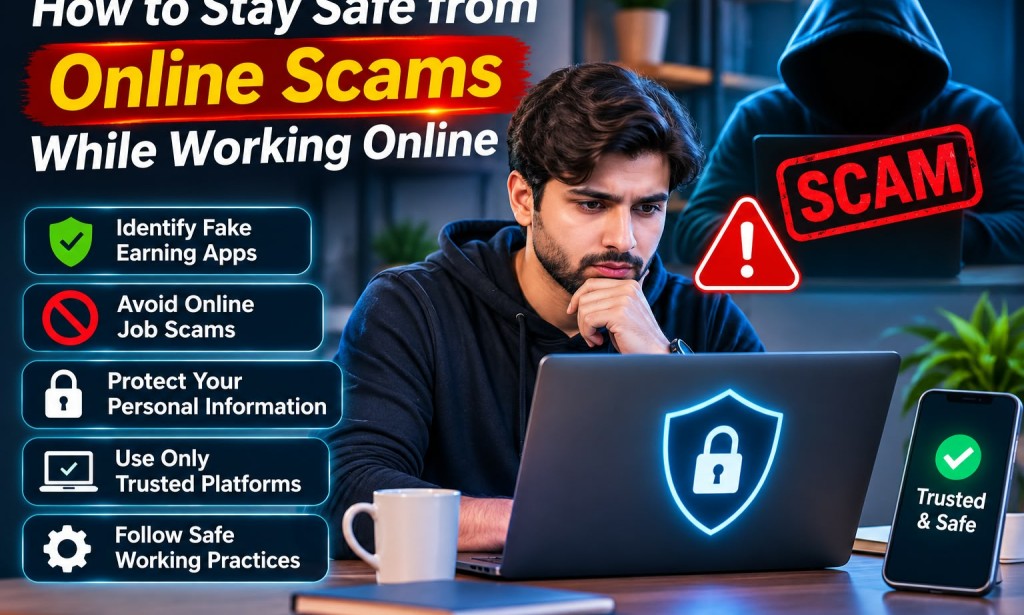
How to Stay Safe from Online Scams While Working Online
Introduction
Working online has become a popular way for people to earn money, learn new skills, and build a career. Students, freelancers, business owners, and beginners can find many opportunities through the internet. People can work from home, communicate with international clients, and provide services without travelling to an office.
However, the internet also has risks. Many scammers create fake job offers, earning apps, websites, and investment opportunities to trick people. They may promise high income for very little work or ask users to pay registration fees before receiving a job.
For beginners, it can be difficult to identify which opportunities are genuine. This is why learning about online safety is important. By following a few simple rules, people can protect their money, personal information, and online accounts.
1. Learn to Identify Fake Earning Apps
One common online scam involves fake earning applications. These apps promise users money for watching advertisements, reading articles, clicking links, or completing simple activities.
Some platforms may display a growing balance to encourage users to continue working. However, when users try to withdraw their earnings, they may be asked to pay a fee or invite more people.
Before joining an earning app, check its official website, company information, payment rules, and independent user reviews. Search for genuine withdrawal experiences rather than trusting screenshots posted by the platform itself.
Be especially careful when an app promises unusually high daily earnings for almost no effort. Real online work usually requires time, skills, or meaningful tasks.
2. Avoid Online Job Scams
Fake job advertisements are another common problem. Scammers may publish attractive offers on social media, messaging groups, and job websites.
They sometimes use well-known company names to make their offers look trustworthy. They may also contact people directly and offer jobs without interviews or proper discussions.
Before accepting an online job, check the employer's official website and contact information. Look for a clear job description, payment details, responsibilities, and a professional hiring process.
Never send money to someone simply because they promise to provide a job. Genuine employers generally do not require applicants to pay a fee to receive ordinary employment.
3. Protect Your Personal Information
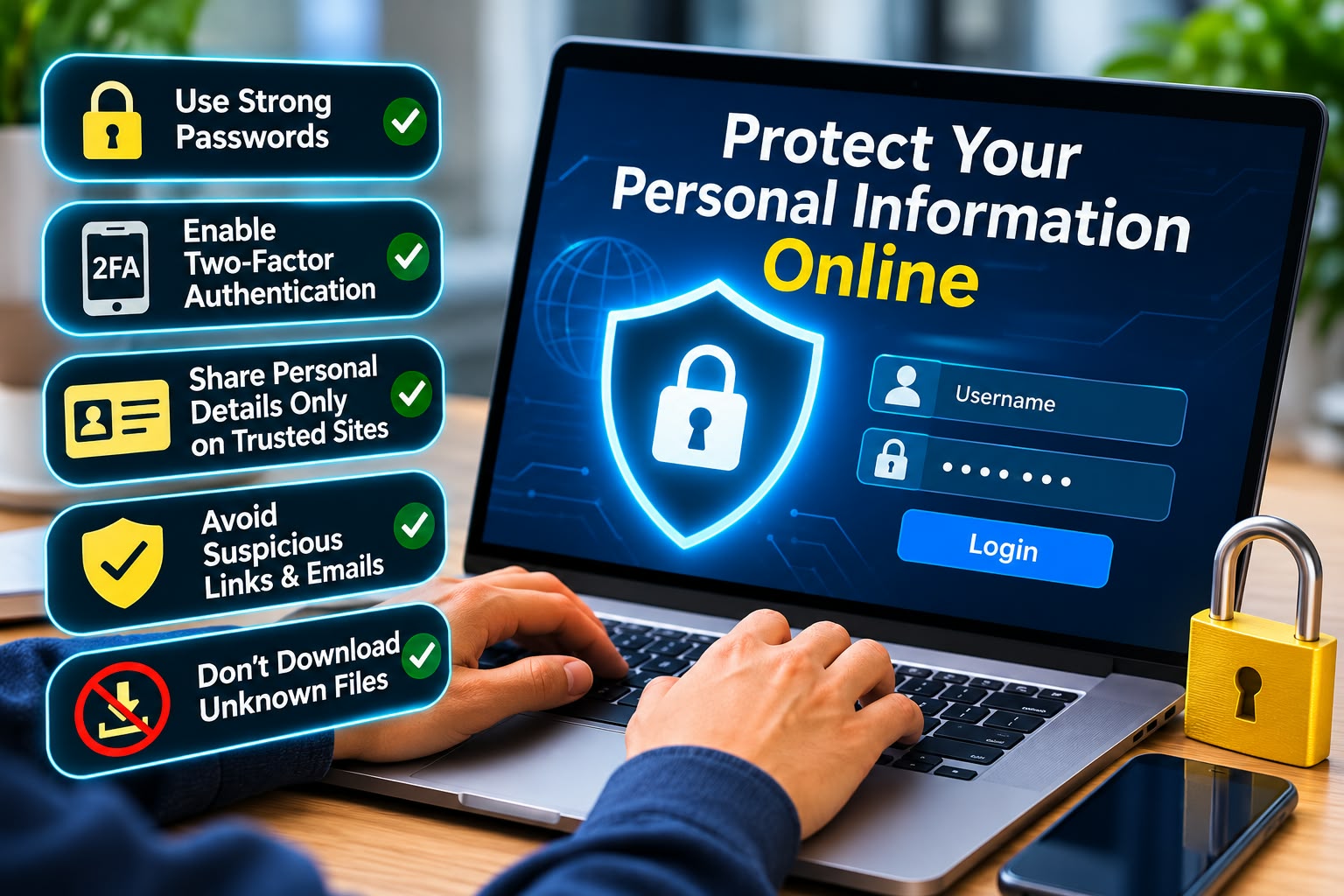
Personal information is valuable. Your email address, phone number, identity documents, bank details, and passwords should be protected.
Scammers may pretend to be customer support representatives or payment service providers. They can ask users to share verification codes, passwords, or account details.
Never share an OTP or password with another person. Use different passwords for important accounts and enable two-factor authentication whenever possible.
Avoid uploading identity documents to unknown websites. If a legitimate payment service requires identity verification, access it through its official website or application and read its privacy policy first.
4. Use Trusted Websites and Platforms
Before creating an account on a website, research the platform carefully. Check when the company started, what services it offers, and whether it provides clear contact information.
Read the terms and conditions, privacy policy, payment policy, and withdrawal requirements. These details can help you understand how the platform works.
For freelance work, use established marketplaces and communicate through their official systems whenever possible. Do not move a transaction outside a platform if doing so removes your payment protection.
Remember that a professional-looking website does not automatically prove that a business is genuine. Always do your own research before trusting a new platform.
5. Be Careful with Payment and Withdrawal Offers
Some online platforms display earnings but make withdrawals difficult. They may introduce unexpected conditions, such as paying a processing fee, purchasing a membership, or reaching an unrealistic referral target.
Before spending time on a platform, understand its minimum withdrawal amount, available payment methods, service charges, and verification requirements.
Never pay an unknown person to release money that you supposedly earned. Do not share your banking password, card PIN, or payment account OTP.
If you are working with a new client, agree on the price, deadline, and payment method before starting the work. Keep written records of important agreements.
6. Recognize Suspicious Links and Messages
Scammers often send messages containing links that look similar to official websites. These links may lead to fake login pages designed to steal passwords.
Check the website address carefully before entering any personal information. Be suspicious of messages that create urgency, such as claims that your account will be blocked immediately unless you click a link.
Avoid downloading unknown files or applications sent by strangers. These files may contain harmful software that can affect your device.
If you receive a suspicious message from a company, visit its official website separately and contact its support team to confirm whether the message is genuine.
7. Keep Your Devices and Accounts Secure
Online safety is not only about choosing trustworthy websites. Your phone and computer also need protection.
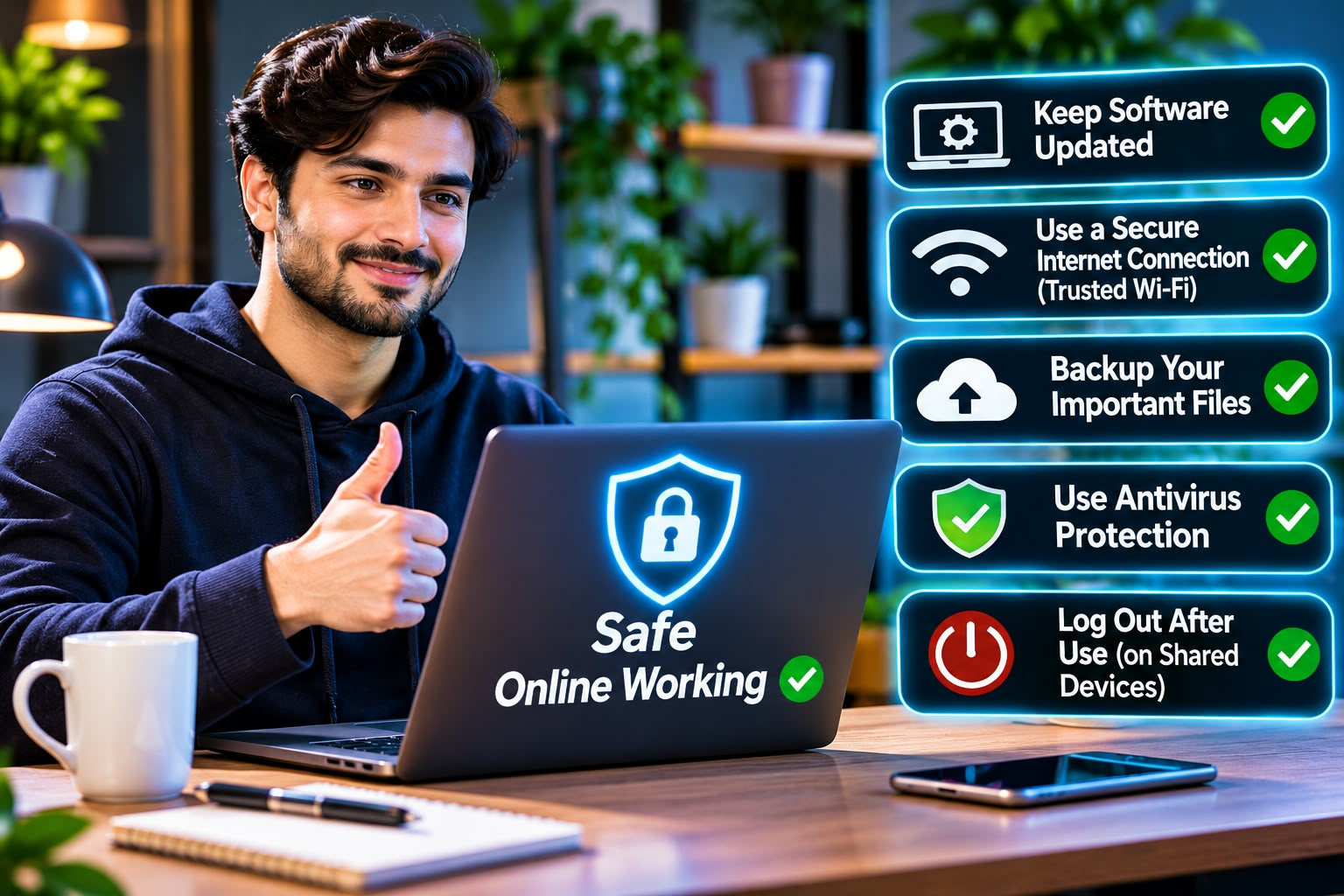
Keep your operating system, browser, and applications updated. Updates often include security improvements that help protect devices against new threats.
Use a screen lock on your phone and computer. Avoid logging into important accounts on public computers, and always log out when using a shared device.
Make sure your important files are backed up. If you notice unusual account activity, change your password immediately and contact the relevant service provider.
8. Research Before Trusting Online Opportunities
A little research can prevent major problems. When you find a new earning opportunity, search for its name along with words such as review, complaint, payment proof, and scam.
Do not depend on only one review. Some reviews may be fake or sponsored. Compare information from different sources and look for clear evidence.
Ask questions before joining. How does the company earn money? What work will you perform? Who pays you? What are the withdrawal conditions?
If the answers are unclear, do not rush into registration. It is better to miss a questionable opportunity than to lose your money or personal information.
9. What to Do If You Encounter an Online Scam
If you think you have encountered a scam, stop communicating with the suspicious person or website.
Do not send additional money or verification codes. Save relevant messages, screenshots, transaction records, and website addresses as evidence.
If you shared a password, change it immediately. If you shared banking or payment information, contact your bank or payment provider through its official contact details.
You can also report suspicious activity to the relevant platform and appropriate cybercrime authorities in your country.
Acting quickly may help reduce the damage and protect other people from the same scam.
Conclusion
Working online can provide valuable opportunities, but safety should always come first. Fake earning apps, dishonest job advertisements, suspicious links, and requests for personal information can put beginners at risk.
The best way to stay safe is to research every opportunity, use trusted platforms, protect passwords, avoid advance payments, and understand withdrawal rules before starting work.
Online success does not happen overnight. Building useful skills, gaining experience, and choosing genuine opportunities is a much safer approach than chasing unrealistic earning promises.
By developing good online habits, anyone can make better decisions and enjoy the benefits of working on the internet with greater confidence.






Comments 0
Sign in to join the conversation.
No comments yet. Be the first to say something.