

Introduction
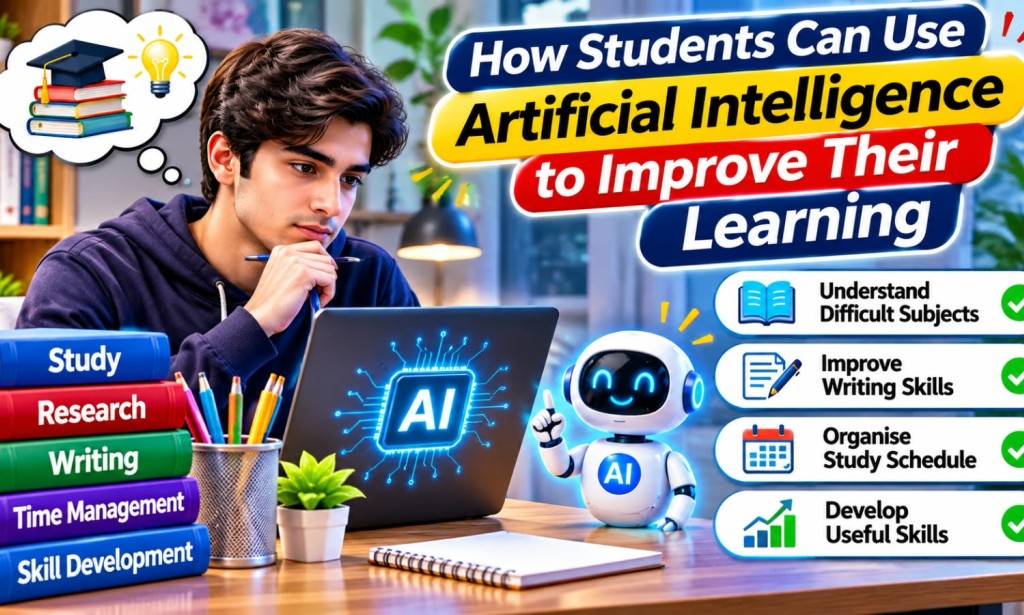
Artificial Intelligence (AI) is changing the way students learn and study. Today, students can use AI tools to understand difficult topics, improve their writing, organise their study schedules, and find new learning ideas. These tools can make studying easier when they are used correctly. However, AI should support students' own thinking instead of doing all their work for them. In this article, we will explore practical ways students can use artificial intelligence to improve their learning and develop useful skills for the future.
1. What Is Artificial Intelligence?
Artificial Intelligence, commonly called AI, is technology that allows computers to perform tasks that usually require human intelligence. These tasks include answering questions, understanding language, analysing information, and helping people solve problems.
Students can use AI tools as learning assistants. For example, if a student does not understand a science topic, an AI tool can explain it using simple language and examples. It can also suggest practice questions to help the student remember important information.
However, AI is not always correct. Students should check important information with textbooks, teachers, and reliable educational websites. AI should be used as a helpful learning tool, not as a replacement for independent thinking.
2. Use AI to Understand Difficult Topics
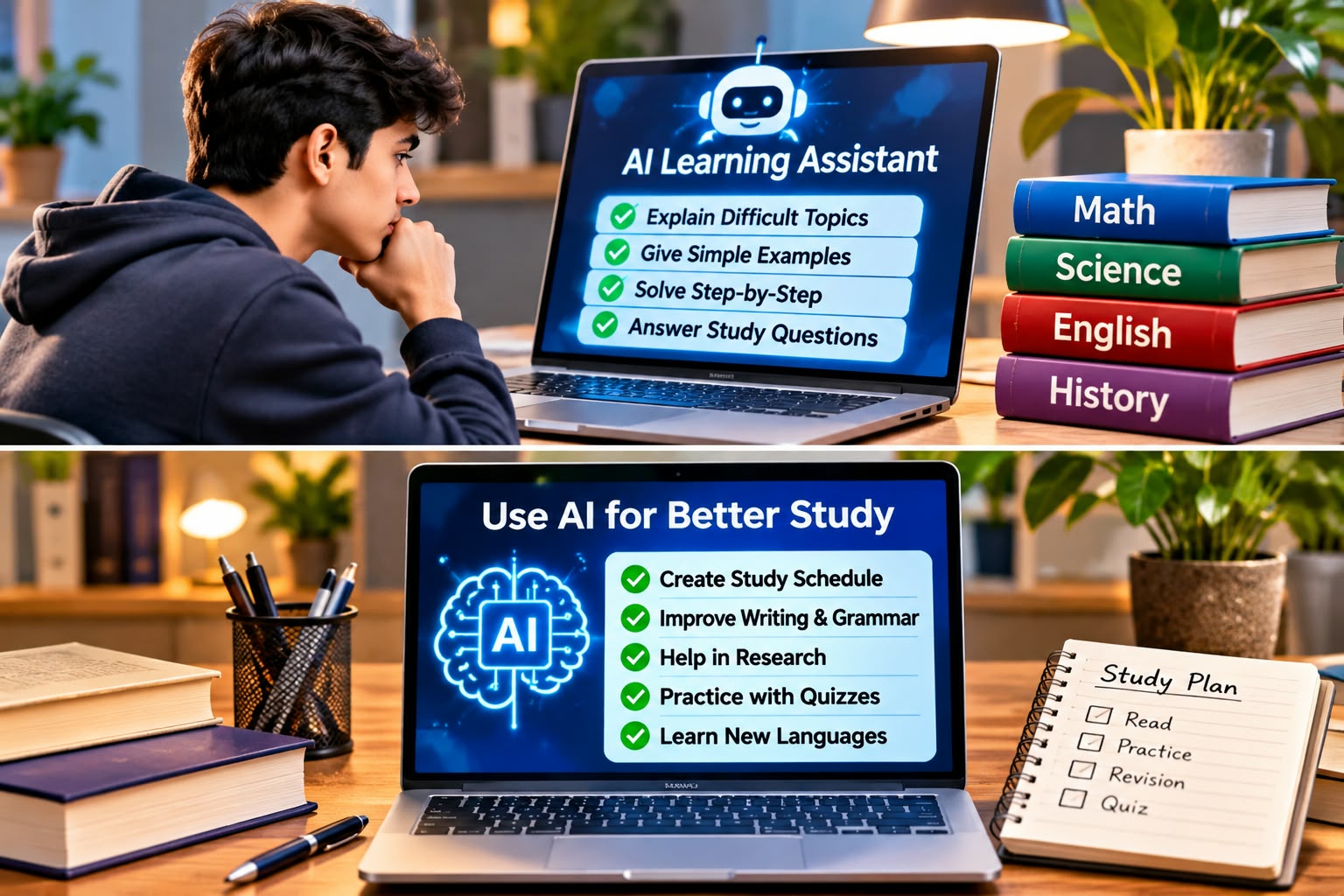
One useful way to use artificial intelligence is to understand difficult school subjects. Sometimes students read a lesson several times but still cannot understand its meaning. AI tools can explain the same topic in simpler words.
For example, a student who finds mathematics difficult can ask an AI tool to explain a formula step by step. A science student can request simple examples about planets, electricity, or the human body.
Students should ask clear questions to get useful answers. Instead of writing only "Explain science," they can ask, "Explain photosynthesis in simple English with an example."
After reading the explanation, students should try to explain the topic in their own words. This helps them check whether they have understood the lesson properly.
3. Improve Writing and Grammar with AI
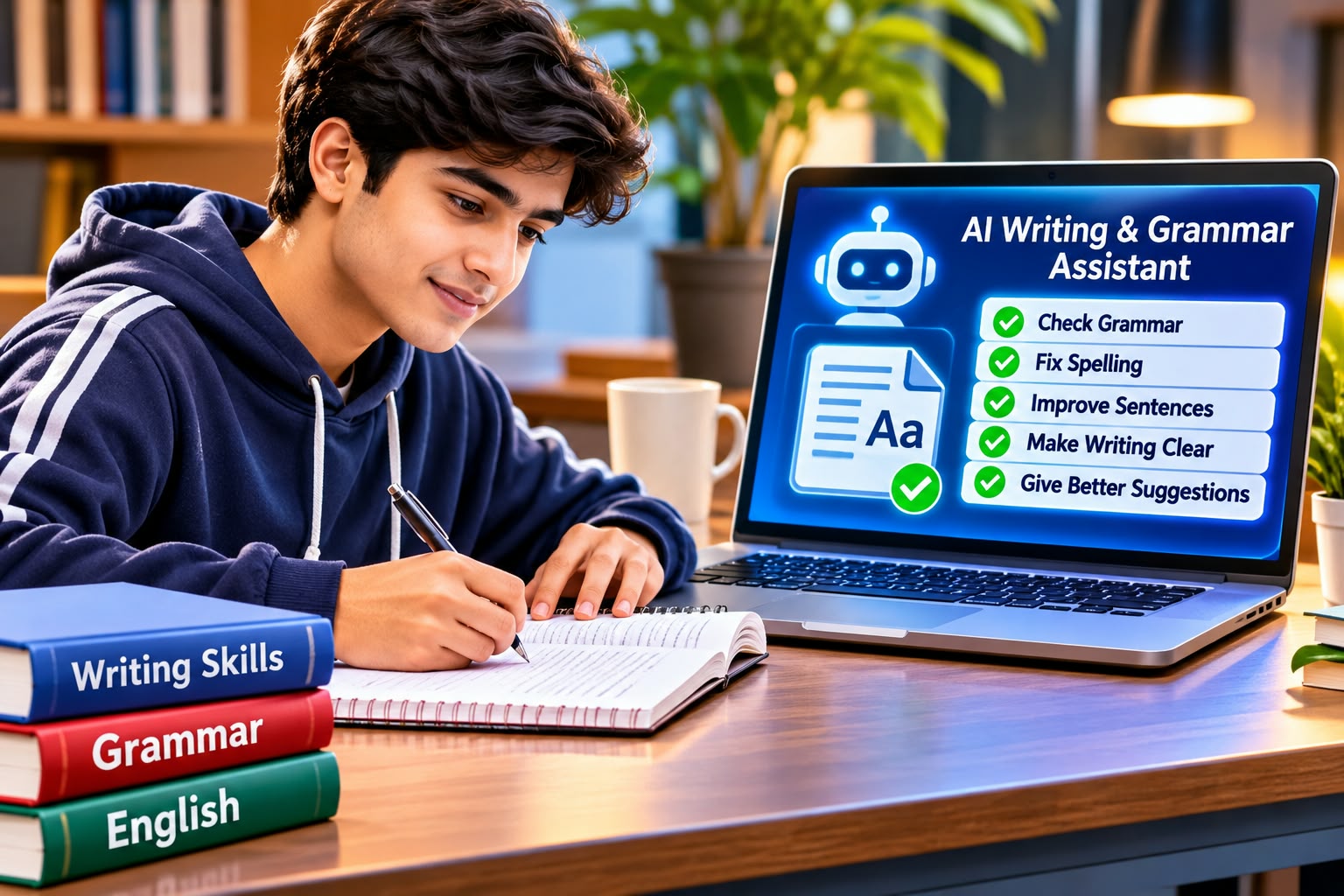
Students can also use AI tools to improve their writing skills. Writing clear sentences is important for school assignments, emails, reports, and future jobs. AI can help students identify grammar mistakes and understand how to correct them.
For example, a student can write a short paragraph and ask an AI tool to check spelling, punctuation, and sentence structure. The tool may suggest clearer words or explain why a sentence is incorrect.
Students should not simply copy every suggested correction. Instead, they should read the explanation and learn from their mistakes. They can also practice writing a new paragraph without help to test their progress.
Using AI in this way can support learning and help students become more confident writers.
4. Create a Better Study Schedule with AI
Managing study time can be difficult, especially when students have several subjects and assignments. AI tools can help students organise their daily and weekly study schedules.
For example, a student can tell an AI tool about upcoming exams, difficult subjects, and available study hours. The tool can suggest a simple timetable that includes time for reading, practice, revision, and short breaks.
Students should remember that a timetable must be realistic. Studying for many hours without rest can cause tiredness. It is better to divide study time into smaller sessions and take regular breaks.
At the end of each day, students can review their progress and adjust the next day's plan. This makes it easier to stay organized and complete important tasks on time.
5. Use AI for Research and New Ideas
AI tools can help students explore new ideas and find information about different subjects. When students work on school projects, they sometimes need help choosing a topic or organizing their research.
For example, a student preparing a presentation about climate change can ask AI for a list of important points, such as causes, effects, and possible solutions. The student can then research these points using reliable books and educational websites.
AI can also suggest questions for classroom discussions and project activities. This can make learning more interesting and encourage students to explore subjects in greater detail.
Students should always verify facts from trusted sources. They should not copy AI-generated information without understanding it or checking whether it is correct.
6. Learn New Languages with AI
Artificial intelligence can also help students improve their language skills. Learning a new language takes regular practice, patience, and confidence. AI tools can support students by explaining vocabulary, correcting sentences, and providing simple conversation exercises.
For example, a student learning English can ask an AI tool to provide five new words every day with their meanings and example sentences. Students can also practise writing short paragraphs and ask for feedback on grammar and spelling.
AI can help learners understand difficult words by giving simple explanations. However, students should also read books, listen to English conversations, and practise speaking with other people.
Regular practice is important. Even fifteen minutes of language learning each day can help students gradually improve their vocabulary and confidence.
7. Practice with AI Quizzes and Questions
Practice is an important part of learning. Students can use AI tools to create quizzes and test their knowledge after studying a lesson.
For example, after reading a history chapter, a student can ask an AI tool to create ten multiple-choice questions. The student can answer these questions and then check the explanations to understand any mistakes.
AI can also create short-answer questions, vocabulary exercises, and mathematics practice problems. Students should choose questions that match their school level and subject.
Regular testing helps students identify topics that need more attention. However, students should also complete their actual school assignments independently and follow their teachers' instructions.
8. Use Artificial Intelligence Responsibly
Students should use AI tools carefully and responsibly. They should never share private information, passwords, home addresses, or personal documents with AI tools. They should also check important answers using trusted educational sources.
AI should help students learn, not replace their own effort. Students must follow school rules and complete assignments honestly. By using AI responsibly, students can enjoy its benefits while developing independent thinking and problem-solving skills.
9. Conclusion
Artificial intelligence can be a useful learning partner when students use it wisely. It can explain difficult topics, improve writing, organize study schedules, support research, and provide practice questions. However, students should always think independently, check important information, and protect their personal data.
The best results come from combining AI tools with regular study, practical activities, books, and guidance from teachers. Students who use technology responsibly can build stronger knowledge and prepare themselves for future educational and career opportunities.








Comments 0
Sign in to join the conversation.
No comments yet. Be the first to say something.