

1. The Foundations of Scientific Inquiry
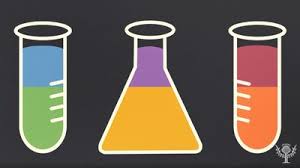
Science begins with curiosity—the innate human desire to understand the world around us. From the earliest observations of celestial bodies to modern quantum mechanics, the scientific method has been the cornerstone of discovery. This method involves formulating hypotheses, conducting experiments, and analyzing results to draw conclusions.
Through centuries, figures like Galileo Galilei, Isaac Newton, and Marie Curie have exemplified the pursuit of knowledge, transforming our understanding of physics, chemistry, and biology. The foundation of science lies not only in these discoveries but also in its collaborative nature, uniting minds across the globe to tackle pressing challenges.
2. Breakthroughs in Modern Technology
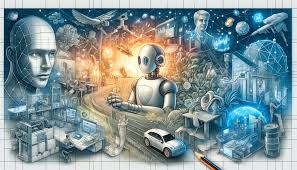
Scientific innovation drives technological progress. From the Industrial Revolution to the digital age, science has revolutionized communication, transportation, and industry. Breakthroughs such as semiconductors, the internet, and artificial intelligence have transformed how we interact with the world.
Today, emerging technologies like quantum computing and nanotechnology are pushing the boundaries further, promising faster computations and groundbreaking materials with applications in medicine, energy, and beyond.
3. The Role of Science in Healthcare Advancements
Healthcare has undergone a paradigm shift thanks to science. Vaccines, antibiotics, and imaging technologies have saved countless lives. The mapping of the human genome unlocked a new era of personalized medicine, enabling treatments tailored to individual genetic profiles.
Additionally, innovations like CRISPR gene editing hold the potential to eradicate hereditary diseases. During global health crises like COVID-19, the rapid development of vaccines highlighted the importance of scientific collaboration in addressing challenges efficiently.

4. Environmental Sustainability Through Scientific Innovation
As humanity faces climate change and resource depletion, science offers solutions to ensure a sustainable future. Renewable energy technologies such as solar and wind power are replacing fossil fuels, reducing carbon emissions.
Moreover, advancements in environmental science help monitor ecosystems and mitigate biodiversity loss. From bioengineering drought-resistant crops to developing carbon capture technologies, science plays a pivotal role in safeguarding the planet for future generations.Addressing environmental challenges requires scientific ingenuity. Renewable energy sources like solar, wind, and hydropower are replacing carbon-intensive fossil fuels. Innovations in battery storage and grid management make these solutions increasingly viable.
Furthermore, climate modeling and satellite technology enable us to monitor environmental changes, providing critical insights for conservation. Science-driven approaches, such as bioengineering and carbon capture, are essential for ensuring a sustainable future for generations to come.
5. Future Horizons: The Next Frontier of Science
The future of science holds limitless possibilities. Space exploration, for instance, is expanding our horizons, with missions to Mars and beyond. Similarly, advancements in artificial intelligence and robotics are transforming industries and daily life.Science continually pushes boundaries, exploring uncharted territories. Space exploration, for instance, seeks answers to fundamental questions about our existence. Missions to Mars, lunar habitats, and the search for extraterrestrial life are at the forefront of this quest.
Synthetic biology, quantum mechanics, and AI-driven research are equally transformative, holding the potential to redefine industries and unlock new possibilities. As interdisciplinary collaboration intensifies, science promises to deliver solutions to global challenges while expanding the horizons of human understanding.
In the realm of biology, breakthroughs in synthetic biology could pave the way for lab-grown organs and sustainable biofuels. As interdisciplinary collaboration continues to grow, the next generation of scientists is poised to tackle challenges we cannot yet imagine, shaping a future defined by innovation and resilience.









Comments 0
Sign in to join the conversation.
No comments yet. Be the first to say something.