

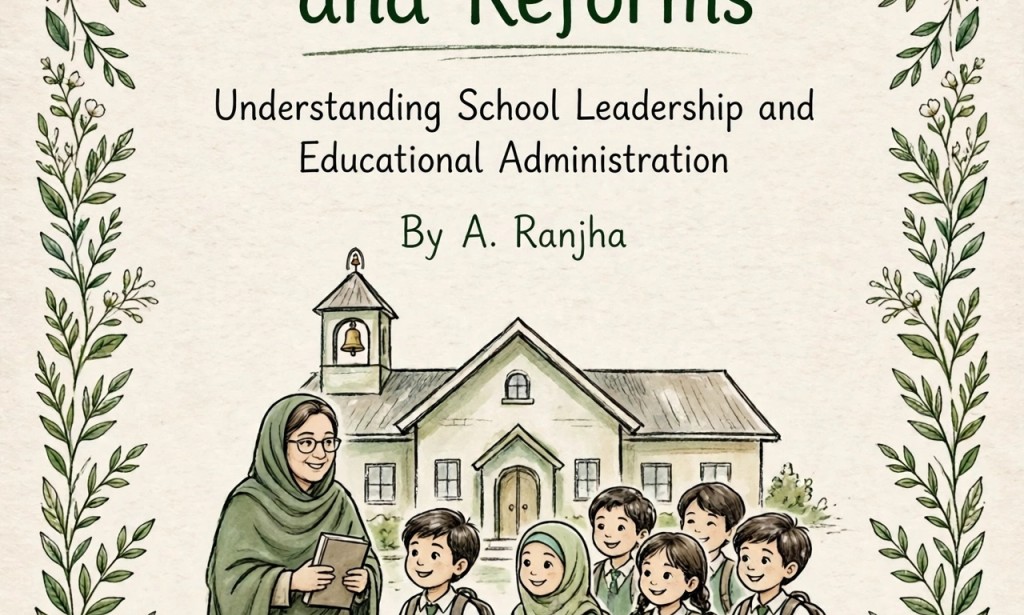
Educational Policies and Reforms
Understanding School Leadership and Educational Administration
By A. Ranjha
1. Introduction
Education is very important for every country. It helps people gain knowledge, learn good habits and build a better future.
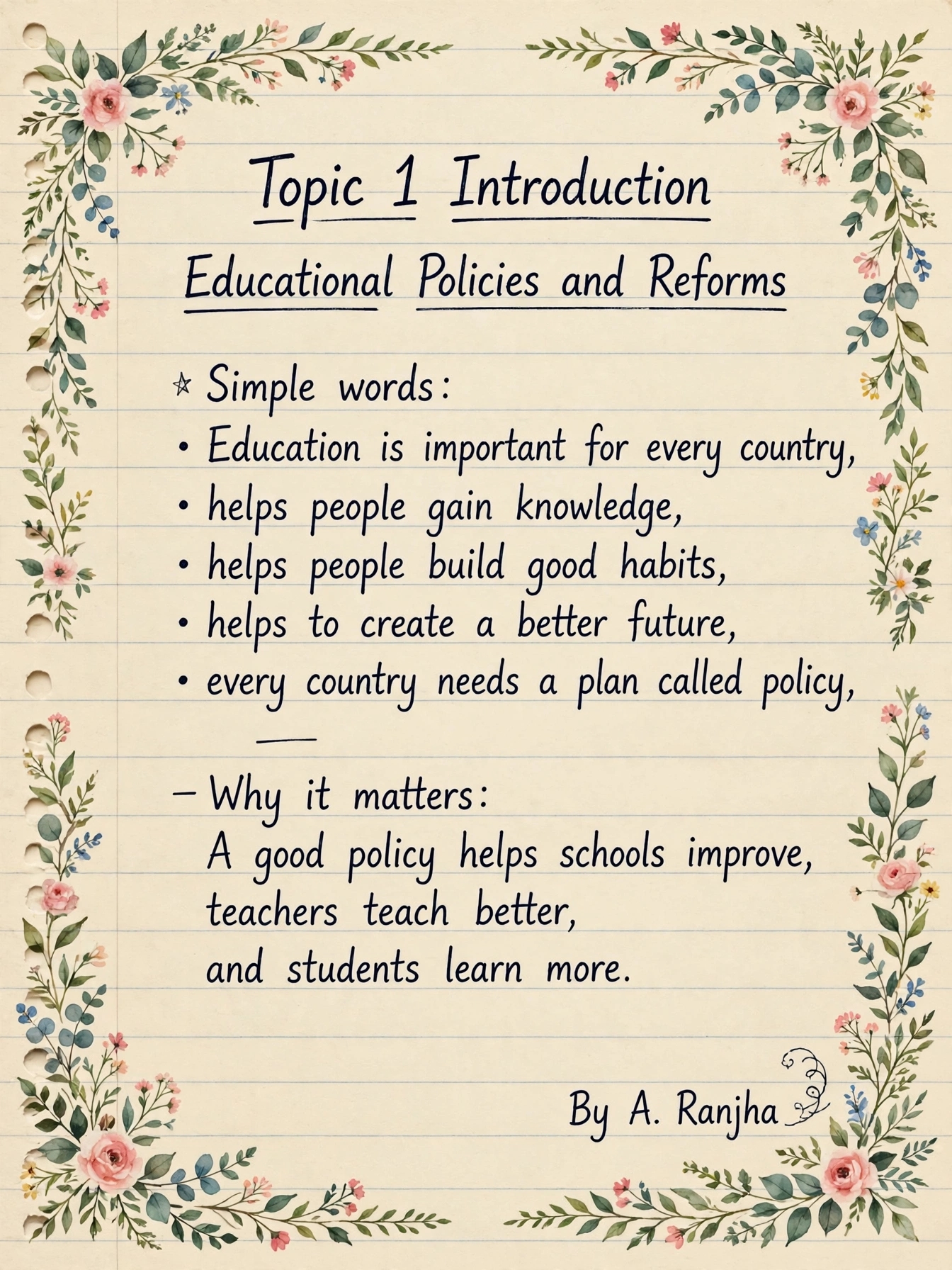
Every country needs a proper plan to improve its education system. This plan is called an educational policy.
Educational policies guide schools, teachers, students and education officers. They explain what the government wants to achieve in education and how these goals can be reached.
However, education needs change with time. New problems appear, and new ways of teaching become necessary. Therefore, governments make changes in the education system. These changes are called educational reforms.
2. What Is an Educational Policy?
An educational policy is a set of rules, plans and decisions made to improve education.
In simple words, it tells us:
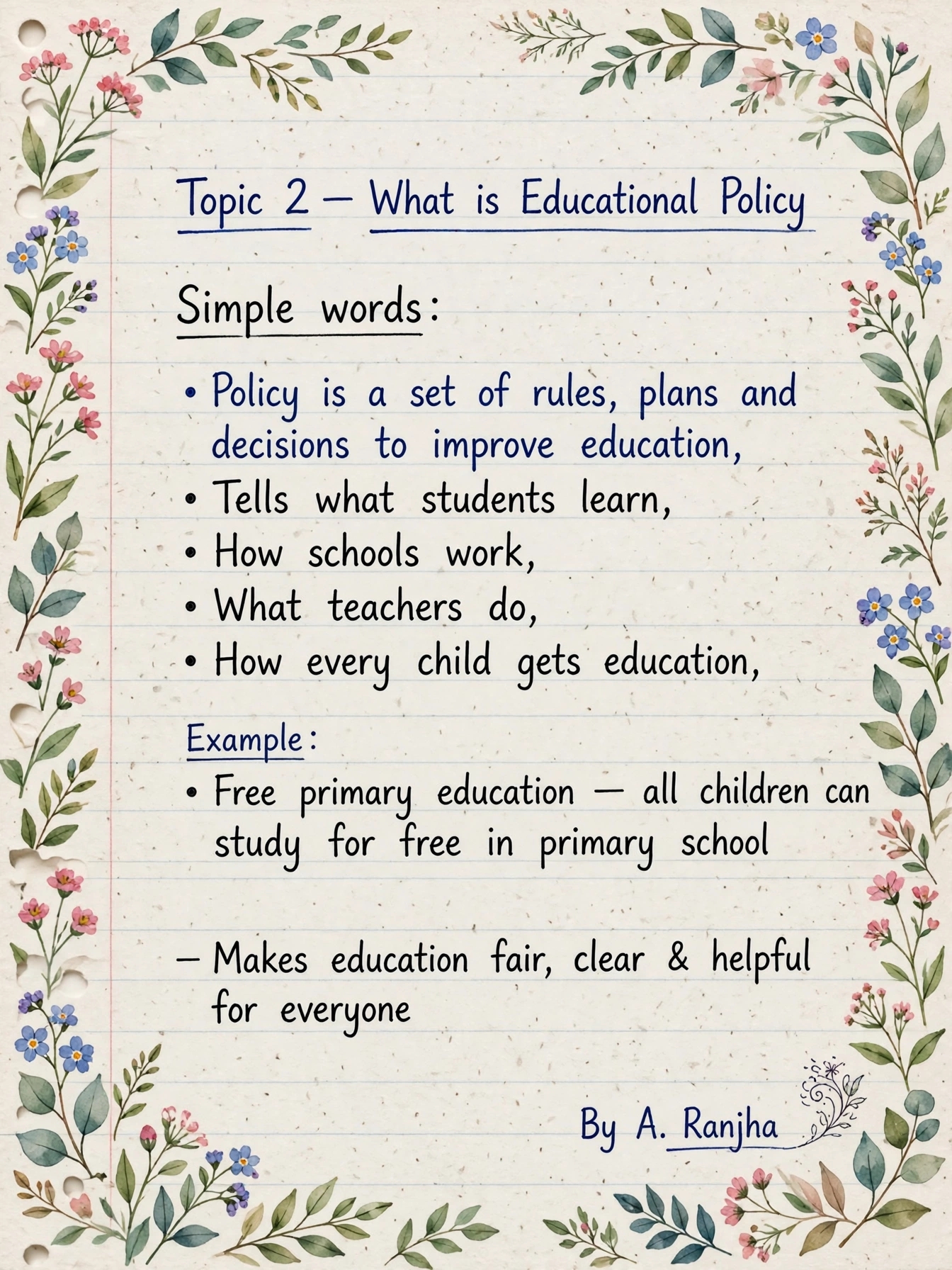
- What students should learn.
- How schools should work.
- What teachers should do.
- How schools should be managed.
- How education can reach every child.
- How the quality of education can be improved.
Example: If the government decides that every child should receive free primary education, this decision is part of an educational policy.
3. What Are Educational Reforms?
Educational reforms are changes made to improve the education system.
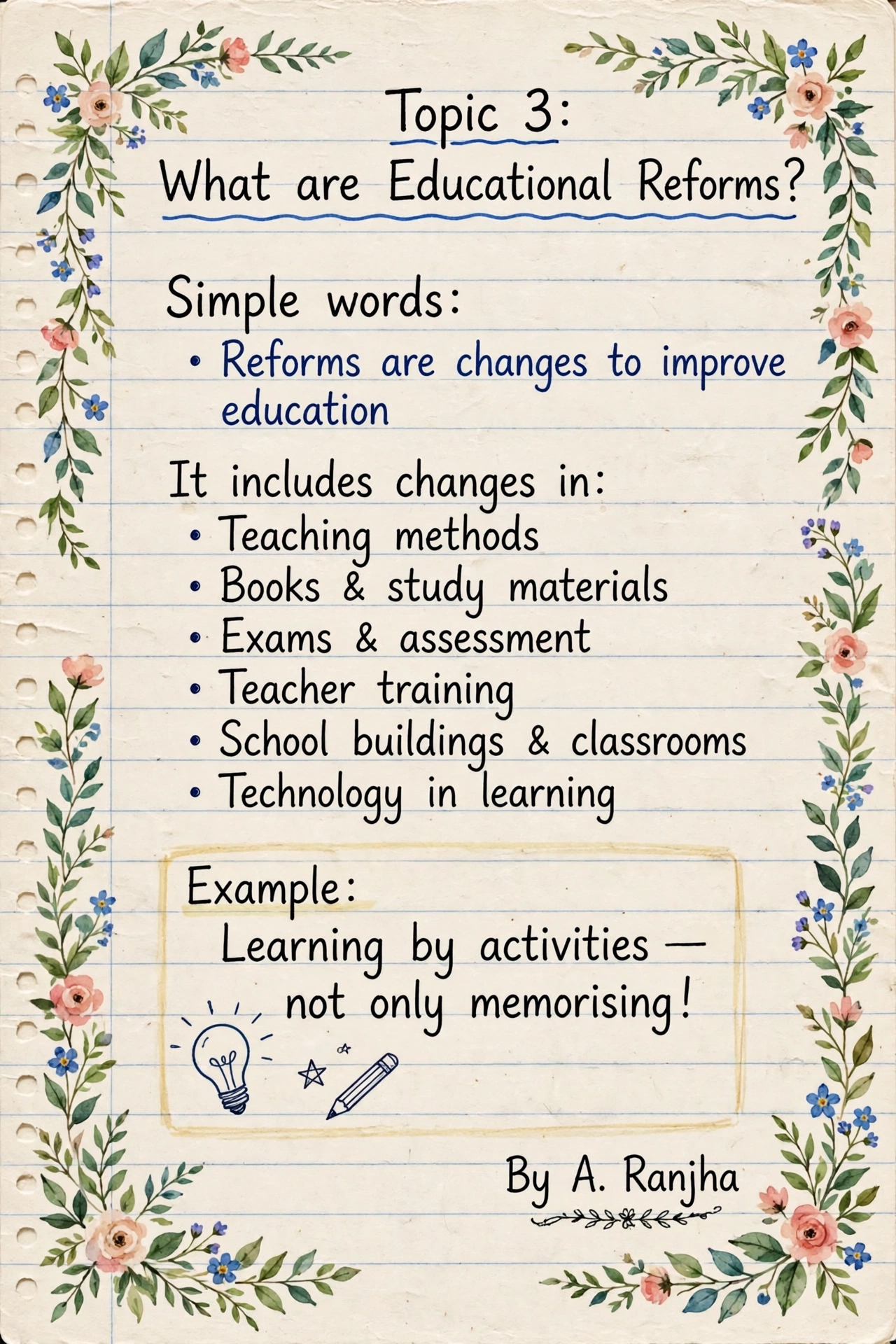
These changes may be made in:
- Teaching methods.
- School buildings.
- Textbooks.
- Examinations.
- Teacher training.
- School management.
- The use of technology.
- Education rules and plans.
Example: If schools replace only memorising lessons with activities, discussions and practical learning, this is an educational reform.
4. Difference Between Educational Policy and Educational Reform
Educational Policy| Educational Reform
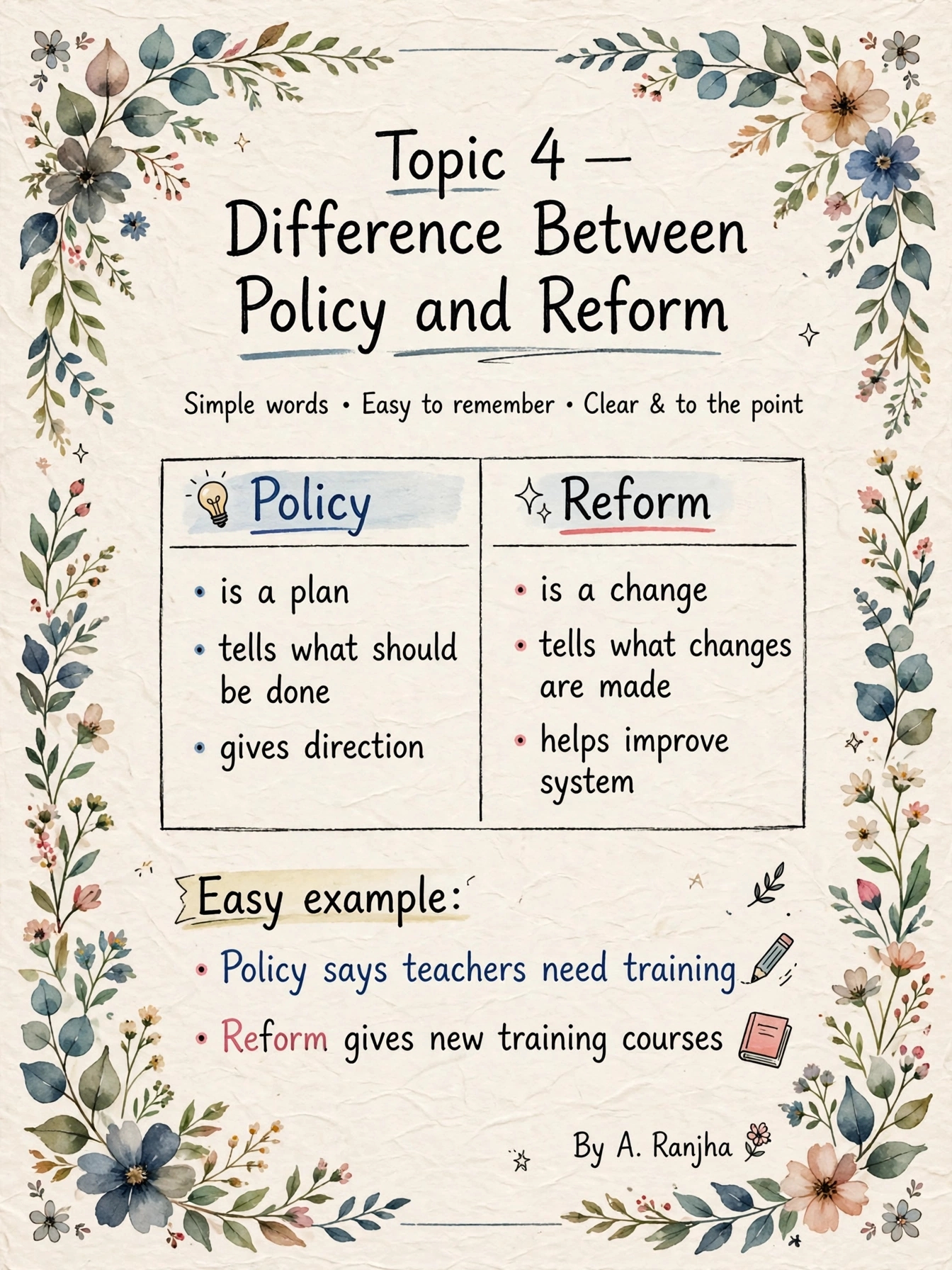
It is a plan or set of rules.| It is a change made to improve education.
It explains what should be done.| It explains what changes are made.
It gives direction to the education system.| It helps improve the education system.
Easy example: A policy may say that teachers need better training. A reform may introduce new training courses for teachers.
5. Main Aims of Educational Policies
Educational policies are made to achieve the following aims:
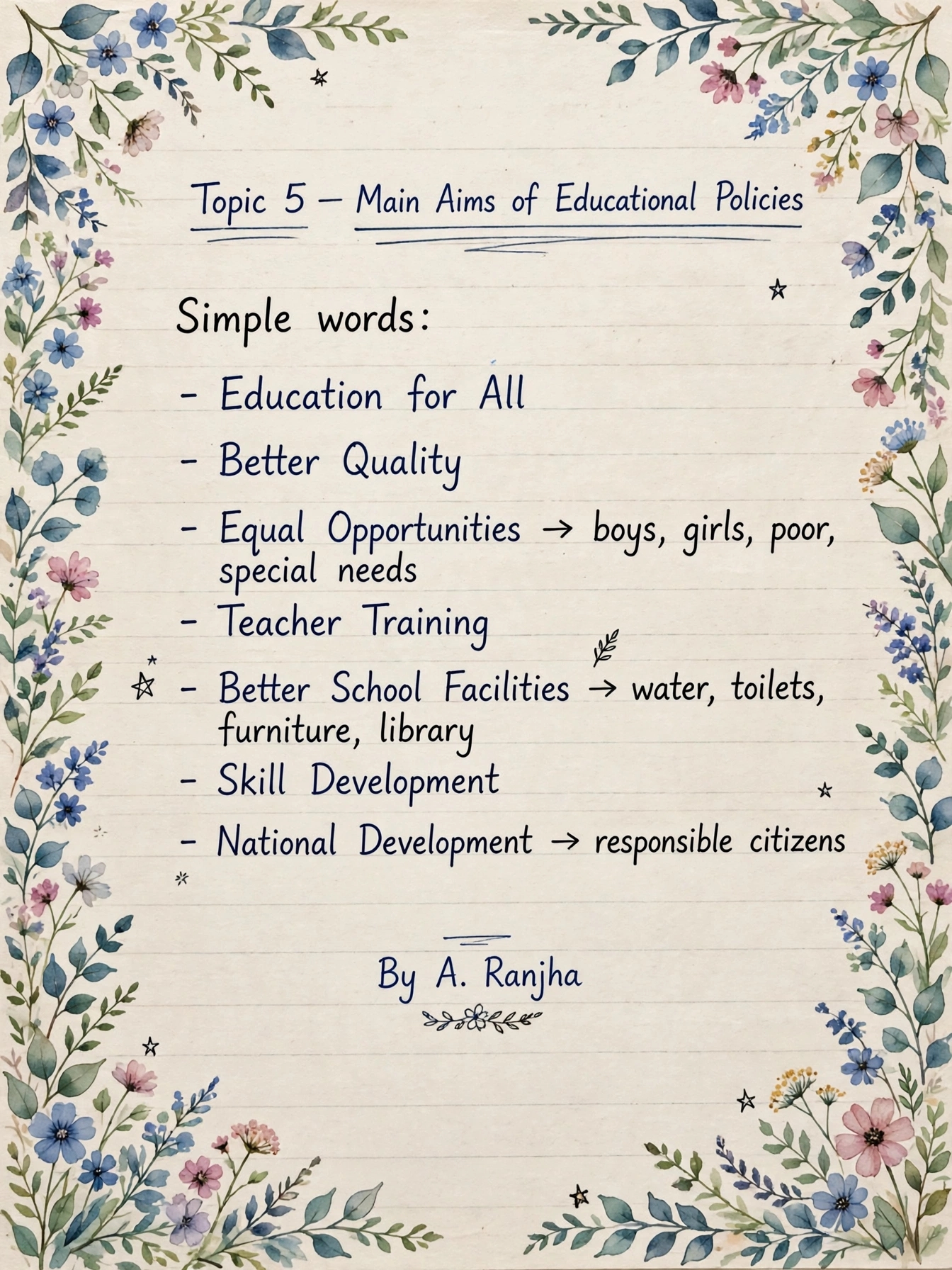
1. Education for All
Every child should have the chance to attend school, whether the child lives in a city or a village.
2. Better Quality of Education
Students should receive useful and good education. Schools should have trained teachers, suitable books and a good learning environment.
3. Equal Opportunities
Boys and girls should have equal chances to get an education. Children from poor families and children with special needs should also receive support.
4. Teacher Training
Teachers should receive proper training to improve their teaching skills.
5. Better School Facilities
Schools should have safe classrooms, clean drinking water, toilets, furniture, libraries and other basic facilities.
6. Skill Development
Students should learn useful skills that help them in daily life and future jobs.
7. National Development
Education should help people become responsible citizens and take part in the progress of their country.
6. Important Areas of Educational Reforms
Educational reforms can bring changes to many parts of the school system.
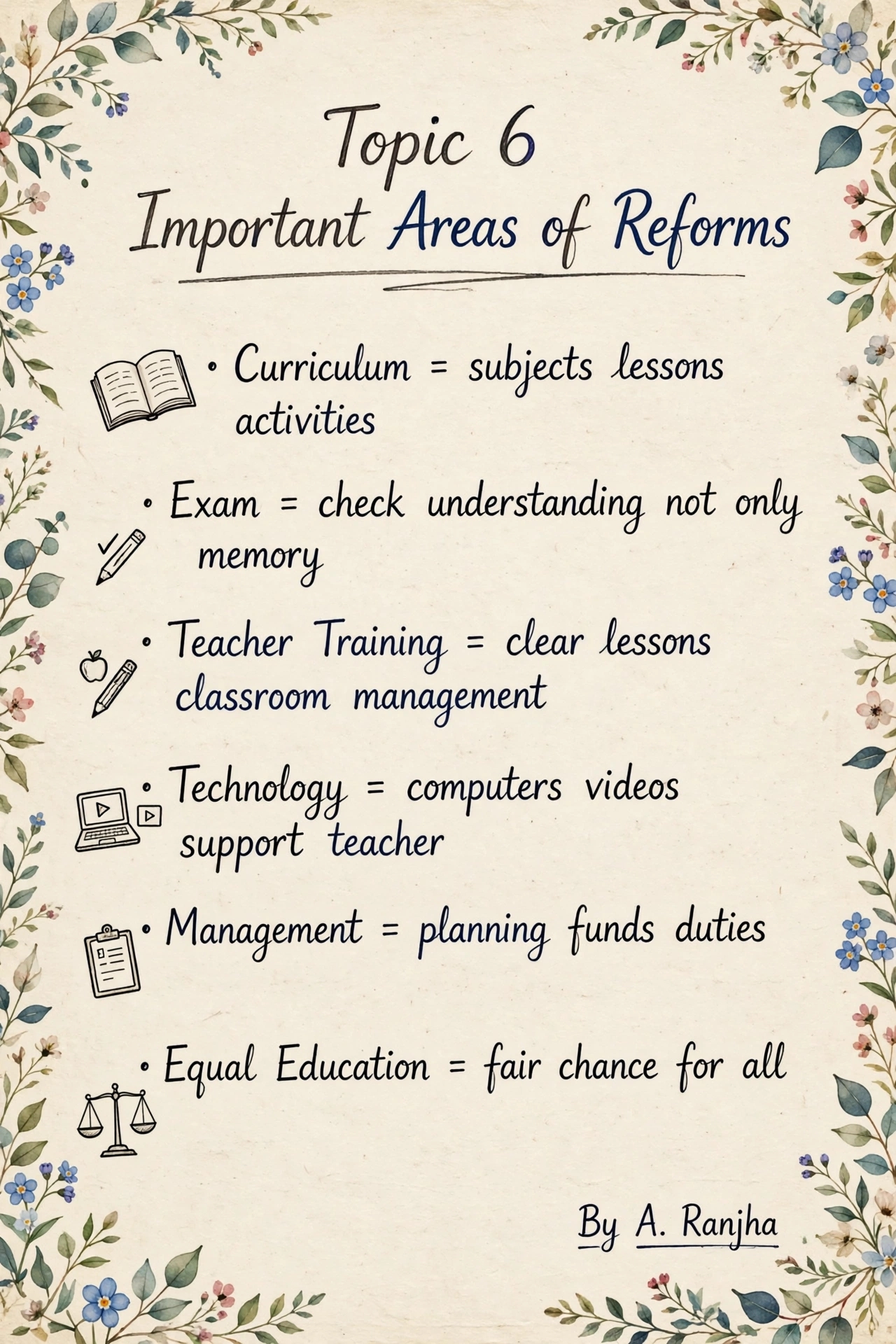
A. Curriculum Reforms
A curriculum is the complete learning plan followed by students.
Curriculum reforms mean changing or improving the subjects, lessons and learning activities.
For example, schools may include computer education, practical activities and life skills in the curriculum.
B. Examination Reforms
Examination reforms improve the way students are tested.
Students should not be judged only by memorising answers. Their understanding, writing, problem-solving and practical skills should also be checked.
C. Teacher Training Reforms
Teachers need new knowledge and skills to teach students effectively.
Training can help teachers:
- Explain lessons clearly.
- Manage classrooms.
- Understand students' needs.
- Use modern teaching methods.
- Check students' learning.
D. Technology in Education
Technology can make learning easier and more interesting.
Schools may use computers, projectors, educational videos and online learning materials.
However, technology should support teachers, not replace them.
E. School Management Reforms
Schools need good management to work properly.
Changes in school management may include better planning, proper use of funds, regular school visits and clear duties for teachers and school heads.
F. Reforms for Equal Education
Every child should receive a fair chance to learn.
Special attention should be given to children who cannot attend school because of poverty, distance, disability or other difficulties.
7. Educational Policies and Reforms in Pakistan
Pakistan has introduced different education policies and plans over the years to improve education.
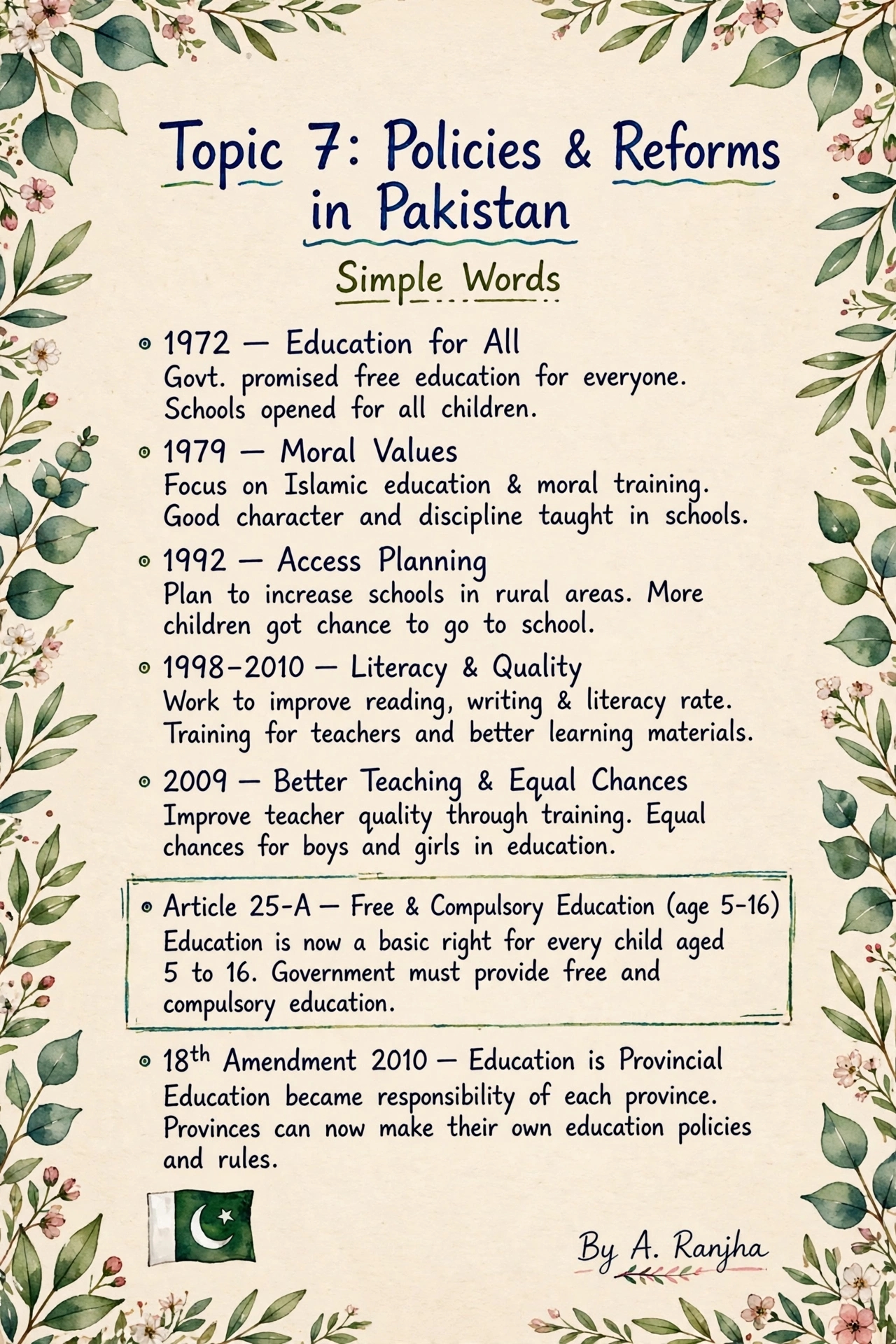
Some important examples are:
1. National Education Policy 1972
This policy gave importance to education for all and aimed to increase educational opportunities.
2. National Education Policy 1979
It focused on improving education, promoting moral values and giving importance to national identity.
3. National Education Policy 1992
It aimed to improve the education system, increase access to education and strengthen educational planning.
4. National Education Policy 1998–2010
It focused on increasing literacy, improving the quality of education and expanding educational facilities.
5. National Education Policy 2009
It gave importance to better teaching, improved learning, equal educational opportunities and stronger school management.
6. Article 25-A of the Constitution of Pakistan
Article 25-A is an important part of Pakistan's Constitution.
It states that the State shall provide free and compulsory education to all children aged five to sixteen years, in the manner determined by law.
This article gives constitutional importance to children's right to education.
7. Education After the 18th Constitutional Amendment
After the 18th Constitutional Amendment in 2010, education became mainly a provincial responsibility.
This means provinces have an important role in making and carrying out education plans and laws.
8. Problems in Implementing Educational Policies
Making an education policy is not enough. It must also be put into practice.
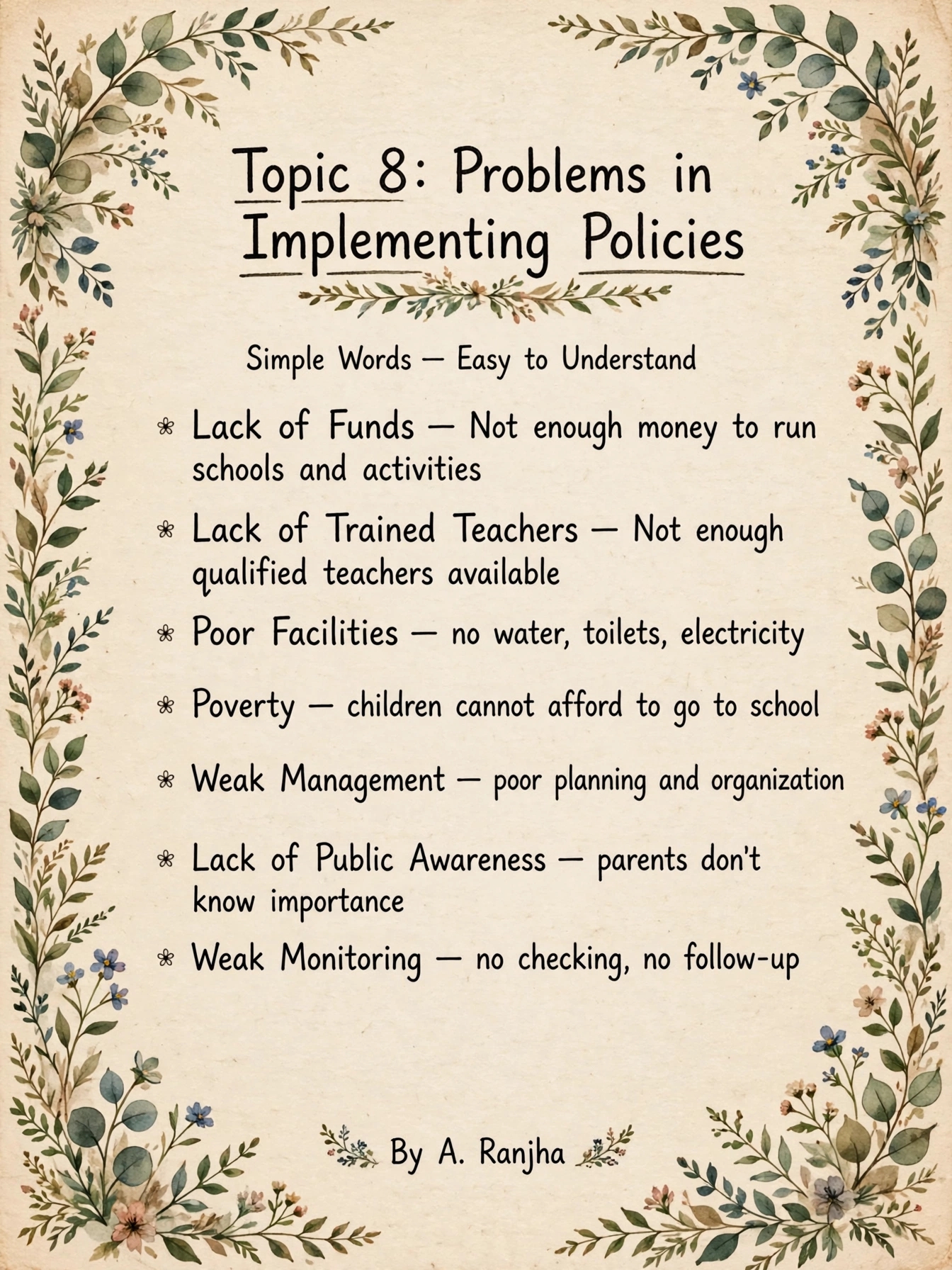
Some common problems are:
1. Lack of Funds
Many schools do not have enough money for buildings, furniture, books and other needs.
2. Lack of Trained Teachers
Some schools do not have enough trained teachers. This can affect the quality of teaching.
3. Poor School Facilities
Some schools lack clean water, toilets, electricity and proper classrooms.
4. Poverty
Some children cannot continue their education because their families cannot afford school-related expenses.
5. Weak Management
Poor planning and weak management can stop a good policy from achieving its goals.
6. Lack of Public Awareness
Some parents do not fully understand the importance of education. They may not send their children to school regularly.
7. Weak Monitoring
If school activities are not checked regularly, problems may continue without being solved.
9. Role of a Headmaster/Headmistress
A headmaster or headmistress plays an important role in carrying out educational policies at school level.
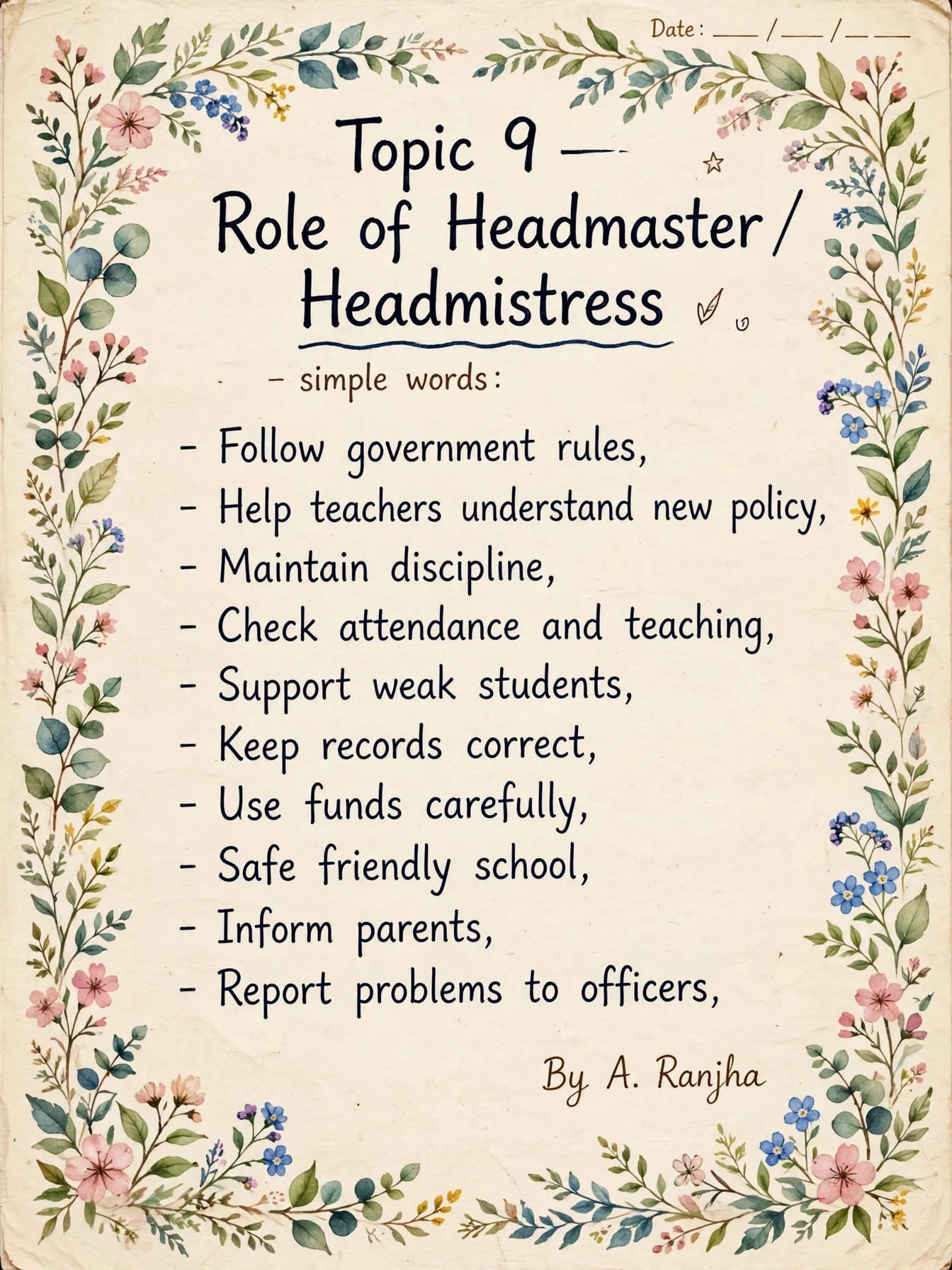
The school head should:
1. Make sure that government education rules are followed.
2. Help teachers understand new policies and changes.
3. Maintain discipline in the school.
4. Check teachers' attendance and teaching work.
5. Support students who are facing learning difficulties.
6. Keep school records complete and correct.
7. Use school funds carefully.
8. Maintain a safe and friendly school environment.
9. Inform parents about students' progress.
10. Report school problems to the concerned education officers.
Example: If a new teaching method is introduced, the headmaster should guide teachers, arrange support where possible and check whether the method is helping students learn.
10. How Can Educational Policies Be Made Successful?
Educational policies can work better when:
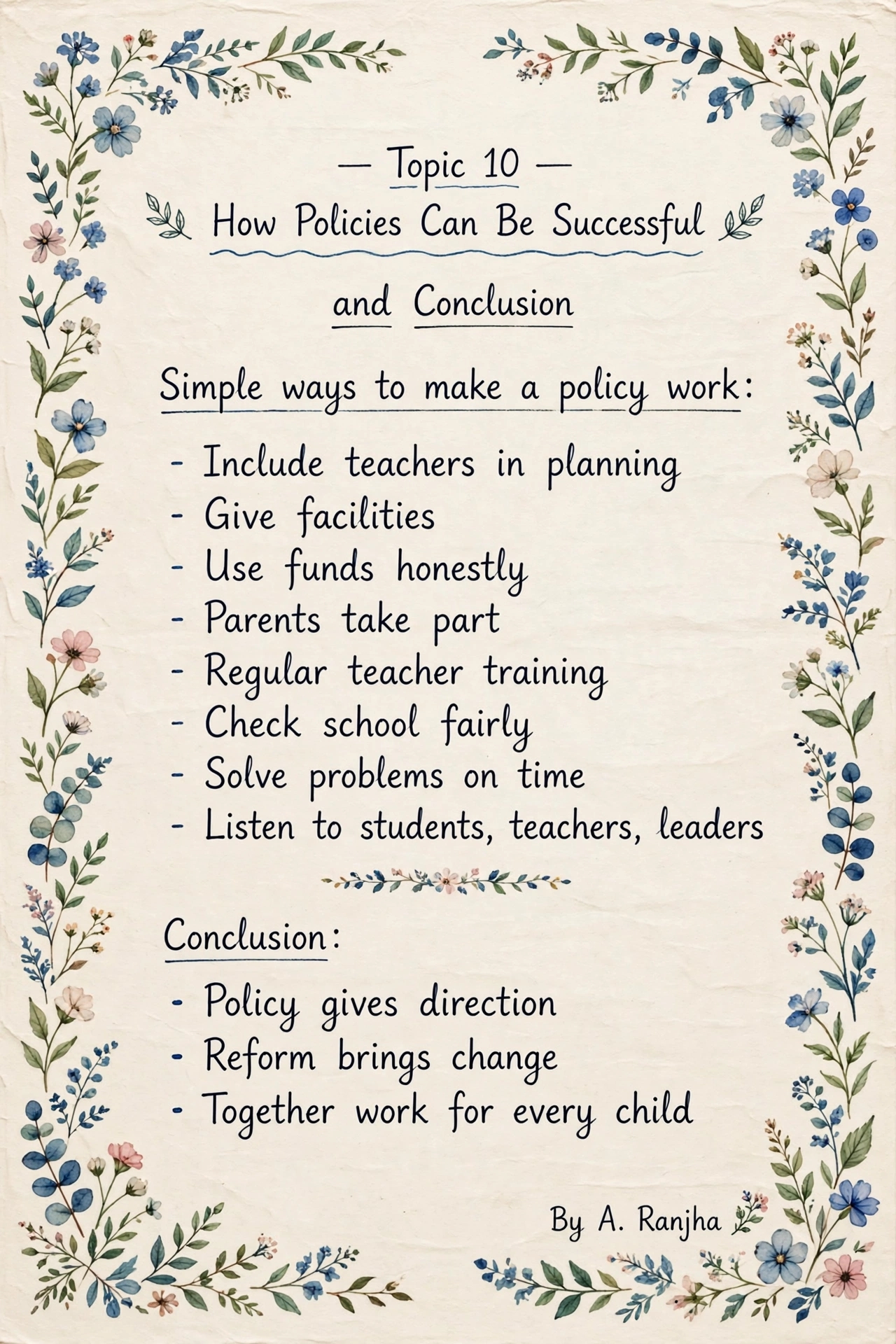
- Teachers are included in the planning process.
- Schools receive the facilities they need.
- Funds are used honestly and carefully.
- Parents take part in their children's education.
- Teachers receive regular training.
- School performance is checked fairly.
- Problems are solved on time.
- The government listens to students, teachers and school leaders.
A good policy needs proper planning, support and regular checking.
11. Conclusion
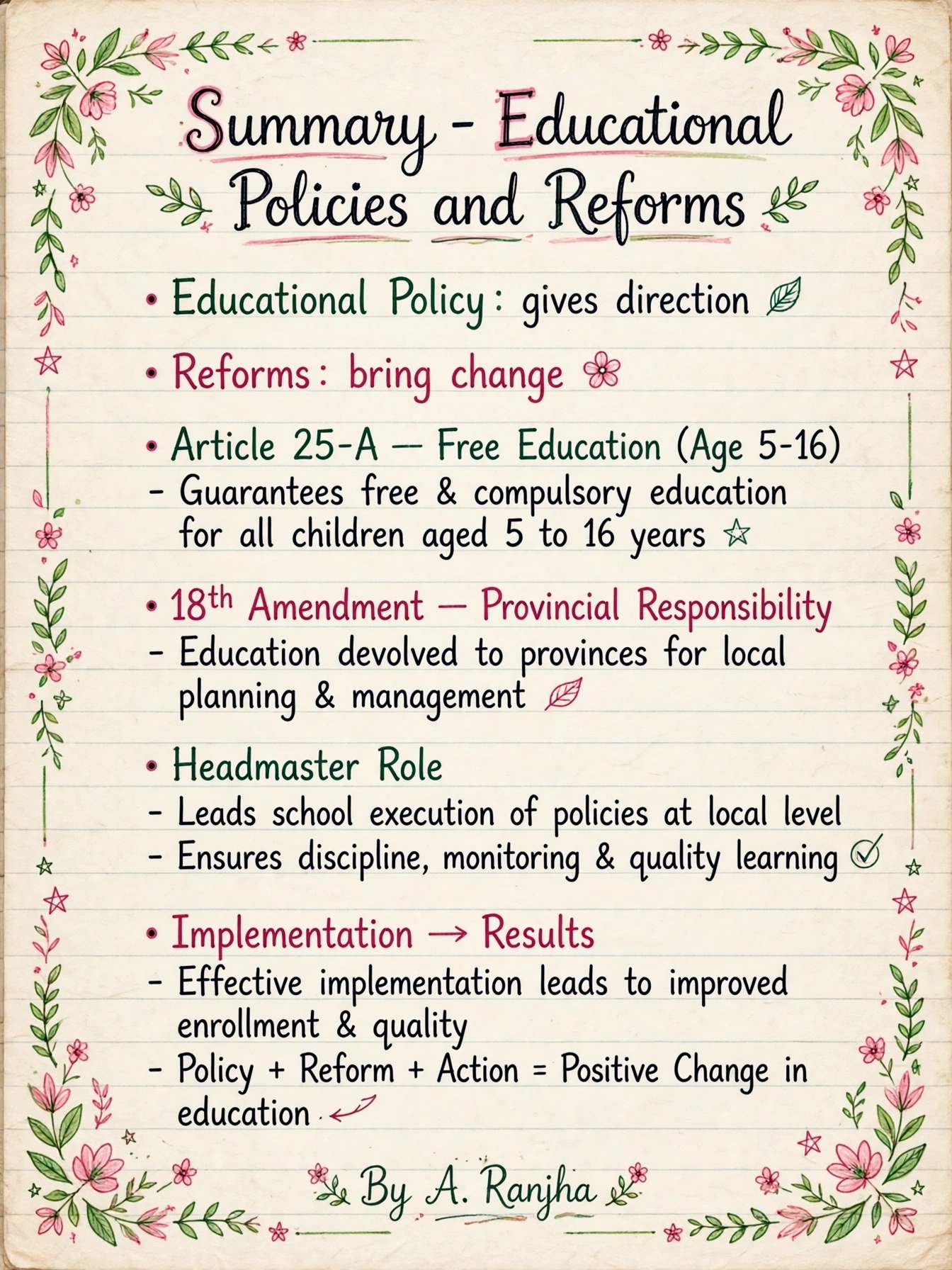
Educational policies give direction to the education system, while educational reforms bring changes to improve it. Both are important for the progress of schools and students.
A successful education system needs good policies, trained teachers, proper school facilities and responsible school leadership.
A headmaster or headmistress must understand educational policies and help put them into practice. When government, teachers, parents and school leaders work together, education can become better for every child.
---
Important Points for Examination
- Educational Policy: A plan or set of rules for improving education.
- Educational Reform: A change made to improve the education system.
- Article 25-A: Provides for free and compulsory education for children aged 5–16 years.
- 18th Constitutional Amendment: Made education mainly a provincial responsibility.
- National Education Policy 2009: Focused on improving access, quality and management of education.
- Curriculum: A complete learning plan for students.
- Implementation: Putting a plan into action.
- Monitoring: Checking whether work is being done properly.
Remember: A policy gives direction, but proper implementation brings results.




Comments 0
Sign in to join the conversation.
No comments yet. Be the first to say something.