


Table of Contents
-
Introduction: The Rise of Screen Dependence
-
The Science Behind Screen Fatigue
-
Physical Health Benefits of a Digital Detox
-
Mental and Emotional Benefits
-
How to Start Your Digital Detox
-
The Future of Balanced Technology Us
1. Introduction: The Rise of Screen Dependence
In today’s hyper-connected world, screens have become an inseparable part of daily life — from checking emails before breakfast to scrolling social media before sleep. While technology brings convenience and instant access to information, it also traps us in a cycle of constant notifications, distractions, and mental overload.
Studies show that the average adult spends over 7 hours a day looking at screens, leading to digital fatigue and burnout. A digital detox offers a way to break this cycle, helping people reconnect with the real world, improve health, and regain mental clarity.
 .
.
2. The Science Behind Screen Fatigue
Screen fatigue is the result of prolonged exposure to digital devices such as smartphones, laptops, and tablets. This overexposure affects both the eyes and the brain.
-
Blue Light Exposure: Disrupts melatonin production, affecting sleep patterns.
-
Continuous Dopamine Hits: Social media likes and notifications trigger addictive dopamine cycles.
-
Reduced Attention Span: Constant multitasking reduces focus and memory retention.
Neurologists warn that this digital overstimulation can lead to chronic stress, anxiety, and even depression if left unchecked.

3. Physical Health Benefits of a Digital Detox
A break from screens can greatly improve your physical well-being. Some benefits include:
-
Better Sleep Quality: Without blue light interference, your body naturally adjusts to healthier sleep patterns.
-
Reduced Eye Strain: Fewer headaches, less dryness, and sharper vision.
-
Improved Posture: Less time hunched over devices reduces neck and back pain.
-
Increased Physical Activity: Time away from devices encourages outdoor activities and exercise.
Even short breaks, such as a “no screens after 9 PM” rule, can help the body reset and recover from digital stress.
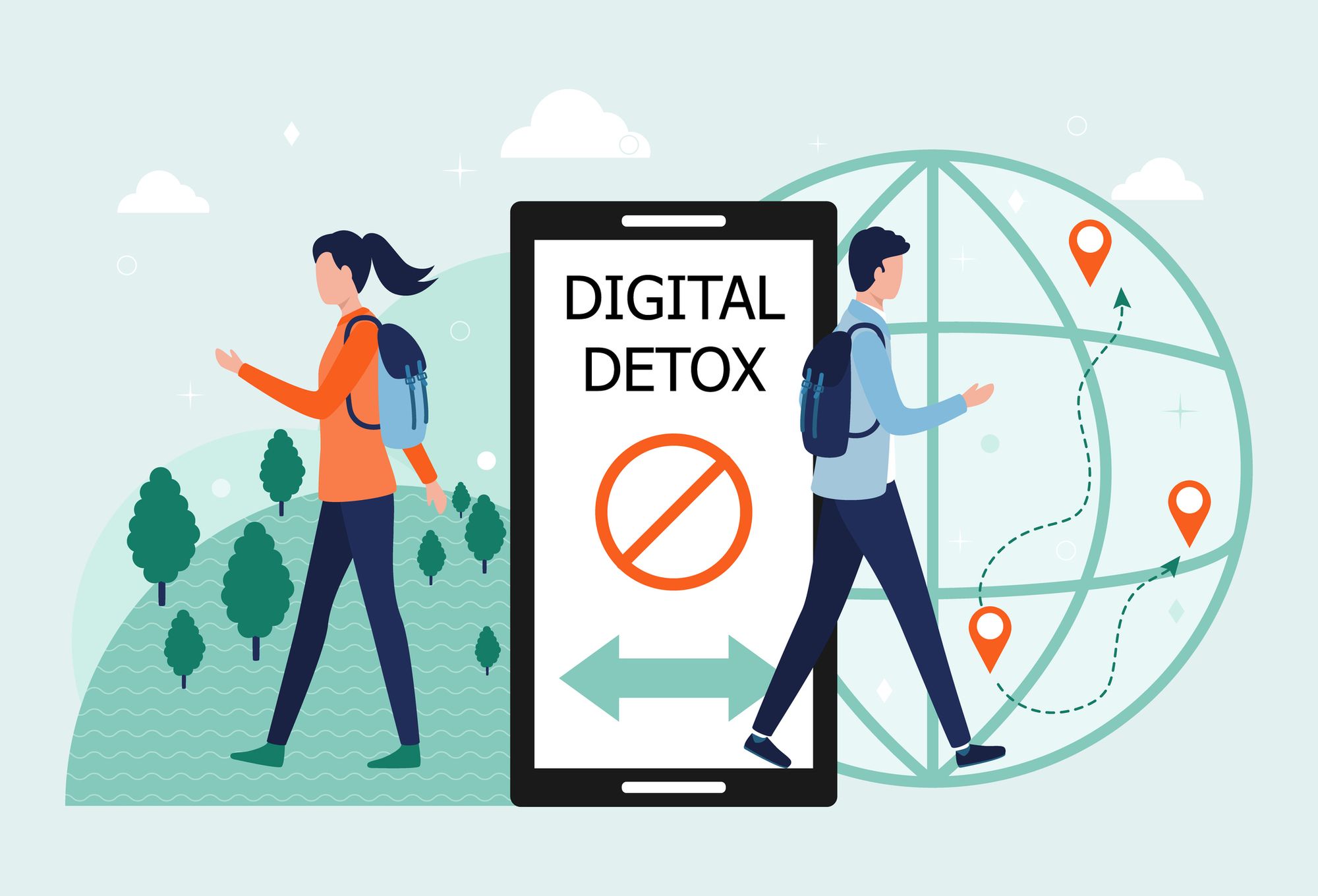
4. Mental and Emotional Benefits
A digital detox impacts more than just physical health — it rejuvenates the mind and emotions too.
-
Lower Stress Levels: Without constant alerts, cortisol levels drop.
-
Better Relationships: More eye contact and real-life conversations improve social connections.
-
Enhanced Creativity: Time spent offline allows the brain to wander and generate new ideas.
-
Mindfulness: Without digital noise, you become more aware of the present moment.
Many people report feeling lighter, happier, and more focused after just a weekend without screens.

5. How to Start Your Digital Detox
You don’t have to go completely offline — small, consistent steps make the biggest difference.
-
Set Boundaries: Create “tech-free zones” like the bedroom or dining table.
-
Schedule Screen Breaks: Use the 20-20-20 rule — every 20 minutes, look at something 20 feet away for 20 seconds.
-
Replace Screen Time with Offline Hobbies: Reading, cooking, exercising, or spending time in nature.
-
Use Apps to Limit Apps: Ironically, technology can help you manage technology.
6. The Future of Balanced Technology Use
The goal isn’t to reject technology but to use it mindfully. Companies are now developing digital well-being tools that help track usage, remind users to take breaks, and encourage healthier tech habits.
The future of digital health lies in balance — where technology serves human needs without taking over our lives.









Comments 0
Sign in to join the conversation.
No comments yet. Be the first to say something.