


Table of Contents
- Introduction: The Fascination with Black Holes
- Achieving the Impossible: Capturing the Image
- Decoding the Image: What We See
- Scientific Significance and Implications
- The Future of Black Hole Exploration
1. Introduction: The Fascination with Black Holes
For decades, black holes have captivated both scientists and the public with their enigmatic and powerful nature. These cosmic phenomena possess gravitational forces so intense that not even light can escape their grasp, leaving their interiors shrouded in mystery. Theoretical physicists have long debated their properties, yet direct observational evidence of their existence remained elusive—until 2019.
The Event Horizon Telescope (EHT), an ambitious international collaboration, shattered this mystery by delivering humanity's first image of a black hole. This breakthrough has transformed our understanding of black holes and marked a pivotal moment in astrophysics.
2. Achieving the Impossible: Capturing the Image
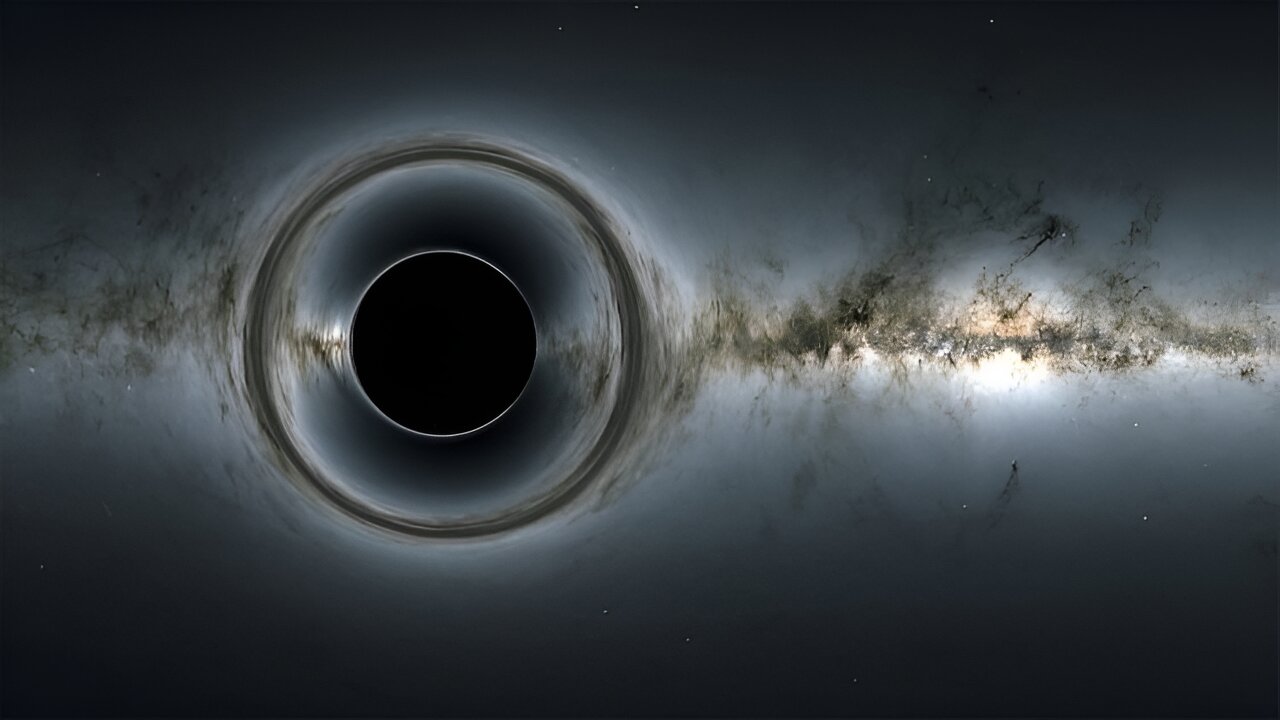
The monumental achievement of imaging a black hole required unparalleled precision, technology, and collaboration. The EHT utilized a global network of eight radio telescopes, effectively creating an Earth-sized virtual telescope capable of detecting faint signals from the depths of space.
The telescopes targeted the supermassive black hole at the center of the Messier 87 (M87) galaxy, located 55 million light-years away. The data collected from these observatories were synthesized to construct the now-iconic image of the black hole.
Key technical milestones include:
- Extreme Resolution: The EHT achieved a resolution of 15 microarcseconds, akin to seeing a grapefruit on the Moon.
- Massive Collaboration: Over 200 scientists from across the globe contributed to the project, showcasing the power of collective effort in tackling complex scientific challenges.
- Composite Imaging: By combining millimeter-wave radio signals, scientists were able to "see" the black hole indirectly by capturing its surrounding emissions.

3. Decoding the Image: What We See
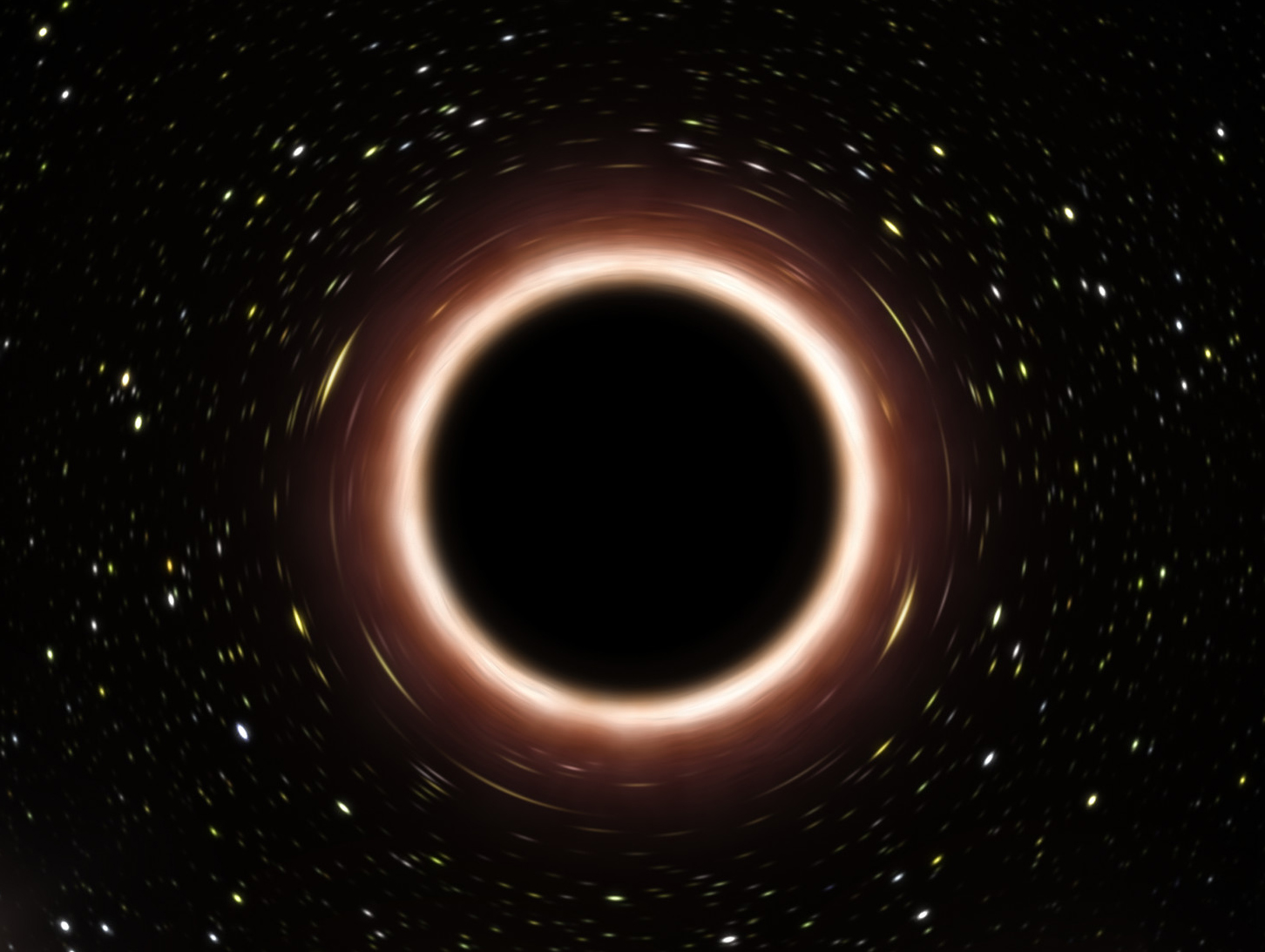
The image of the black hole is not just a picture; it is a composite of data revealing critical details about these cosmic giants. The key features include:
- The Bright Ring: The orange-red ring represents the accretion disk, a superheated collection of gas and dust swirling around the black hole. This material emits radiation as it spirals inward, reaching millions of degrees in temperature.
- The Shadow: The darker region within the ring, known as the black hole’s shadow, marks the event horizon—the boundary beyond which nothing, not even light, can escape.
This visualization provides a direct glimpse into the interaction of matter and gravity at extreme scales. It also aligns with theoretical predictions derived from Einstein's general theory of relativity, confirming its robustness even in the universe's most extreme environments.
4. Scientific Significance and Implications
The image of the M87 black hole carries profound scientific implications:
- Testing Theories of Gravity: This direct observation offers critical data to refine and test Einstein's theories, particularly general relativity, under extreme conditions.
- Understanding Galaxy Formation: Supermassive black holes like the one in M87 are thought to play a central role in galaxy formation and evolution, influencing the distribution of matter in their vicinity.
- Opening New Avenues: The success of the EHT paves the way for more detailed observations, potentially capturing event horizons or even mapping the dynamics of accretion disks.
Additionally, the project underscores the power of collaboration and technological innovation in achieving seemingly insurmountable scientific goals.
5. The Future of Black Hole Exploration
The EHT’s success is only the beginning. Plans are already underway to enhance the capabilities of the telescope array, enabling more detailed studies of black holes. Key future developments include:
- Higher-Resolution Imaging: Upcoming improvements in telescopic technology will allow scientists to observe finer details of black holes and their surroundings.
- Exploring Other Targets: Scientists aim to image the black hole at the center of our own Milky Way galaxy, Sagittarius A*, which poses unique observational challenges due to its smaller size.
- Dynamic Observations: Future advancements may even capture time-lapse images, revealing the changing behavior of black holes and their accretion disks in real-time.
With these advancements, the scientific community hopes to answer fundamental questions about black holes, their role in the cosmos, and their connections to phenomena such as gravitational waves.
Conclusion
The first direct image of a black hole represents a monumental leap in our understanding of the cosmos. By capturing this elusive phenomenon, the EHT collaboration has provided humanity with an unprecedented window into the universe's most mysterious objects.
This groundbreaking achievement not only validates long-standing theoretical models but also inspires a new generation of research and exploration. As we stand at the dawn of a new era in black hole studies, the legacy of this discovery will continue to illuminate the path of scientific inquiry for years to come.









Comments 0
Sign in to join the conversation.
No comments yet. Be the first to say something.