

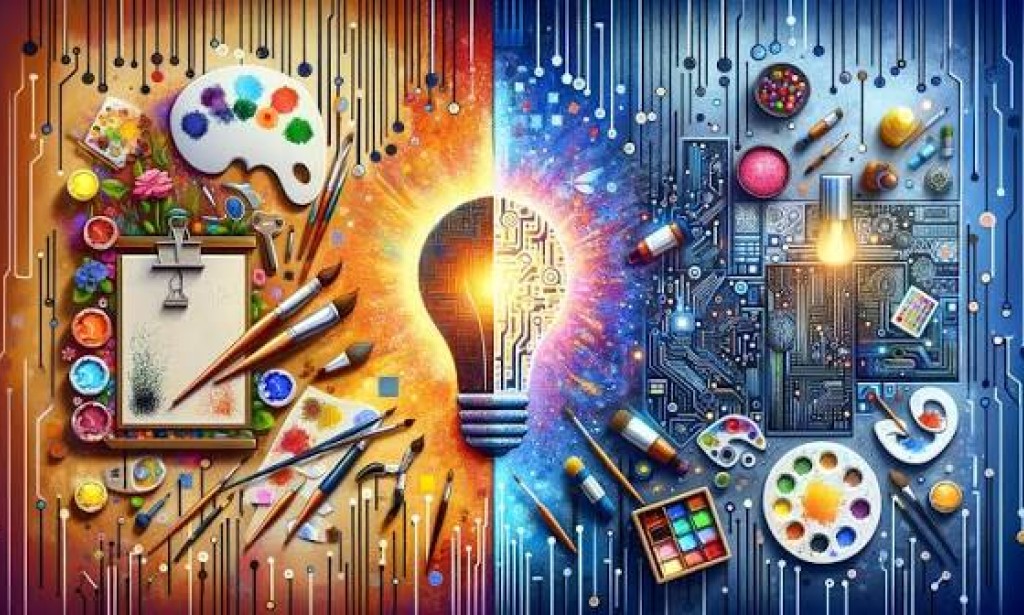
In the era of technologies and machines Can a machine truly be creative or is creativity a unique trait found only in human beings? Let's dig in to explore about it.
AI And Human Creativity
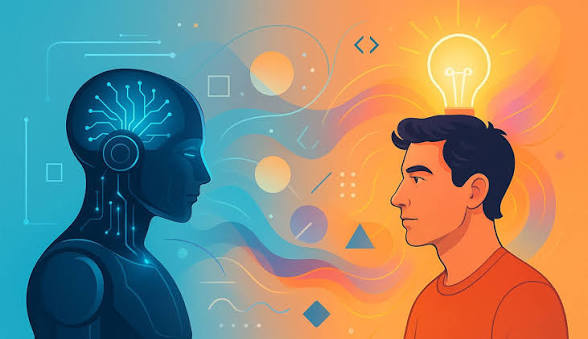
Artificial Intelligence (AI) is a technology that enables computer and machines to perform different tasks that usually needs human intelligence like learning, thinking, understanding language, problem solving and making decisions etc. AI works by using the given information (data) processes it in the forms of algorithms to identify patterns and learn from the information and generate responses.
Human Creativity is the ability of a human being to use their imagination, knowledge, experience and emotions to create new ideas, find different solution to problems and create something unique using their brain. It is the ability to think differently and turn ideas into something meaningful.
Human creativity is more than producing something new; it is the ability to give meaning, emotion, and purpose to our ideas.
The main characteristics of human creativity include imagination, critical thinking, originality, emotions and experience.Human creativity makes the world innovative, expressive, and meaningful. It helps people communicate emotions, develop new ideas, solve problems, and bring positive changes to society.
The Rise Of Artificial Intelligence
The rise of Artificial Intelligence (AI) is one of the most significant technological developments of the modern era. AI has rapidly transformed the way people live, work, communicate, and learn. What once seemed like science fiction has now become a part of our everyday lives.
With the development of machine learning, automation, and advanced computer systems, AI can perform tasks that previously required human intelligence. From answering questions and writing articles to creating images, composing music, and analyzing information, AI is changing almost every industry.
Some major reasons behind the rapid growth of AI are:
Easy access to information: AI provides quick answers and helps people find information.
Time-saving technology: It completes many tasks within seconds.
Content creation: AI can generate articles, images, videos, and music.
Education: Students use AI for learning, research, and understanding difficult topics.
Business and industries: Companies use AI to improve productivity and automate tasks.
How AI Is Changing Creativity
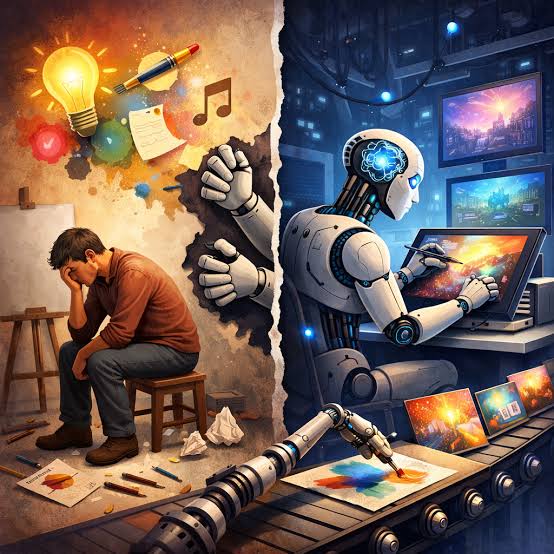
Artificial Intelligence is transforming the creative world by introducing new ways to generate ideas, create content, and express imagination. In the past, creative work mostly depended on human skills, knowledge, and personal experiences. Today, AI tools can help people write articles, design images, compose music, edit videos, and develop creative concepts within seconds.
AI is not only changing how people create things but also changing the creative process itself.
AI image generators allow users to create digital artwork from simple text descriptions. This has introduced new opportunities for artists, designers, and content creators.
Tasks that once required hours of work can sometimes be completed in minutes. This allows creative professionals to focus more on developing and improving their ideas.
Despite its benefits, AI has raised concerns about originality, copyright, and the value of human effort. AI-generated content may look creative, but it does not have human life experiences or emotions.
Can AI Really Replace Human Creativity ?
While AI continues to expand its creative abilities, the real question is whether technological intelligence can ever replace the imagination and emotional depth of the human mind. The answer is to this for me is no because AI cannot completely replace human creativity. However, it can change the way humans express, develop, and share their creative ideas.
Artificial Intelligence has become a powerful tool in the creative industry. It can write articles, generate images, compose music, edit videos, and even produce designs within seconds. These abilities make AI a valuable assistant for writers, artists, designers, and other creative professionals.
1. Human emotions:
Humans create through feelings, experiences, happiness, sadness, and personal struggles. AI can imitate emotions but does not experience them.
2. Original imagination:
Human creativity comes from imagination, curiosity, and the ability to think beyond existing ideas.
3. Personal experiences:
Every human has a unique story and perspective. These experiences often inspire meaningful creative work.
4. Critical thinking:
Humans can understand cultural values, social situations, and emotional connections in ways that go beyond simply generating content.
5. Human connection:
Creative work often becomes meaningful because people can relate to the emotions and experiences behind it.
Pros And Cons Of AI In Creativity
Like every technology, AI has both advantages and disadvantages. It offers exciting opportunities but also creates challenges for human creativity.
Pros of AI in Creativity
1. Saves Time and Effort
AI helps people complete creative tasks quickly, such as writing articles, editing videos, and designing images.
2. Generates New Ideas
AI can suggest fresh ideas, topics, and concepts that help writers, artists, and designers overcome creative blocks.
3. Makes Creativity Accessible
People without professional artistic or technical skills can use AI tools to create images, music, and written content.
4. Encourages Experimentation
AI allows creators to explore different styles, designs, and creative possibilities.
5. Improves Productivity
AI can handle repetitive tasks, allowing people to focus more on planning, imagination, and original ideas.
Cons of AI in Creativity
1. Reduces Human Creativity
Excessive dependence on AI may discourage people from developing their own imagination and creative thinking skills.
2. Lacks Human Emotions
AI can generate creative content, but it does not experience personal feelings, memories, or emotions like humans do.
3. Copyright Issues
AI-generated content can raise questions about originality, ownership, and the use of artists' work.
4. Lack of Originality
AI-generated work may sometimes look repetitive or lack the unique personal touch that makes human creativity special.
5. Threat to Creative Jobs
The increasing use of AI may reduce opportunities for some writers, designers, artists, and other creative professionals.
The Future: Humans And AI Working Together
The future is not necessarily about artificial intelligence replacing humans; instead, it is about humans and AI working together to achieve better results. As technology continues to develop, AI is becoming an important part of our daily lives, education, businesses, healthcare, and creative industries.
AI can perform repetitive tasks, analyze large amounts of information, generate ideas, and complete work quickly. On the other hand, humans bring emotional intelligence, personal experiences, imagination, critical thinking, and decision-making skills that machines cannot fully replicate.
For example, in the creative industry, AI can help writers develop ideas, designers create artwork, and filmmakers edit videos. However, human creativity and emotions give these creations meaning and originality.
In the workplace, AI can increase productivity by reducing workload and saving time. This allows people to focus more on complex tasks, innovation, and problem-solving.
However, successful collaboration requires humans to use AI responsibly. People must maintain control over important decisions and ensure that technology benefits society.
Conclusion
Ultimately, the future belongs neither to humans alone nor to AI alone. It belongs to those who understand how to combine human intelligence with artificial intelligence. Together, they can create opportunities, solve problems, and build a smarter and more innovative world.
"AI may be the tool of the future, but the fact is human intelligence will always be the force that guides it."






Comments 0
Sign in to join the conversation.
No comments yet. Be the first to say something.