

How to Check Your Car Before a Long Drive: A Step-by-Step Guide
A long drive can be enjoyable, but a small car problem can quickly turn it into a stressful experience. A weak battery, low engine oil, damaged tyre, coolant leak, or brake problem may leave you stranded or create a serious safety risk.
After reading this guide, you will be able to perform a basic pre-trip inspection of your car. You will know how to check important fluids, tyres, battery, lights, brakes, and other basic components before starting a long journey.
What You Need
You do not need expensive professional equipment for a basic inspection. Most checks can be performed visually or with a few simple items.
1. Clean Cloth or Paper Towel
Keep a clean cloth or paper towel with you. It is useful when checking the engine oil dipstick and cleaning dirt from different components.
2. Tyre Pressure Gauge
A tyre pressure gauge helps you check whether your tyres have the correct air pressure. Correct tyre pressure is important for safe handling, tyre life, and fuel economy.
3. Flashlight
A flashlight can help you inspect areas under the bonnet and underneath the vehicle, especially when lighting conditions are poor.
4. Basic Toolkit
A small toolkit containing common screwdrivers, pliers, and suitable spanners can be useful for minor issues. However, do not attempt repairs that require professional knowledge or equipment.
5. Owner's Manual
Your car's owner's manual contains important information such as recommended tyre pressure, correct fluid specifications, warning-light information, and maintenance recommendations.
Step 1: Check the Engine Oil
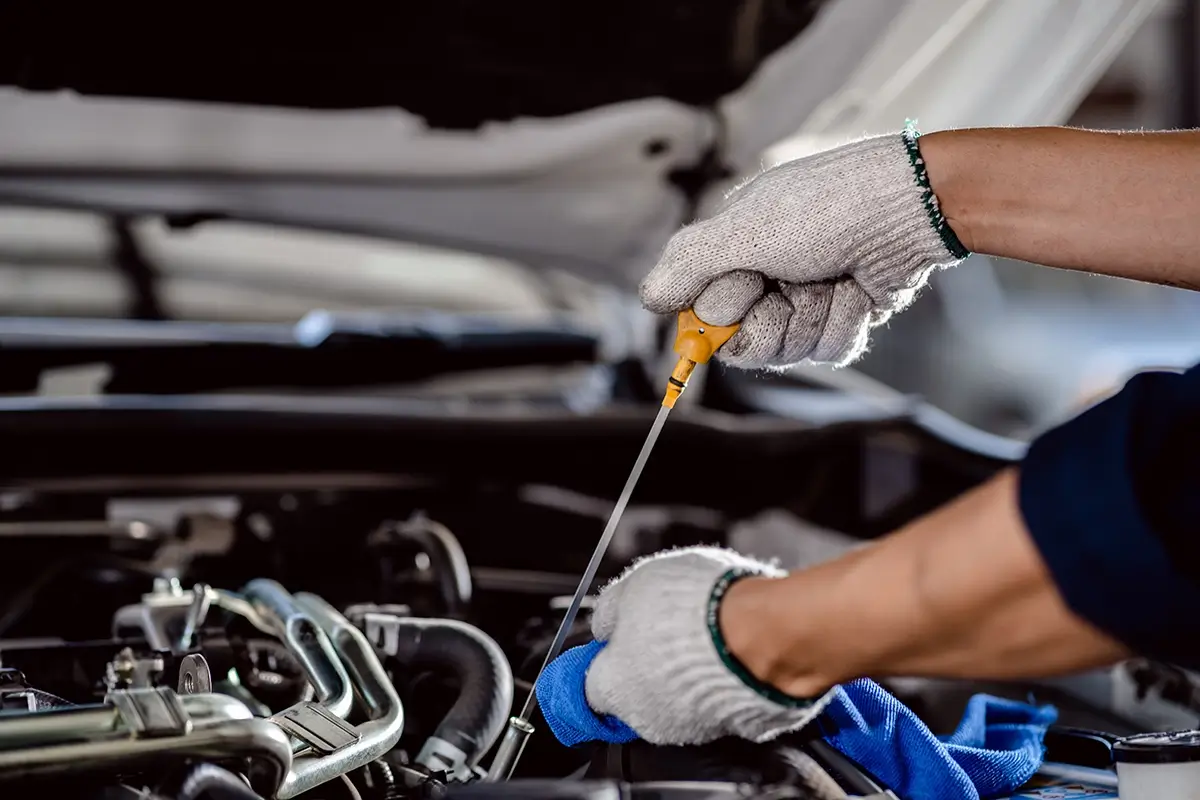
Engine oil is essential for lubricating and protecting moving engine components. Driving with insufficient oil can cause serious engine damage.
Park the vehicle on a level surface and switch off the engine. Follow the manufacturer's instructions about how long to wait before checking the oil, because the recommended procedure can vary between vehicles.
Open the bonnet and locate the engine oil dipstick. Remove it and wipe it with a clean cloth. Insert it fully again and then remove it to check the oil level.
The oil should normally be between the minimum and maximum marks on the dipstick. If it is below the recommended level, add the correct type of engine oil according to the owner's manual.
Do not overfill the engine. Too much oil can also cause problems.
Picture suggestion: A person checking the engine oil dipstick.
Step 2: Check the Coolant
The cooling system controls engine temperature. Insufficient coolant can contribute to overheating and potentially serious engine damage.
Always check coolant when the engine is cold. Never open a radiator cap when the engine is hot because the cooling system can be under pressure and hot coolant or steam can cause severe burns.
Check the coolant level in the expansion or reservoir tank. Look for the minimum and maximum markings. The coolant should be at the appropriate level specified by the vehicle manufacturer.
Also inspect around the radiator, reservoir, hoses, and underneath the vehicle for visible signs of leakage.
If coolant repeatedly becomes low, simply adding more coolant is not a permanent solution. The system should be inspected to find the cause.
Picture suggestion: Car coolant reservoir under the bonnet.
Step 3: Inspect All Four Tyres
Tyres are one of the most important safety components of a vehicle because they are the contact point between the car and the road.
Walk around the car and inspect every tyre carefully.
Look for cuts, cracks, bulges, exposed cords, nails, or unusual damage. You should also look at the tread condition.
Check the tyre pressure when appropriate using a tyre pressure gauge. Use the pressure recommended by the vehicle manufacturer. This information is often available on a label in the driver's door area or in the owner's manual.
Do not simply use the maximum pressure printed on the tyre sidewall as your normal target pressure.
Incorrect tyre pressure can affect handling, braking, fuel consumption, and tyre wear.
Do not forget the spare tyre if your vehicle has one. A flat spare tyre will not help you during an emergency.
Picture suggestion: Driver checking tyre pressure with a pressure gauge.
Step 4: Inspect the Battery
A weak battery may cause starting problems, especially after the vehicle has been parked for some time.
Open the bonnet and visually inspect the battery. Make sure the terminals appear secure and look for excessive corrosion around the connections.
If the battery terminals are loose, damaged, or heavily corroded, they may require proper servicing.
Pay attention to how the engine starts. Slow cranking can sometimes indicate a weak battery, although battery, starter, wiring, charging-system, and other faults can produce similar symptoms.
If you have the proper equipment and knowledge, the battery and charging system can be tested before a long journey.
Picture suggestion: Mechanic visually inspecting a car battery.
Step 5: Check the Brakes
Your brakes must be in good working condition before any journey.
Before leaving, pay attention to how the brake pedal feels. If the pedal feels unusually soft, goes too far down, or braking performance has changed, the system needs attention.
During normal driving, unusual grinding, scraping, or persistent abnormal noises while braking can indicate a problem.
You should also check the brake fluid reservoir according to the vehicle manufacturer's instructions. If brake fluid is unexpectedly low, do not just keep topping it up without determining why.
Brake systems are safety-critical. If you suspect a serious brake problem, have the vehicle inspected by a qualified mechanic instead of taking it on a long trip.
Picture suggestion: Car brake disc and brake pad inspection.
Step 6: Check All Lights
Vehicle lights help you see the road and allow other drivers to see your vehicle and understand your intentions.
Turn on the headlights and check both sides.
Check:
.Low-beam headlights
.High-beam headlights
.Front and rear indicators
.Brake lights
.Tail lights
.Hazard lights
.Reverse lights, where practical
You may need another person to help you check the brake and reverse lights.
Replace faulty bulbs or repair electrical problems before starting your journey. Clean dirty light lenses because heavy dirt can reduce visibility.
Common Mistakes to Avoid
Checking Coolant While the Engine Is Hot
Never remove a pressurized cooling-system cap while the engine is hot. Hot coolant and steam can escape suddenly and cause severe burns. Wait until the engine has cooled and follow the manufacturer's instructions.
Ignoring Small Oil or Coolant Leaks
A small leak may become worse during a long journey. If you notice repeated fluid loss, find the cause rather than simply topping up the fluid again and again.
Forgetting the Spare Tyre
Drivers often check the four tyres on the road but forget the spare. Inspect its pressure and condition if your vehicle carries one. Also make sure you have the correct jack and wheel-changing tools
Guessing Tyre Pressure
Do not guess the correct pressure or automatically inflate the tyre to the maximum number printed on its sidewall. Follow the vehicle manufacturer's recommended pressure
Ignoring Dashboard Warning Lights
A warning light is there for a reason. Some warnings indicate problems that can cause vehicle damage or create a safety risk. Identify the warning and its cause before travelling.
Replacing Parts Without Diagnosis
Modern vehicles contain many electronic sensors and control systems. A warning light or trouble code does not always prove that a particular sensor is faulty. Check wiring, connectors, power supplies, mechanical conditions, and other relevant components before replacing parts.
Carrying No Emergency Equipment
Depending on your journey and local requirements, useful items can include a properly inflated spare tyre or manufacturer-provided repair solution, jack, wheel tools, flashlight, warning triangle, first-aid kit, phone charger, and emergency contact information.
Conclusion
Checking your car before a long drive does not have to be complicated. Start with the most important areas: engine oil, coolant, tyres, battery, brakes, lights, wipers, visible leaks, belts, hoses, dashboard warnings, and fuel.
A basic inspection can help you notice problems before you are far from home. However, a visual check cannot guarantee that every mechanical or electrical component is working perfectly.
If you find a serious problem with the brakes, tyres, steering, engine temperature, fluid levels, or another safety-critical system, do not ignore it just because the car still drives.
Fix the problem yourself only if you have the correct knowledge, tools, and safe working conditions. Otherwise, have the vehicle inspected by a qualified mechanic.
A few minutes spent checking your car before a long journey can help reduce the risk of breakdowns, expensive repairs, and unsafe situations on the road.





Comments 0
Sign in to join the conversation.
No comments yet. Be the first to say something.