
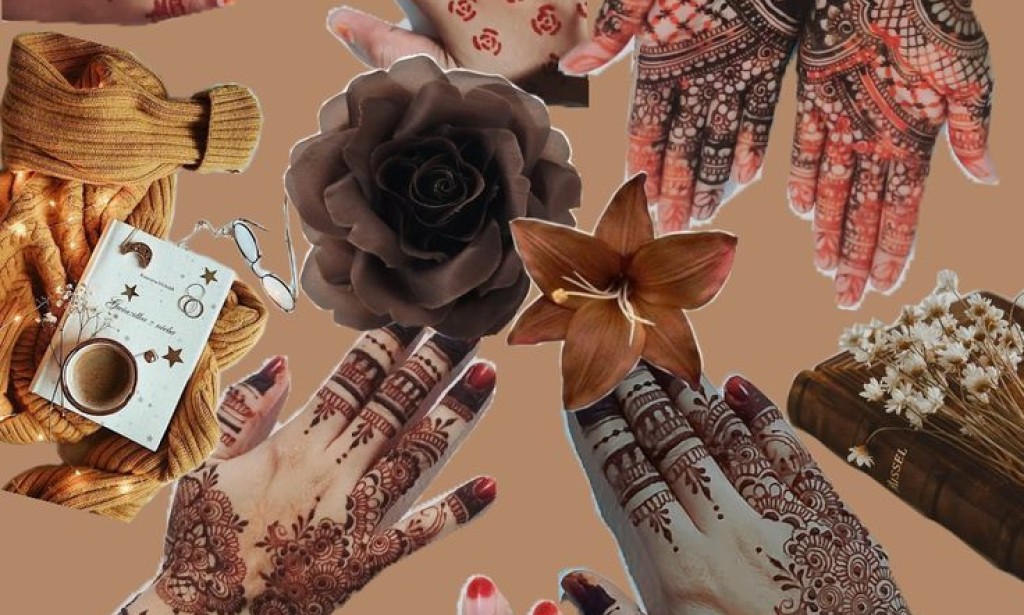
15 Trending Pakistani Mehndi Designs for Weddings in 2026
Mehndi is one of the most beautiful traditions of Pakistani weddings. From delicate floral patterns to detailed bridal designs, mehndi adds charm to a bride's appearance and makes wedding celebrations even more special. Whether you are preparing for your own wedding, attending a friend's mehndi function, or looking for inspiration for Eid, choosing the right design can be exciting.
In 2026, mehndi lovers can explore a wide variety of styles, including Arabic patterns, traditional Indian-inspired designs, minimal floral art, and intricate bridal mehndi. Some people prefer simple designs that take only a few minutes, while others love detailed patterns covering their hands and feet.
If you are searching for inspiration, here are 15 beautiful Pakistani mehndi designs to consider for weddings and festive occasions.
1. Traditional Pakistani Bridal Mehndi
Traditional Pakistani bridal mehndi is famous for its detailed patterns and artistic appearance. These designs often cover the palms, fingers, wrists, and sometimes the entire arms. Common elements include flowers, leaves, paisleys, and decorative shapes.
Brides may choose symmetrical designs that look similar on both hands. Some also include personal details, such as initials or meaningful symbols, within the patterns.
This style is ideal for brides who love traditional wedding customs and want their mehndi to complement their bridal outfit. Although these designs can take several hours to complete, their intricate details create a beautiful overall look.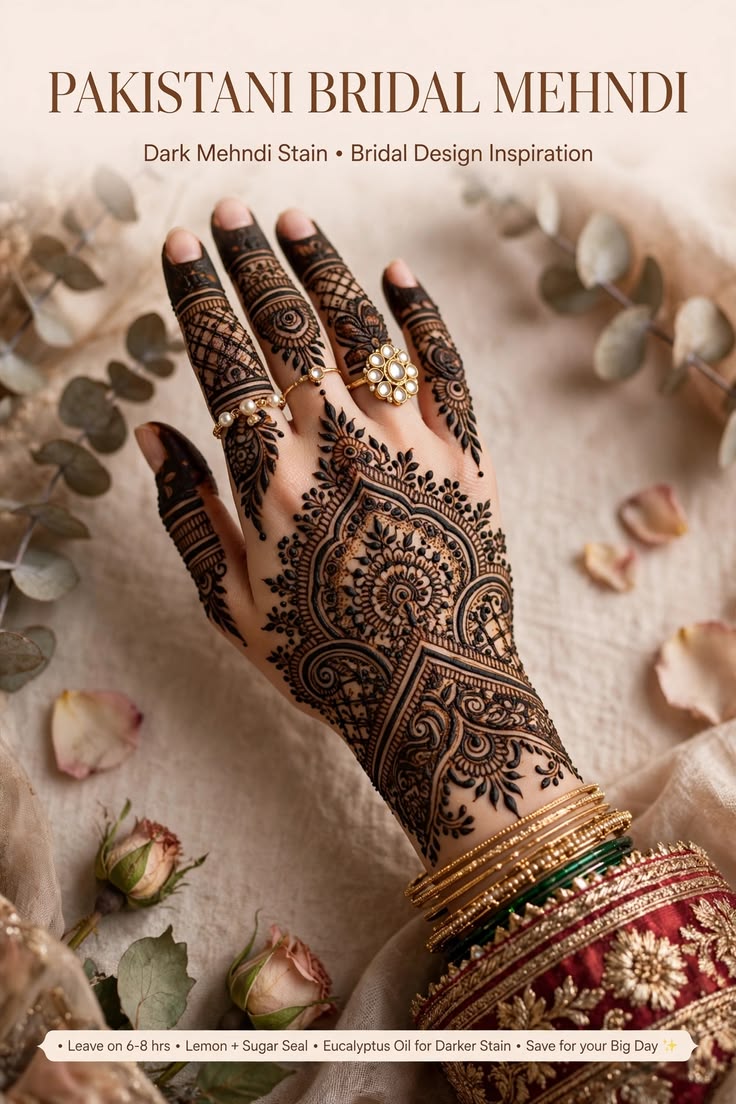
2. Arabic Mehndi Designs
Arabic mehndi is a popular choice for women who prefer elegant patterns with flowing lines. Unlike densely packed traditional designs, Arabic mehndi often features larger flowers, leafy vines, and curved shapes with plenty of open space.
These patterns usually move diagonally across the hand, creating a graceful appearance. They can look beautiful on the front or back of the hands.
Arabic mehndi is suitable for wedding guests, bridesmaids, and women attending family celebrations. It is also a good option for anyone who wants an attractive design without covering the entire hand.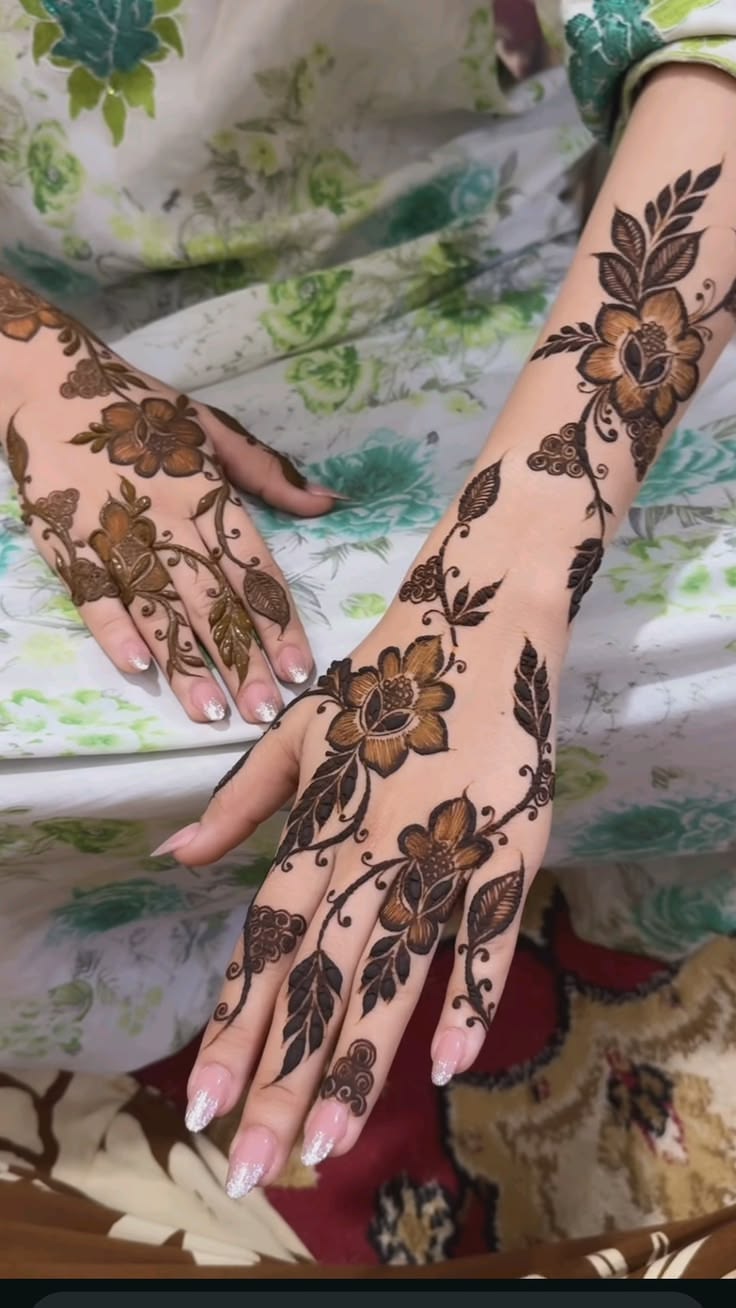
3. Simple Floral Mehndi
Floral mehndi designs are timeless and suitable for almost every occasion. They usually feature flowers surrounded by small leaves, dots, and delicate curves.
A single flower in the centre of the palm can create a simple design, while several connected flowers can form a pattern extending towards the wrist. You can also combine floral elements with thin lines for additional detail.
This style is ideal for people who appreciate minimal designs. It works well for Eid, engagement parties, family gatherings, and pre-wedding celebrations.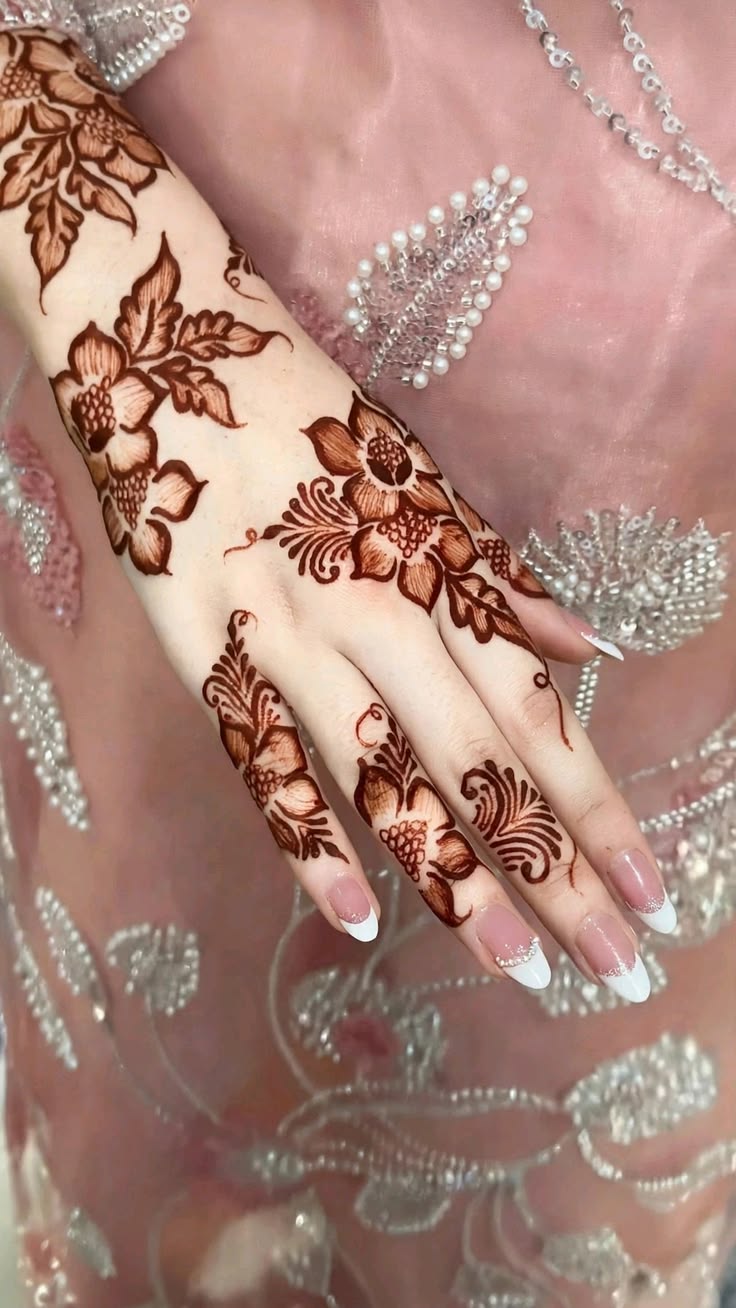
4. Mandala Mehndi Designs
Mandala mehndi features a circular pattern that begins with a central point and expands through repeated shapes. The design may include petals, dots, curved lines, and decorative borders.
A mandala placed in the middle of the palm creates a balanced appearance. Smaller mandalas can also be drawn on the back of the hand or near the wrist.
One advantage of this style is that it can be adapted to different preferences. A simple mandala is suitable for casual occasions, while a detailed version can complement a wedding outfit.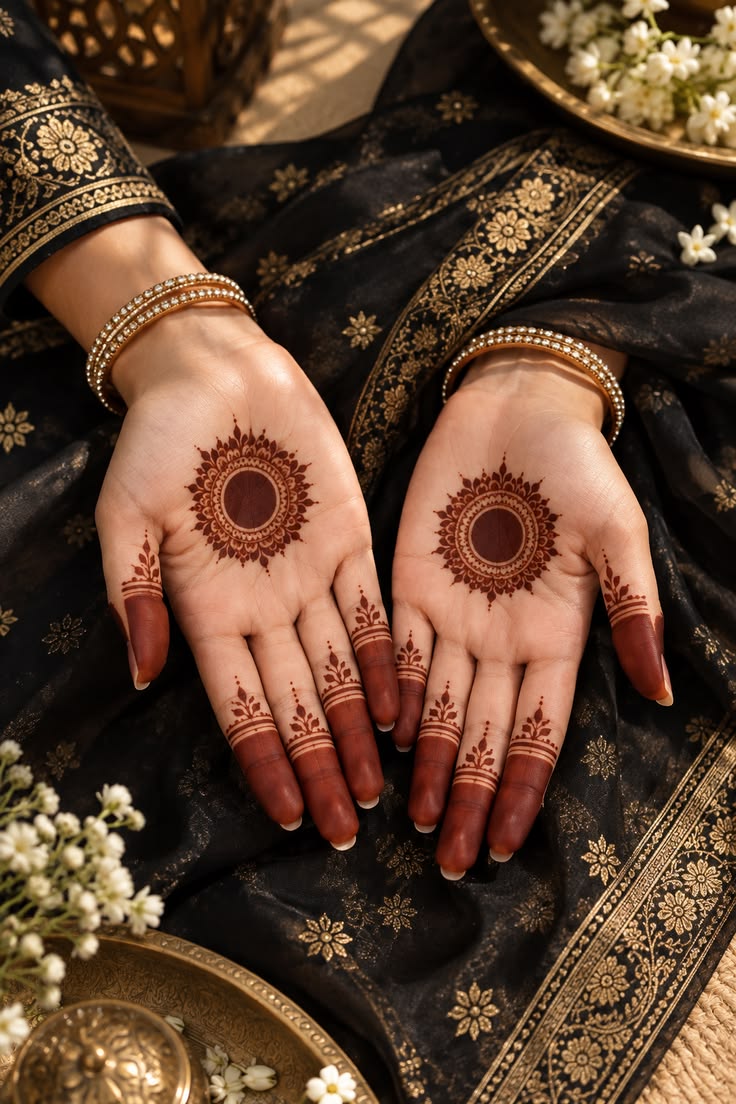
5. Finger Mehndi Designs
Finger mehndi is an excellent option for people who do not want a full-hand design. It focuses on decorating the fingers with rings, tiny flowers, leafy lines, dots, and geometric patterns.
Some designs cover only one or two fingers, while others decorate all the fingers with matching details. A small motif on the back of the hand can complete the look.
Finger mehndi is particularly suitable for short events or occasions when you want something neat and understated. It can also be combined with a bracelet-style pattern around the wrist.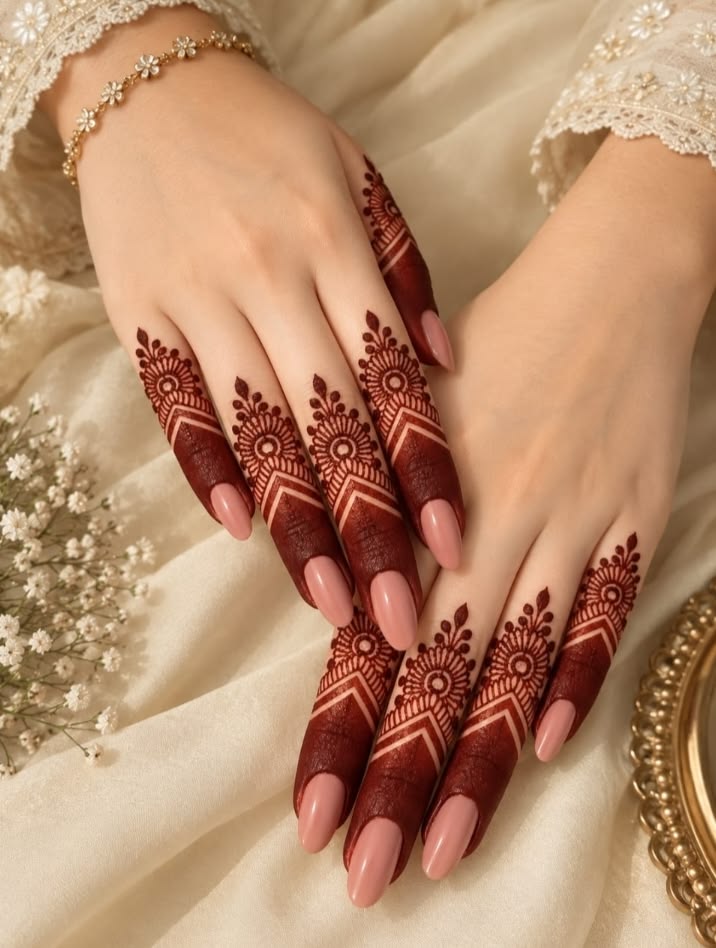
6. Back-Hand Mehndi Designs
Back-hand mehndi is popular because it allows the artist to create visible patterns without covering the palm. Designs may include flowers, vines, paisleys, and decorative lines extending from the fingers towards the wrist.
A central floral motif surrounded by smaller leaves can create an elegant arrangement. Arabic-inspired patterns also work beautifully on the back of the hand.
This style is a good choice for wedding guests and bridesmaids. If you prefer detailed designs but want to keep your palms free, back-hand mehndi is worth considering.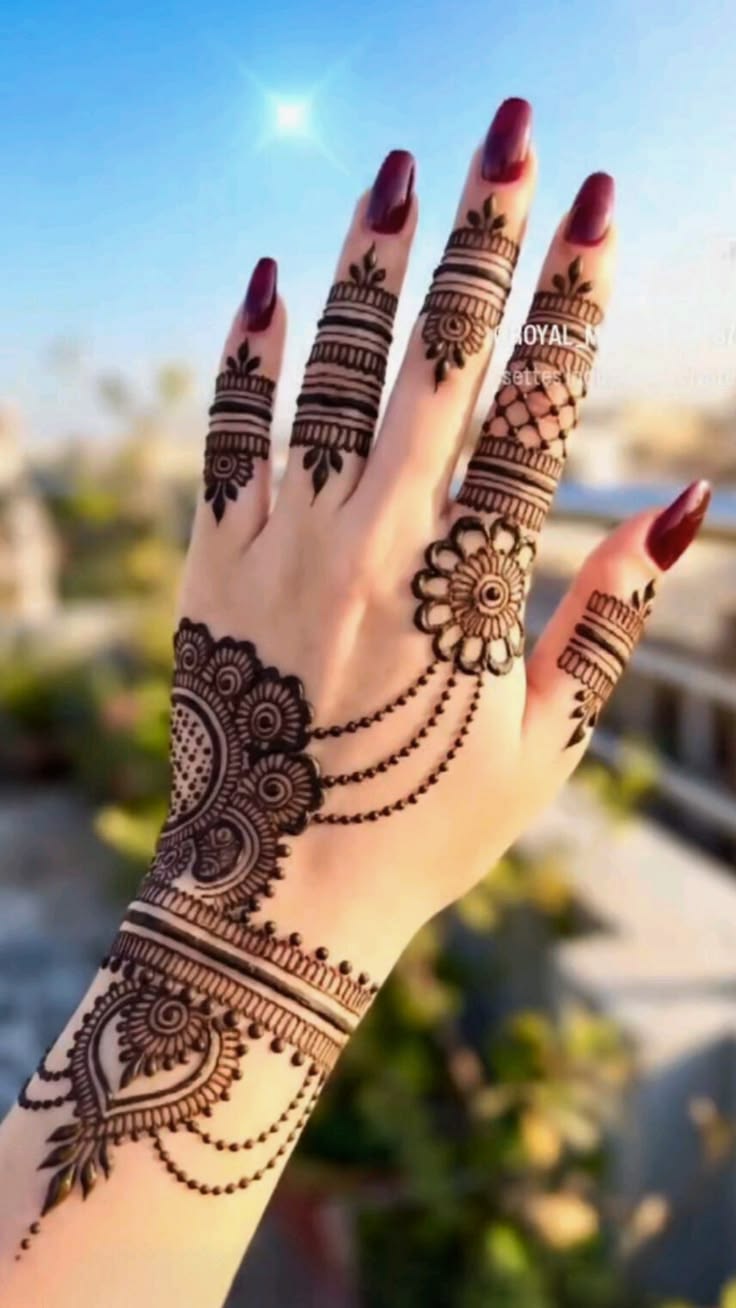
7. Minimal Mehndi Designs
Minimal mehndi is perfect for people who believe that simple designs can be just as beautiful as elaborate ones. These patterns may include a small flower, a delicate vine, a few dots, or a narrow design along the fingers.
Minimal mehndi is generally quicker to apply than full bridal designs. It is suitable for casual celebrations, Eid gatherings, and small family events.
You can also combine a small wrist motif with finger patterns to create a coordinated look. The key is to keep the design balanced rather than adding too many details.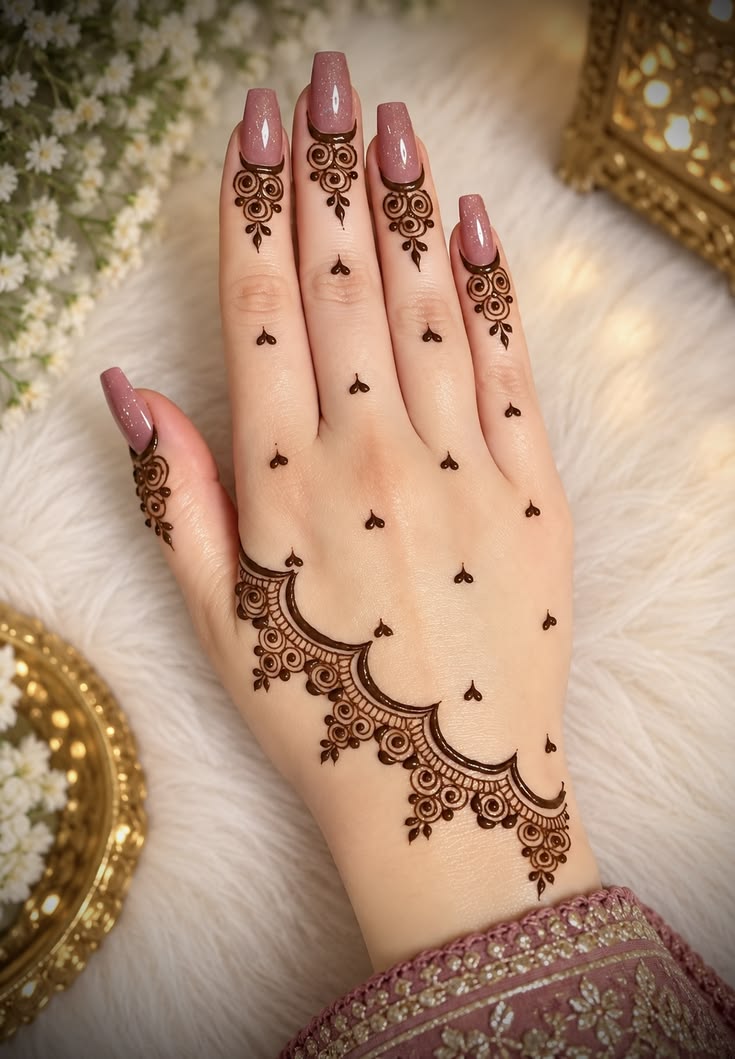
8. Peacock Mehndi Designs
Peacock motifs have a special place in traditional mehndi art. Their curved feathers, decorative bodies, and detailed shapes make them attractive elements in bridal patterns.
A peacock can be placed in the centre of the palm, along the wrist, or within a larger design covering the hand. Artists often combine the motif with flowers, leaves, paisleys, and fine lines.
This style is particularly suitable for brides who appreciate traditional patterns. A small peacock design can also work for wedding guests who want a distinctive motif without choosing a complete bridal pattern.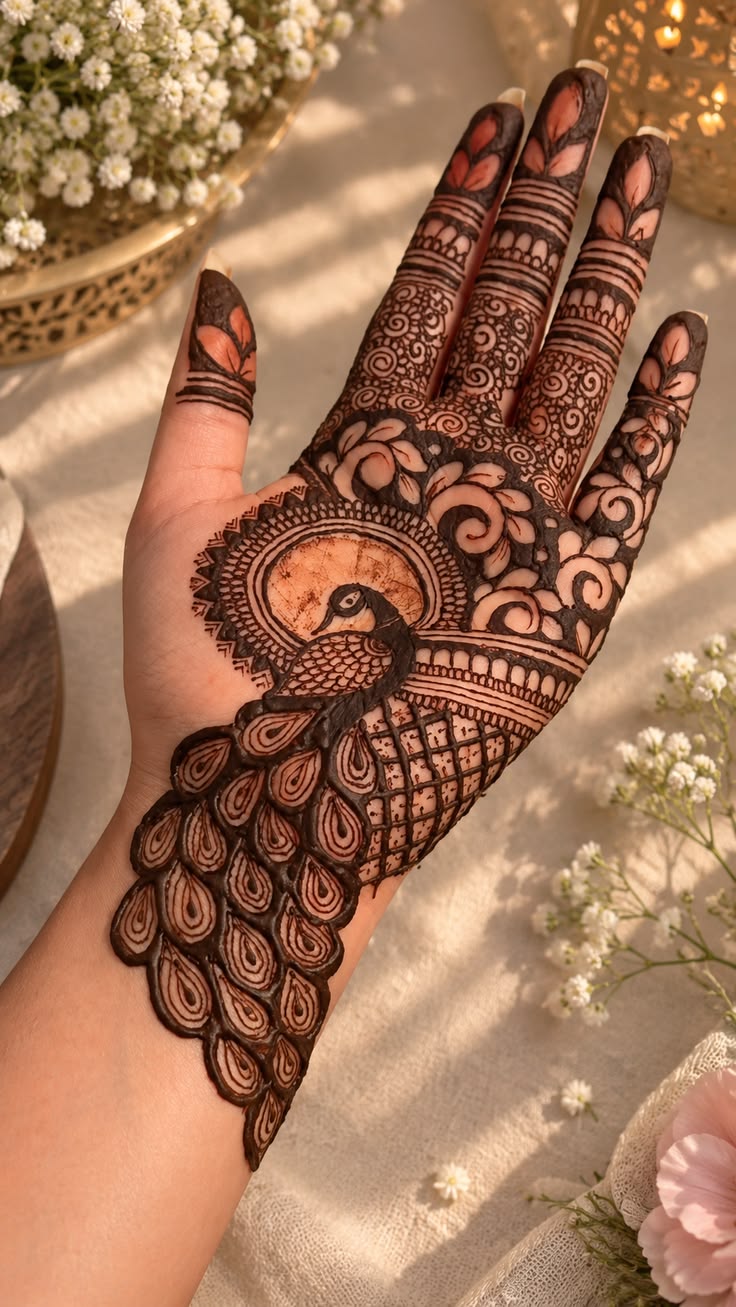
9. Paisley Mehndi Designs
Paisley is a classic motif frequently used in South Asian decorative art. Its curved, teardrop-like shape can be filled with dots, leaves, flowers, and fine lines.
Paisley patterns work well in both simple and elaborate mehndi designs. A single paisley on the palm can look elegant, while several connected motifs can form a detailed bridal arrangement.
These designs are easy to combine with floral and Arabic patterns, making them suitable for different occasions. If you want a traditional design with plenty of decorative detail, paisley mehndi is a beautiful option.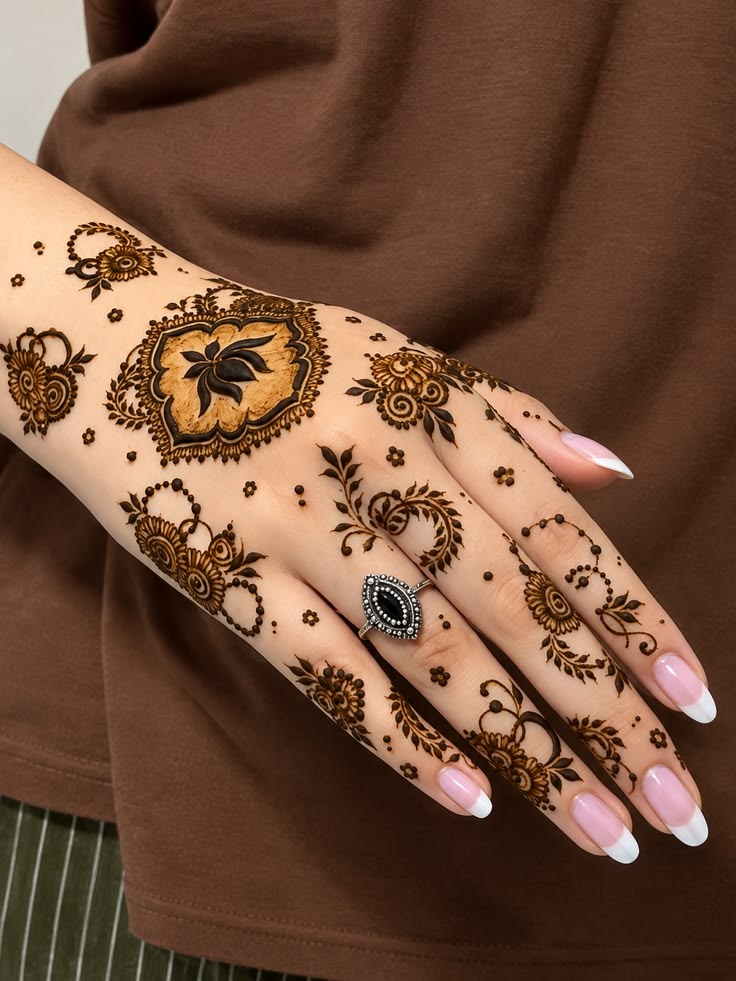
10. Bracelet-Style Mehndi
Bracelet-style mehndi creates the appearance of decorative jewellery on the wrist. It may feature connected flowers, curved lines, small circles, and hanging motifs resembling charms.
Some designs extend towards the fingers, while others remain around the wrist. This flexibility makes the style suitable for people who prefer either minimal or moderately detailed mehndi.
Bracelet mehndi can be especially attractive for engagement functions, wedding parties, and festive gatherings. It is also a useful choice when you want to decorate your hands without applying a full-hand pattern.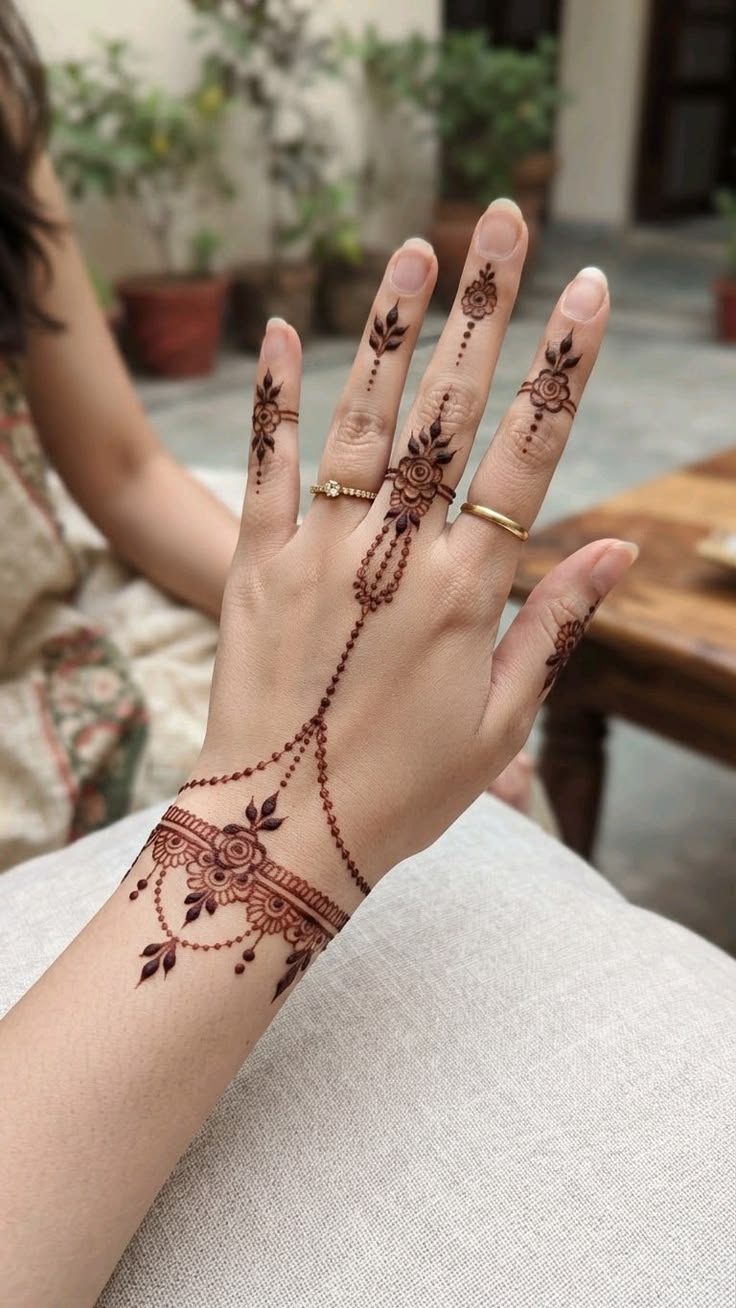
11. Jaal Mehndi Designs
Jaal mehndi features a net-like pattern created through intersecting lines. Small flowers, dots, and decorative shapes can be added inside the spaces to make the design more detailed.
This pattern is often used in traditional bridal mehndi, particularly when artists want to fill larger areas of the hand. It can also be combined with paisleys and floral motifs.
Jaal designs require steady hands and careful spacing. When applied neatly, they create an intricate appearance that works well for brides who enjoy detailed traditional art.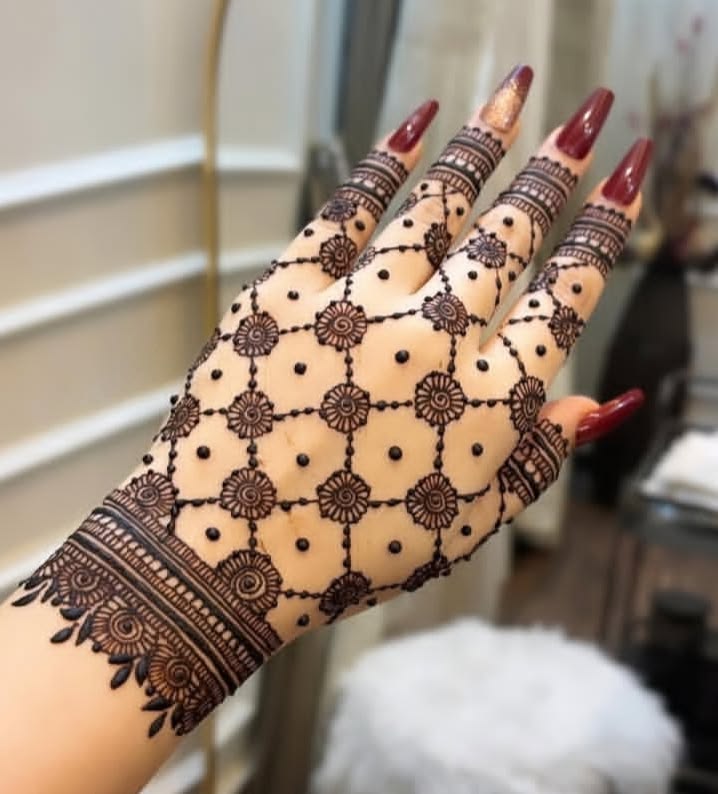
12. Moroccan-Inspired Mehndi
Moroccan-inspired mehndi uses geometric shapes, straight lines, triangles, diamonds, and symmetrical arrangements. Unlike heavily floral designs, these patterns often have a structured appearance.
The designs can be adapted to decorate the fingers, palms, wrists, or backs of the hands. Some artists combine geometric elements with small flowers to create a mixed style.
This option is suitable for people who want something different from conventional floral mehndi. It can also complement modern outfits and provide an interesting alternative for wedding guests.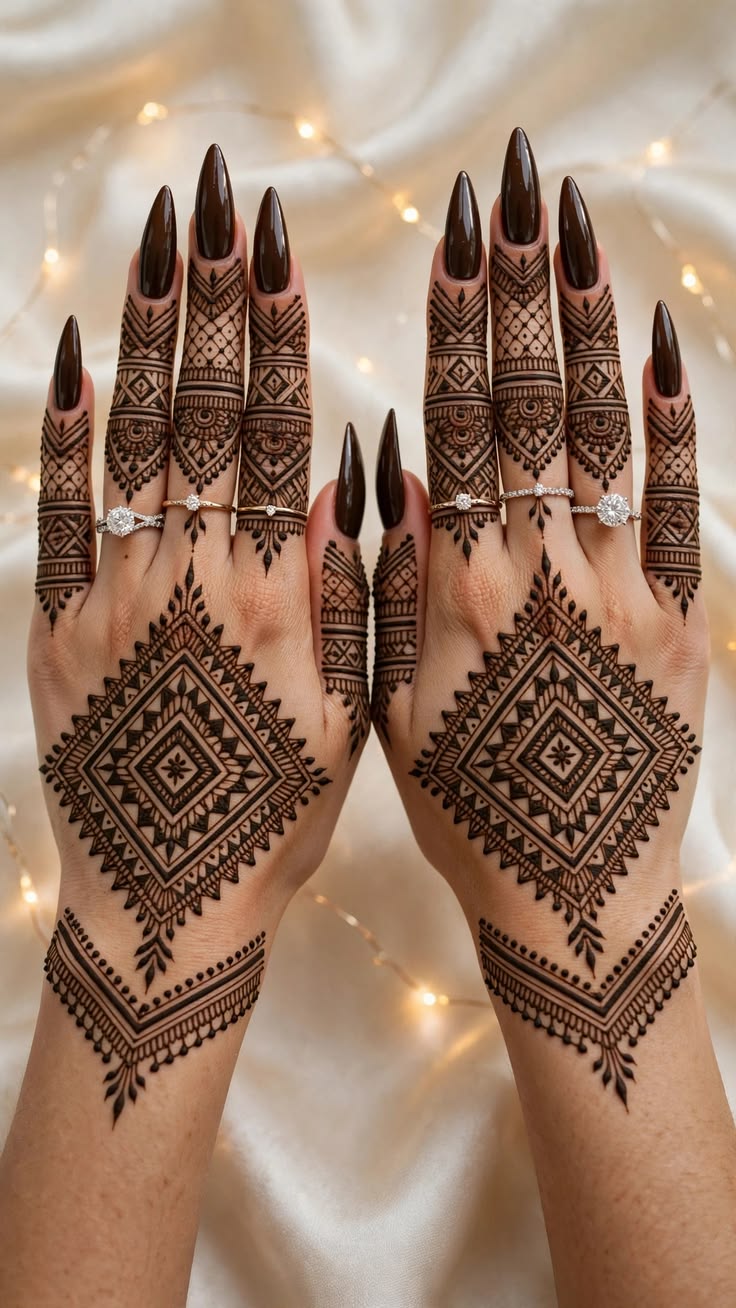
13. Bridal Mehndi with Personal Details
Many brides enjoy adding meaningful details to their wedding mehndi. These may include the initials of the couple, an important date, or a small symbol representing a shared memory.
Such details can be incorporated into floral patterns, paisleys, or traditional bridal designs. They do not need to dominate the entire pattern; a small hidden detail can make the design feel personal.
If you want this style, discuss your ideas with the mehndi artist before the appointment. Planning ahead gives the artist enough time to include the details neatly without making the design look crowded.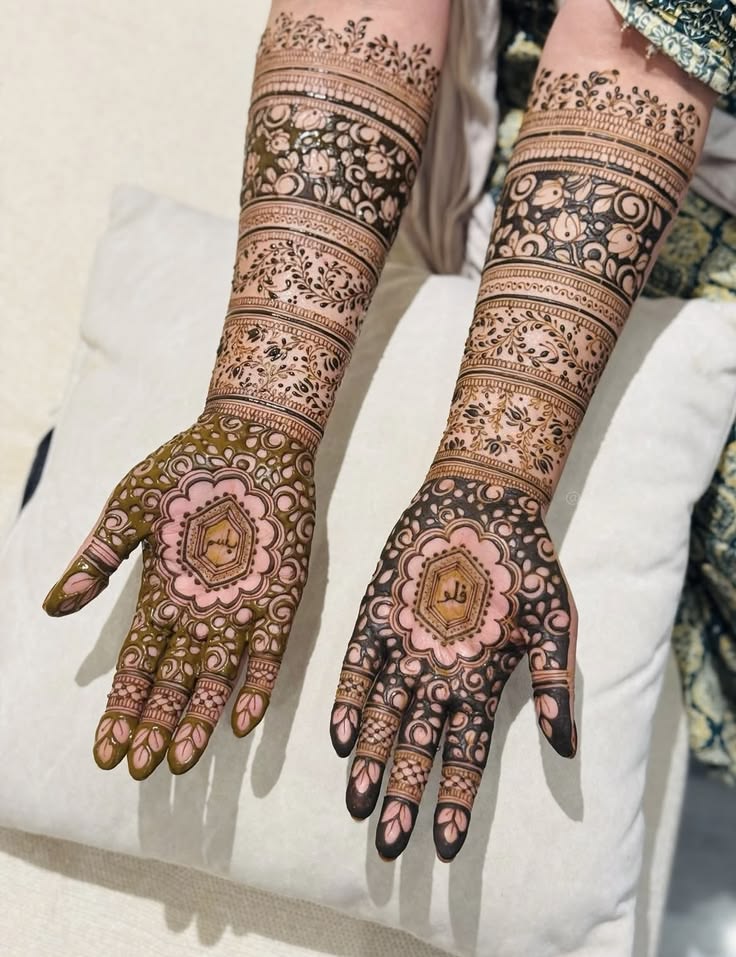
14. Full-Hand Mehndi with Floral Patterns
Full-hand floral mehndi combines flowers, leaves, vines, and decorative borders to cover most of the palm and fingers. Some versions extend from the fingertips towards the forearms.
The flowers may vary in size, creating a design with different levels of detail. Smaller leaves and curved lines help connect the motifs into a complete arrangement.
This style is suitable for brides and women who prefer traditional, elaborate mehndi. It can also be customised to match the embroidery or decorative elements of a wedding outfit.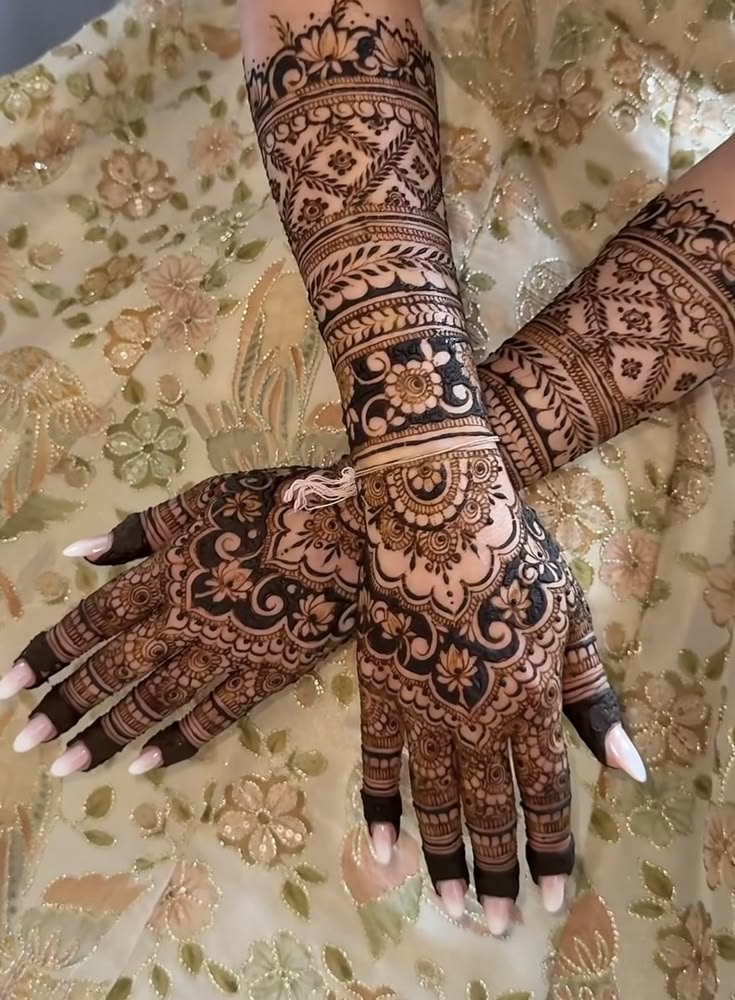
15. Mehndi Designs for Feet
Mehndi is not limited to the hands. Foot mehndi can add another decorative element to a bridal look, especially when the outfit allows the feet to be visible.
Popular designs include floral arrangements around the toes, anklet-style patterns, mandalas on the feet, and detailed motifs extending towards the ankles.
Brides may choose matching patterns for both feet, while others prefer a simpler arrangement. The design should complement the hand mehndi without necessarily repeating every detail.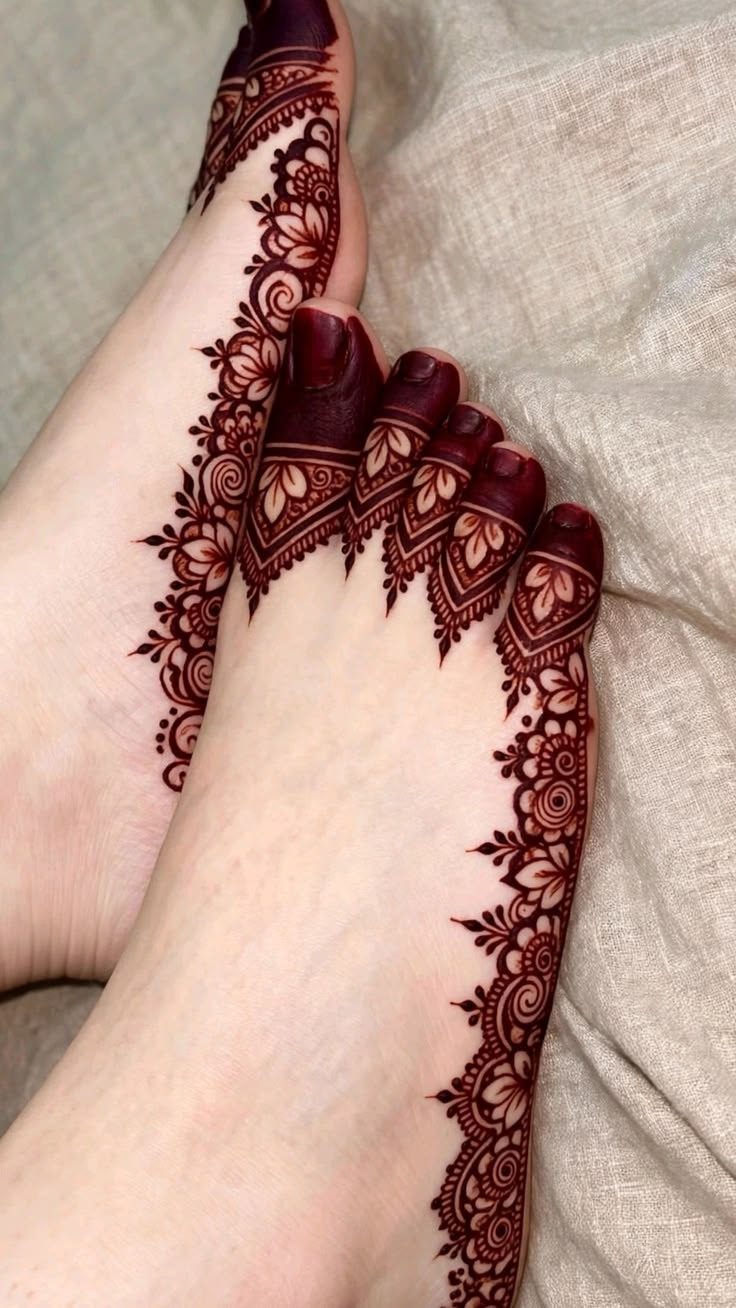
Tips for Choosing the Right Mehndi Design
Choose a mehndi design according to your occasion and personal style. Brides may prefer detailed bridal patterns, while wedding guests can opt for simple floral or Arabic designs. Save reference pictures to help your mehndi artist understand your preferences.
Consider the time required before selecting an intricate design. Always choose a skilled artist and skin-safe henna products for the best experience.
How to Get a Darker Mehndi Stain
Use fresh, good-quality natural henna for a beautiful stain. Follow the product instructions and allow the paste to remain on your skin for the recommended time. After removing it, avoid washing the area immediately. The colour may deepen over the next 24–48 hours.
Avoid black henna and harsh chemicals, as they may cause harmful skin reactions.
References
Conclusion
Pakistani mehndi designs offer something for everyone, from intricate bridal patterns to simple floral motifs and modern geometric styles. Arabic mehndi, mandala designs, paisleys, peacocks, and bracelet patterns remain useful sources of inspiration for weddings and festive occasions.
The best design is one that matches your personal preferences, the occasion, and the time available. Whether you choose a traditional full-hand pattern or a minimal floral design, mehndi can make your celebration feel even more special.

You must be logged in to post a comment.