


Imagine your first day at work after graduating.
You have spent years attending lectures, completing assignments, preparing presentations, and sitting through examinations. You know the theories behind your subject. You have studied its principles and perhaps even completed a final-year project.
But then reality begins.
You are expected to communicate professionally, manage your time, understand workplace expectations, solve unfamiliar problems, handle disagreements, and make decisions without someone explaining every step.
Suddenly, you realise that knowing your subject and knowing how to navigate the world are not always the same thing.
This raises an important question: Does a degree actually prepare us for real life, or does it prepare us mainly to pass examinations?
We Learn Subjects, But Not Always How to Use Them
Education gives us structured knowledge. We learn concepts, theories, methods, and processes that help us understand a particular field.
A student studying business learns about management, marketing, and financial principles. Someone studying computer science learns programming languages, algorithms, and computational thinking. A science student develops an understanding of scientific concepts and research methods.
All of this knowledge matters.
However, applying what we learn in an unpredictable situation can be very different from answering a question in an examination.
For example, a student may understand the theory of communication but struggle to explain a complicated idea to a colleague. Someone may study project management but find it difficult to coordinate a team with different priorities.
The problem is not necessarily that education has failed. It is that theoretical understanding and practical experience develop in different ways.
We need opportunities to connect the two.
A degree can give us the foundation, but applying that knowledge requires practice, experimentation, and sometimes making mistakes.
The Workplace Has Its Own Unwritten Rules
One of the biggest surprises after graduation is discovering that professional life involves much more than technical knowledge.
Knowing how to perform a task is important, but so is knowing how to work with people.
Consider a few everyday workplace situations:
How do you communicate when you disagree with a colleague?
What should you do when you receive unclear instructions?
How do you prioritise several tasks with the same deadline?
How do you ask for help without feeling that you are admitting failure?
How do you respond when someone gives you constructive criticism?
These situations may seem ordinary, but they influence how effectively we work.
Most academic programmes teach communication and teamwork in some form. Group assignments, presentations, and classroom discussions provide opportunities to practise these skills.
However, professional environments introduce different responsibilities. There are deadlines, workplace expectations, organisational structures, and people with different working styles.
A classroom presentation and explaining an important finding to a manager may require similar communication skills, but the circumstances are not identical.
This is why practical exposure matters. Internships, projects, volunteering, and workplace experience can help students understand expectations that are difficult to reproduce through textbooks alone.
Why Don't We Learn More About Money?
Another important area is financial literacy.
We can complete a degree, understand complicated academic concepts, and still feel uncertain about everyday financial decisions.
How should we prepare a monthly budget? What is the difference between saving and investing? How do interest rates affect borrowing? How can we recognise misleading financial offers?
These are questions people encounter outside the classroom.
Financial literacy is not simply about earning money. It involves understanding how to manage resources, evaluate choices, and plan for future responsibilities.
Some educational institutions offer financial literacy courses, economics subjects, or business-related programmes. However, many students finish their education without receiving much practical guidance on personal financial management.
This does not mean universities should turn every degree into a personal finance course.
It means basic financial education deserves a place in broader learning, whether through dedicated subjects, workshops, or accessible educational resources.
Understanding how money works is a life skill, not something relevant only to people studying finance.
Degrees Cannot Teach Us Every Life Skill
There are many responsibilities that become clearer only when we experience them ourselves.
Managing household expenses, organising personal commitments, making independent decisions, communicating with different people, and adapting to unexpected situations are all parts of everyday life.
Some of these skills can be taught through formal education. Others develop through family experiences, observation, practice, and personal responsibility.
For example, a university can teach students how to research a problem and evaluate information. But deciding how to apply those abilities when faced with an unfamiliar personal situation requires judgement.
Similarly, learning about time management is not the same as managing a schedule that includes work, family responsibilities, personal commitments, and unexpected interruptions.
Education can introduce useful principles, but applying them consistently takes experience.
Perhaps this is one reason people sometimes feel unprepared after graduation. They expect their qualification to provide answers to situations that were never part of their academic curriculum.
But no single degree can cover every challenge a person will encounter.

Is the Problem With Universities or Our Expectations?
It is easy to blame educational institutions whenever graduates struggle to adapt to professional or personal responsibilities.
However, the issue is more complicated.
Universities have specific academic objectives. They are expected to develop subject knowledge, critical thinking, research abilities, and professional foundations.
They cannot realistically prepare students for every possible workplace, industry, or life situation.
At the same time, educational institutions should recognise that students need more than theoretical instruction.
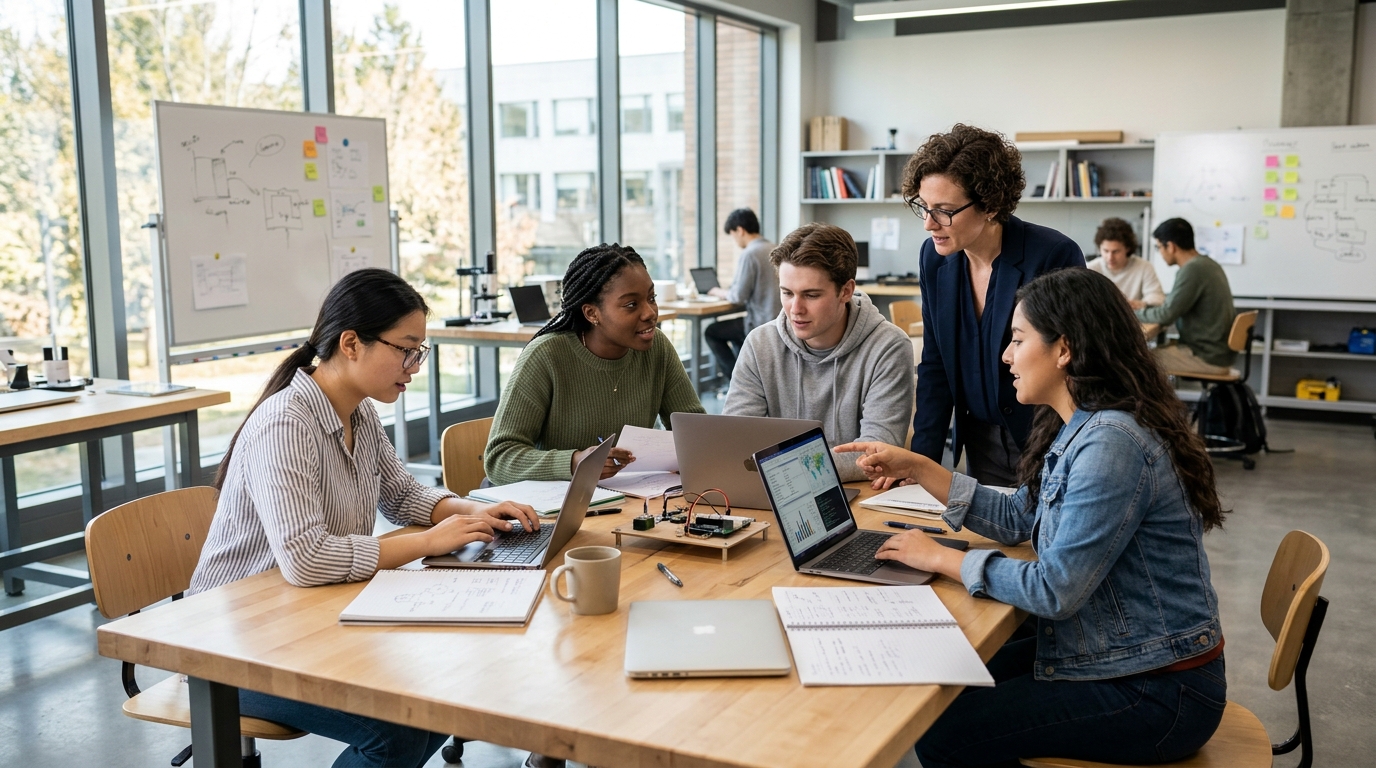
Practical assignments, internships, industry collaboration, problem-based learning, and opportunities to work on real-world challenges can make education more relevant.
Students also have a role to play.
Instead of treating graduation as the final stage of learning, they can seek practical experience, develop communication skills, explore different responsibilities, and learn outside their academic specialisation.
The responsibility is shared. Education should provide a stronger connection to the real world, while students should remain willing to learn beyond the classroom.
What Would a More Practical Education Look Like?
A degree does not need to become less academic to become more useful.
In fact, theoretical knowledge becomes more valuable when students understand how to apply it.
A more practical learning experience could include:
1. Real-world projects
Students should have opportunities to solve problems that resemble those they may encounter in professional environments, rather than completing assignments focused only on memorising information.
2. Financial literacy
Basic knowledge of budgeting, saving, borrowing, and financial decision-making can help students navigate everyday responsibilities.
3. Communication and teamwork
Presentations, group projects, discussions, and collaborative activities can help students develop the ability to express ideas and work with different people.
4. Practical workplace exposure
Internships, industry visits, professional mentorship, and work-based learning can help students understand how their academic knowledge translates into actual responsibilities.
5. Critical thinking and independent decision-making
Students should learn to evaluate information, question assumptions, identify problems, and consider different solutions rather than relying entirely on memorised answers.
These additions would not make degrees less valuable. They would make the learning experience more connected to the environments in which graduates eventually work and live.
A Degree Is a Beginning, Not a Complete Preparation for Life
Perhaps we expect too much from a qualification.
A degree represents years of effort, learning, and personal development. It can open professional opportunities, provide specialised knowledge, and help us build a foundation for our future.
But it cannot guarantee that we will know how to handle every responsibility that follows.
Some lessons arrive through professional experience. Others come from financial decisions, relationships, mistakes, changing circumstances, and everyday responsibilities.
The real world does not provide a syllabus before presenting its challenges. There is no examination timetable telling us when we will need to solve a difficult problem or make an unfamiliar decision.
And perhaps that is the point.
Education should not only prepare us to pass examinations or earn qualifications. It should help us become people who can continue learning, adapt to unfamiliar situations, and use knowledge beyond the classroom.
A degree can give us the tools to begin. What we do with those tools is another lesson entirely.
Graduating means we have completed a course of study. It does not mean we have finished learning.








Comments 0
Sign in to join the conversation.
No comments yet. Be the first to say something.