

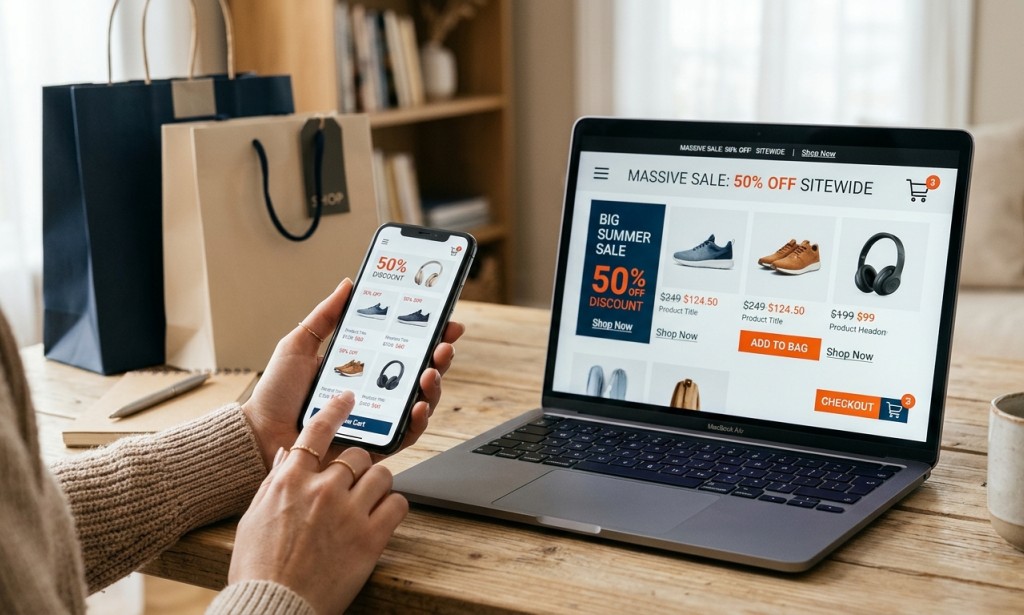
Introduction: The Temptation of a 50% Discount
Imagine opening an online shopping website just to look around. You have no particular plans to buy anything, but one product catches your attention. Its original price is Rs. 10,000, and now it is available for just Rs. 5,000.
A 50% discount. Half the original price.
It looks like an excellent deal. You might even think you would be foolish to miss it. Before you know it, the product is sitting in your shopping cart.
But there is one question worth asking: Did you actually save Rs. 5,000, or did the discount simply convince you to spend Rs. 5,000 on something you were not planning to purchase?
This is where the psychology of discounts becomes interesting.
Online shopping has made comparing prices and finding deals easier than ever. However, the way products are presented can influence how we evaluate their value. A discount is not simply a lower price. It can also change how attractive a product appears, how quickly we make decisions, and whether we feel comfortable spending money.
Understanding the psychology behind online shopping can help explain why a product that seemed unnecessary a few minutes ago suddenly feels like a bargain.
1. The Psychology of Discounts: Why Do We Love a Sale?
There is something appealing about seeing a product marked down from its original price. Even when we do not know whether the original price represents its actual market value, the reduced price can feel like an opportunity.
This happens partly because we rarely evaluate prices in isolation.
Consider two situations:
A product costs Rs. 5,000.
A product originally costs Rs. 10,000 but is now available for Rs. 5,000.
The final price is exactly the same. Yet the second option may feel much more attractive because we see the difference between the two prices.
This is connected to a concept in consumer psychology called reference pricing. We use a reference point to judge whether a price seems reasonable, expensive, or inexpensive.
When a seller displays an original price alongside a discounted price, that original figure can become the reference point for our decision.
The interesting part is that we may focus more on how much we appear to be saving than on whether the product is worth its current price.
2. How Price Anchoring Makes Discounts Look Attractive
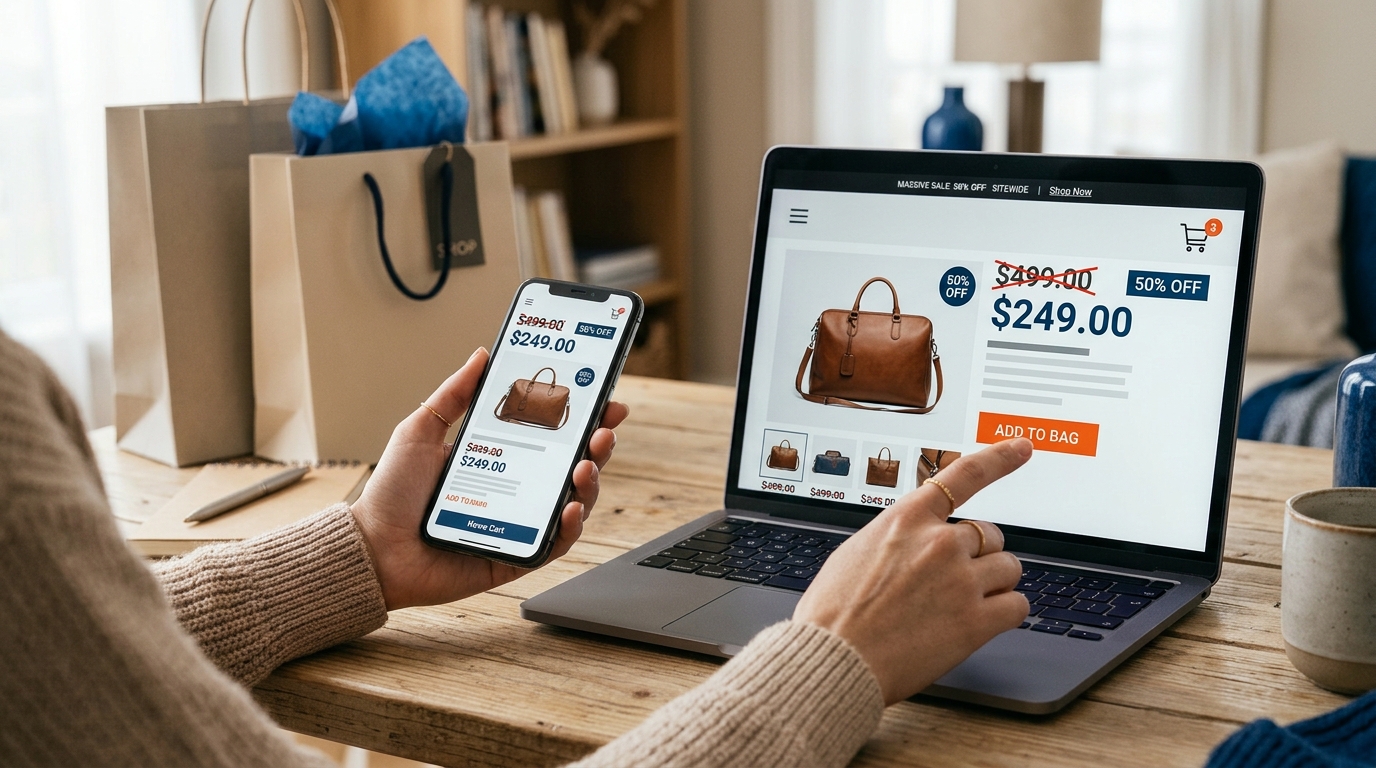
Have you ever noticed how online stores display an original price with a line through it and place a new price beside it?
There is a reason this presentation is so common.
It uses a psychological principle known as price anchoring.
Price anchoring occurs when an initial number influences how we evaluate a later number. In online shopping, the original price often becomes that initial reference.
For example, imagine seeing a pair of shoes listed at Rs. 12,000, reduced to Rs. 7,000.
Instead of asking whether Rs. 7,000 is a reasonable price for those shoes, we may immediately calculate the difference. The Rs. 5,000 reduction becomes the most noticeable part of the offer.
Now imagine seeing the same shoes listed directly at Rs. 7,000, without any discount label.
The product has not changed, and neither has the price. However, the shopping experience feels different.
This is why a discount label can influence our perception of value. It encourages us to compare the current price with the displayed original price rather than independently evaluating the product.
Of course, not every discount is misleading. Many retailers genuinely reduce prices. The important thing is to recognise that a crossed-out price is not automatically proof of a great bargain.
3. Why Limited-Time Offers Make Us Buy Faster
You are browsing an online store when a message appears:
"Sale ends in 10 minutes!"
Suddenly, the decision feels more urgent.
You might have wanted to compare the product with other options, check customer reviews, or wait until the next day. But now there is a possibility that the offer will disappear.
This is an example of scarcity marketing.
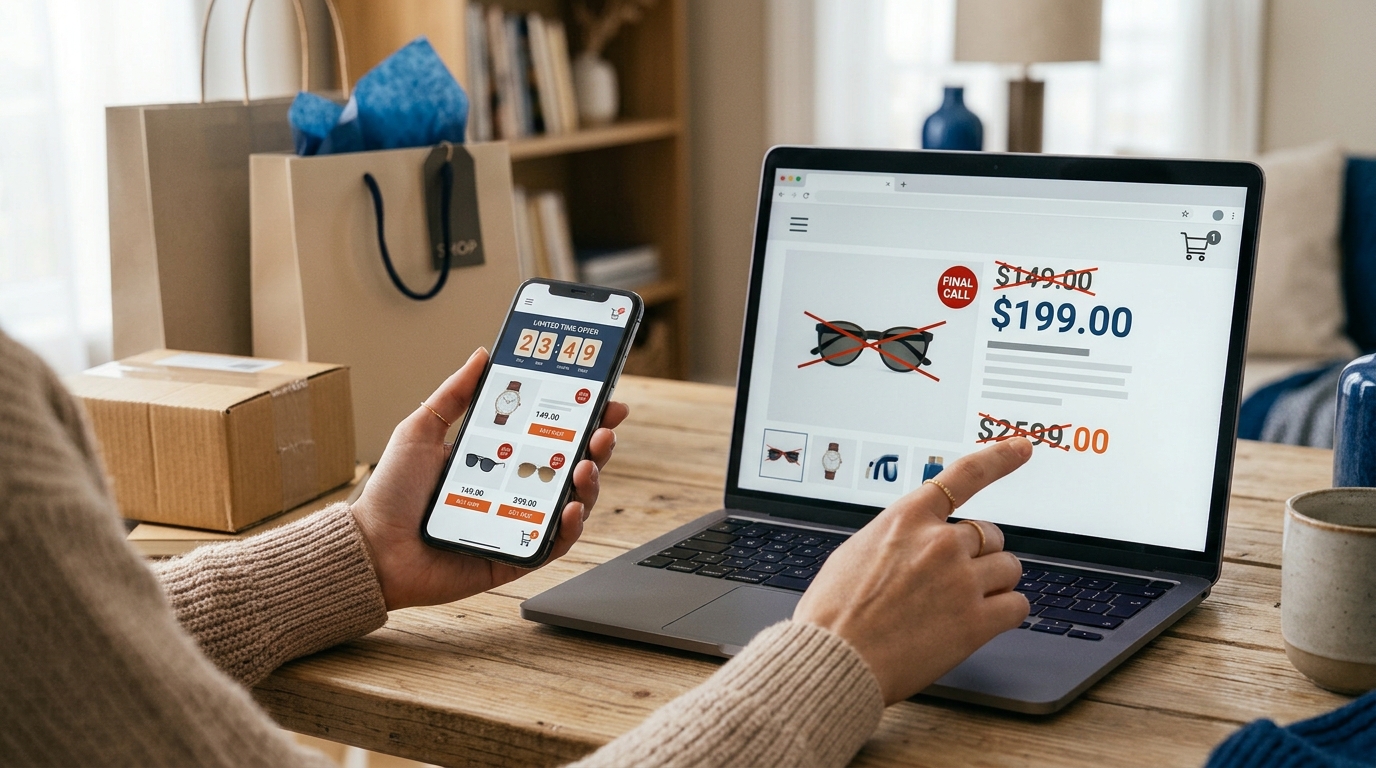
Scarcity marketing uses limited availability or limited time to make an offer appear more valuable. When something seems difficult to obtain, we may become more interested in getting it.
Online retailers frequently use messages such as:
Only a few items left!
Offer expires tonight.
Limited-time deal.
Last chance to save 50%.
These messages can create a sense of urgency, encouraging customers to make decisions before carefully considering their options.
The problem is not that every limited-time offer is dishonest. Some promotions genuinely have deadlines or limited stock. However, repeated urgency messages can make shopping feel like a race rather than a decision.
A useful habit is to pause and ask whether you would still purchase the product if the countdown timer were not there.
If the answer is no, the urgency may be influencing your decision more than the product itself.
4. Why Free Shipping Makes Us Spend More
Here is another familiar situation.
You add a product worth Rs. 1,700 to your shopping cart. At checkout, you discover that delivery costs Rs. 250.
But there is a message saying:
"Free delivery on orders above Rs. 2,000."
You now have two choices. Pay the delivery fee or add another product worth Rs. 400 to qualify for free shipping.
Many shoppers choose the second option because paying for delivery can feel like losing money without receiving anything in return.
Adding another product, on the other hand, feels like getting something extra.
This is an interesting example of how the presentation of costs influences consumer buying behaviour.
The problem is that the additional purchase may cost more than the delivery fee we originally wanted to avoid.
In this example, spending an extra Rs. 400 to avoid a Rs. 250 delivery charge means paying Rs. 150 more overall.
Free shipping is not necessarily a bad offer. It can be useful when we are already planning to purchase multiple items. But when we buy something unnecessary simply to reach a delivery threshold, the supposed saving becomes questionable.
Sometimes, paying a small delivery fee is actually the cheaper decision.
5. How Online Discounts Encourage Impulse Buying
Traditional shopping often gives us more opportunities to reconsider a purchase. We might walk around a store, compare different products, or decide to return later.
Online shopping works differently.
Products are displayed through personalised recommendations, promotional banners, notifications, and suggested items. A single purchase can lead to several more recommendations.
You may initially search for a phone case and then discover screen protectors, headphones, charging accessories, and other products you had not planned to buy.
Discount labels make these additional products even more appealing.
This can contribute to impulse buying, which refers to purchasing something without much prior planning or consideration.
Online shopping platforms make this easier by reducing the steps between discovering a product and purchasing it. Saved payment information, quick checkout options, and shopping applications can make the process feel almost effortless.
There is nothing wrong with occasionally buying something simply because we like it. The concern begins when repeated promotional messages and attractive offers encourage spending that does not fit our actual needs or budget.
6. Are All Online Discounts Genuine Bargains?
Not necessarily.
A product displaying a 40% or 50% discount does not automatically mean that it is being sold at an unusually low price.
Sometimes, the displayed original price may not reflect the price at which the product was regularly available. In other cases, a product may be discounted because a newer version has arrived, demand has changed, or the retailer wants to clear existing stock.
This does not mean every online sale is misleading. It simply means that the discount percentage should not be the only factor influencing our decision.
Before purchasing a discounted product, consider a few things:
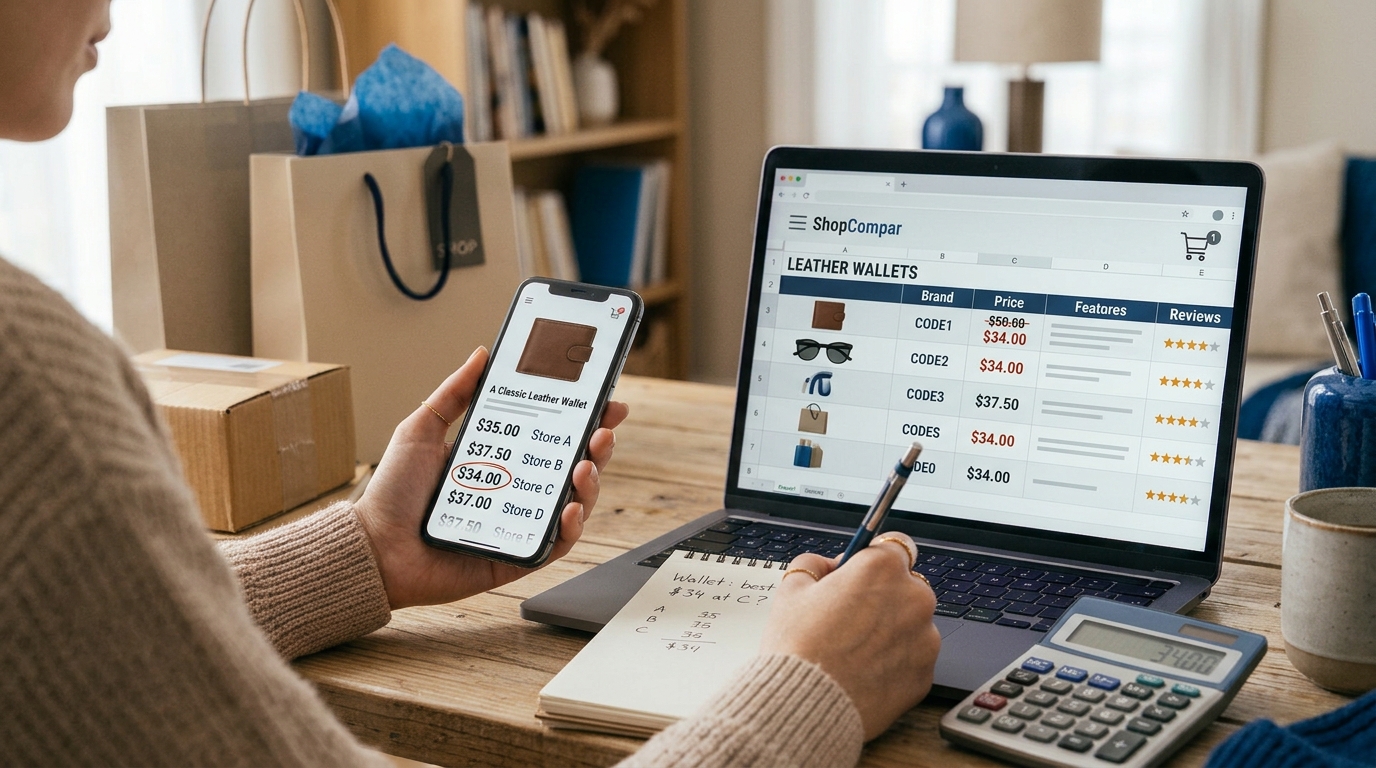
1. Compare prices across different stores.
A product advertised as 50% off on one website might be available at a similar price elsewhere without any discount label.
2. Check the product's price history when possible.
This can help you understand whether the current offer represents a genuine reduction.
3. Read customer reviews.
A lower price does not necessarily mean the product offers good quality or value.
4. Consider whether you actually need it.
A product is not a bargain simply because it is cheaper than before.
5. Calculate the final checkout price.
Delivery charges, additional fees, and other costs can change how attractive an offer really is.
The purpose is not to avoid discounts altogether. It is to make sure that the decision is based on the product's actual value rather than the excitement of a promotional message.
7. How to Become a Smarter Online Shopper
Understanding discount pricing psychology does not mean we need to stop enjoying online sales. Discounts can genuinely help us save money, particularly when purchasing products we already intended to buy.
The goal is to become more aware of the factors influencing our decisions.
A few simple habits can make a difference.
Make a shopping list before browsing. Knowing what you need can help prevent unrelated products from finding their way into your cart.
Set a spending limit. Decide how much you are comfortable spending before looking at promotional offers.
Give yourself time to reconsider. If a purchase is not urgent, leave it in your cart and return later. You may find the excitement around the discount has faded.
Focus on the final price. Ask whether you would purchase the product at its current price without the discount label.
Avoid unnecessary purchases for free shipping. Compare the delivery charge with the cost of adding another product.
These habits may sound simple, but they shift attention away from promotional messages and towards actual purchasing decisions.
Conclusion: A Discount Is Not Always a Saving
Online shopping has changed the way we discover products, compare prices, and make purchasing decisions. Discounts make this experience even more attractive by giving us the feeling that we are getting something valuable for less.
However, the psychology behind online shopping shows that our decisions are not always based on price alone.
A crossed-out original price can influence how we judge value. A countdown timer can make us feel rushed. Free shipping can encourage additional purchases, and personalised recommendations can introduce products we never intended to buy.
None of these techniques automatically makes an online shopping offer bad. They simply remind us that the way a deal is presented can be just as influential as the price itself.
So, the next time you see a 50% discount, take a moment before adding the product to your cart.
Instead of asking, "How much am I saving?", ask a more useful question:
"Would I still buy this if it were not on sale?"
Sometimes, the smartest bargain is the purchase we decide not to make.





Comments 0
Sign in to join the conversation.
No comments yet. Be the first to say something.