


"What is AI?"

Artificial intelligence used to belong to science fiction: glowing robots, scheming supercomputers, distant futures. Today it sits in your pocket. It suggests the next word in your message, filters spam from your inbox, and recommends the song you didn't know you wanted. The revolution didn't arrive with a bang. It slipped in quietly, one helpful feature at a time.
What AI Actually Is
At its core, AI is software that learns patterns from data instead of following only hand-written rules. Show a system millions of examples and it can learn to recognize faces, translate languages, or predict what comes next. The latest wave, generative AI, goes a step further: it can write, summarize, code, and create images. Tools like Claude can draft an email, explain a tricky concept, or help debug a program in seconds.
Where It's Making a Difference
The impact is easiest to see where time and expertise are scarce. In healthcare, AI helps radiologists spot anomalies in scans and speeds up the search for new drugs. In education, it acts as a patient tutor, explaining a math problem a fifth way until it finally clicks. In business, it handles repetitive work like sorting data, drafting reports, and answering routine questions, so people can focus on judgment and creativity. For small teams and solo founders, it feels like gaining a capable assistant overnight.
The Honest Challenges
None of this comes without trade-offs. AI systems can be wrong with total confidence, which makes human review essential. They can absorb biases from the data they learn from. Questions about privacy, copyright, and who benefits from automation are still being debated, and rightly so. Many workers worry about how their roles will change, and those concerns deserve serious answers rather than easy reassurance.
The best way to think about AI is as a powerful tool, not a replacement for human judgment. It is fast and tireless, but it doesn't understand your goals, values, or context unless you bring them to the table.
How to Learn AI? - A Practical Roadmap for Beginners
Learning AI can feel overwhelming. New tools launch weekly, the jargon is dense, and every expert seems to recommend a different starting point. The good news is that you don't need a PhD or a math degree to begin. You need a clear path, steady practice, and a willingness to build things that don't work the first time.
Step 1: Decide Your Goal
Before opening a single tutorial, ask what you want from AI. If you want to use it well in your job, you need prompting skills and good judgment, not code. If you want to build AI-powered apps, you need programming and some familiarity with APIs. If you want to research or train models, you need math and machine learning theory. Your goal sets your path, and it saves months of wandering.
Step 2: Start by Using It
The fastest way to understand AI is to work with it daily. Use an assistant like Claude to summarize articles, draft emails, explain concepts, or review your writing. Notice where it shines and where it confidently gets things wrong. That intuition is surprisingly valuable, and it makes every later lesson easier to absorb.
Step 3: Build the Foundations
If you want to go technical, focus on three things:
• Python. It's the main language of AI work, and it's beginner-friendly.
• Basic math. Get comfortable with the ideas behind probability, statistics, and linear algebra. You need the concepts first, not heavy proofs.
• Data skills. Learn to clean, explore, and visualize data, since most AI work starts there.
Step 4: Take One Structured Course
Pick a single well-reviewed course and finish it rather than sampling ten. Andrew Ng's machine learning courses, fast.ai, Kaggle Learn, and Hugging Face's free courses are popular starting points. Finishing one gives you a shared vocabulary and a solid base to build on.
Step 5: Build Small Projects
Tutorials teach you to follow instructions. Projects teach you to think. Start small: a classifier that sorts photos, a chatbot for your own notes, a tool that summarizes your weekly reading. Each project will force you to debug, search, and make decisions, which is where real learning happens. Share your work publicly so you get feedback and a portfolio.
Step 6: Go Deeper and Stay Current
Once you're comfortable, explore neural networks, language models, and how they're trained and evaluated. Follow a few trusted newsletters or researchers rather than chasing every headline. The field moves fast, but the fundamentals change slowly, so strong foundations keep paying off.
Chatbots:
Chatbots are programs that talk with you in everyday language, and they've come a long way from the clunky "press 1 for support" scripts of the past. Modern chatbots built on large language models can answer questions, draft emails, explain tricky ideas, and hold a natural back-and-forth conversation.
You'll find them in customer support, banking apps, shopping sites, and as general assistants like Claude. They work around the clock, respond instantly, and handle routine questions so people can focus on the harder ones.
Chatbots have specific jobs to do just like us, you can use them to code, generate videos, images, artificial voices, researching, write essays, applications, multi-tasking and much more.
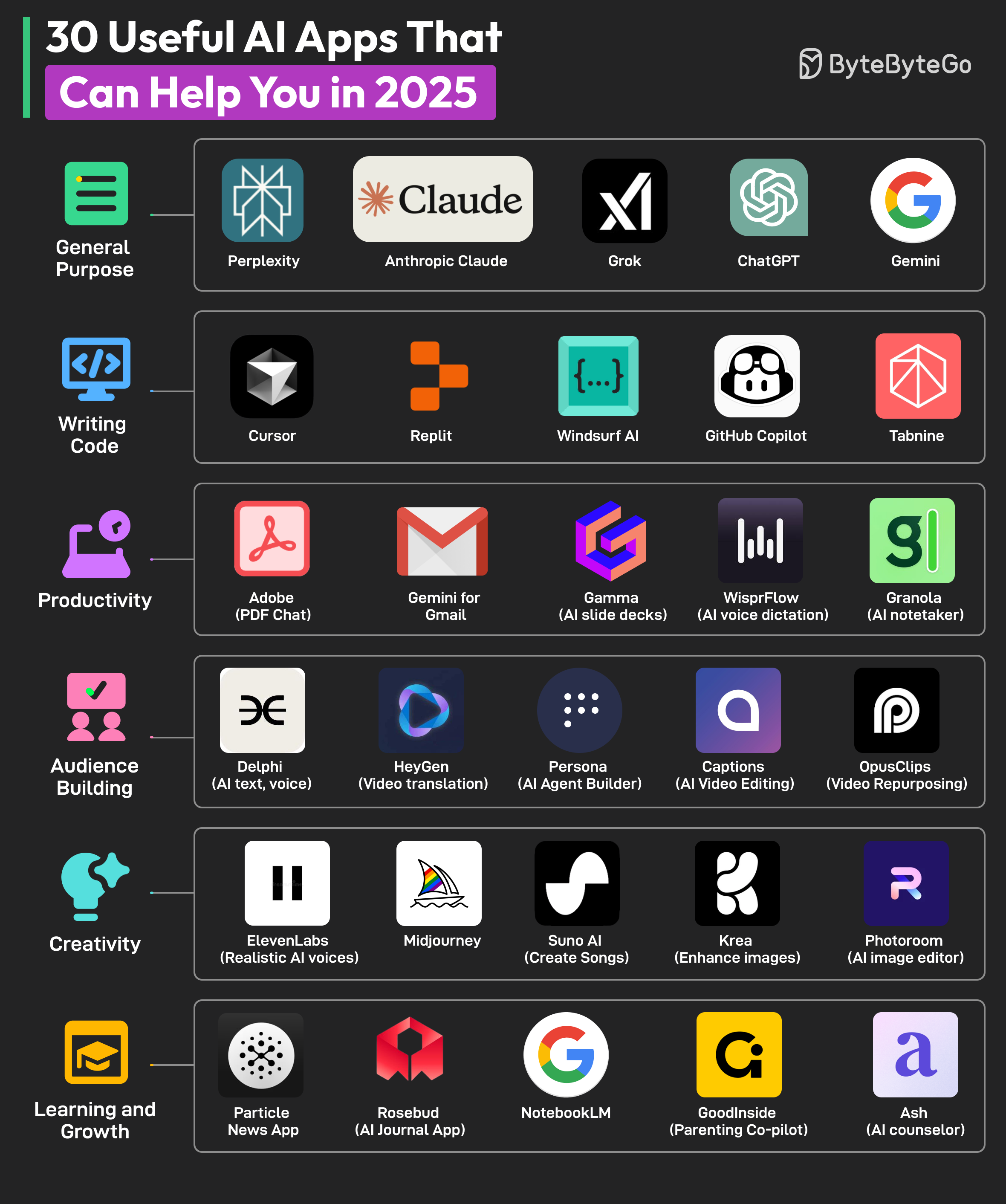
Thee are multiple chatbots that you can use in daily life:
ChatGPT - All-round assistance, writing, coding, images
Claude - Natural writing, long documents, coding
Google Gemini - Google integration, research, multimodal tasks
Microsoft Copilot - Microsoft Office and productivity
Perplexity - Web research with sources
DeepSeek - Reasoning, mathematics, coding
Meta AI - Everyday assistance and Meta app integration
Grok - Conversational AI and information from X
Poe - Accessing multiple AI models in one place
Mistral Le Chat - General assistance, writing, and multilingual tasks
Videos that will help you learn AI:
How to learn AI? https://youtu.be/0Tch0N5nsRU?si=Ij2T3ML2mmqI06q0
Basics of AI: https://youtu.be/nVyD6THcvDQ?si=-UYrnahKJZoQZdRQ
What is a "Chat-bot?" https://youtu.be/gmUHEvrpYoU?si=9IPGTJVVgTd_Oida
Watch these videos to learn more about AI.
---
Article was published by: Statei
Date: 25 - OCT - 2026








Comments 0
Sign in to join the conversation.
No comments yet. Be the first to say something.