

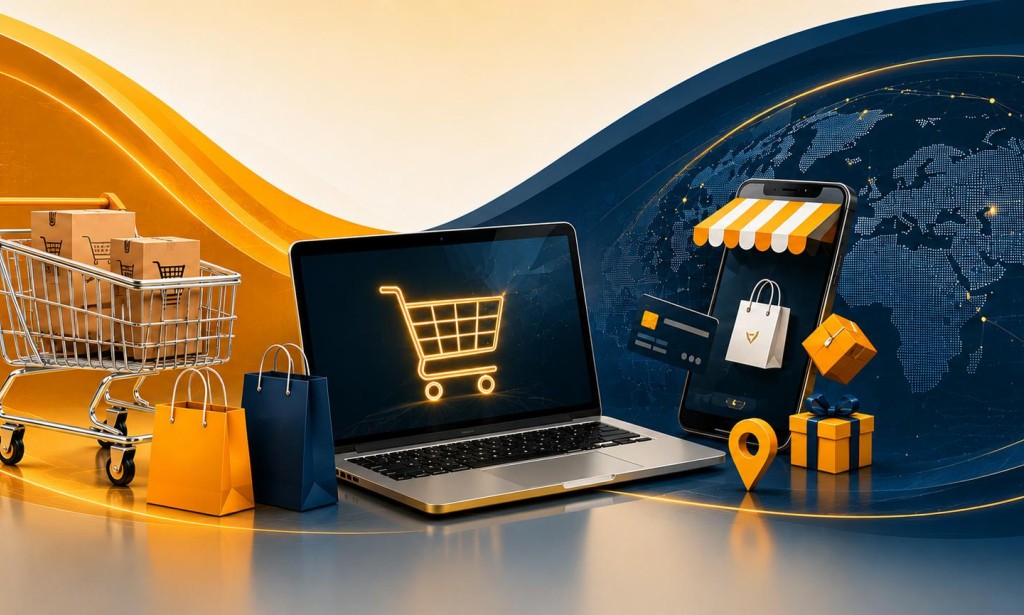
Understanding the basics of e-commerce

What is e-commerce?
E-commerce is also known as electronic commerce or internet commerce.
It is the online buying and selling of goods and services.
It includes receiving orders, delivering goods, and exchanging data through the internet.
Transactions include:
Digital buying and selling of products.
Online payments.
Online delivery of goods.
Online marketplace.
Four main types of e-commerce
B2C (business-to-consumer)
B2C commerce involves selling products or services directly to individuals.
This is a common mode of online shopping where customers visit an online marketplace and complete a
Sale.
B2C commerce sells products and services to consumers under one umbrella, like
AMAZON, Alibaba, and Walmart.
B2C transactions usually focus on consumer-friendly features, like ease of buying,
Marketing strategies
B2B (business-to-business)
This refers to the online sale of goods and services by one business to another business.
Like B2C, a B2B business can sell its products, raw materials, and software solutions and services to
other companies as well.
Here, the orders are high-value and involve long sales cycles.
B2B sales also involve several decision-makers.
Example:
A software company sells accounting or customer-management software to other firms.
.
C2C (customer-to-customer)
The online selling of goods and services between two
individuals.
In this mode of business, customers are facilitated by online
platforms and websites.
Where they connect and directly buy and sell goods and
services.
Examples:
eBay, Etsy, and many other online platforms that connect customers.
C2B (customer to business)
The digital selling of products and services by an individual to a business.
In this mode of business, customers provide value to the
business and earn some
Profit by selling their goods and services to the company.
This mode allows customers to name their own price.
Example:
If a customer has a useful idea for producing a new product
and the company uses this idea, and in return it pays the
Customer.
The core importance of e-commerce business:

E-commerce is the buying and selling of goods and services through the internet.
Like:
Buying any product from Shopify.
It is important globally for both buyers and sellers.
Shopping is simpler because it connects buyers and sellers directly.
It offers a wide variety of prices and products to B2C customers.
As internet use has increased, online shopping has grown.
It helps customers with low investments.
It allows customers and businesses to advertise and expand their marketplace.
Online shopping looks easy and simple, which attracts many customers.
It offers a direct connection between customers, which also reduces financial risks.
Ways to promote business
Through social media platforms.
SEO.
Through effective advertising for the brand.
Good quality email marketing.
How it actually works:

An e-commerce business transaction usually works through the following:
Online shop:
Customers first create an online shop where they sell their products and services.
This includes promoting the brand by adding pictures, including the qualities of the product and
prices of their products.
Customers and companies have their storefronts on many websites and Facebook pages for
advertisements.
Platforms to make an online shop:
Shopify
WooCommerce
Wix
Selection:
In this step, customers select their favorite products based on their qualities and price, then add
them to an electronic cart.
This is where customers begin shopping.
Many products and services are available, and customers can start a business.
Identification and checkout:
This process includes collecting important information about payment, delivery, and the connection
between buyer and seller.
Payment or payment commitment:
A payment gateway or any other secure method processes the payment
There are many other ways to record the information about payment.
The company can also create methods for payment by itself.
Management and delivery:
The system confirms the order, processes its delivery, and prepares for shipment.
It also updates the stock record.
If the product is digital, the system confirms the download.
After-sales service:
After the delivery of the product, the customer may ask questions and may return the product
This service also handles requests related to the warranties of products and personal data of
Customers.
Advantages and Disadvantages of E-Commerce
E-commerce has become an important part of modern business. It allows people to buy and sell products and services through the internet. Like other business methods, e-commerce has both advantages and disadvantages.
Advantages of E-Commerce
1. Easy Shopping
E-commerce makes shopping simple and convenient. Customers can buy products from home without visiting physical stores. They can place orders at any time.
2. Saves Time
Online shopping saves time because customers do not need to travel to different shops. They can search for products, compare prices, and complete purchases within minutes.
3. Wide Variety of Products
Online stores offer a wide range of products and services. Customers can explore different brands, compare product qualities, and choose according to their needs.
4. Global Reach
E-commerce allows businesses to connect with customers from different cities and countries. It helps companies expand their markets and reach more people.
5. Lower Business Costs
Starting an online business can require less investment than opening a physical shop. Businesses can reduce expenses related to shop rent and other physical store requirements.
6. Easy Product Promotion
Businesses can promote their products through social media, SEO, email marketing, and online advertising. These methods help attract new customers.
Disadvantages of E-Commerce
1. Security Risks
Online shopping involves sharing personal and payment information. If websites do not have proper security, customer information may be at risk.
2. No Physical Product Inspection
Customers cannot touch or check products before buying them. Sometimes, the delivered product may look different from the pictures shown online.
3. Delivery Delays
Online orders may sometimes arrive late because of shipping problems, weather conditions, or other delivery issues.
4. Internet Dependency
E-commerce requires an internet connection and a digital device. People without internet access may find it difficult to use online shopping services.
5. Return and Refund Problems
Some customers face difficulties when returning products or requesting refunds. The process may take extra time.
6. Strong Competition
Many businesses sell similar products online. It can be difficult for new businesses to attract customers and compete with established brands.
Conclusion
E-commerce offers many benefits, including easy shopping, time savings, global reach, and lower business costs. However, security risks, delivery delays, and product quality issues are some of its disadvantages. Understanding both sides helps customers and businesses make better decisions.
.









Comments 0
Sign in to join the conversation.
No comments yet. Be the first to say something.