

Introduction
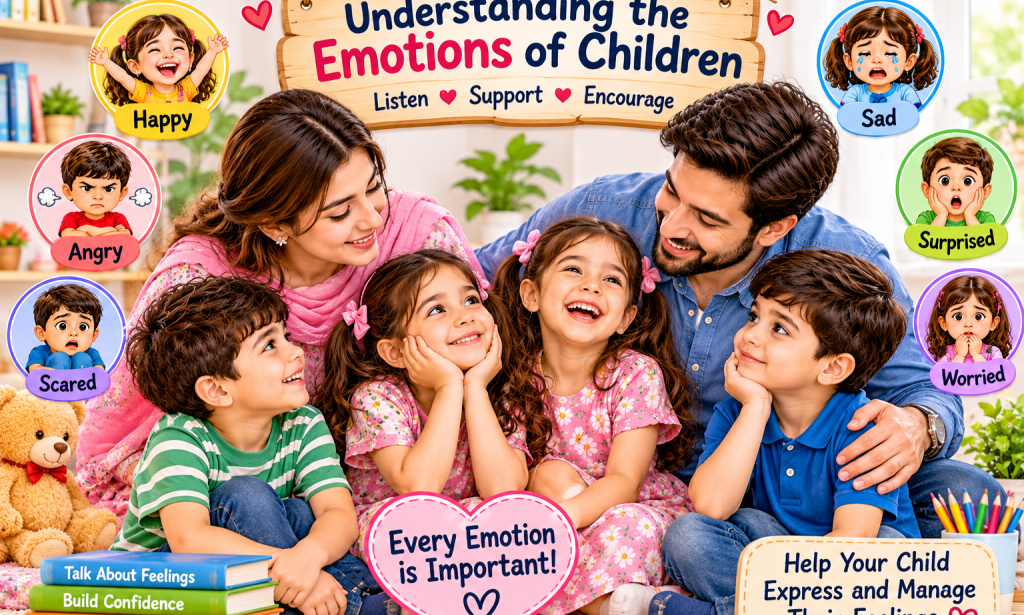
Have you ever seen a child burst into tears because a toy broke, become angry when asked to share, or refuse to talk after a difficult day at school?
To adults, these reactions may seem small. But for young children, emotions can feel enormous. They are still learning how to understand their feelings, communicate their needs, and respond to situations they find challenging.
Early childhood is about much more than learning the alphabet, counting numbers, or developing physical skills. It is also when children begin building emotional awareness, confidence, empathy, and social relationships.
Understanding children's emotions is therefore an important part of parenting and education. When adults respond with patience, attention, and appropriate guidance, they help children develop skills that can support them throughout life.

1. Why Emotional Development Matters in Early Childhood
Emotional development refers to a child's growing ability to recognize, express, and manage feelings. also includes learning to understand other people's emotions and build positive relationships.
Young children experience happiness, sadness, anger, fear, excitement, and disappointment. However, they do not always know how to express these feelings appropriately.
For example, a four-year-old who becomes upset because another child takes their favourite toy may start crying or shouting. The child may not yet have the communication skills needed to explain the problem calmly.
This is why emotional development deserves the same attention as academic learning. Children need opportunities to practice identifying feelings, communicating their needs, and developing healthy responses.
2. Remember That All Emotions Are Valid
One important lesson for parents and teachers is that no emotion should be treated as shameful.
Adults sometimes tell children:
• "Stop crying. You are a big child now."
• "There is nothing to be afraid of."
• "Good children don't get angry."
Although these statements may be intended to encourage good behavior, they can make children feel that expressing emotions is unacceptable.
Instead, adults should acknowledge feelings while teaching appropriate behavior.
For example, if a child becomes angry after losing a game, a parent might say:
"I understand that you are disappointed. Losing can feel upsetting. But we should not throw things or hurt anyone."
This response teaches two important lessons: feelings are natural, but behavior has boundaries.
3. Listen to Your Child Before Giving Advice
Children need to feel heard and understood. Sometimes, adults become so focused on correcting behavior that they forget to listen to the child's experience.
Imagine a child returning from preschool and saying, "Nobody wanted to play with me today."
Responding immediately with "Don't worry, you will find friends tomorrow" may overlook the child's present feelings.
Instead, try asking:
"That sounds like a difficult day. Can you tell me what happened?"
Give your child time to explain. Avoid interrupting, blaming, or immediately offering solutions.
These small conversations help children develop trust and confidence. They also teach them that talking about problems is a healthy way to handle difficult situations.
4. Teach Children to Recognize and Name Their Feelings
Children cannot always explain emotions because they may not have the vocabulary to describe them.
Parents and teachers can introduce simple emotional words during everyday conversations.
For example:
Picture books, storytelling, emotion cards, and pretend play are also useful learning tools.
A simple activity:
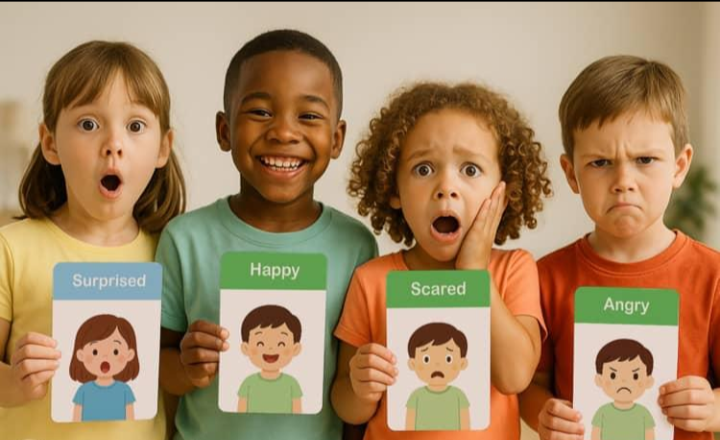
Show children pictures of different facial expressions and ask them to identify the feelings. They can also draw faces showing happiness, sadness, anger, and surprise.
This activity makes emotional learning enjoyable while helping children connect words with feelings.
5. Create a Safe and Supportive Environment
Children need an environment where they can express feelings without fear of being laughed at, ignored, or unnecessarily punished.
Emotional safety begins with everyday actions.
Parents can:
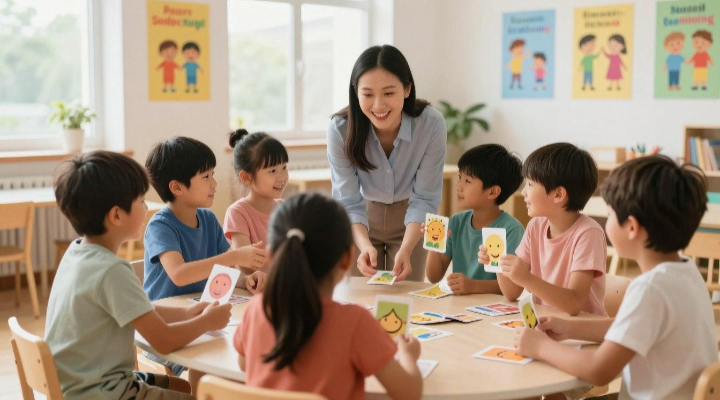
Teachers can create supportive classrooms by encouraging cooperation, respecting individual differences, and helping children resolve conflicts peacefully.
According to the World Health Organization's nurturing care framework, responsive and supportive relationships are important elements of healthy early childhood development.
6. Help Children Manage Big Emotions
Emotional regulation is the ability to understand and manage feelings. It develops gradually and requires practice.
Young children may need adult support when they feel angry, frightened, frustrated, or overwhelmed.
Here are five simple strategies parents and teachers can introduce:
Deep breathing: Ask children to imagine smelling a flower and slowly blowing out a candle.
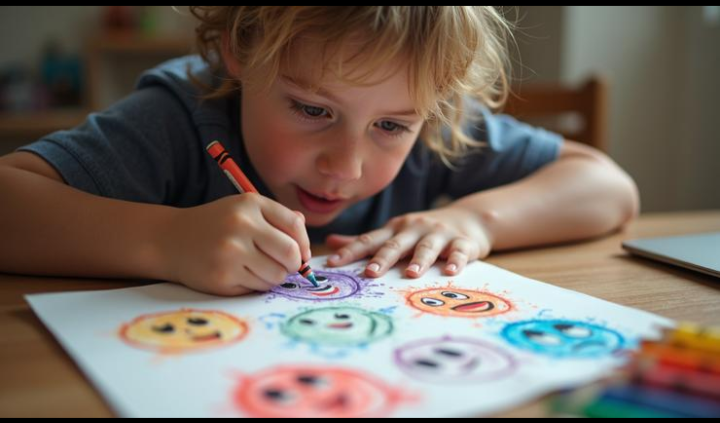
Drawing feelings: Provide crayons and paper and invite children to draw how they feel.
Quiet time: Create a comfortable space with cushions and books where children can relax.
Naming emotions: Encourage children to say, "I feel sad," "I am angry," or "I need help." Gentle reassurance: Offer comforting words and a hug if the child welcomes physical affection. These strategies work best when adults practice them with children during calm moments, not only during emotional outbursts.
7.Children Learn Emotional Behaviour by Watching Adults
8.Why Should Parents Seek Professional Guidance?
Every child develops at their own pace. Some children express feelings openly, while others need more time and encouragement. However, parents should seek advice from a qualified pediatrician or child development professional if emotional or behavioral difficulties are persistent, intense, affect everyday activities, or interfere with relationships and learning.
Early professional guidance can help families understand a child's needs and identify suitable ways to support development.
Seeking help is not a sign of failure. It is a positive step towards understanding and supporting a child.
Conclusion: Understanding Today, Supporting Tomorrow
Understanding children's emotions is one of the most meaningful responsibilities of parenting and early childhood education.
Children do not need adults who expect them to behave like grown-ups. They need patient people who listen, guide, encourage, and help them understand their feelings.
Every conversation, comforting response, and shared activity creates an opportunity for emotional learning.
When parents and teachers make emotional development a priority, they help children build confidence, develop empathy, strengthen relationships, and learn healthier ways to face challenges.
Remember: A child who feels understood is better supported in learning to understand themselves and others.
Article Summary
Understanding children's emotions is essential for healthy early childhood development. Parents and teachers can support emotional growth by listening carefully, acknowledging feelings, teaching emotional vocabulary, creating safe environments, and demonstrating positive behavior. With patience and consistent guidance, children can gradually develop emotional awareness, confidence, empathy, and self-regulation.
Reliable references:
• World Health Organization – Nurturing Care for Early Childhood Development
• Harvard University – Serve and Return
• WHO – Improving Early Childhood Development









Comments 3
Sign in to join the conversation.
Amazing Information ⭐👏🏻
Keep it up 👍🏻
💪🏻👏🏻