


Most students study the way they were taught to study: read the chapter, highlight it, read it again. It feels productive because the material becomes familiar. Familiarity and recall are different things, and exams test the second one.
The techniques below come from research on learning and memory rather than study advice. Each has been compared against a control method and won. Each is also slightly uncomfortable, which is part of why they work.
Why Rereading Fails
Rereading creates fluency: the text feels easy, so your brain concludes it knows the material. When the exam asks you to produce the information without the text in front of you, the fluency disappears and so does the answer.
Every effective technique on this list forces retrieval or forces you to notice a gap. Discomfort is the signal that learning is happening, which is exactly the opposite of what highlighting teaches you to expect.
The Top 10 Techniques
1. Active Recall
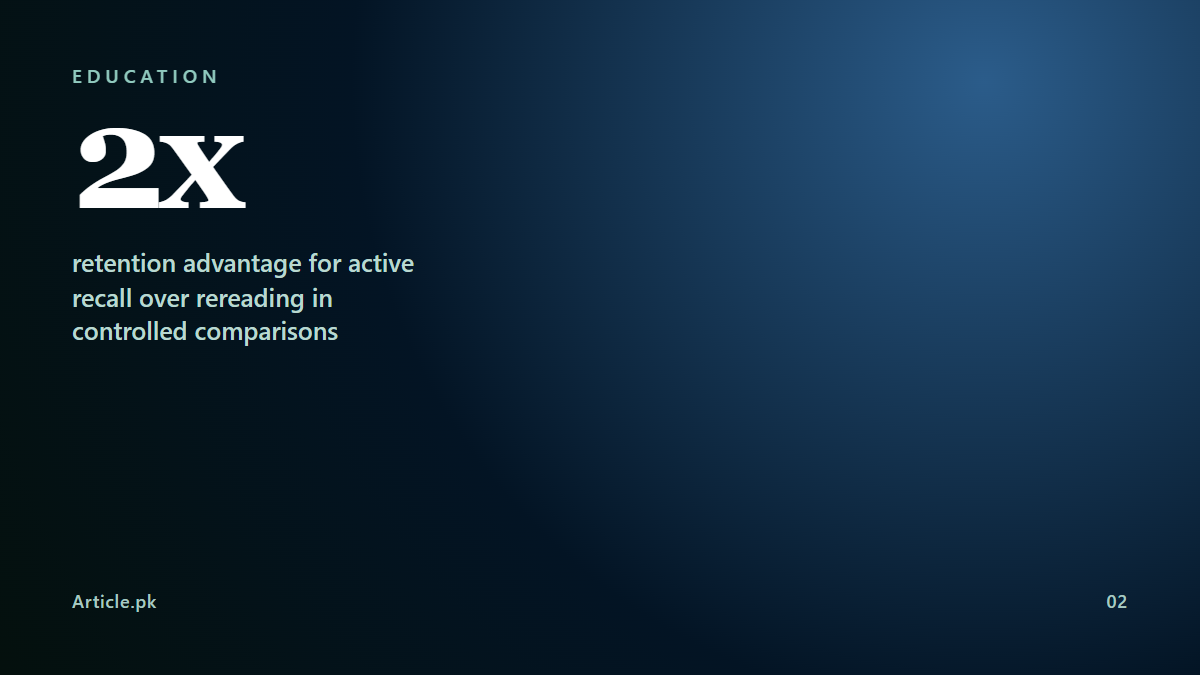
Close the book and write everything you remember, then check. The act of pulling information out strengthens the memory far more than putting it in again.
Use blank paper, not a highlighted page.
2. Spaced Repetition
Review at increasing intervals: one day, three days, a week, a month. Each review lands just as the memory is fading, which is when it does the most good.
Four short sessions beat one long one, reliably.
3. The Feynman Explanation
Explain the concept out loud in plain language as if to a younger student. The point where your explanation turns vague is the point where your understanding is thin.
Say it aloud. Silent explanation lets you skip the hard parts.
4. Interleaving
Mix problem types within a session instead of doing twenty of one kind. It feels worse and produces better transfer to exam conditions, where questions are not labelled by type.
Start with blocks, then interleave once the basics are solid.
5. Past Papers Under Time
Full papers, real timing, no notes. This trains the retrieval and the pacing at once, and it exposes which topics you cannot produce under pressure.
Mark it honestly. The mark scheme is the most useful document you have.
6. Elaborative Interrogation
Ask why and how for each fact. Why does this step follow that one? How does this connect to the previous chapter? Connections multiply the routes back to the memory.
Write the questions in the margin as you read.
7. Dual Coding
Pair a verbal explanation with a diagram you draw yourself. Drawing forces you to decide what matters and where it sits, which reading a finished diagram never does.
Redraw from memory, then compare.
8. The Sleep-Anchored Review
Review the hardest material shortly before sleep and again the next morning. Consolidation happens during sleep, and the morning review tells you what stuck.
Do not replace sleep with study. That reliably lowers your marks.
9. Teaching Someone Else
Explain the topic to a classmate who will ask questions. Answering an unexpected question exposes gaps that solo revision never finds.
If nobody is available, record yourself and listen back.
10. Deliberate Practice on Weak Spots
Spend the session on what you get wrong, not what you already know. Most students revise the comfortable topics because they feel productive.
Keep an error log and start every session from it.
How to Rebuild Your Study Week
Replace one rereading session with active recall on blank paper. Add past papers twice a week with real timing. Keep an error log and begin every session from the last three entries.
That is roughly three changes. Students who make them typically report the same study hours with better marks, because the hours stop being spent on material they already knew.
What Research Says Does Not Work
Highlighting and underlining are the most popular study techniques in the world and among the least effective. They require no retrieval, produce no error signal, and create a permanent record of what you read rather than what you know.
Rereading is only marginally better than doing nothing when measured a week later. It feels good, which is why it survives.
Studying in a single marathon session produces a strong immediate performance and poor retention a week on. Cramming works for tomorrow's test and fails for the exam that counts.
Learning-styles matching — visual, auditory, kinaesthetic — has no reliable support in controlled studies. The comfortable format is not the effective one.
And passively watching videos at double speed is not studying. It is entertainment with a study-adjacent aesthetic. If you cannot reproduce the content on blank paper afterwards, you did not learn it.
Building a Revision Timetable That Survives Real Life
Start from your exam dates, not from a daily plan. Work backwards to decide how many sessions each subject deserves. Most students give equal time to unequal subjects and then wonder why one paper drags the average down.
Schedule recall sessions in the morning when you are freshest and input sessions in the evening when you are tired. Reading a chapter while tired is fine. Testing yourself while tired teaches you very little.
Leave one empty slot per week. Timetables that fill every hour fail the first time something goes wrong, and something always goes wrong.
Write the session's target on a sticky note before you begin: “recall chapter four without notes” rather than “study biology.” A target you can fail is a target that produces feedback.
Finally, plan the last three days for past papers only. New material in the final seventy-two hours mostly produces anxiety, not marks.
What to Do the Night Before an Exam
Close the material by early evening. A final review of your error log is useful; a new chapter is not. Anything learned for the first time twelve hours before an exam is fragile, takes time you do not have, and usually displaces what you already know.
Prepare the logistics: documents, stationery, route, and alarm. Administrative panic on the morning of an exam costs marks that studying cannot recover.
Sleep properly. Sleep is when consolidation happens, and a night of extra revision consistently produces worse results than a full night's rest, even among students who feel underprepared.
In the first five minutes of the paper, read all the questions before writing. It changes how you allocate time and prevents the classic error of over-writing the first answer and rushing the last.
The Bottom Line
Replace rereading with retrieval, space your sessions, and test under real conditions. The work feels harder and takes less time, which is the trade you are being offered.






Comments 0
Sign in to join the conversation.
No comments yet. Be the first to say something.