


Every winter the same question comes back: what can I actually eat to stop getting sick? The honest answer is that no single food turns your immune system into a fortress. What does work is a steady supply of the nutrients your immune cells need to divide, communicate, and repair. Miss those nutrients for weeks and your defences thin out quietly, long before you notice a scratchy throat.
The ten foods below are not exotic. They are cheap, they are in every neighbourhood market, and they are the ones nutrition researchers keep returning to when they study immune function in real populations. Rotate them through your week and you cover the major gaps most diets leave open.
Why Your Diet Shapes Immunity
Your immune system is not a fixed shield. It is tissue, and tissue is rebuilt constantly. White blood cells are replaced within days. The lining of your gut, where roughly seventy percent of your immune tissue sits, renews itself every three to five days. Every one of those rebuilds needs raw material: protein for structure, zinc for cell division, vitamin C and vitamin E to limit oxidative damage, vitamin D to regulate the response, and fibre to feed the bacteria that train your immune cells what to attack.
When those inputs are missing, the system does not shut down. It becomes sloppy. Responses arrive late, stay too long, or misfire against your own tissue. That is why poor nutrition shows up as frequent colds, slow healing, and lingering fatigue rather than one dramatic illness.
The Top 10 Immune-Boosting Foods
1. Citrus Fruits
Oranges, grapefruits, lemons, and sweet limes are the most familiar vitamin C sources on earth. One medium orange delivers about seventy milligrams, close to a full day's requirement. Vitamin C concentrates inside immune cells, where it protects them from the toxic by-products they release while killing pathogens.
Eat the whole fruit rather than drinking juice. The fibre slows the sugar load and supports gut bacteria at the same time.
2. Red Bell Peppers
Gram for gram, a red bell pepper holds nearly three times the vitamin C of an orange, plus beta-carotene for skin and mucosal repair. Your skin is the first physical barrier pathogens meet, and it needs vitamin A to stay intact.
Eat them raw in salads or lightly sautéed. Boiling leaches water-soluble vitamin C into the water, so keep cooking short.
3. Garlic
Garlic's active compound, allicin, forms only when the clove is crushed or chopped and left to sit for ten minutes. Allicin has shown antibacterial and antiviral activity in laboratory studies, and regular garlic eaters in observational research report fewer colds.
Crush first, wait ten minutes, then cook. Heating immediately destroys the enzyme that makes allicin.
4. Ginger
Gingerols and shogaols give ginger its bite and its anti-inflammatory effect. Chronic low-grade inflammation keeps immune cells in a permanently activated state, which is exhausting and imprecise. Ginger helps calm that background noise.
A thumb-sized piece steeped in hot water with honey makes a useful daily drink during flu season.
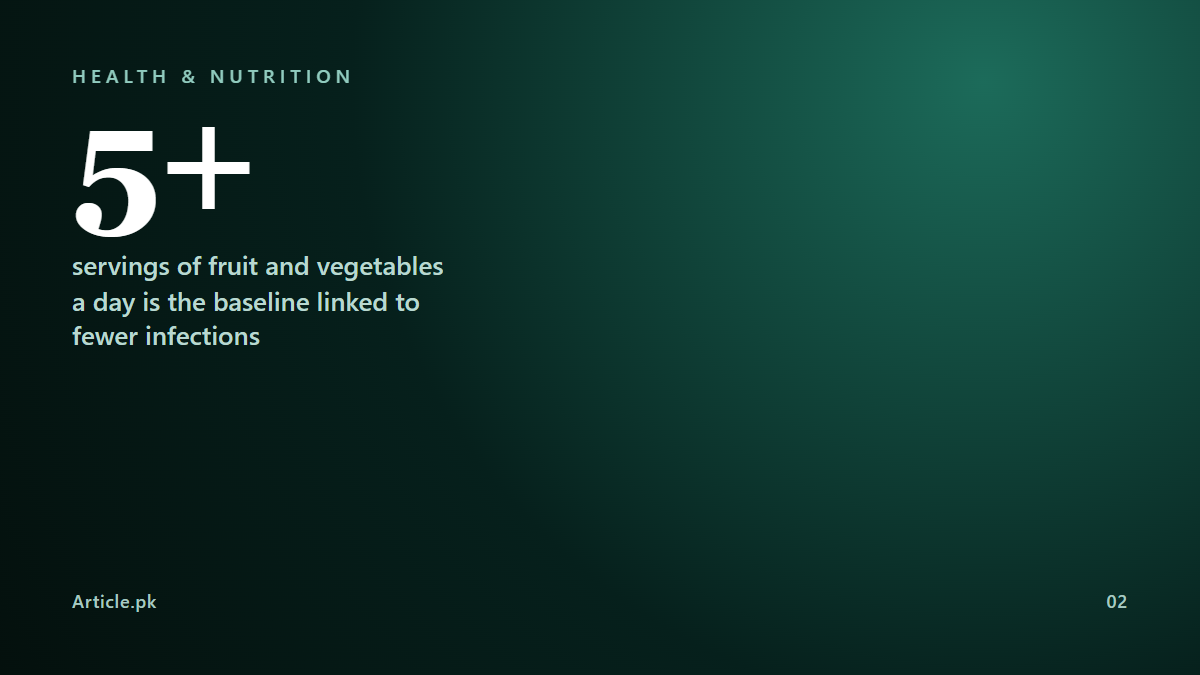
Illustration: Article.pk
5. Yoghurt and Fermented Dairy
Live cultures in plain yoghurt, kefir, and buttermilk seed your gut with bacteria that train immune cells and crowd out pathogens. Studies on fermented dairy consistently link regular intake with shorter, milder respiratory infections.
Choose plain, unsweetened versions. The sugar in flavoured yoghurt feeds the wrong bacteria.
6. Spinach
Spinach packs vitamin C, beta-carotene, folate, and antioxidants called flavonoids in one cheap leaf. Folate is essential for the rapid cell division immune responses demand.
Lightly steam rather than boil. Steaming preserves more folate and makes the fat-soluble vitamins easier to absorb.
7. Almonds
A handful of almonds supplies vitamin E, a fat-soluble antioxidant that sits in cell membranes and protects them from oxidative stress. Vitamin E deficiency is rare but suboptimal intake is common, especially in low-fat diets.
About twenty to twenty-five almonds a day is a sensible target. They are calorie-dense, so portions matter.
8. Turmeric
Curcumin, the yellow pigment in turmeric, is one of the most studied natural anti-inflammatory compounds. Pair it with black pepper, which increases absorption dramatically, and with fat, since curcumin is fat-soluble.
A quarter teaspoon in cooking daily is enough. Supplements are unnecessary if you cook with it regularly.
9. Green Tea
Green tea contains epigallocatechin gallate, an antioxidant shown to interfere with viral replication in laboratory work. It also supplies a gentle dose of caffeine and L-theanine, a combination that improves alertness without the crash.
Two to three cups daily. Avoid adding milk if you want the catechins fully available.
10. Fatty Fish
Salmon, sardines, and mackerel deliver omega-3 fatty acids that regulate inflammation and support the membranes of immune cells. Vitamin D, which most people are short of in winter, comes bundled in the same fish.
Two portions a week. Tinned sardines are the cheapest reliable source and carry almost no mercury risk.
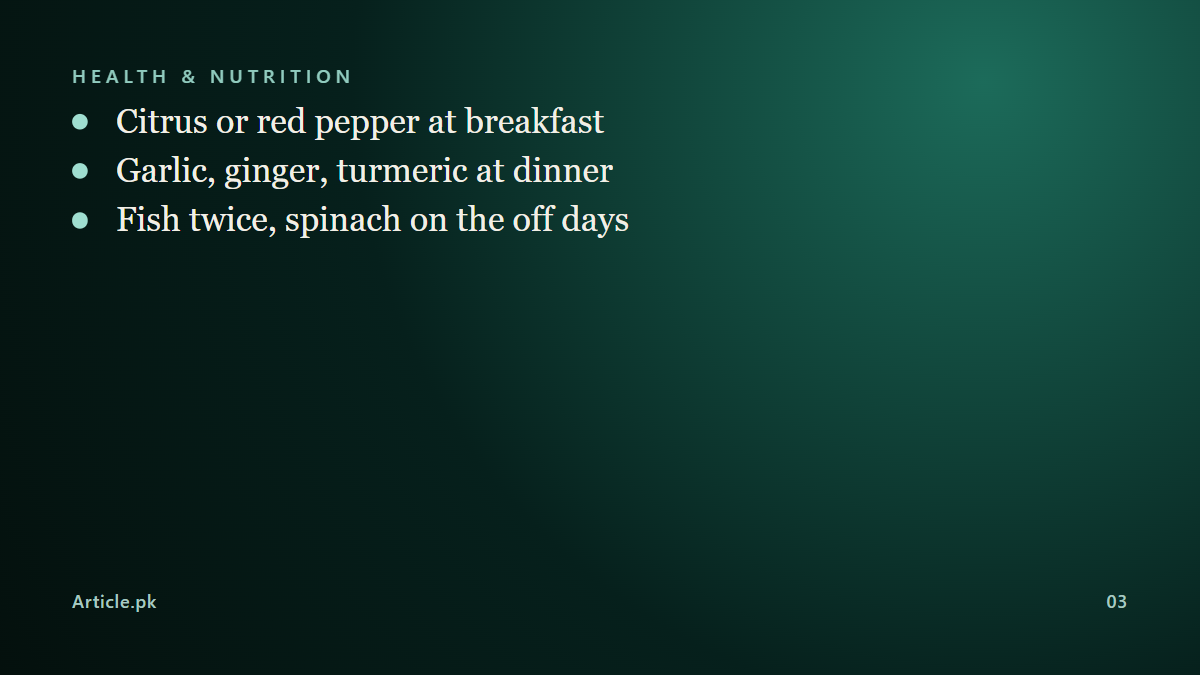
Illustration: Article.pk
How to Build These Into a Normal Week
You do not need all ten every day. A workable pattern looks like this: citrus or red pepper at breakfast three or four mornings a week. Garlic, ginger, and turmeric in whatever you cook for dinner. Yoghurt as a snack or with fruit. A handful of almonds mid-afternoon. Fish twice a week and spinach on the days you do not eat fish. Green tea in place of one coffee.
That pattern covers vitamin C, vitamin E, zinc, folate, omega-3, and live cultures without any supplement.
What Food Cannot Fix
Diet is one input among several, and pretending otherwise wastes money. Sleep under six hours a night measurably suppresses natural killer cell activity. Chronic stress raises cortisol, which blunts immune response. Smoking damages the mucosal lining directly. No amount of turmeric compensates for any of those.
The World Health Organization's guidance on healthy diets is a useful baseline, and Harvard's nutrition source on immunity explains why single-nutrient supplements rarely deliver what whole foods do.
The Bottom Line
Immunity is built in the kitchen over months, not bought in a bottle over a weekend. Ten ordinary foods, rotated through a normal week, close the nutrient gaps that quietly weaken most diets. Start with the two you will actually eat, and build from there.









Comments 0
Sign in to join the conversation.
No comments yet. Be the first to say something.