

Most people treat their eyes the way they treat their phone battery: use them until they complain, then charge them. The difference is that a battery recovers fully and eyes do not always. Damage from UV exposure, screen strain, and neglected prescriptions accumulates over decades and shows up in your forties and fifties.
The habits below are the ones with consistent evidence behind them. None require expensive equipment.
What Actually Harms Your Eyes
Three things cause most preventable vision loss: ultraviolet light, uncorrected refractive errors, and diabetes. Screens are a distant fourth, despite the attention they receive. Screens cause discomfort and strain, which is real but reversible. UV and diabetes cause damage that is not.
The second issue is that people do not get their eyes checked until something is wrong, by which point the condition has progressed. Regular checks catch problems while they are still simple.
The Top 10 Habits
1. Wear UV-Blocking Sunglasses
UV exposure is linked to cataracts and macular degeneration. Look for lenses that block ninety-nine to one hundred percent of UVA and UVB.
Darkness alone is not protection. A dark lens without UV blocking is worse than no lens, because it dilates the pupil and lets more UV in.
2. Follow the 20-20-20 Rule
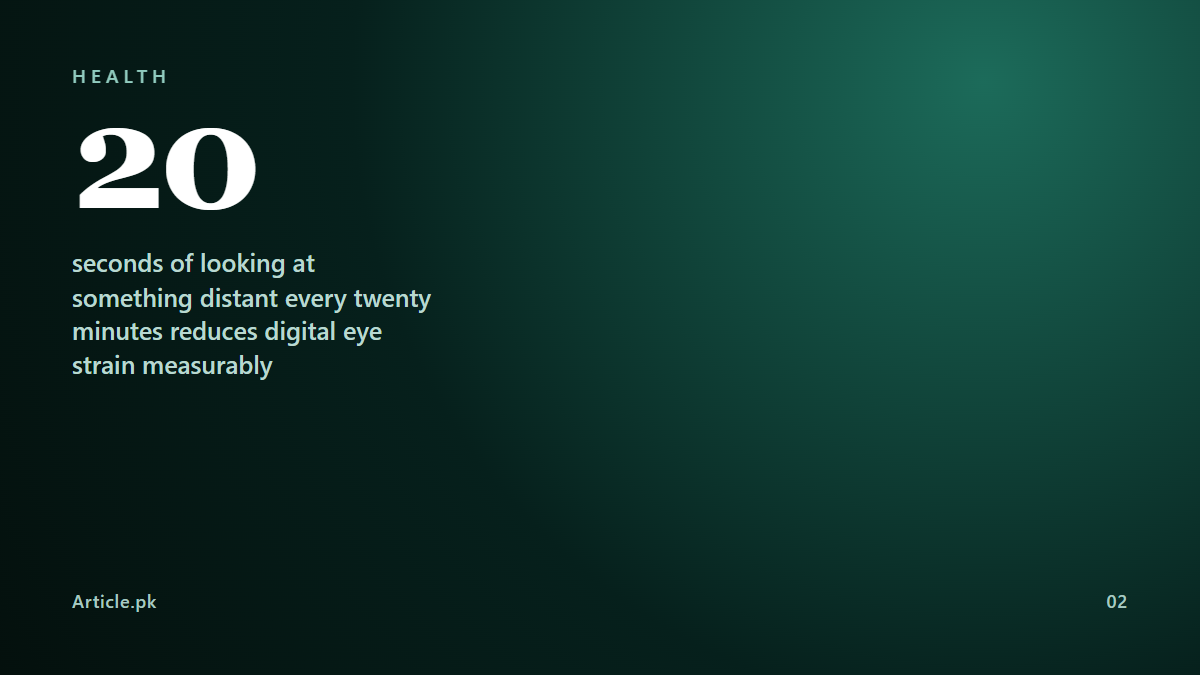
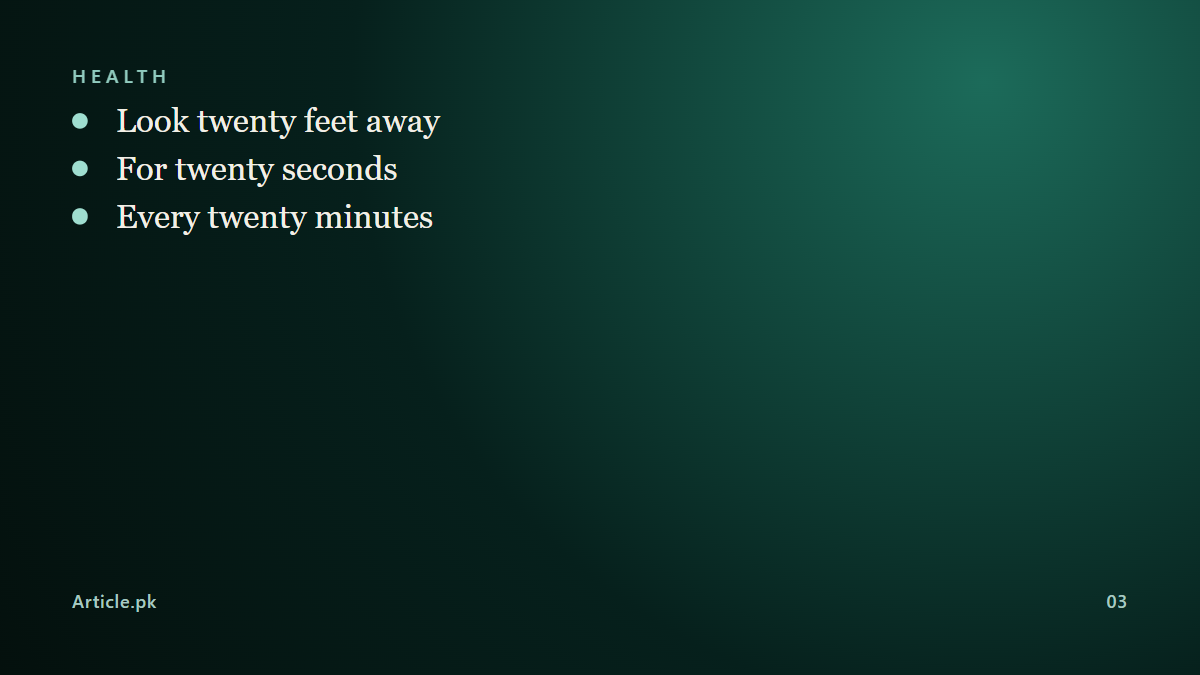
Every twenty minutes, look at something twenty feet away for twenty seconds. This relaxes the focusing muscle and reduces the strain that builds over a day of close work.
Set a reminder. Nobody remembers this without one.
3. Blink Deliberately
Blink rate drops by half during screen use, which dries the eyes and causes the burning sensation most people attribute to the screen itself. Conscious blinking every few minutes helps.
If your eyes feel dry, use preservative-free artificial tears rather than redness-reducing drops.
4. Get Regular Eye Exams
Adults need an exam every one to two years, more often after forty. Many serious conditions have no symptoms until they are advanced.
Children need screening before school starts, because uncorrected vision problems affect learning.
5. Adjust Screen Position and Brightness
Screen at arm's length, top of the screen at or slightly below eye level, brightness matched to the room. These three changes reduce strain more than any blue-light filter.
A screen brighter than the room is the most common and most fixable problem.
6. Eat for Your Eyes
Leafy greens, oily fish, eggs, and citrus contain lutein, zeaxanthin, and omega-3s, which are associated with lower rates of macular degeneration.
Food beats supplements here. The evidence for supplements is weaker and inconsistent.
7. Do Not Sleep in Contact Lenses
Unless specifically prescribed for overnight wear, sleeping in lenses dramatically increases the risk of serious infection. The convenience is not worth the risk.
Replace lenses on schedule. Overwearing is the second most common cause of contact lens problems.
8. Manage Diabetes and Blood Pressure
Both damage the blood vessels in the retina. Control of these conditions is eye care as much as general health care.
If you have either, annual retinal screening is essential.
9. Quit Smoking
Smoking doubles the risk of macular degeneration and cataracts. It is one of the strongest modifiable risk factors for vision loss.
The benefit of quitting begins within months.
10. Rest Your Eyes During Long Tasks
A five-minute break every hour of close work, ideally involving distance viewing and blinking. The focusing muscle needs rest the way any other muscle does.
Combine it with a walk for compound benefit.
What Blue Light Actually Does
Blue light from screens does not damage the retina at normal exposure levels. The evidence does not support the claim that it does. What blue light does is suppress melatonin, which can delay sleep if you use screens late at night.
The fix for sleep is dimming the screen and the room in the evening, not buying expensive filters. The fix for eye strain is the 20-20-20 rule and proper screen position.
Blue-light glasses are not harmful, but they are not the solution they are marketed as.
When to See a Professional
Sudden vision changes, flashes of light, a curtain over part of your vision, or persistent eye pain are emergencies. Do not wait for a routine appointment.
Gradual changes, frequent headaches, and difficulty with night driving are routine but worth addressing promptly. Most are easily corrected with an updated prescription.
Annual exams become more important after forty, when presbyopia and other age-related changes begin.
Protecting Children's Eyes
Children's eyes are more vulnerable to UV than adults', and the damage accumulates over a lifetime. Sunglasses and hats for children are not cosmetic.
Outdoor time is also protective. Studies consistently show that children who spend more time outdoors have lower rates of myopia, and the effect is substantial. Two hours a day outside is a reasonable target.
Screen time limits for young children are sensible for developmental reasons, but the eye-specific concern is close work without breaks. The 20-20-20 rule applies to children too, though they need reminders.
And ensure children's prescriptions are checked before school starts and whenever they complain of headaches or difficulty seeing the board.
The Eye Exam: What to Expect
A standard exam checks visual acuity, refractive error, eye pressure, and the health of the retina and optic nerve. It takes twenty to thirty minutes and is painless.
The eye pressure test feels odd but not painful. The dilation drops blur your vision for a few hours, so arrange transport if you are having a full retinal examination.
Ask for a copy of your prescription and your eye health summary. Keeping these records helps if you change providers or need to refer back.
If you have diabetes, high blood pressure, or a family history of glaucoma or macular degeneration, tell the examiner. These change what they look for and how often you should return.
Choosing the Right Eyewear
Prescription glasses are not all equal, and the difference that matters most is not the frame. It is the lens coating. An anti-reflective coating reduces glare significantly, especially at night and on screens, and it is worth the extra cost for anyone who spends hours in front of a monitor.
Blue-light coatings are optional and the evidence for them is thin. Do not pay a premium unless you find them genuinely helpful for sleep.
For sunglasses, fit matters as much as the UV rating. A poorly fitting pair lets light in around the edges, which defeats the purpose. Wraparound styles block more peripheral UV than flat lenses.
And replace scratched lenses. Scratches scatter light and increase glare, which is more tiring than no coating at all.
The Bottom Line
Protect your eyes with UV-blocking sunglasses, the 20-20-20 rule, and regular exams. The damage accumulates silently and the prevention is cheap.







Comments 0
Sign in to join the conversation.
No comments yet. Be the first to say something.