
What if a free animation tool handed you three full minutes of HD video, animated characters, templates, AI voices and all — and then quietly kept back the one thing every creator assumes comes with it?
That is the deal Powtoon offers. On paper, the free plan looks generous in a way most animation tools are not. Three minutes is a long time in short-form video. It is enough for a full explainer, a product walkthrough, or a lesson that actually finishes its point.
So where is the catch? It is real, it is on Powtoon’s own official pages, and it changes how you should use the free plan. The catch is in the verdict below — and if you make videos for clients or a channel, it is the one detail you need before you start building.
What It Is
Powtoon is an animated explainer and presentation video maker. You pick a template, drag in animated characters and props, write a script, and build a scene-by-scene video in your browser.
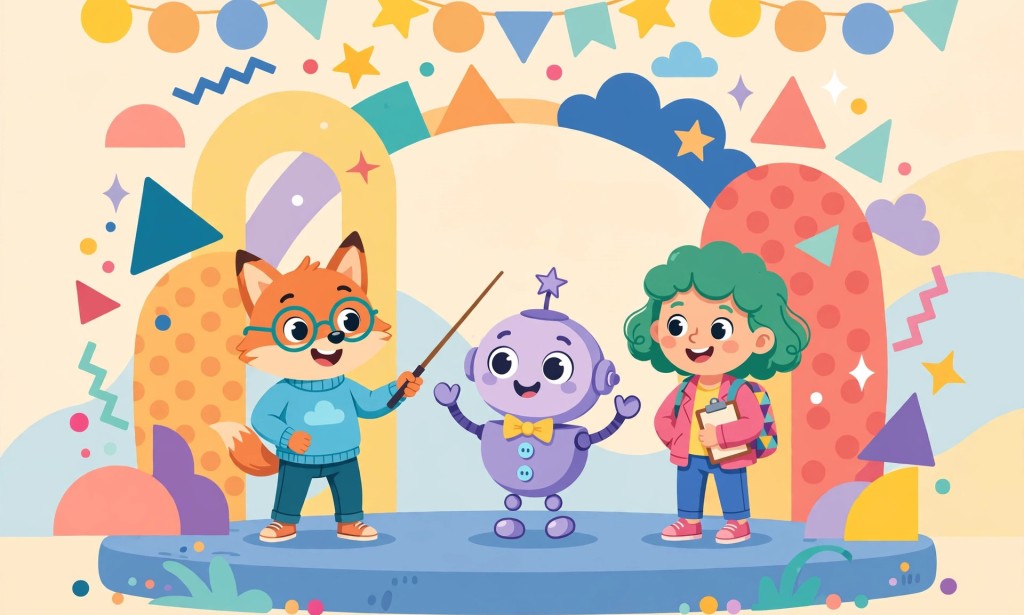
The style is the familiar cartoon-explainer look: flat animated characters, speech bubbles, icons, whiteboard-style scenes and upbeat motion. It is the format companies use for training videos, product explainers, school lessons and social media ads.
It also has newer AI features. Script-to-video can turn written text into a draft video. AI voices can read your script aloud. AI avatar lipsync can make an avatar’s mouth move in time with the words.
Here is the first honest distinction, and it matters. Powtoon is not a cinematic text-to-video generator like Veo or Sora. It does not dream up realistic footage from a prompt.
What it does is assemble animation from a library — characters, props, scenes and templates that you arrange yourself. That is a different skill and a different result. If you want a cartoon explainer that looks clean and professional, that is exactly what it is built for. If you want photorealistic AI footage, this is the wrong tool, and no free plan changes that.
So who is it for? Teachers, small businesses, marketers, and YouTubers who need explainers — anyone who must turn a boring topic into something watchable without hiring an animator.
The question is whether the free version is genuinely useful for those people — or whether it is a demo dressed up as a plan.
Free Plan Details
The good news first, because it is genuinely good. Powtoon’s own support page, “Is Powtoon free?”, says the core features cost nothing. You can create a Powtoon, share it with others, and upload it directly to YouTube — all without a paid subscription.
That is not a seven-day trial dressed as a free plan. It is a standing free tier.
What do you actually get? The official pricing page lists the Free column like this: 100 MB of storage, videos up to 3 minutes long, in HD. You get the free soundtracks and the free objects and templates — the starter library, not the full catalogue.
Three minutes in HD, for free, is the headline. Most free animation tools cap you at 30 or 60 seconds, or stamp the video so heavily it is unusable. Powtoon gives you real length.
But slow down and read the fine print, because the free plan’s limits are specific. Paid plans unlock a wider selection of characters, props, images and soundtracks, plus higher-resolution exports and additional download and export options.
That last phrase is doing a lot of quiet work on the pricing page. Keep it in mind — we come back to it in the verdict, because it decides whether the free plan fits your workflow or fights it.
There is also the AI side to weigh. Powtoon sells AI credits separately, and the official pricing page lists the rates plainly. A text-to-speech voiceover costs 2 credits per generation. AI avatar lipsync costs 20 credits per minute, with a 10-credit minimum per generation.
Credit packs cost $25 for 100 credits, $55 for 250, and $95 for 500 — but an active paid subscription is required to buy credits at all.
Paid plans include some credits: Lite monthly 10 a month, Lite yearly 25 a year, Professional monthly 25 a month, Professional yearly 80 a year, and Business 350 a year. No AI-credit allowance is listed for the Free plan anywhere on the official pricing page.
So if your plan was free tier plus AI voices, that is not how it works. The AI voices and lipsync are effectively a paid feature, even though the animation tools themselves are free.
And how many free videos can you make in a month? That is unconfirmed. No monthly video count for the free plan is stated on the official pages we checked. We will not guess a number.
One more practical question readers always ask: can you export vertical 9:16 video for Shorts and Reels on the free plan? That is also unconfirmed — the official pages we checked do not state it. If vertical export is essential to your workflow, check it inside the editor before you build a whole project around it.
Watermark and Commercial Use
Now the part every creator checks second: the watermark.
The official pricing page is blunt about it. “Powtoon branding removed” is blank on the Free column. The branding stays on free videos. Only paid plans remove it.
So yes — free Powtoon videos carry Powtoon branding. That is the trade for three free minutes in HD. For a classroom video it may not matter. For a client deliverable or a polished channel video, it does.
Then there is the harder question: can you use a free-plan video commercially?
This is where Powtoon’s own official pages send mixed signals, and honesty means saying so instead of picking the friendlier one.
On one side, Powtoon’s terms — last revised January 22, 2025 — say the licence permits personal and business use, but you may not resell any presentation.
On the other side, the official pricing table lists “Commercial rights” under the “ALL PLANS INCLUDE” banner for paid plans only. It does not list commercial rights on the Free column.
Those two signals do not cleanly agree. The terms suggest business use is allowed; the pricing page suggests commercial rights are a paid-plan inclusion. Because of that conflict, free-plan commercial and monetised use is not cleanly verified, and we will not tell you it is safe.
One more terms detail: free users’ presentations are available at a publicly available URL and may be indexed by search engines. In plain language, a free-plan video is not private by default — it lives at a public link search engines can find.
Paid plans include full privacy control. If you are making a video you do not want the public stumbling across — a draft, an internal training clip, a client preview — the free plan’s public-by-default setup is something to plan around, not discover later.
How to Use It
Getting started is straightforward, and the workflow is the same whether you are making a 30-second ad or a full three-minute explainer.
Go to the official Powtoon website and create a free account, then choose a template or start from a blank video.
Pick your scenes. Add animated characters, props, text and backgrounds from the free library, and arrange them on the timeline.
Write your script in the editor. Keep sentences short — animated explainers work best when one idea fills one scene.
Add a voiceover. You can record your own voice for free, or use the script-to-video and AI voice features if your plan includes credits.
Preview the whole video from the start. Watch for scenes that run long, text that overflows, or characters that enter late.
When you are happy with it, share it from inside Powtoon or upload it directly to YouTube using the built-in option.
That last step deserves a second look. Sharing from inside Powtoon and uploading to YouTube are the free plan’s ways out. Notice what is not on that list — the verdict below explains why that absence matters more than anything else on this page.
Honest Verdict

Here is the detail we held back, and it is the whole story.
The official pricing page leaves “Download as MP4” blank on the Free column. MP4 export requires a paid subscription — Powtoon’s own support article confirms it. Free videos can be shared from inside Powtoon or uploaded to YouTube, but there is no free file download.
Read that again. You can build a three-minute HD animated video for free, show it to people, and put it on YouTube — but your video never becomes a file you own. There is no MP4 on your computer to edit, re-upload elsewhere, archive, or hand to a client.
For some creators, that is a fair trade. If your video lives on YouTube anyway, the built-in upload does the job. For others, it is a deal-breaker: if you need the file — for Instagram, TikTok, a client folder, a course platform, or your own archive — the free plan cannot give it to you, no matter how good the video is.
Everything else about the free plan now falls into place around that one fact. The three minutes are real. The HD quality is real — the official Help Centre calls free exports HD 720p, with paid plans stepping up to Full HD 1080p. The watermark is real too, and so is the public-by-default link.
Paid plans start at Lite, from $15 a month, and the paid column is where the missing pieces live: Powtoon branding removed, Download as MP4, Full HD 1080p, full privacy control, commercial rights, and 24/7 priority support.
So the verdict is split, and it depends entirely on what “free” needs to mean for you. If you want a free way to make a real explainer and publish it to YouTube, Powtoon is one of the more honest free plans in animation — three minutes, HD, no subscription required. If you want a free video file you can keep, edit and use anywhere, this is not that tool, and the paid plan starting at $15 a month is the real price of the feature you actually wanted.
That is the trade. Know it before you build, not after.
You can try it yourself on the official Powtoon website — but before you start your first video, tell us in the comments: would you accept a watermarked video you can never download as a file, or is owning the MP4 a deal-breaker for you?






Comments 0
Sign in to join the conversation.
No comments yet. Be the first to say something.