


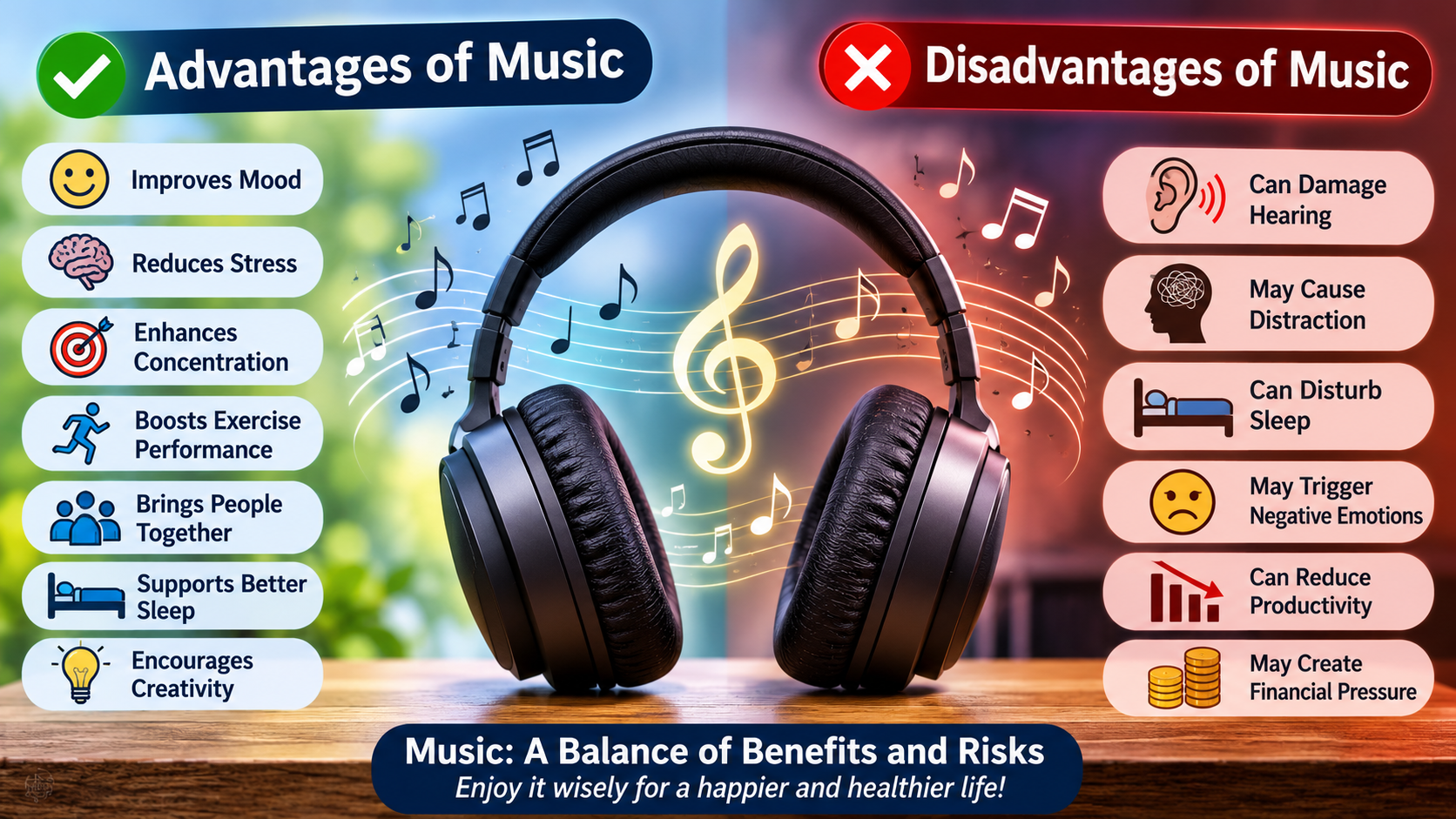
Advantages and Disadvantages of Music: How It Affects Our Daily Lives
Music is one of the most popular forms of entertainment around the world. People listen to music while working, studying, exercising, travelling, relaxing, and spending time with friends. It is more than just a source of entertainment because it can influence our emotions, thoughts, and daily activities.
Some people listen to music to feel relaxed, while others use it to improve their mood or stay motivated. Different types of music can create different feelings and experiences. For example, soft music may help someone feel calm, while energetic songs can make exercise more enjoyable.
However, listening to music also has some disadvantages. Loud music can damage hearing, certain songs may become distracting, and listening to music at the wrong time can affect sleep and productivity.
Understanding the advantages and disadvantages of music helps us enjoy its positive effects while avoiding possible problems.
What Is the Importance of Music in Daily Life?
Music plays an important role in different cultures and societies. It brings people together, creates memories, and provides a way to express feelings that are sometimes difficult to explain through words.
People enjoy different musical styles, including pop, classical, rock, jazz, folk, and instrumental music. Every person has different preferences depending on their personality, culture, and mood.
Music is also used in celebrations, religious events, films, educational activities, and social gatherings. It can make ordinary moments more enjoyable and help people connect.
Advantages of Music
Listening to music can offer several benefits when enjoyed in a balanced and healthy way. Here are some important advantages of music and how it can positively influence everyday life.
1. Music Helps Improve Mood
One of the biggest benefits of listening to music is its ability to influence our mood. A favourite song can make someone feel happy, energetic, relaxed, or emotionally connected.
When people feel tired or upset, listening to enjoyable music may help them feel better. Upbeat songs can create a positive atmosphere, while gentle melodies may provide comfort during stressful moments.
Music does not solve every emotional problem, but it can be a helpful way to manage everyday feelings.
2. Music May Reduce Stress and Anxiety
Daily responsibilities, work pressure, financial concerns, and personal problems can sometimes make people feel stressed. Listening to relaxing music may help the mind feel calmer.
Slow melodies and soft instrumental sounds can create a peaceful environment. Some people prefer listening to relaxing music before sleeping or after a busy day.
Music can support relaxation, although it should not replace professional help when someone is experiencing serious or ongoing anxiety.

3. Music Can Improve Concentration
Some people find it easier to concentrate while listening to music. Instrumental music, soft background sounds, and familiar melodies may help create a comfortable study or working environment.
For example, students may listen to quiet music while completing assignments, while employees may use background music during certain tasks.
However, the effect depends on the person and the activity. Songs with lyrics can distract people when they need to read, write, or remember detailed information.
4. Music Makes Exercise More Enjoyable
Music can make physical activities more interesting and enjoyable. Many people listen to energetic songs while walking, running, cycling, or exercising at the gym.
A fast rhythm may encourage movement and help people maintain motivation during workouts. It can also make repetitive exercises feel less boring.
However, people should remain aware of their surroundings when exercising outdoors, especially near roads or in crowded areas.
5. Music Supports Emotional Expression
Sometimes people find it difficult to explain their emotions. Music provides another way to understand and express feelings.
A meaningful song may remind someone of a special memory, a relationship, or an important experience. Sad music may help some listeners process difficult emotions, while cheerful songs can create feelings of happiness.
This emotional connection is one reason why music remains important in people's lives.
6. Music Brings People Together
Music is a powerful way to connect people from different backgrounds and cultures. Concerts, weddings, festivals, parties, and community celebrations often bring people together through shared musical experiences.
People can enjoy the same songs even when they speak different languages or come from different countries.
Music also creates opportunities for friendships, teamwork, and cultural understanding.
7. Music May Support Better Sleep
Some people find that listening to soft and relaxing music before bedtime helps them prepare for sleep.
Gentle instrumental sounds may create a peaceful atmosphere and help listeners relax after a busy day. Establishing a calming bedtime routine can also make it easier to disconnect from daily stress.
However, loud music, stimulating songs, and using headphones throughout the night may disturb sleep rather than improve it.
8. Music Encourages Creativity
Music can inspire creativity in different ways. Writers, artists, designers, and other creative professionals sometimes listen to music while developing new ideas.
Different sounds and rhythms may help create an inspiring environment. Learning to play a musical instrument can also encourage patience, practice, and creative expression.
Music does not automatically make everyone more creative, but it can become a useful part of a creative routine.
Disadvantages of Music
Although music has many positive effects, excessive or inappropriate listening habits can also create problems. Understanding these disadvantages can help people develop healthier listening habits.
1. Loud Music Can Damage Hearing
One of the most serious disadvantages of music is the risk of hearing damage from excessive volume.
Listening to loud music through headphones or speakers for long periods can damage the sensitive structures inside the ears. This may lead to hearing loss or tinnitus, which is a ringing or buzzing sound in the ears.
To protect hearing, keep the volume at a comfortable level and take regular listening breaks.

2. Music Can Become a Distraction
Although music helps some people concentrate, it can distract others.
For example, students may struggle to understand difficult lessons while listening to songs with lyrics. Similarly, employees may lose focus when background music interrupts tasks that require careful attention.
Listening to music while driving can also be dangerous if it prevents you from hearing important sounds around you.
Choosing the right environment and music style is important.
3. Music May Affect Sleep
Listening to music at the wrong time can sometimes interfere with sleeping habits.
Fast, energetic, or loud songs may keep the mind active when someone is trying to relax. Keeping headphones on while sleeping may also cause discomfort or interrupt rest.
People who enjoy bedtime music should choose gentle sounds, keep the volume low, and use a sleep timer when possible.
4. Certain Music May Influence Negative Emotions
Music can influence how people feel, but its effects vary from person to person.
Some listeners may find that repeatedly listening to emotionally intense or sad songs makes them focus more on negative feelings. Others may find the same songs comforting and helpful for emotional expression.
The impact depends on personal experiences, mood, and individual preferences.
Notice how different types of music affect your emotions, and choose songs that support your well-being.
5. Excessive Listening Can Affect Productivity
Listening to music for many hours without breaks may interfere with daily responsibilities for some people.
For example, someone may spend too much time choosing songs, changing playlists, or focusing on entertainment instead of completing important tasks.
Music itself is not necessarily harmful to productivity. The problem usually comes from poor time management and listening habits.
Setting specific times for entertainment can help maintain a healthy balance.
6. Music Can Create Financial Pressure
Music can also involve expenses. Concert tickets, musical instruments, paid streaming subscriptions, and audio equipment may cost money.
People who regularly purchase expensive music products or attend events without planning their budgets may experience unnecessary financial pressure.
Enjoying free music platforms, setting a budget, and making thoughtful purchases can help avoid these problems.
Comparison Table: Advantages vs. Disadvantages of Music
The following table provides a simple comparison of the positive and negative effects of music.
Advantages | Disadvantages |
|---|---|
May improve mood | Can influence emotions differently |
Helps some people relax | Loud music may cause hearing damage |
Can support concentration | May distract during important tasks |
Makes exercise enjoyable | Can distract during outdoor activities |
Encourages creativity | May interrupt productivity |
Brings people together | Concerts and equipment can be expensive |
May support better sleep | Loud or stimulating music may disturb sleep |
How to Enjoy Music in a Healthy Way
Music can be a positive part of everyday life when people develop responsible listening habits. Here are some simple ways to enjoy it safely.
1. Keep the Volume at a Safe Level
Avoid listening to music at maximum volume, especially when using headphones. Lower volume levels can help protect your hearing.
2. Take Regular Breaks
Give your ears a break instead of listening continuously for several hours. Regular breaks are particularly important when using headphones.
3. Choose Music According to Your Activity
Select music that matches what you are doing. For example, relaxing sounds may be suitable before bedtime, while energetic songs may be enjoyable during exercise.
4. Avoid Music During Important Tasks
If music affects your concentration, turn it off while studying, reading, driving, or completing tasks that require full attention.
5. Maintain a Healthy Balance
Enjoy music as part of your routine, but do not allow it to replace sleep, physical activity, personal communication, or important responsibilities.
Frequently Asked Questions (FAQs)
1. What are the main advantages of listening to music?
The main advantages include improved mood, relaxation, emotional expression, exercise motivation, creativity, and social connection. Some people also find music helpful for concentration and sleep.
2. What are the disadvantages of listening to music?
The disadvantages may include hearing damage from loud volume, distraction, sleep disruption, reduced productivity, and unnecessary expenses related to music subscriptions or equipment.
3. Is listening to music good for mental health?
Music may support emotional well-being by helping people relax, express feelings, and manage everyday stress. However, its effects vary between individuals, and it is not a replacement for professional mental health treatment.
4. Can music improve concentration while studying?
Yes, some people find that instrumental or soft background music helps them concentrate. However, music with lyrics can distract others, especially during reading and writing activities.
5. Is listening to music every day harmful?
Listening to music every day is generally fine when the volume is kept at a safe level and listening habits are balanced. Excessive exposure to loud music can increase the risk of hearing damage.
6. What type of music is best for relaxation?
Soft instrumental music, classical music, gentle acoustic songs, and calming nature sounds are popular choices for relaxation. The best option depends on individual preferences.
Conclusion
Music is an important part of human life because it provides entertainment, supports emotional expression, and brings people together. The advantages and disadvantages of music show that it can influence our mood, concentration, sleep, productivity, and social experiences in different ways.
Listening to music may help people relax, improve their mood, enjoy exercise, and express their emotions. However, loud volume, excessive listening, and distractions can create problems when music is not enjoyed responsibly.
The key is to maintain a healthy balance. Choose music that suits your activities, protect your hearing, and take regular breaks. When enjoyed wisely, music can remain a positive and enjoyable part of everyday life.
**What type of music do you enjoy the most, and how does it affect your mood? Share your thoughts in the comments.









Comments 0
Sign in to join the conversation.
No comments yet. Be the first to say something.