


Introduction:
Banking Is Entering a New Era
The banking industry is experiencing one of the biggest transformations in its history. For generations, people depended on physical bank branches to deposit money, withdraw cash, transfer funds, apply for loans and manage their financial activities. Visiting a bank, waiting in queues, completing paperwork and meeting banking officers were considered normal parts of everyday financial life.
Today, that traditional experience is changing rapidly.
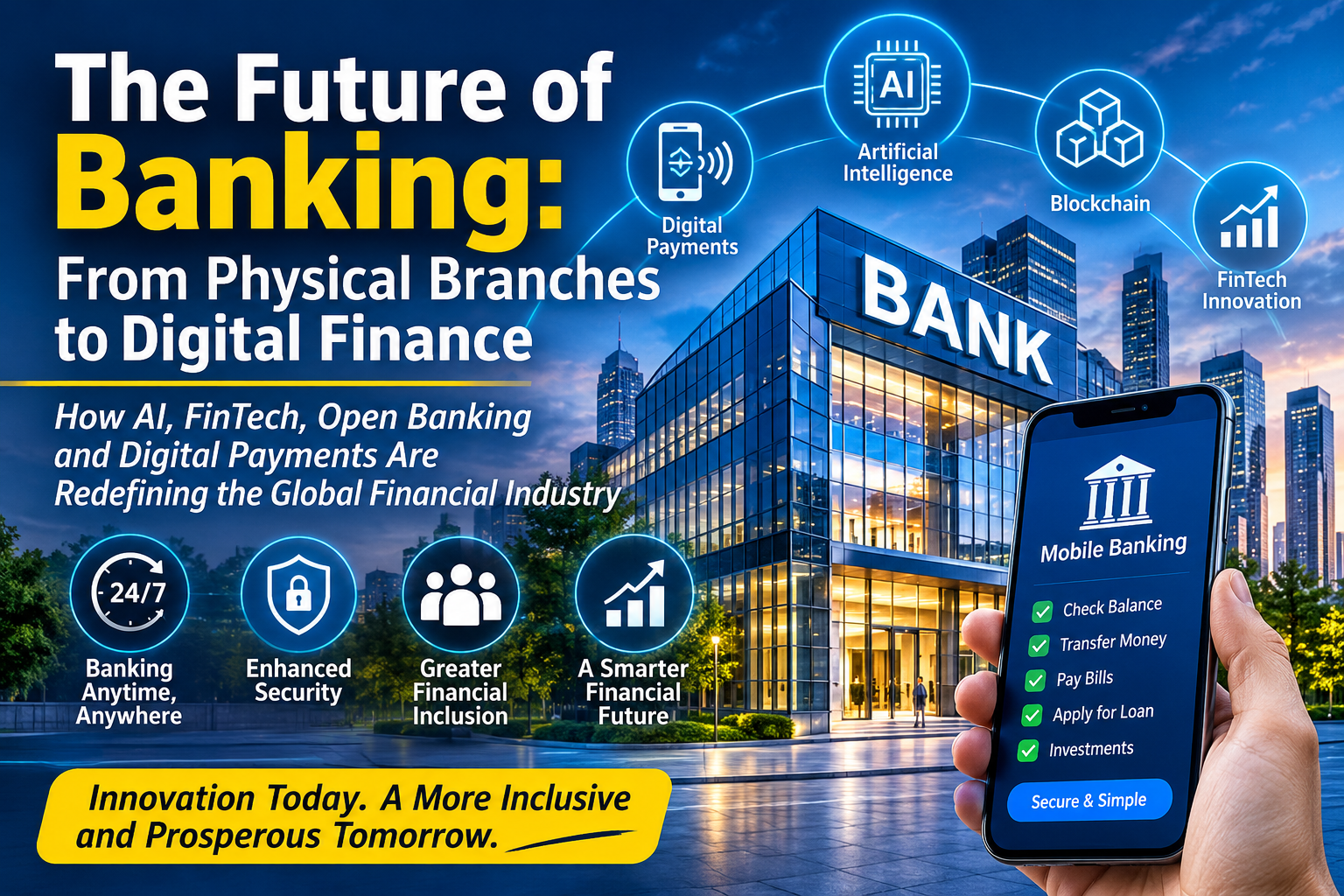
With the development of smartphones, artificial intelligence (AI), blockchain, cloud computing, digital payment systems and financial technology (FinTech), banking services are becoming faster, more accessible and increasingly personalized.
Customers can now transfer money, pay bills, check account balances, apply for financial products and manage investments without visiting a physical branch.
But this transformation raises an important question:
Will traditional banks disappear, or will they evolve into something more powerful in the digital economy?
The answer may be neither complete disappearance nor simple modernization. The future of banking will likely combine digital convenience, intelligent financial services, stronger cybersecurity and human expertise.
Let's explore how this transformation is reshaping the global financial industry.

1. The Decline of Traditional Banking Experiences
Traditional banking was built around physical infrastructure. Banks established branches in cities, towns and commercial areas to provide financial services to individuals and businesses.
This model helped build trust and confidence because customers could meet banking representatives, discuss financial problems and receive assistance directly.
However, traditional banking also has limitations:
* Customers must often travel to branches.
* Transactions may require paperwork and manual verification.
* Banking hours can restrict access to services.
* Maintaining physical branches creates significant operating costs.
* Manual processes can increase processing time.
As customer expectations change, convenience and speed have become essential.
People increasingly expect banking services to be available 24 hours a day, seven days a week.
Digital banking is responding to this demand by moving many everyday services from physical counters to secure online platforms.
Physical branches will continue to serve important purposes, especially for complex financial advice, business relationships and customers who need personal assistance. However, their role is evolving from transaction centers into advisory and relationship-management centers.
2. Digital Banking: Financial Services in Your Pocket
Digital banking is one of the most visible developments in modern finance.
A smartphone has effectively become a personal banking counter. Customers can access many services without visiting a branch or speaking to a banking officer.
Modern digital banking platforms commonly provide:
* Account balance and transaction history.
* Domestic and international transfers.
* Utility bill payments.
* Mobile wallet services.
* Debit and credit card management.
* Digital account opening.
* Online financing applications.
* Investment and savings information.
This transformation is particularly important for countries where large populations have limited access to traditional banking infrastructure.
Digital platforms can help financial institutions reach customers in remote areas and provide convenient services to people who previously found banking difficult.
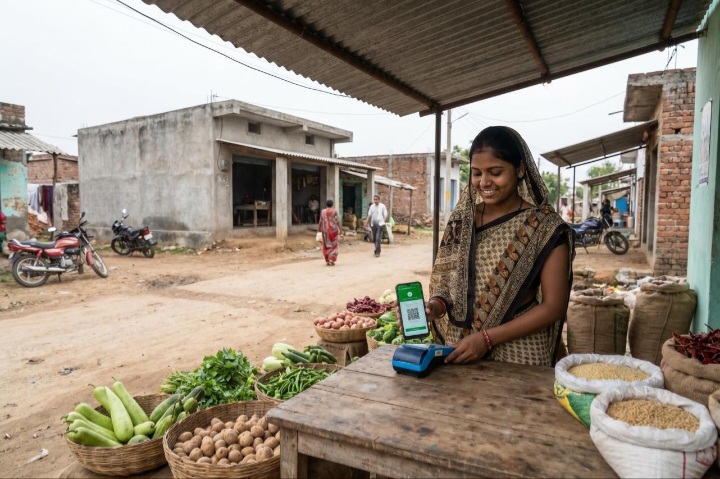
For example, a small business owner can receive customer payments digitally, pay suppliers electronically and monitor cash flow through a mobile application.
This is not simply a technological improvement. It represents a fundamental change in how people participate in the financial system.

3. Artificial Intelligence: The New Brain of Banking
Artificial intelligence is becoming an important part of the banking industry's transformation.
Banks manage enormous quantities of financial information every day. AI systems can help analyze this information, identify unusual activities, improve customer service and support better decision-making.
Some important applications include:
Fraud detection:
AI can analyze transaction patterns and identify suspicious activities that may indicate fraudulent payments or unauthorized account access.
Customer support:
AI-powered chatbots and virtual assistants can answer common banking questions, guide customers through services and provide assistance around the clock.
Credit assessment:
Machine-learning systems can help financial institutions evaluate repayment patterns and assess lending risks. These systems must be carefully monitored to avoid unfair or discriminatory decisions.
Personalized banking:
AI can help identify spending habits and provide relevant budgeting information, savings suggestions and financial insights.
Operational efficiency:
Intelligent automation can reduce repetitive administrative work, improve document processing and support faster internal operations.
However, AI also introduces challenges involving customer privacy, inaccurate decisions, algorithmic bias and accountability.
Banks must ensure that technology supports responsible financial decisions rather than replacing human judgment entirely.

4. FinTech Companies: The New Competition for Traditional Banks
Financial technology companies, commonly known as FinTech businesses, are changing the competitive environment of banking.
These companies develop technology-based solutions for payments, lending, money transfers, digital wallets, investment management and other financial activities.
Unlike traditional banks, many FinTech companies operate primarily through digital platforms.
Their business models often focus on:
* Faster customer onboarding.
* Convenient digital payments.
* Lower-cost money transfers.
* Simplified financial applications.
* Innovative lending solutions.
* Integration with online businesses.
This competition is encouraging traditional banks to modernize their services.
Instead of treating FinTech companies only as competitors, many financial institutions are also developing partnerships with technology providers.
The future banking environment may therefore become a combination of traditional financial institutions, digital banks, payment companies and technology platforms working together.
The biggest winners will likely be organizations that can combine customer trust, regulatory compliance, technological innovation and efficient services.
5. Open Banking: Giving Customers More Control Over Their Financial Data
One of the most important developments in modern financial services is Open Banking.
Traditionally, banks controlled the financial information stored within their systems. Customers generally accessed their own financial information through the bank's applications or services.
Open Banking introduces a different approach.
With customer consent and appropriate security safeguards, financial institutions can share selected financial information with authorized third-party service providers through secure application programming interfaces (APIs).
This creates opportunities for customers to access innovative financial products and services.
For example, a customer may use one financial application to view accounts from multiple banks, analyze spending patterns and compare financial products.
Businesses can also benefit from improved financial data connectivity, making it easier to manage payments, reconcile transactions and assess cash flow.
Open Banking can encourage competition because customers gain greater flexibility in choosing financial services.
However, data privacy, customer consent, cybersecurity and clear accountability must remain central to this transformation.
6. Instant Payments: The End of Waiting for Money Transfers
Traditional banking transfers sometimes involve delays, particularly when transactions cross institutions, countries or different payment networks.
Instant payment systems are changing this experience.
They allow participating institutions to transfer money within seconds or near real time, depending on the system and its operating arrangements.
This innovation is valuable for individuals, retailers, freelancers and businesses.
Imagine a small retailer receiving payment immediately after completing a sale. A freelancer can receive money without waiting for traditional settlement cycles. Families can transfer emergency funds more conveniently.
For developing economies, fast payment infrastructure can also encourage formal financial participation and reduce dependence on cash.
The World Bank recognizes modern payment infrastructure as an important foundation for financial inclusion and economic development. World Bank +1
However, instant payments also require effective fraud monitoring, transaction authentication, dispute-resolution procedures and consumer protection.
When money moves quickly, mistakes and fraudulent transactions can also happen quickly. Therefore, speed must always be supported by security.
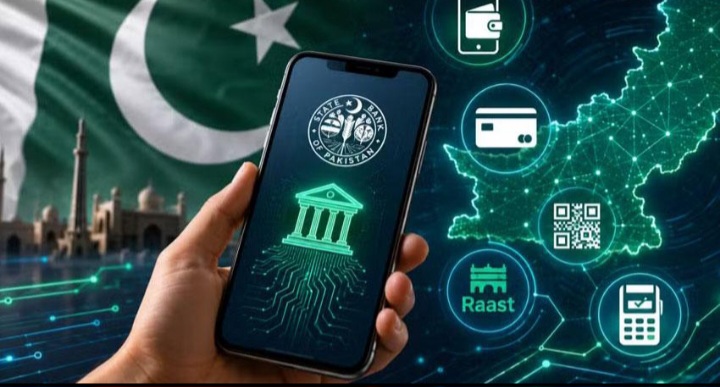
7. Pakistan's Banking Industry: Moving Towards Digital Finance
Pakistan provides an interesting example of how digital banking is transforming an emerging economy.
For many years, traditional banking remained an important channel for financial transactions. However, mobile banking, internet banking, branchless banking and digital payment platforms are creating new opportunities.
According to a speech by the Bank for International Settlements discussing State Bank of Pakistan initiatives, Pakistan's banking and payment channels processed approximately 9.1 billion transactions in FY2025.
The speech reported that:
* 68% of transactions were conducted through mobile applications.
* 5% were conducted through cards.
* 3% were conducted through internet banking portals.
* 12% were conducted over the counter.
* 12% were conducted through ATMs.
The same speech reported that digital retail transaction volume increased by 44% during the year. Bank for International Settlements
These figures demonstrate how rapidly customers are adopting digital banking channels.
Pakistan's financial sector has significant opportunities to expand further through:
* Digital account opening and electronic KYC.
* Instant payment infrastructure.
* Secure mobile banking applications.
* Digital wallets and merchant payments.
* Better international remittance services.
* Financial services for small and medium-sized enterprises.
* Responsible AI adoption in banking operations.
For Pakistan, digital finance is not simply about replacing traditional banking services. It can also help bring more people into the formal financial system.
Millions of individuals and small businesses need affordable, convenient and reliable financial services.
Technology can help address this need, provided that digital infrastructure, financial literacy and consumer protection develop together.
8. Cybersecurity: The Biggest Challenge of Digital Banking
As banking becomes increasingly digital, cybersecurity becomes one of the most important responsibilities of financial institutions.
In traditional banking, customers were concerned about physical security, unauthorized access and document fraud.
In digital banking, the risks have expanded.
Cybercriminals may attempt to steal passwords, compromise mobile devices, manipulate customers through fake calls, create fraudulent websites or gain unauthorized access to financial accounts.
Artificial intelligence has also made certain forms of impersonation and social engineering more convincing.
Banks must therefore invest in strong cybersecurity systems, including:
* Multi-factor authentication.
* Real-time transaction monitoring.
* Encryption of sensitive information.
* Secure application programming interfaces.
* Continuous vulnerability assessments.
* Strong identity verification.
* Disaster recovery and business continuity planning.
* Customer awareness and fraud reporting systems.
Customers also have responsibilities.
They should never share one-time passwords, banking PINs or confidential credentials with anyone. They should avoid suspicious links and verify unusual payment requests through official channels.
The Bank for International Settlements has highlighted that digital banking requires resilience, cybersecurity and responsible AI governance alongside technological innovation. Bank for International Settlements +1
The future of banking will not be determined only by how quickly banks can process transactions, but also by how effectively they can protect customer trust.
9. Blockchain and the Possibility of a New Financial Infrastructure
Blockchain technology has introduced new possibilities for financial transactions and record management.
It is a distributed ledger technology that allows information to be recorded and verified across a network.
In banking and financial services, blockchain-related applications may support:
* Faster settlement of certain transactions.
* Improved transparency in transaction records.
* Tokenization of financial assets.
* Programmable financial transactions.
* New approaches to cross-border payments.
Tokenization is particularly interesting because it involves representing ownership or claims over assets digitally.
In the future, certain financial assets could be issued, transferred and settled using digital infrastructure.
However, blockchain is not a solution to every banking problem. Questions involving regulation, scalability, interoperability, privacy and operational risks must be addressed before these systems can achieve wider adoption.
The future will likely involve a combination of traditional payment infrastructure and new digital technologies rather than an immediate replacement of the entire banking system.
10. Financial Inclusion: Bringing Banking to Everyone
One of the most meaningful opportunities created by digital banking is financial inclusion.
Millions of people around the world still face difficulties accessing affordable financial services.
Some live far from bank branches. Others lack the documentation, income history or financial knowledge required to use traditional banking products.
Digital banking can reduce several of these barriers.
A person with access to a suitable mobile phone and secure financial services may be able to receive payments, save money, pay bills and participate in the digital economy.
Small businesses can also benefit from digital transaction records, which may help them demonstrate business activity when applying for financing.
However, financial inclusion is not simply about opening more digital accounts.
People also need affordable services, reliable connectivity, understandable financial products, digital literacy and protection against fraud.
The objective should be to make financial services genuinely useful and accessible, not merely digital.

11. The Changing Role of Banking Employees
Digital transformation does not necessarily mean that human employees will become unnecessary.
Instead, their responsibilities will change.
Routine activities such as data entry, document processing, transaction verification and basic customer inquiries may increasingly be automated.
At the same time, demand will continue for professionals with expertise in:
* Cybersecurity and technology risk management.
* Financial analysis and relationship management.
* Regulatory compliance and anti-money laundering.
* Artificial intelligence and data analytics.
* Digital banking operations.
* Customer experience and financial advisory.
Banking professionals will need to develop new skills to remain competitive.
Financial institutions should invest in employee training and help their workforce adapt to technological developments.
The future banking employee will need a combination of financial knowledge, technological understanding, communication skills and professional judgment.
12. What Will Banking Look Like in 2035?

Imagine walking into a world where banking services are integrated into almost every part of daily life.
You purchase a product, and the payment is processed instantly. Your financial application automatically organizes your monthly expenses. An AI assistant helps you compare savings products and understand your financial position.
Businesses receive payments through interconnected systems, while international transactions become more transparent and potentially faster.
Banks may increasingly operate as technology-driven financial ecosystems rather than institutions dependent on physical branches.
Some possible developments include:
AI-powered personal finance: Intelligent financial assistants could help customers organize budgets, monitor spending and understand financial decisions.
Invisible banking: Financial services may become integrated into shopping platforms, business software and other everyday applications.
More connected international payments: Improved payment infrastructure and interoperability could make cross-border transfers more efficient.
Digital identity: Secure digital identity systems could simplify customer verification and account opening.
Personalized financial products: Banks could use customer-authorized data to offer more relevant services.
However, these developments will depend on regulation, infrastructure, consumer acceptance and responsible technology adoption.
13. The Challenges Banks Must Overcome
Despite the opportunities, digital transformation is not without challenges.
There is also a risk of overdependence on external technology providers. Banks must understand their technology supply chains and ensure that critical services can continue during disruptions.
The Bank for International Settlements and other international financial institutions emphasize the importance of balancing innovation with financial stability, supervision and resilience. IMF eLibrary +1
Technology alone cannot create a successful banking industry. Trust, transparency, accountability and customer protection must remain its foundation.
Conclusion:
The Future of Banking Is Digital, but Trust Remains Human
The banking industry is not simply moving from physical branches to mobile applications. It is undergoing a deeper transformation that will redefine how money is managed, transferred, protected and invested.
Artificial intelligence will make financial services more intelligent. Digital payments will make transactions more convenient. Open Banking will provide new opportunities for financial connectivity. Blockchain and tokenization may introduce new financial infrastructure. FinTech companies will continue challenging traditional banking models.
However, the most important element will remain unchanged: customer trust.
People do not choose a bank simply because it has an attractive mobile application. They choose financial institutions because they expect their money, information and financial interests to be protected.
Traditional banks that refuse to adapt may struggle to compete. Digital banks that ignore security and customer relationships may struggle to build lasting confidence.
The institutions most likely to succeed will be those that combine technological innovation with strong governance, responsible financial practices and excellent customer service.
For developing countries such as Pakistan, this transformation offers an especially important opportunity. Digital banking can support businesses, improve financial inclusion, encourage entrepreneurship and strengthen economic participation.
The next generation of banking will not necessarily be defined by the number of branches a bank operates or the size of its physical infrastructure.
It will be defined by how effectively it connects people, businesses, technology and financial opportunities.
Banking is no longer just about managing money. It is about managing the future of the digital economy.
* Banking
* FinTech
* Digital Transformation
* Artificial Intelligence
* Finance
#FutureOfBanking #DigitalBanking #FinTech #ArtificialIntelligence #FinancialTechnology #BankingInnovation #DigitalTransformation #FinancialInclusion #PakistanBanking





Comments 0
Sign in to join the conversation.
No comments yet. Be the first to say something.