


George Santayana’s warning that those who cannot remember the past are condemned to repeat it (The Life of Reason, 1905) is perhaps the most quoted sentence about history ever written. Yet nations behave, again and again, as though they had never heard it. Wars are fought in the shadow of earlier wars. Financial bubbles inflate on the ruins of previous ones. Societies slide back into the very divisions that once brought them to the edge.
The puzzle is not that history offers no lessons. It is that societies find them hard to recognise, uncomfortable to accept, and harder still to apply. To understand why, we need to look beyond events themselves and ask about memory, power, institutions, and the uneasy relationship between truth and national pride.
Patterns, Not Replays
History rarely repeats itself in identical form. Technologies change, and so do the people involved. (The line that “history doesn’t repeat, but it rhymes” is often attributed to Mark Twain, though there is no solid evidence he said it.) What returns are patterns of behaviour: power concentrating in few hands, communities pushed to the margins, public opinion manipulated, accountability neglected, and a quiet confidence that old warnings no longer apply.
This exposes a basic weakness in human societies. We inherit the experiences of earlier generations, but not automatically their wisdom.
The Problem of Selective Memory
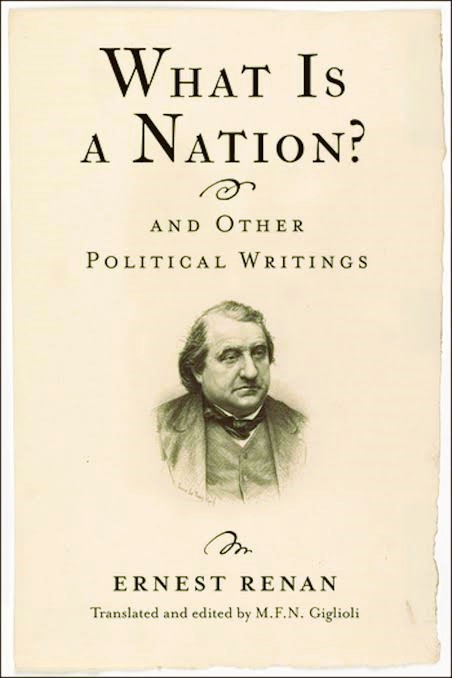
Every nation remembers some things with pride and others with discomfort. Victories become public holidays, and heroes become symbols, while painful episodes are folded into convenient, simplified explanations. The French thinker Ernest Renan observed as early as 1882, in his lecture What Is a Nation?, that getting history wrong is, in a sense, part of how nations form. Forgetting, he argued, is essential to national unity.
Such narratives are not always deliberately false, but they are usually incomplete. Maurice Halbwachs, who pioneered the study of collective memory, showed that societies do not preserve the past neutrally. They reconstruct it according to present needs. Historian Margaret MacMillan makes a related point in The Uses and Abuses of History (2008): the past is easily bent into a tool for legitimacy and grievance.
When a nation recalls its achievements but not the errors that accompanied them, history stops being a source of reflection and becomes a source of reassurance. Citizens may know that a crisis happened without knowing why: which institutions failed, which rivalries festered, which inequalities went unaddressed. A society that remembers events without understanding their causes is poorly equipped to stop them from recurring.
The Tyranny of the Short Term
Political leaders face a persistent temptation to favour immediate advantage over long-term stability. Elections, ambitions, factional rivalries, and the instinct for self-preservation all shape decisions. Even leaders who grasp a policy’s dangers may pursue it because abandoning it would cost them their position.
The American historian Barbara Tuchman captured this in The March of Folly (1984). She defined folly in government as the pursuit of policies contrary to a state’s own interests, despite the availability of workable alternatives. Her examples, from the Trojan Horse to Vietnam, show that the warnings were usually there. Leaders simply did not heed them.
Nor is this a flaw peculiar to authoritarian systems. Democracies can reward popular promises over unpopular reforms. Economic adjustments get postponed, independent institutions weakened, and social divisions exploited because the benefits arrive now and the bill arrives later, often after those responsible have left office.
Short Financial Memories
Economic history is a revealing case. In This Time Is Different (2009), Carmen Reinhart and Kenneth Rogoff surveyed eight centuries of financial crises and found strikingly similar patterns: excessive borrowing, inflated asset prices, and weak oversight, each accompanied by the belief that circumstances had fundamentally changed. Charles Kindleberger’s classic Manias, Panics, and Crashes and Hyman Minsky’s “financial instability hypothesis” make a similar argument: stability itself breeds complacency, and complacency breeds risk.
After each crash, reforms are introduced, and promises of prudence are made. Then memory fades, confidence returns, and the old habits quietly reappear. The circumstances differ, but the temptation is constant: the conviction that this time will be different.
Institutions That Fail to Learn
Societies can diagnose a crisis without building the mechanisms to prevent the next one. Inquiries identify failures, commissions publish recommendations, and leaders acknowledge shortcomings. But if the underlying incentives remain unchanged, the old behaviour continues under a new public narrative.
This is especially true where authority is concentrated, accountability is weak, and criticism is treated as disloyalty. Officials in such systems learn that challenging a superior is riskier than letting an error continue. Over time, organisations lose the ability to see their own warning signs. The problem is rarely a lack of knowledge. It is the absence of a culture in which knowledge can actually influence decisions.

Tacitus, writing about the early Roman Empire in the Annals, described this atmosphere precisely: flattery and fear gradually hollowing out honest counsel once the old republican checks had faded. Daron Acemoglu and James Robinson develop the modern version of the argument in Why Nations Fail (2012). They contend that lasting prosperity and stability depend on inclusive institutions that constrain power, not on the virtue of individual rulers. When systems depend on personal loyalty rather than rules and accountability, progress becomes fragile and past failures remain possible.
The Fading of Lived Experience
Generational change poses a quieter challenge. Those who lived through war, political breakdown, or economic collapse carry an awareness of its cost that no textbook can fully convey. Their successors meet the same events through classrooms, family stories, monuments, and anniversaries, and the emotional force gradually weakens.
The result can be a dangerous illusion of immunity. A generation that has never known major conflict may start to treat peace as a permanent condition rather than something sustained by diplomacy, restraint, and deliberate political choices. Distance from history is not harmful in itself. It becomes harmful when education fails to turn inherited memory into practical understanding.
What Education Owes History
This is why education matters so much. When history is taught as a list of dates, rulers, and battles, students may memorise facts without learning to weigh evidence or spot patterns. Richard Neustadt and Ernest May’s Thinking in Time (1986) argues that good decision-makers use history analytically: asking what is genuinely similar, what is different, and what alternatives existed.
Meaningful teaching asks why events occurred, whose interests were served, which other paths were open, and how different choices might have led elsewhere. It also accepts that historical interpretation is open to debate. Historians test evidence, compare explanations, and revise conclusions, which is the discipline working as intended. A society that suppresses questions in the name of national pride gives up history’s most valuable function: exposing uncomfortable truths.
Reflections from Pakistan’s Experience
The Pakistani experience offers sobering material for reflection. Since 1947, the country has wrestled with recurring questions: civil-military relations, constitutional continuity (three constitutions, in 1956, 1962, and 1973), political polarisation, regional grievances, and the accountability of state institutions to democratic processes. Scholars such as Ayesha Jalal, in The State of Martial Rule (1990), have examined how the early centralisation of state power shaped these trajectories. None of this can be explained by a single cause, and no two episodes should be treated as identical.
Still, the recurrence of institutional tension raises a hard question: why has it proved so difficult to establish durable arrangements that manage disagreement through stable constitutional processes? Answering honestly means examining both historical circumstances and the choices of political leaders, state institutions, and social actors. It also means accepting that institutional weaknesses rarely vanish simply because governments change.
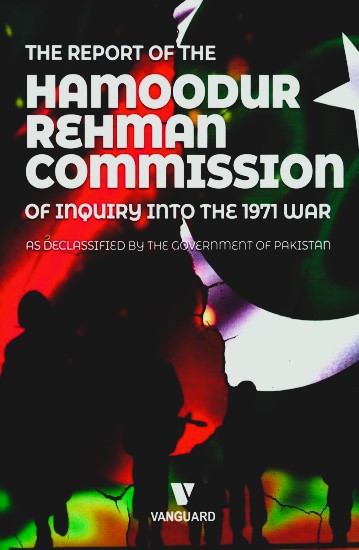
The events of 1971 are the starkest example of what unresolved political grievance can cost. In the 1970 general election, the Awami League won 160 of the 162 seats allotted to East Pakistan, giving it an absolute majority in the National Assembly. The failure to transfer power, followed by the military crackdown of March 1971, turned a constitutional crisis into a civil war and, ultimately, the separation of the country’s eastern wing. The Hamoodur Rahman Commission, appointed to investigate the causes, produced a report whose full contents were not made public for decades, itself a telling illustration of how uncomfortable truths can be postponed.
The lesson is not confined to the past. When legitimate grievances are dismissed, political participation is obstructed, and dialogue gives way to coercion, national unity grows fragile. Remembering 1971 meaningfully requires more than annual commemorations. It requires sustained attention to constitutional rights, representative government, federal balance, and respect for the political voices of diverse communities. Reflection matters only when it changes conduct rather than staying in speeches and textbooks.
Not Condemned, But Not Automatically Saved
It would be wrong to conclude that nations are doomed to repeat their errors. History also holds examples of learning and recovery: countries that rebuilt institutions after devastating wars, widened political participation after periods of exclusion, and constructed safeguards against abuses once thought unavoidable. Such progress tends to rest on four conditions: an honest reckoning with past failures, institutions capable of carrying out reform, leaders willing to accept limits on their own power, and citizens prepared to defend accountability even when it conflicts with their immediate preferences.
The crucial distinction is between remembering history and learning from it. Remembering preserves information, while learning changes behaviour. A nation can build museums, observe anniversaries, and celebrate heroes while continuing to reproduce the conditions that caused earlier disasters. Genuine learning shows up in public policy, in stronger institutional safeguards, in better education, and in a citizenry willing to question comfortable assumptions.
The Inconvenient Truth
Nations repeat their mistakes not because history is silent, but because its warnings are inconvenient. Political interests compete with public welfare, national myths obscure hard realities, institutions resist accountability, and each new generation mistakes the absence of recent catastrophe for proof that the old dangers have gone. These forces make repetition likely, but not inevitable.
The purpose of studying history is not to forecast every event or hunt mechanically for identical patterns. It is to develop the judgement to recognise dangerous tendencies before they harden into disasters. A historically conscious nation understands that progress takes more than celebrating achievements; it takes examining failures without fear or defensiveness.
The true measure of a society’s relationship with its past, then, is not how proudly it remembers its history, but how intelligently it lets that history shape its future.








Comments 0
Sign in to join the conversation.
No comments yet. Be the first to say something.