

Most people who want to write a novel never finish one. Not because they lack talent, but because they mistake preparation for progress. They outline, they research, they buy software, and they never write the first sentence that matters.
What follows are the ten things that actually get a first draft finished, based on what works for people who have done it rather than on what sounds impressive.
Before You Start
You do not need an outline. You need a premise: a person, a problem, and a reason it matters. Everything else is discovered by writing. An outline written before you know the characters is a plan for a story you have not met yet.
The second thing you need is a daily slot. Not a word count goal, a slot. Thirty minutes at the same time every day, protected like a meeting. The slot is the habit; the words are the output.
The Top 10 Tips
1. Write a Terrible First Draft
The first draft exists to be finished, not to be good. Every writer you admire wrote a bad first draft. The difference is that they finished it and then fixed it.
Lower your standards until you can produce a page a day. You can raise them later.
2. Protect a Daily Slot
Same time, same place, every day. The brain learns that this is when writing happens, and the resistance drops. Thirty minutes daily produces a novel in a year.
Do not write only when inspired. Inspiration arrives after you start, not before.
3. Do Not Edit While Drafting
Editing while drafting is the most common way to never finish. Every time you fix a sentence, you lose the momentum that was carrying you forward. Fix it in the next draft.
The first draft is for discovering the story. The second is for telling it.
4. Write the Scene You Know
When stuck, skip to the scene you want to write. Linear writing is a preference, not a requirement. The scenes you write out of order teach you what the ones between them need to contain.
A draft written out of order is still a draft.
5. Give Your Characters Problems, Not Traits
A character described as brave is flat. A character who is terrified and acts anyway is interesting. Traits are labels; problems are stories.
Ask what your character wants and what stops them. That is the entire novel.

6. End Each Session Mid-Sentence
Stop writing when you know what comes next. The blank page the next morning is the enemy, and leaving a half-finished sentence means you never face it.
Hemingway's trick, and it works.
7. Read Your Genre
Read the kind of novel you are writing, and read it as a writer. Notice how scenes start and end, how dialogue is punctuated, how chapters are structured. You are learning a craft, and craft is learned by studying examples.
Read badly written novels too. They teach what to avoid.
8. Keep a Notebook for Ideas
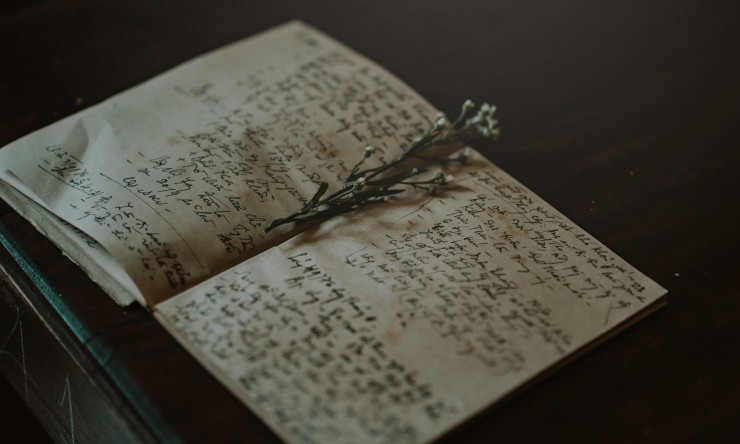
Ideas arrive when you are not writing. Capture them immediately, because they do not survive the walk to the desk. A single notebook, always with you, is enough.
Do not organise it. Organisation is procrastination.
9. Finish Before You Show Anyone
Feedback on an unfinished draft is feedback on a moving target. It produces confusion in you and wasted effort in the reader. Finish the draft, then seek feedback.
The exception is a trusted reader who understands that the draft is unfinished.
10. Accept That It Will Be Bad
The first novel is a learning experience, not a masterpiece. Most first novels are not published, and the ones that are usually took years of revision. The goal of the first draft is to prove you can finish.
Finishing is the skill. Everything else is craft, and craft can be learned.
How to Structure the Writing Year
Months one to three: write the first draft, badly and quickly. Do not look back. Months four to six: read it once, note what works and what does not, then rewrite. Months seven to nine: revise for structure and character. Months ten to twelve: line edit and polish.
Most people spend a year on the first draft and never reach the second. That is the trap. A fast first draft leaves time for the work that actually makes it good.
The Mistakes That Stop People at Chapter Three
Starting with chapter one and polishing it for a month. Waiting for the perfect opening line. Researching instead of writing. Showing the first chapters to friends and losing confidence. And believing that a good novel is written, when in fact it is rewritten.
The first draft is the worst version of the book. That is not a failure; it is the process. Every published novel began as a worse version of itself.
What to Do When You Are Stuck
Stuck usually means one of three things: you do not know what happens next, you are bored by what you are writing, or you are afraid it is not good enough. Each has a different fix.
If you do not know what happens next, skip to a scene you do know and write that. The gap often resolves itself once you know where the story is going.
If you are bored, the reader will be too. Cut the scene or change the stakes. Boredom in the writer is a signal, not a mood.
And if you are afraid, write badly on purpose. Give yourself permission to write the worst version of the scene. You can fix it later, and you usually will not need to.
After the First Draft
Put it in a drawer for a month. You need distance from it to see it clearly. When you return, read it as if someone else wrote it, and note what works and what does not without judgement.
Then rewrite. Not edit — rewrite. The second draft is where the book becomes what it is. Most published novels go through three to five drafts before they are ready.
And accept that the book you finish will not be the book you started. That is not a failure of planning; it is how writing works. The story teaches you what it is about as you write it.
The Bottom Line
Write a terrible first draft, protect a daily slot, and do not edit while drafting. Finishing is the skill; everything else is craft.






Comments 0
Sign in to join the conversation.
No comments yet. Be the first to say something.