

Introduction
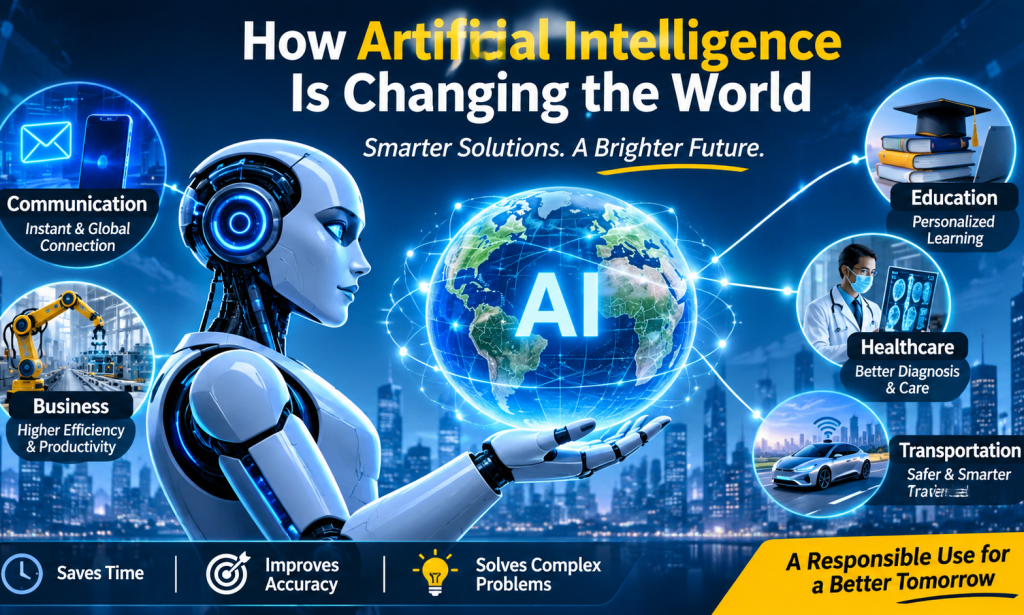
Artificial Intelligence (AI) is one of the most important inventions of modern technology. It is changing the world by making our lives easier, faster, smarter, and more convenient. Artificial Intelligence refers to the ability of computers and machines to perform tasks that usually require human intelligence, such as learning, thinking, problem-solving, decision-making, and understanding languages.
Today, AI has become an important part of our everyday lives. We use it in smartphones, computers, hospitals, schools, businesses, transportation, and many other areas. From answering simple questions to helping scientists discover new medicines, AI is making a big difference in the modern world. It saves time, improves productivity, and creates new opportunities for people. Although AI has many advantages, it also brings challenges that must be handled carefully. Understanding how Artificial Intelligence works and affects our lives is important because it will play a major role in shaping our future.
1. Artificial Intelligence in Education
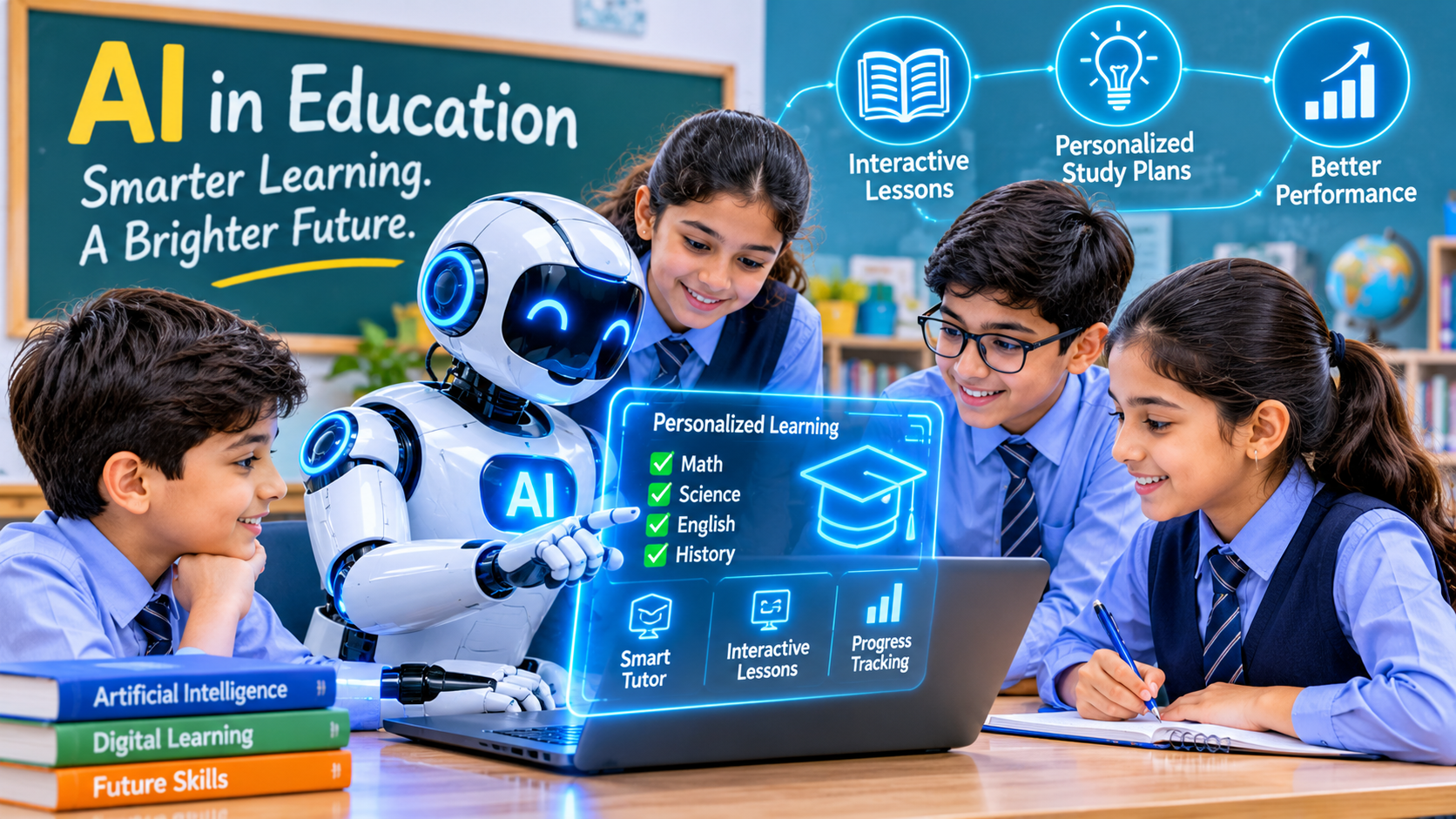
Artificial Intelligence is bringing major changes to the education system. It makes learning easier, faster, and more interesting for students. With the help of AI-powered applications, students can understand difficult subjects, solve mathematical problems, improve their writing, and learn new skills. AI tools can explain lessons in simple words and provide examples according to students' learning needs.
Teachers can also use Artificial Intelligence to prepare lessons, create educational activities, check assignments, and understand students' progress. Online learning platforms use AI to recommend useful lessons and learning materials. Students who cannot attend traditional classrooms can benefit from AI-powered educational resources.
For example, students can use AI assistants to understand science, mathematics, English, and computer studies. However, students should use AI as a learning assistant rather than depending on it to complete all their work. This helps them develop their own knowledge, creativity, and critical-thinking skills.
2. Artificial Intelligence in Healthcare
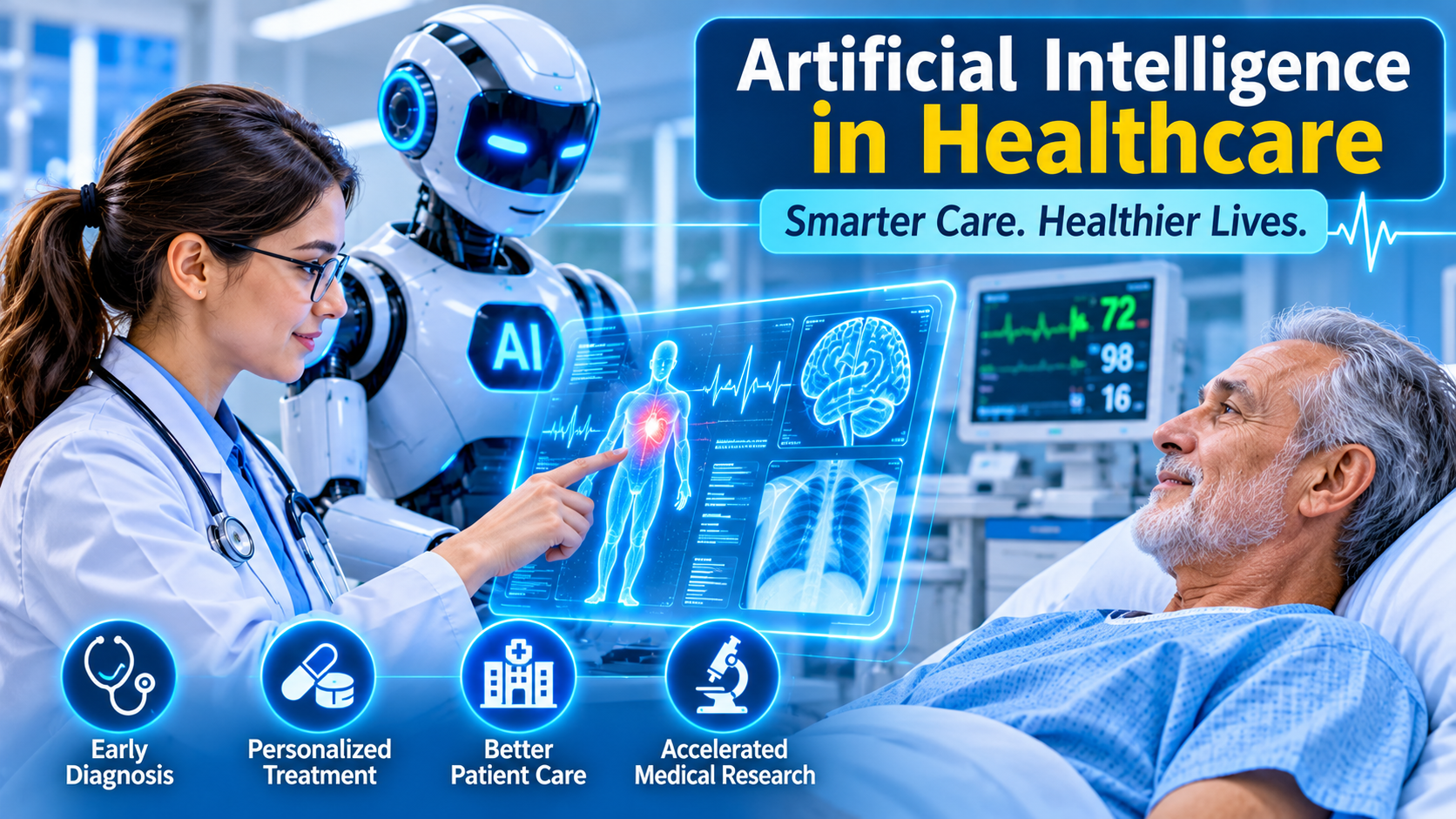
AI is transforming the healthcare industry by helping doctors and medical professionals provide better services. It can examine medical reports, study images such as X-rays, and help identify possible diseases. AI-powered systems can also help doctors monitor patients and organize medical information.
In hospitals, intelligent machines and computer systems can save time by handling certain routine tasks. AI supports medical research by helping scientists study large amounts of information and discover possible new treatments. It can also help people access health information through digital assistants and online services.
For example, AI technology can help doctors examine medical scans and identify areas that may need further attention. This allows medical professionals to make more informed decisions. However, AI cannot completely replace doctors and nurses. Human experts are still needed to understand patients, make important decisions, and provide personal care. AI works best when it supports medical professionals.
3. Artificial Intelligence in Communication
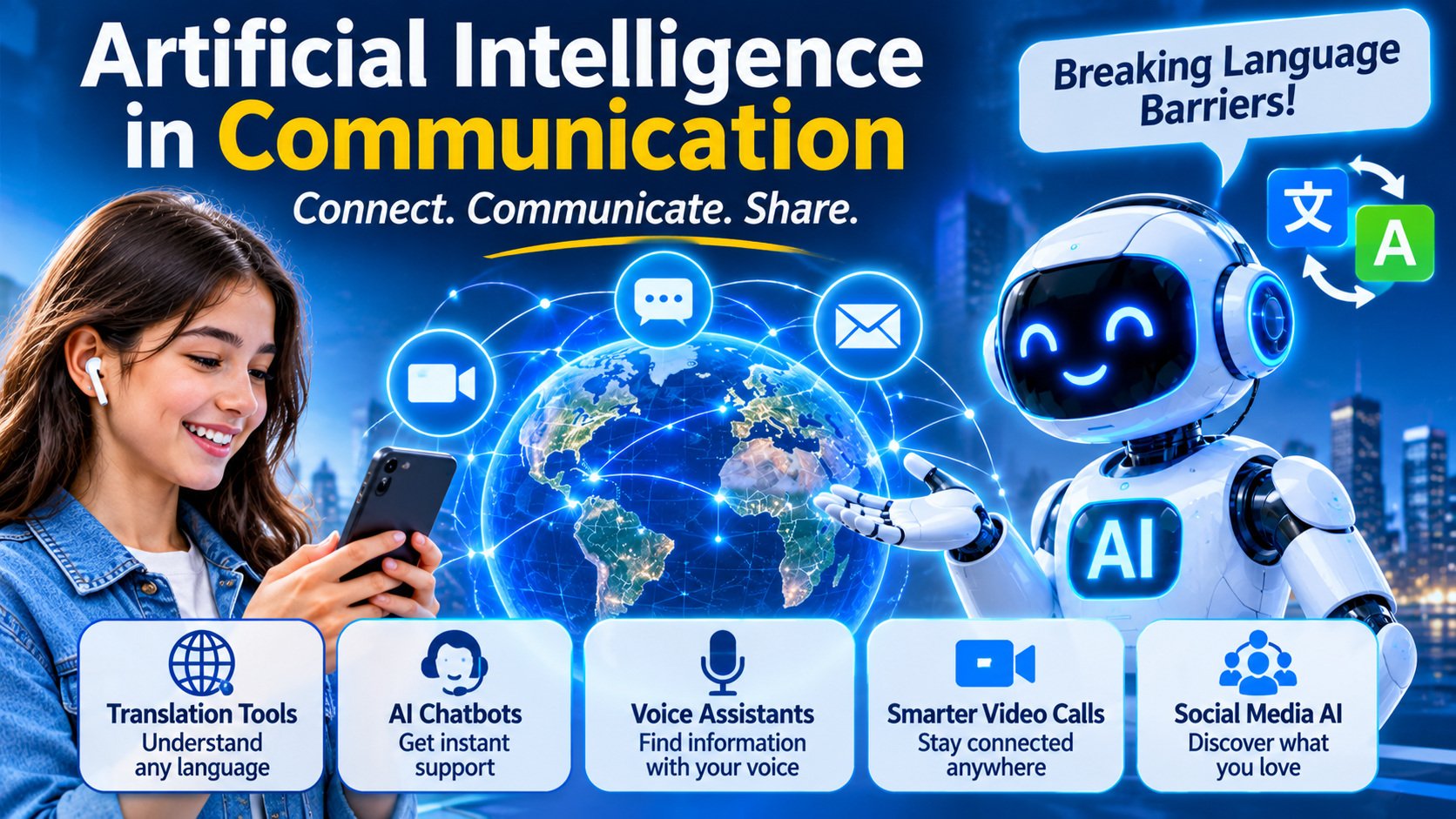
Communication has become faster and easier because of Artificial Intelligence. Today, people can communicate with friends, family members, and colleagues from different parts of the world within seconds. AI-powered translation applications help people understand different languages and communicate with others more easily.
Voice assistants, chatbots, and smart messaging applications are also examples of AI in communication. They can answer questions, provide information, and help users complete simple tasks. Social media platforms use AI to recommend content according to people's interests.
AI has also improved video calls, voice recognition, and online customer support. Businesses use intelligent chatbots to answer customer questions and provide assistance at any time. These technologies connect people and businesses across the world. However, people should be careful about sharing personal information online and should not believe everything they see on social media.
4. Artificial Intelligence in Business
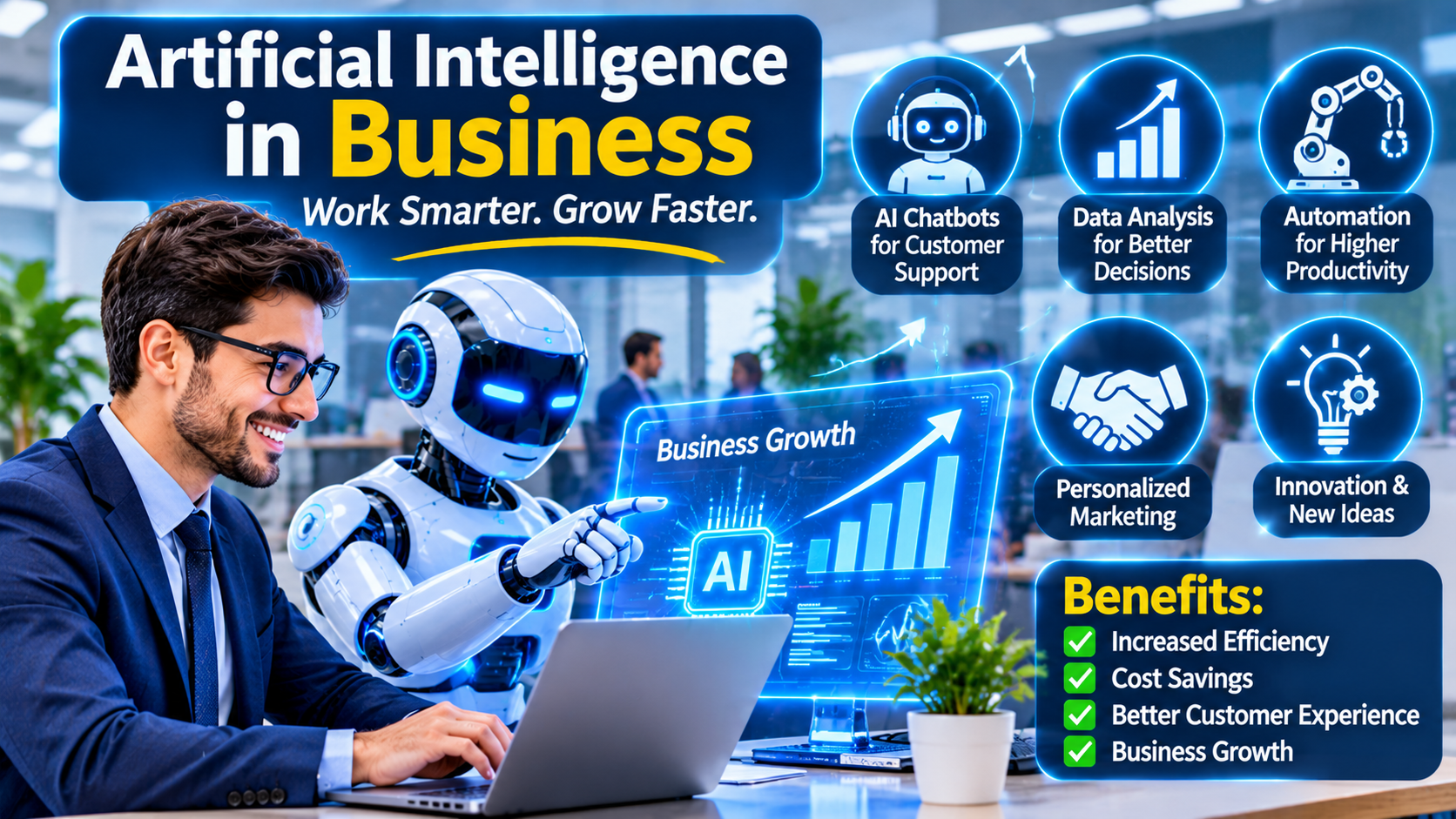
Artificial Intelligence is helping businesses become more successful and productive. Companies use AI to manage information, understand customer needs, improve customer service, and complete tasks more efficiently. AI-powered chatbots can answer common customer questions at any time, saving both time and effort.
Businesses also use AI to study market trends, manage products, and make better decisions. In factories, intelligent robots can perform repetitive tasks with speed and accuracy. This helps companies improve production and reduce certain types of mistakes.
Small businesses can also benefit from AI tools. They can use them to create advertisements, design products, manage schedules, prepare reports, and communicate with customers. For example, an online shop can use AI to recommend products to customers based on their interests. In this way, AI is helping businesses grow and compete in the modern world.
5. Artificial Intelligence in Transportation
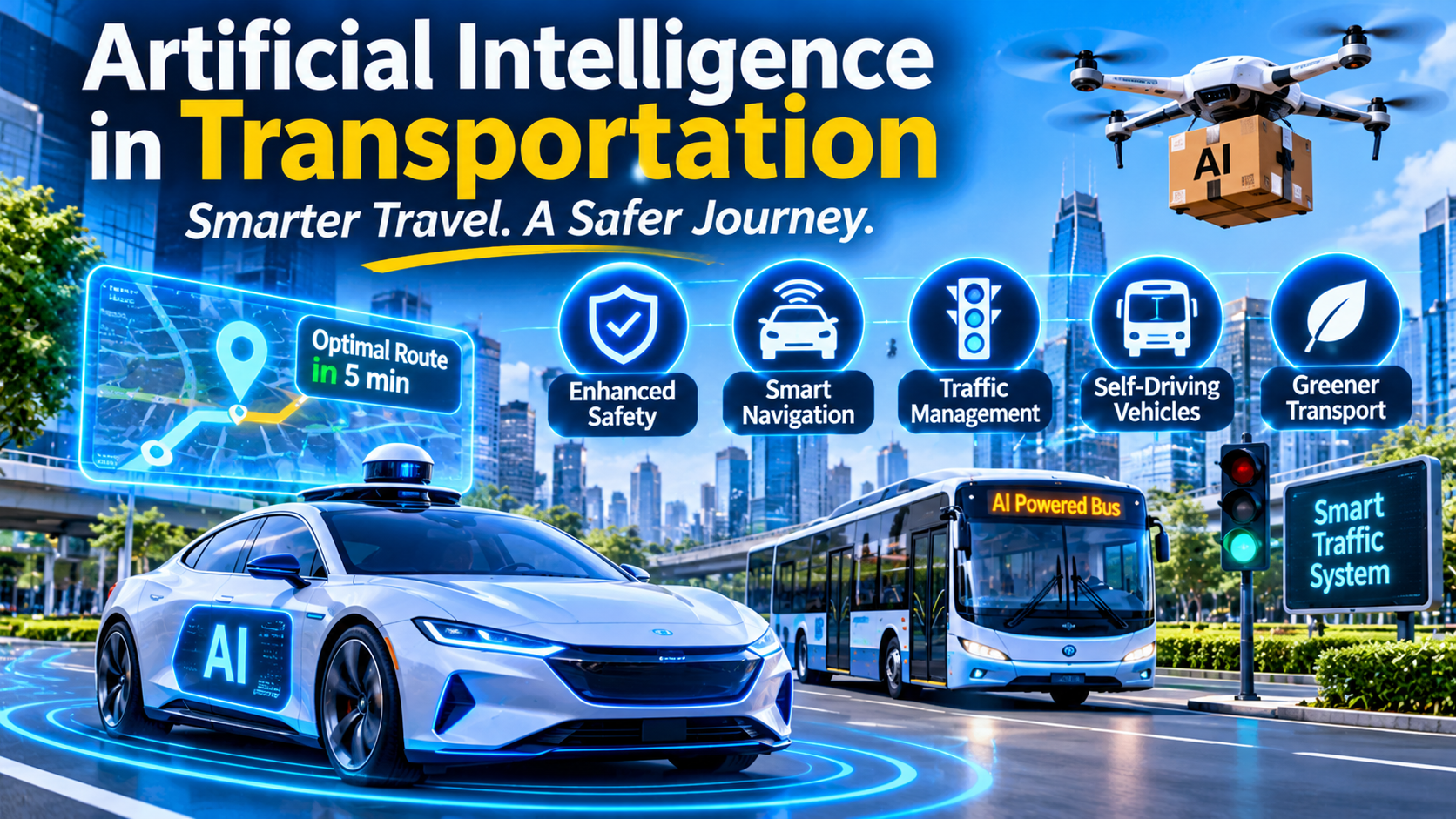
Transportation is another important area where Artificial Intelligence is making a difference. Modern vehicles use AI-powered systems to improve safety, navigation, and driving experiences. Navigation applications use intelligent technology to suggest routes, estimate travel times, and help drivers avoid traffic.
Self-driving vehicles are also being developed with the help of AI. These vehicles use cameras, sensors, and computer systems to understand their surroundings and make driving decisions. AI can also help manage traffic lights and improve transportation systems in busy cities.
For example, smart traffic systems can analyze road conditions and help control traffic flow. In the future, AI may make transportation more efficient, comfortable, and safer. However, proper testing and safety measures are necessary before advanced driving technologies can be widely used.
6. Artificial Intelligence in Everyday Life
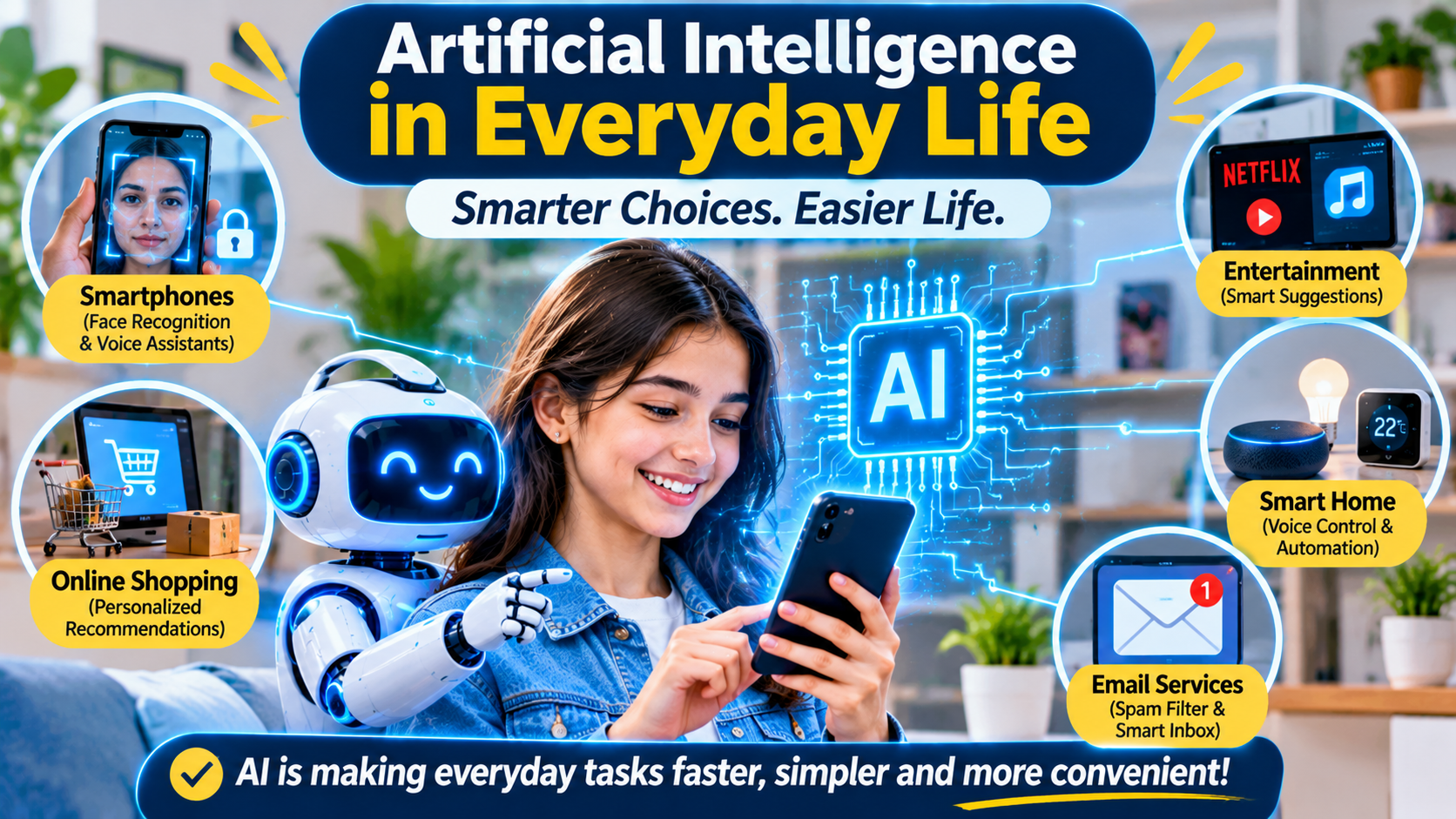
Artificial Intelligence is not limited to large companies or advanced machines. It is also present in our everyday activities. Many people use AI without even realizing it. Smartphones use AI for facial recognition, voice assistants, camera improvements, and personalized suggestions.
Online shopping platforms recommend products according to customers' interests. Music and video applications suggest songs and videos based on viewing habits. Email services use AI to identify unwanted messages and organize inboxes.
Smart home devices can control lights, adjust temperatures, and help people manage household activities. AI-powered applications can also help users plan their schedules, write messages, and find information. These examples show that AI is becoming a normal part of modern life. It saves time, reduces effort, and makes everyday tasks more convenient.
7. Benefits of Artificial Intelligence
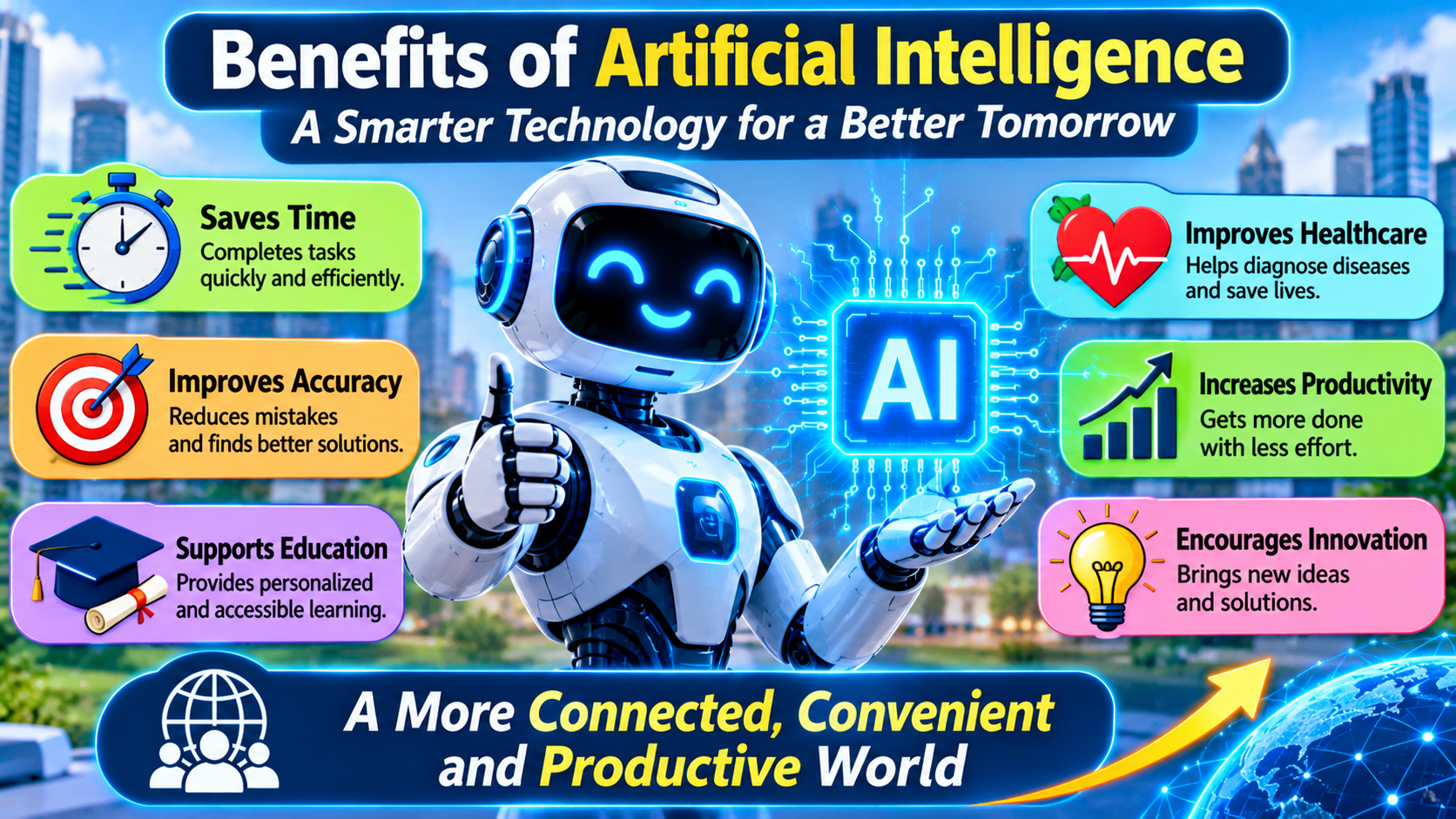
Artificial Intelligence provides many benefits to individuals, organizations, and society. One of its biggest advantages is that it can complete certain tasks quickly and efficiently. It helps people save time and focus on more important activities.
Another important benefit is improved accuracy. AI systems can analyze large amounts of information and help identify patterns that humans might miss. AI also supports education by providing learning resources and helps healthcare professionals examine medical information.
Furthermore, Artificial Intelligence encourages innovation and creates opportunities for new inventions. It can help solve difficult problems, improve communication, increase productivity, and make different services more accessible.
Some major benefits of Artificial Intelligence include:
Saves time: AI can complete many tasks quickly.
Improves accuracy: It can help reduce mistakes in certain tasks.
Supports education: It makes learning more accessible and interesting.
Improves healthcare: It helps medical professionals analyze information.
Increases productivity: It allows businesses to work more efficiently.
Encourages innovation: It creates opportunities for new ideas and inventions.
When used properly, AI can make life more comfortable, productive, and convenient.
8. Challenges and Risks of Artificial Intelligence
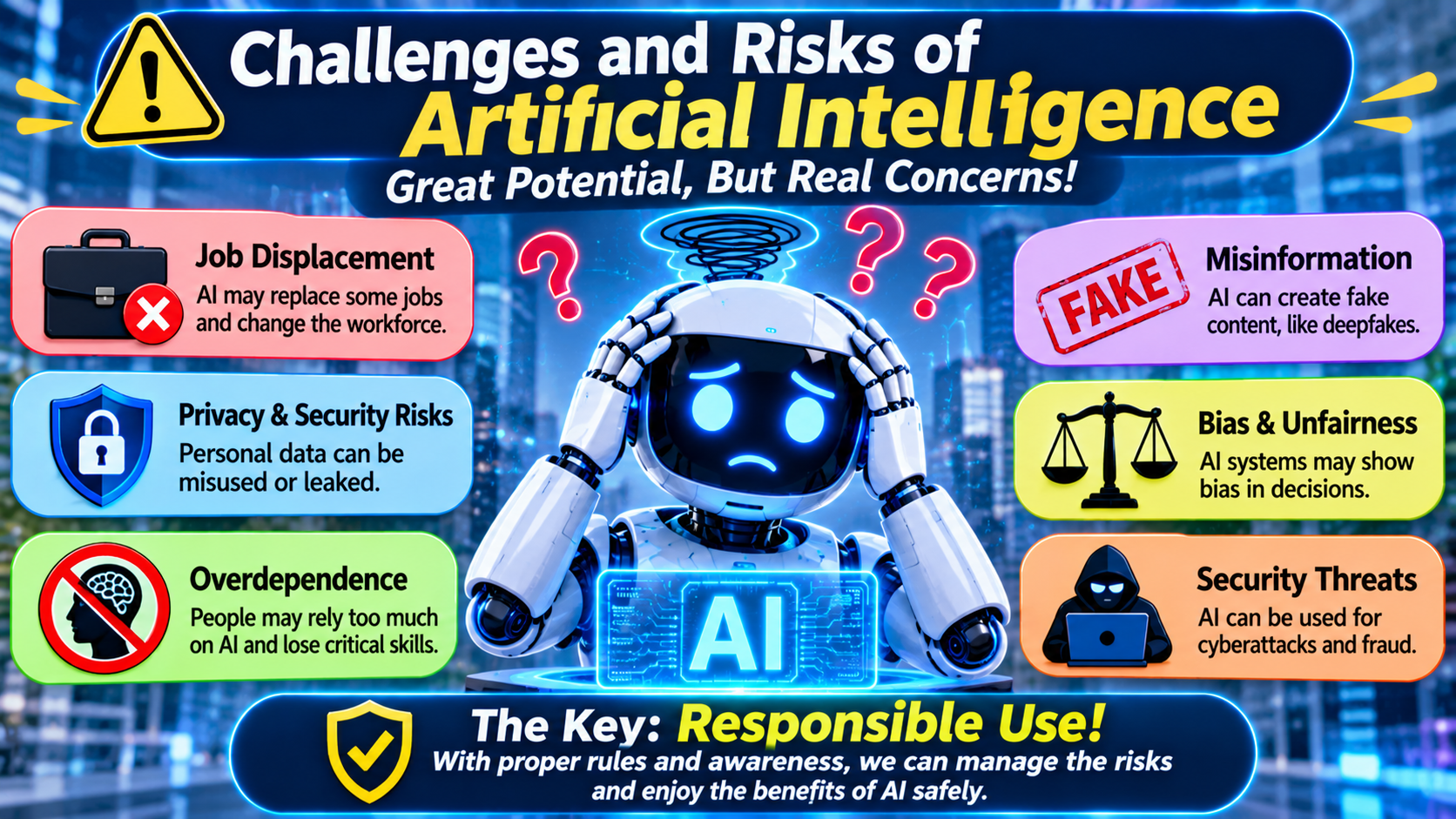
Although Artificial Intelligence has many advantages, it also comes with certain challenges. One major concern is that some jobs may change or become automated because machines can perform particular tasks. This means workers may need to learn new skills to adapt to changing technology.
Another concern is privacy and security. AI systems sometimes use personal information, so protecting that information is very important. False information, online scams, and fake images created using AI can also mislead people.
Depending too much on AI can reduce independent thinking and creativity. For example, students who copy every answer from AI without understanding the topic may miss important learning opportunities.
To overcome these challenges, governments, companies, schools, and individuals should promote responsible AI use, protect personal information, and make sure that technology is used for positive purposes. People should also continue learning new skills so they can adapt to future changes.
9. The Future of Artificial Intelligence
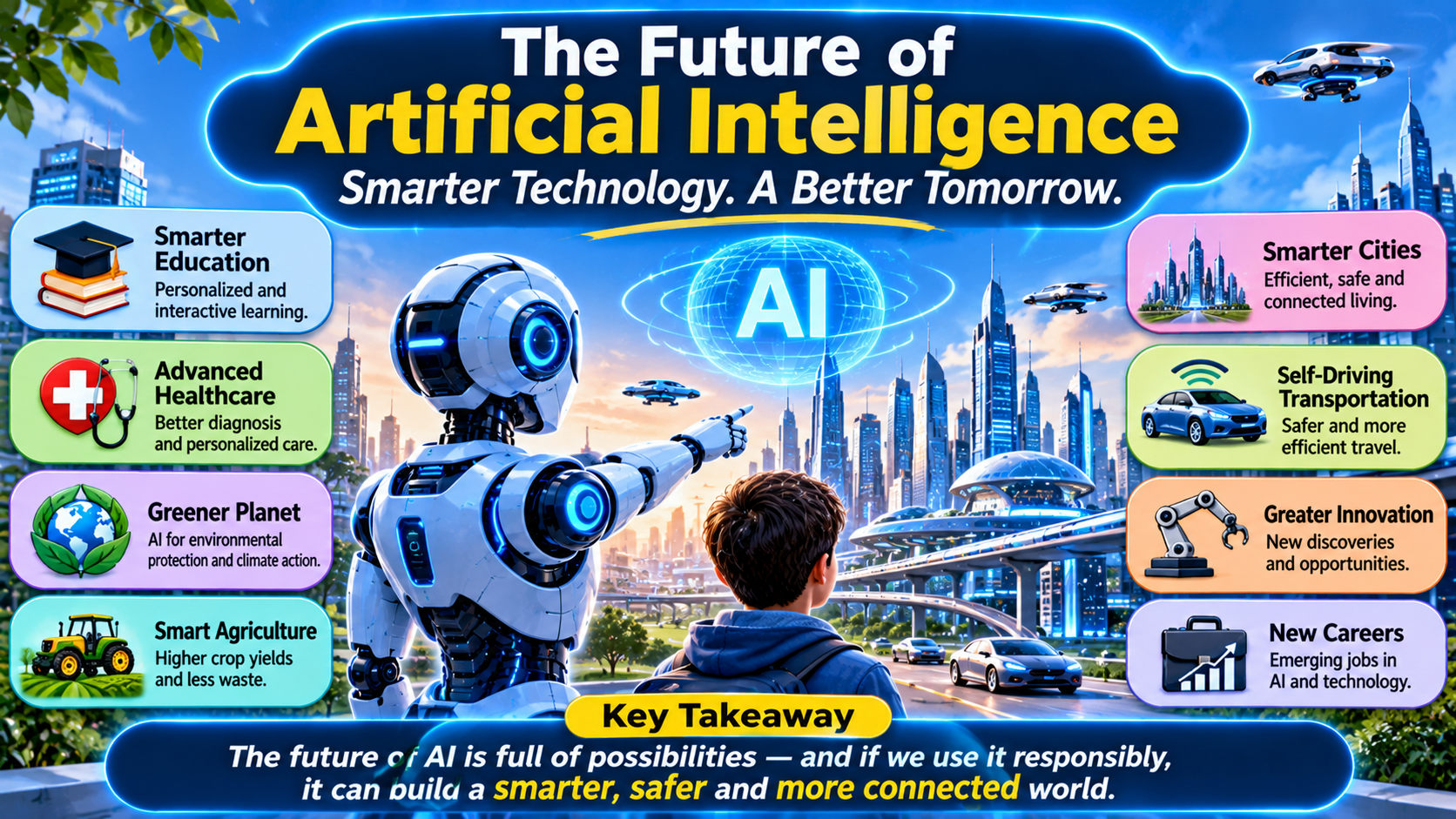
The future of Artificial Intelligence is full of possibilities. As technology continues to improve, AI may become even more useful in education, healthcare, science, transportation, agriculture, and many other fields.
It may help scientists discover new medicines, support teachers in classrooms, improve environmental research, and develop smarter cities. Farmers may use AI-powered tools to monitor crops, understand weather conditions, and improve agricultural production. Businesses may also develop better products and services using intelligent technology.
New AI technologies may create careers and opportunities that do not exist today. People will need to learn digital skills and understand how to work alongside intelligent machines.
However, the future of AI should not only focus on creating powerful technology. It should also focus on human safety, equality, privacy, and responsibility. The main goal should be to use Artificial Intelligence to improve people's lives and create a better society.
10. How to Use Artificial Intelligence Responsibly
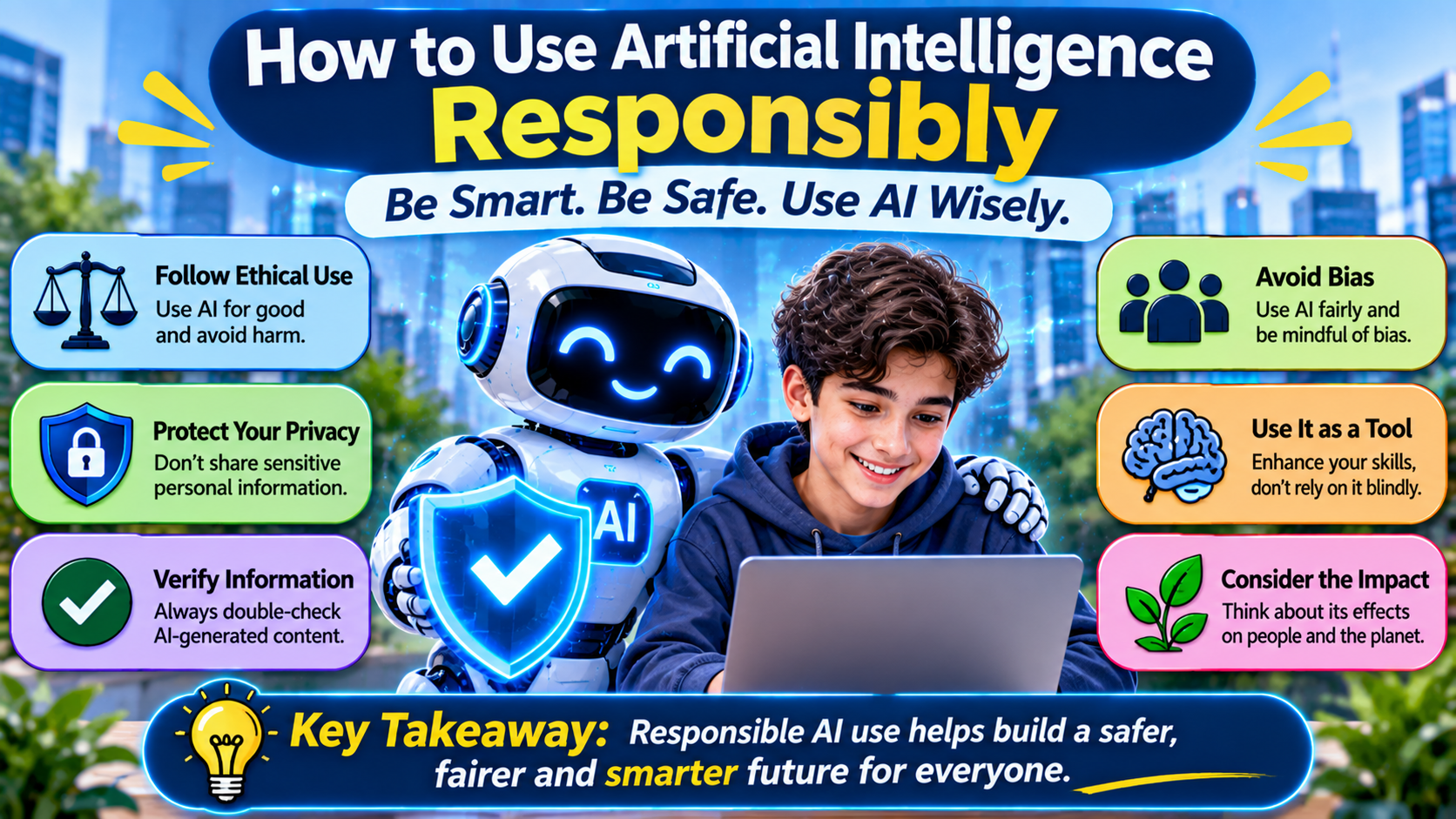
Using Artificial Intelligence responsibly is important for building a safe and successful future. People should understand that AI is a tool that can assist them, but it should not make every decision on their behalf.
Students should use AI to understand lessons and improve their knowledge instead of simply copying answers. Businesses should protect customer information and use AI fairly. People should check important information provided by AI because it can sometimes produce incorrect answers.
It is also important to protect passwords, personal photographs, financial details, and other private information. Parents and teachers should guide children on how to use modern technology safely.
By following these practices, people can enjoy the benefits of Artificial Intelligence while reducing its risks.
11. Useful Websites and References
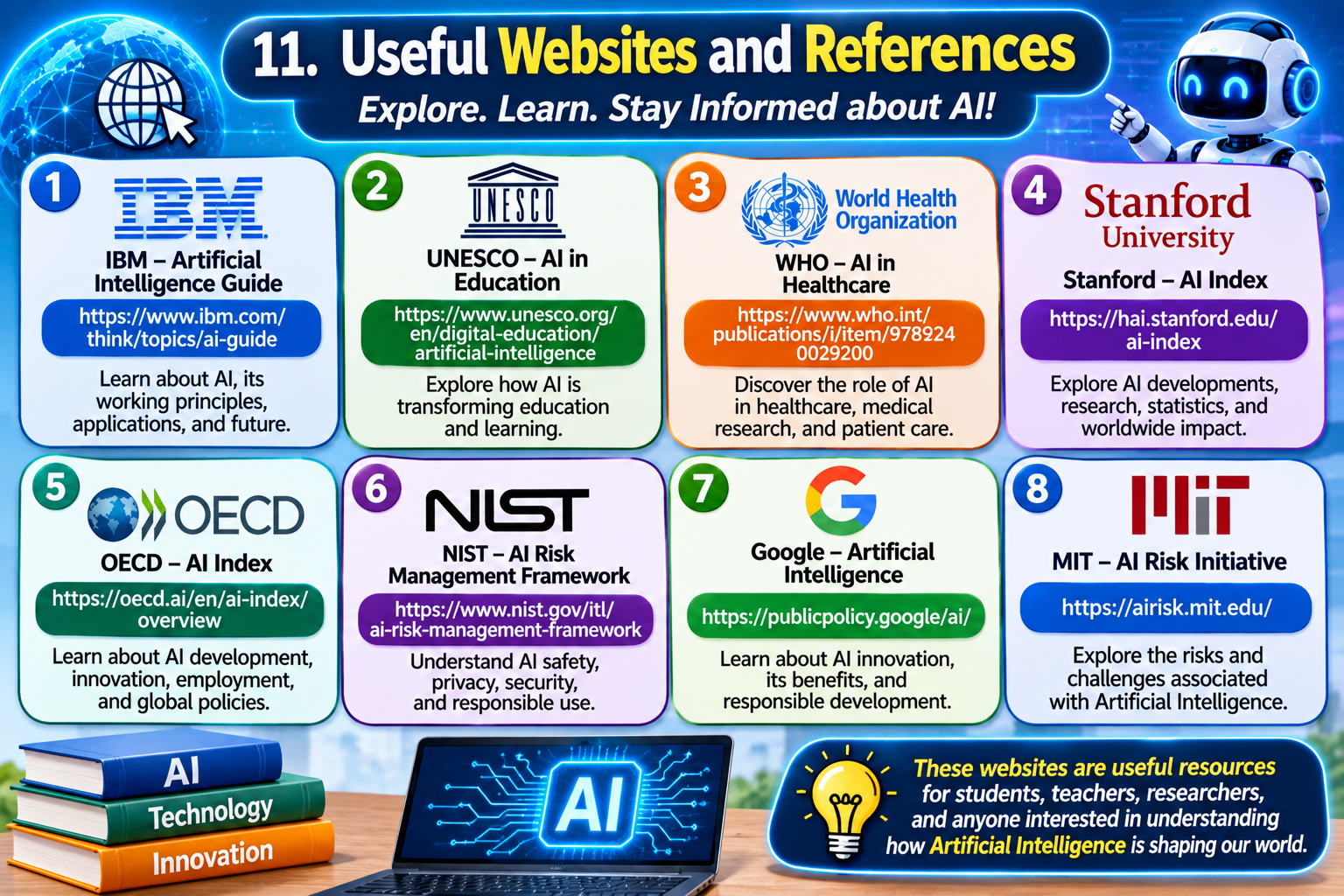
Here are eight useful websites for learning more about Artificial Intelligence:
IBM – Artificial Intelligence Guide
https://www.ibm.com/think/topics/ai-guide
Learn about AI, its working principles, applications, and future.UNESCO – Artificial Intelligence in Education
https://www.unesco.org/en/digital-education/artificial-intelligence
Explore how AI is transforming education and learning.World Health Organization (WHO) – AI in Healthcare
https://www.who.int/publications/i/item/9789240029200
Discover the role of AI in healthcare, medical research, and patient care.
These websites are useful resources for students, teachers, researchers, and anyone interested in understanding how Artificial Intelligence is shaping our world.
Conclusion
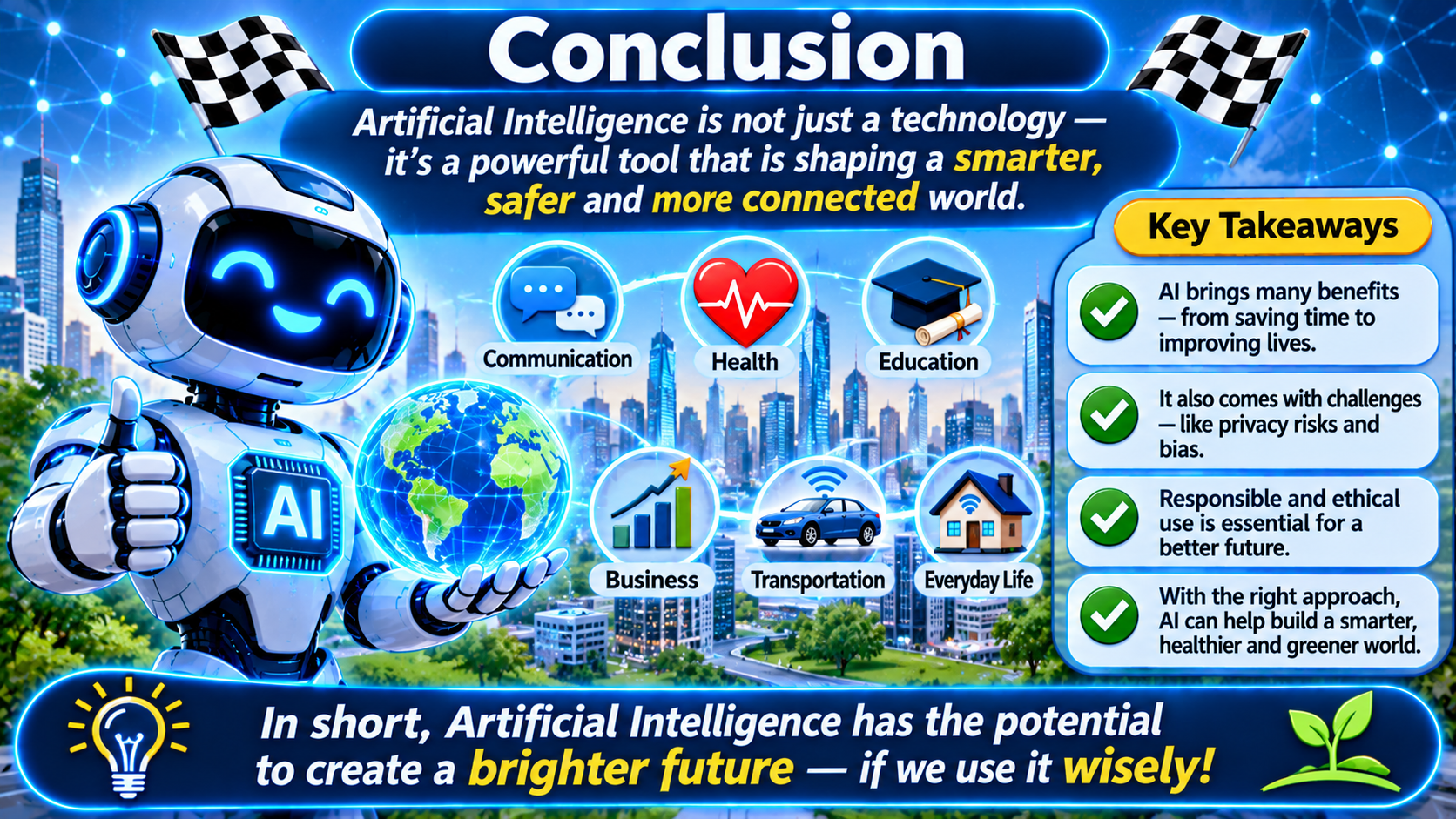
Artificial Intelligence is changing the world in many different ways. It is improving education, healthcare, communication, business, transportation, and everyday activities. It helps people save time, improve accuracy, solve complex problems, and discover new opportunities. It also supports innovation and makes many services faster and more accessible.
Although AI has some challenges, such as privacy concerns, job changes, false information, and overdependence on technology, these problems can be managed through responsible use and proper planning.
In conclusion, Artificial Intelligence is not just the technology of today; it is an important part of our future. If we use it wisely and responsibly, it can help build a smarter, safer, and more connected world. Artificial Intelligence is changing the way we live today and shaping the world of tomorrow.
Discover how Artificial Intelligence (AI) is changing the world through education, healthcare, communication, business, and transportation. Explore its benefits, challenges, and future impact on everyday life.







Comments 0
Sign in to join the conversation.
No comments yet. Be the first to say something.