

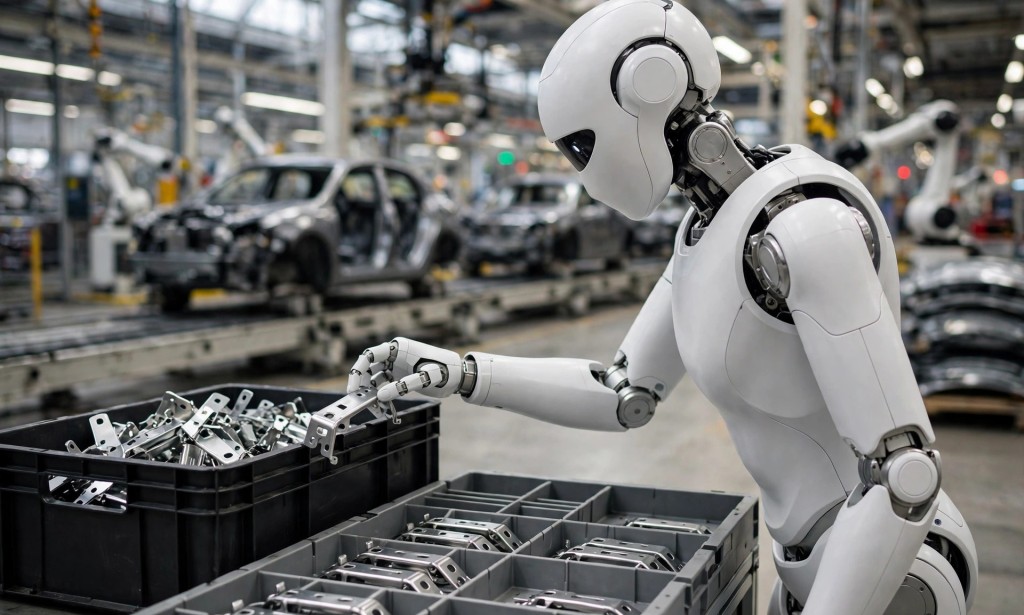
A humanoid robot stood on a live Mercedes-Benz production line, reached into a bin of metal car parts, and packed them in the exact order the assembly line needed — 96 times out of 100, without a human touching it.
That robot was not running a script written for one single job. It was running a new AI model from Google DeepMind called Gemini Robotics 2.5 — and buried inside the launch numbers is one honest limit that decides whether any of this matters to you. We will get to that limit near the end, because it changes how you should read every headline about it.
First, let us break down what this model actually is, in plain language.
What Is a Vision-Language-Action Model?
Most AI you use today works with text and images. You type, it answers. A robot needs something more: it has to move.
A vision-language-action model — VLA for short — takes two inputs: what the robot's cameras see (vision), and what a person tells it in plain words (language). It then produces the third thing: action, meaning real motor commands for arms, hands, legs and grippers.
Think of it as the difference between a chatbot that can describe how to tie a bow, and a machine that can actually pick up the ribbon and tie it.
Gemini Robotics 2.5 is Google DeepMind's most advanced VLA model so far. DeepMind announced it on November 10, 2026, as the successor to Gemini Robotics 2, and describes it as the model that converts vision and language input into motor control for robots of many shapes and sizes.
One Brain, Three Models Working Together
Gemini Robotics 2.5 does not work alone. It is the action model inside a family of three, and understanding the family makes the whole system easier to follow.
Gemini Robotics 2.5 — the hands
This is the VLA model itself. It receives the plan and the camera view, and turns them into precise movements: reach, grip, lift, place, adjust. One single model can operate very different machines — from a tabletop two-arm setup with simple grippers to a full humanoid with five-fingered hands.
Gemini Robotics ER — the planner
ER stands for embodied reasoning. This model thinks before the robot moves. It watches the scene, understands the physical world, and breaks a job into multi-step plans that can run for several minutes. On the Mercedes-Benz line, the ER model kept track of the whole kitting workflow while the 2.5 model controlled the robot's hands and arms.
Gemini Robotics On-Device — the lightweight
This is a smaller version of the VLA built to run locally on the robot's own hardware, for places where a network connection is slow or missing entirely. It is the efficiency member of the family.
Ask yourself this as we go: if the planner makes a mistake, can the hands recover on their own? That question is exactly what the new test results try to answer.
What Is Actually New in Version 2.5?
DeepMind says version 2.5 improves three things: how many skills a robot can learn, how fast it can learn them, and how safely it can work around people. Let us take each claim with its evidence.
Dexterity: 200 tasks, not one demo trick
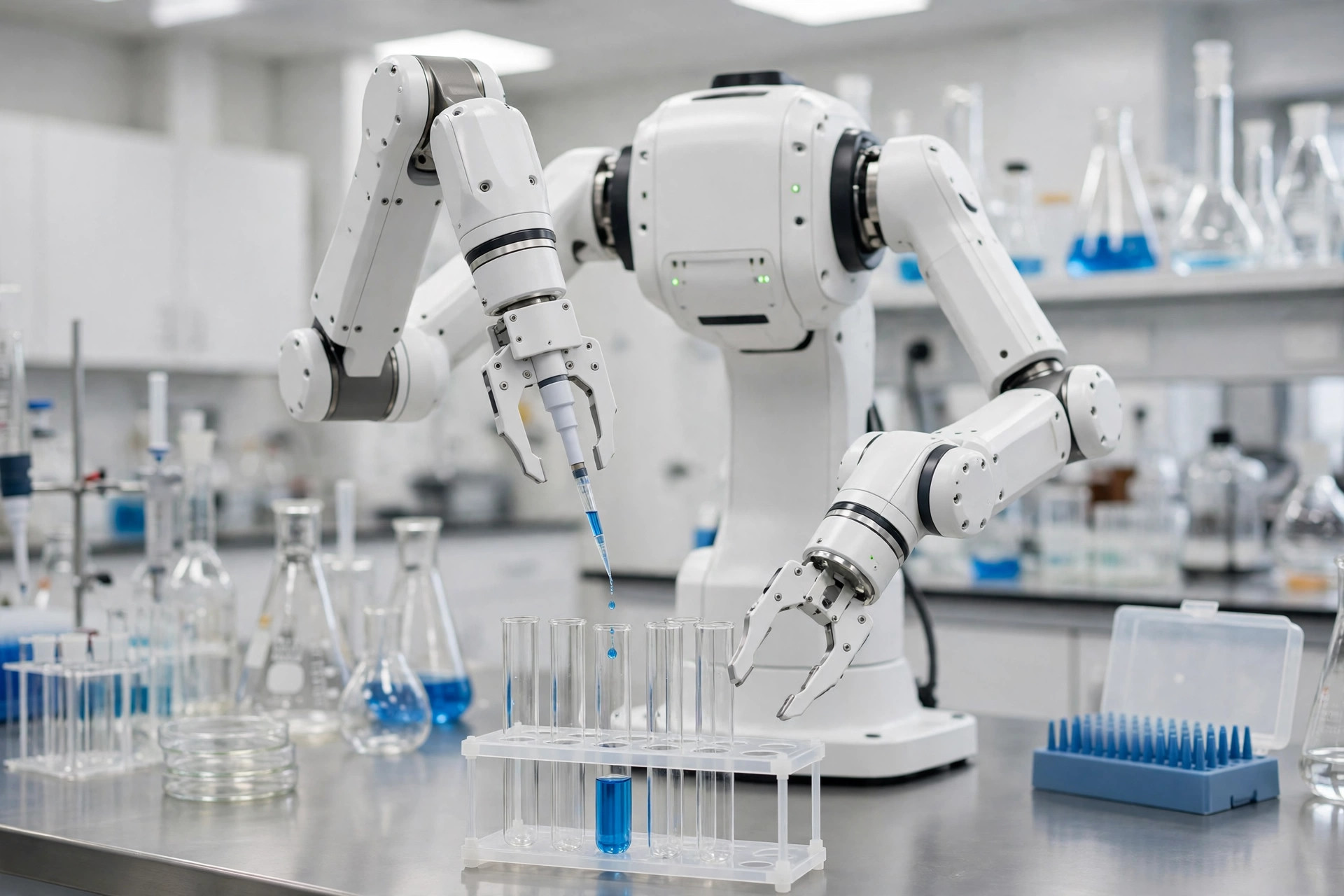
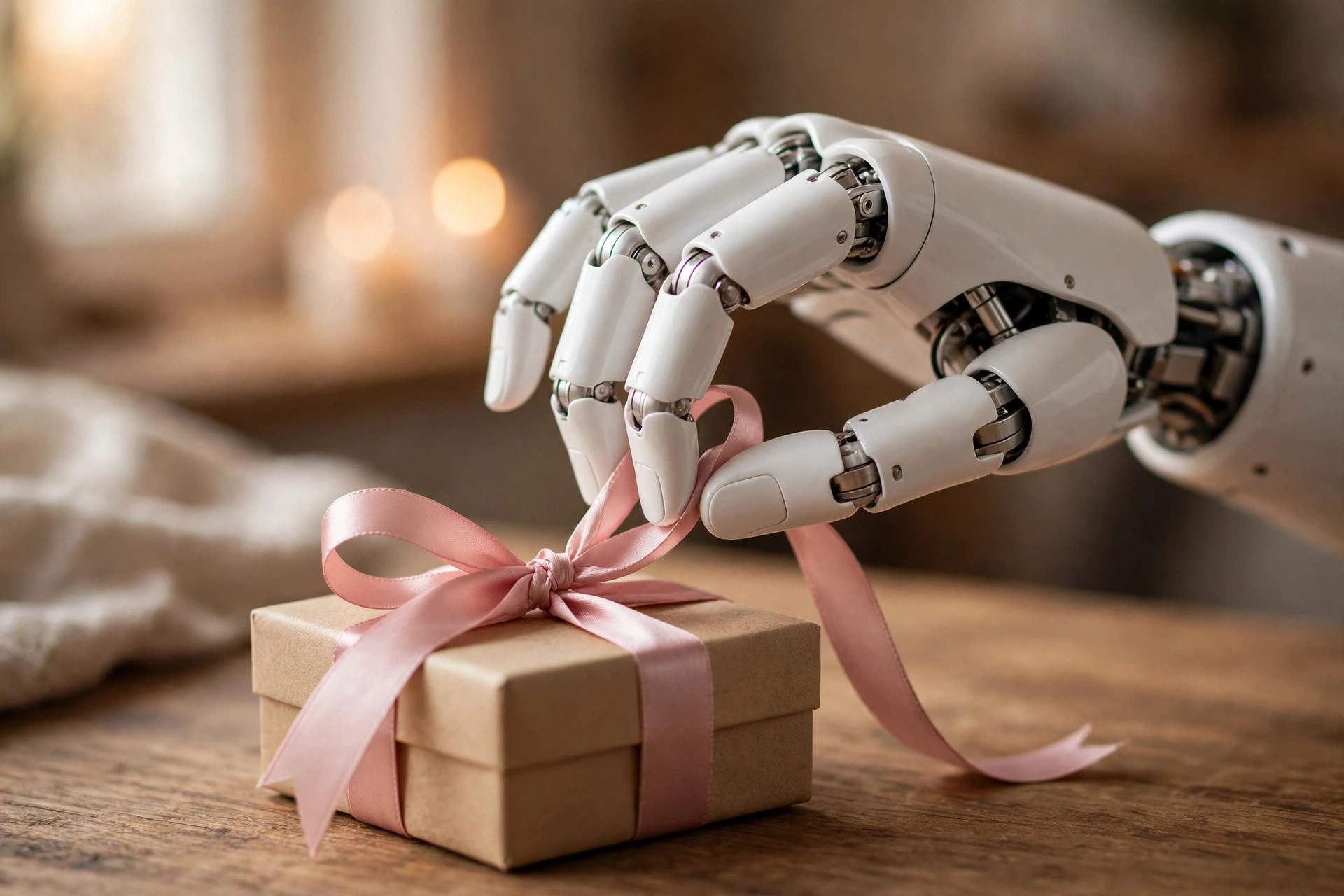
The team evaluated Gemini Robotics 2.5 across more than 200 distinct tasks. These were not simple pick-and-place demos. The list includes serving food with tongs, tying a bow on a gift box, and pipetting a liquid in a lab — jobs that combine tool use, handling soft and flexible objects, and delicate, precise movements.
Compared with previous baselines, DeepMind reports a 30% to 100% higher success rate depending on the type of task, while finishing those tasks 20% to 30% faster.
One honest note here: these are DeepMind's own evaluation results. They are detailed and specific, but at launch there is no independent lab copying the tests yet. That matters when you compare headlines later.
One model, many bodies
A striking part of the design is that the same model drives very different hardware. DeepMind tested it on Apptronik's Apollo 2 humanoid, which uses a five-finger SharpaWave hand with 22 degrees of freedom — roughly, 22 independent ways the hand can bend and move. The same model also runs the Franka Duo platform, a two-arm research robot with simple two-finger parallel grippers.
Why does that matter? Older robot software was usually written for one machine. A model that transfers across bodies means a skill learned on one robot is a step toward that skill existing on many robots.
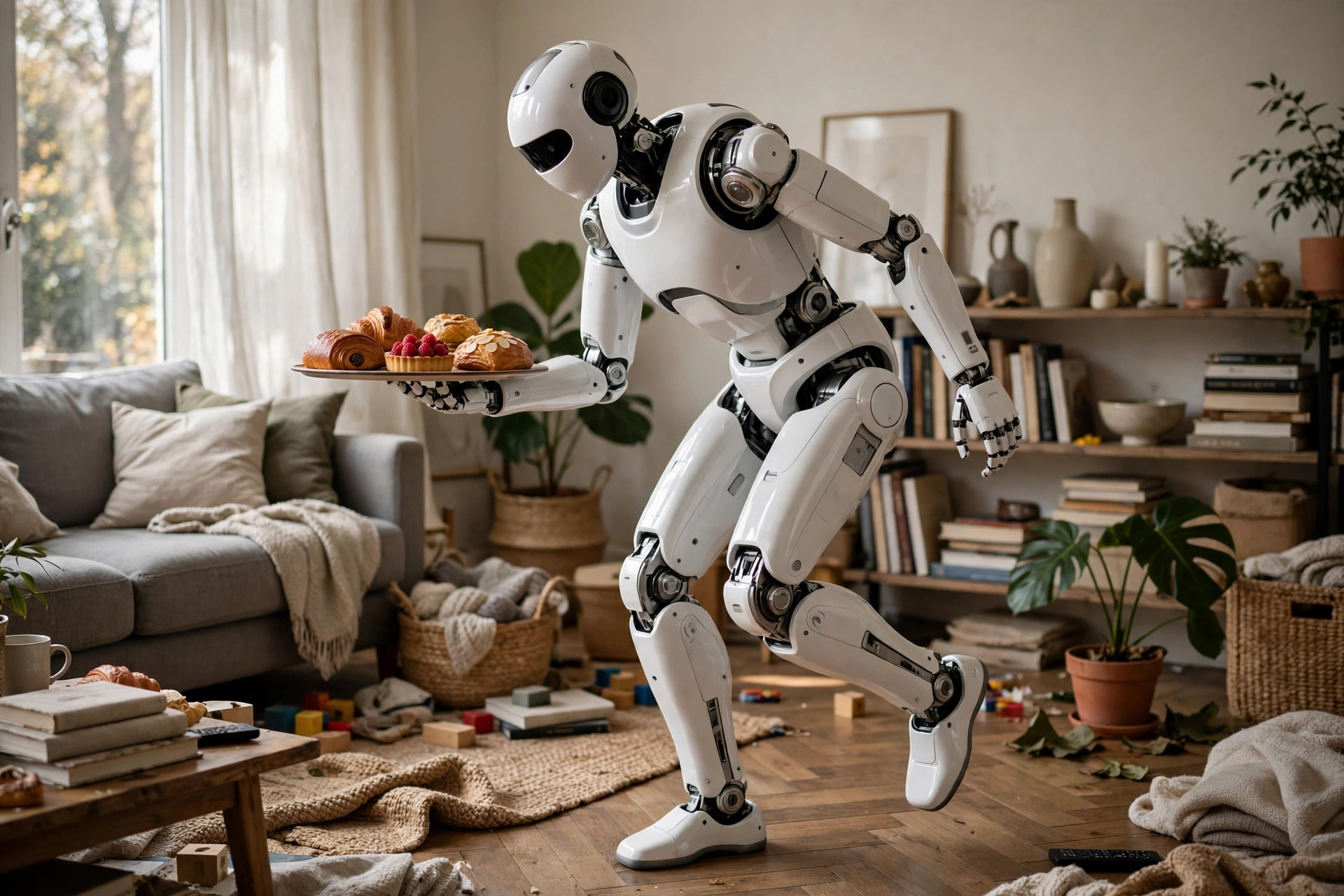
The family also inherits intelligent whole-body control from Gemini Robotics 2: the model can coordinate a full humanoid from feet to fingertips, dynamically balancing the robot's centre of gravity so it can step, squat, bend and reach through cluttered, real-world spaces instead of standing frozen at a workbench.
The Factory Test: 96% on a Live Production Line
Lab demos are easy to stage. A working car factory is not. That is why the Mercedes-Benz proof-of-concept is the strongest evidence in this launch.
DeepMind partnered with Apptronik and Mercedes-Benz to run Apollo 2 humanoids on active automotive production lines in Kecskemét, Hungary, and Sindelfingen, Germany. The robots performed automotive kitting: reaching into bulk supply bins, picking up metal automotive brackets, and placing them into sequencing containers in the exact order each vehicle on the line required — correcting for gaps and changes as they worked.
The result: a 96% success rate on pick-and-pack work.
Kitting is repetitive and physically taxing, and car makers struggle to staff it. DeepMind's argument is practical: if a humanoid can reliably do the monotonous prep work, human technicians are freed for the complex build tasks that still need human judgment.
Here is a question worth pausing on: does 96% sound high to you — or does the missing 4% worry you more? Hold that thought, because the safety numbers come next, and they are the part most summaries skip.
Safety: Steering Around Hazards, and a New Jailbreak Test
A robot that works next to people must fail safely. Version 2.5 adds two safety ideas worth understanding.
First, inference-time reasoning guidance. While the robot is moving, the model continuously reasons about hazards and steers around them in real time — similar to how safety classifiers wrap around a chatbot's answers, but here the output is physical movement. DeepMind reports this raised safe task completion around obstacles by 33%, and around nearby people by 43%.
Second, a new open-source benchmark called ASIMOV-Jailbreak. It contains hundreds of prompts designed to disguise unsafe requests across dozens of scenes — essentially, attempts to trick a robot into doing something dangerous by phrasing it innocently. On this test, Gemini 4 Argon, the frontier model working alongside the robotics system, achieved a 99.5% jailbreak resistance, up from 82% for the previous baseline, Gemini Robotics ER 2.
Releasing the test itself as open source is significant: rival labs and independent researchers can run the same tricky prompts against their own robots and compare honestly.
The Hidden Engine: How Gemini 4 Argon Built This Faster
There is a second story inside this launch, and it may be the most important one for where robotics goes next.
Robots learn slowly because physical practice is expensive: every training attempt needs a real machine, a real room, and real time. DeepMind says Gemini 4 Argon — its most capable model — helped break that bottleneck by acting as a simulation engine.
Argon can take a real-world camera scene and generate thousands of varied, simulated practice runs from it, building a realistic digital twin of the space. Combined with real demonstrations, this lets a robot generalise to new scenes and new objects far more quickly. Argon can also watch video of a failed attempt, hypothesise why the failure happened, and test the fix in simulation and then on the real robot.
In plain terms: the smartest desk-bound AI is now being used to train the AI that has hands. That loop — simulation first, real world second — is how DeepMind says it could teach robots hundreds of everyday skills, from folding laundry to serving pastries, without spending years collecting physical demonstrations for each one.
The Honest Limit Nobody Should Skip
Now the limit we promised at the start — the one that decides how much of this you can use today.
Gemini Robotics 2.5 is rolling out to Google DeepMind's robotics partners. It is not a public product. There is no app to download, no free plan to test, no price page, and no announced date for general availability. The named partners working with the Gemini Robotics platform include Agile Robots, Apptronik and Boston Dynamics, alongside more than 100 trusted testers from industrial automation firms and robotics startups.
So the honest verdict is two-sided. The capability jump is real and unusually well documented: 200+ tasks, measurable speed and success gains, a 96% result on live factory lines, and a public safety benchmark anyone can inspect. But for creators, developers and businesses outside that partner circle, this is a technology to watch and learn from — not a tool you can sign up for this week. Anyone telling you otherwise is selling you something Google has not announced.
Gemini Robotics 2.5 Explained — the NEXA verdict: this is the clearest sign yet that one AI model can become the shared brain for many different robots, and the 96% factory result moves it out of demo territory. But it is partner-only today, its headline numbers are the maker's own, and the real test will be independent results on factory floors Google does not control.
Final Word
Gemini Robotics 2.5 takes the Gemini idea — see, understand, reason — and gives it hands. A planner model that thinks in steps, an action model that moves with 22-degree-of-freedom dexterity, safety steering that works while the robot moves, and a simulation engine that teaches skills before a robot ever touches the real object: that is the full picture behind the headlines. You can read Google DeepMind's complete official announcement here: https://deepmind.google/blog/gemini-robotics-2-5-accelerates-real-world-physical-intelligence/ — and now we want your take: if a humanoid robot could reliably learn one everyday task in your home or workplace, which task would you hand it first?







Comments 0
Sign in to join the conversation.
No comments yet. Be the first to say something.