


Frontend web development jobs are the most common entry point into the industry, and also the most misunderstood by candidates. Most applicants arrive thinking the job is about knowing a framework. It is not. It is about making an interface work for every user, on every device, under real network conditions, and being able to explain why it works.
This guide covers what frontend roles actually test, which skills separate candidates who pass from candidates who do not, and how to prepare without chasing every new tool.
What Frontend Means in 2026
Frontend is the layer between the data and the user. It includes the markup, the styles, the client-side logic, the accessibility, the performance, and the integration with APIs. A frontend developer who only writes components is half a frontend developer. The other half is everything that makes the component usable.
Roles vary. Some are heavy on design systems and component libraries. Some are heavy on data visualisation and complex state. Some are essentially full-stack roles with a nicer title. Read the description to find out which one you are applying for.
The Skills That Get Tested
HTML and CSS beyond the basics. Flexbox, grid, responsive design, and the cascade are tested in every serious frontend interview. Many candidates can build a component from a tutorial but cannot explain why a flex item is not shrinking. Learn the fundamentals until you can debug a layout without guessing.
JavaScript depth. Closures, the event loop, promises, async and await, and the DOM. Frameworks change every few years. JavaScript does not. A candidate who understands the language is easy to train on any framework.
Accessibility. Keyboard navigation, screen reader behaviour, focus management, and ARIA. This is the single most under-tested skill in the industry and the easiest one to stand out on. Learn it properly.
Performance. Core web vitals, bundle size, lazy loading, and caching. A page that loads in four seconds loses users. Employers know this, and they test for it.
How Frontend Interviews Actually Work
Read the browser console before you ask for help.
Frontend interviews test reasoning, not memorisation.
A screening call, then a technical stage. The technical stage is usually one of three things: a live coding exercise where you build a small component while explaining your reasoning, a take-home project with a time limit, or a system design discussion about a real interface.
Live coding is not about speed. It is about communication. Talk through your approach before you type. Ask clarifying questions. Say what you are unsure about. Interviewers hire people they would want to work with, and silence is worse than a wrong answer explained well.
Framework Knowledge: How Much Is Enough
One framework, used in production, is enough for most entry and mid-level roles. React dominates listings, but Vue and Svelte appear in enough roles to matter. Learn the framework mental model, its data flow, and its common pitfalls. Do not try to learn all three.
Interviewers rarely test framework trivia. They test whether you can build something, debug it, and explain why it behaves the way it does. A candidate who has shipped one real project in React and can talk about its state management will beat a candidate who has read three framework documentations.
The Portfolio That Passes
Three projects. One that solves a real problem you had. One that handles data: a form, an API, loading and error states. One that is small and polished. Deploy all three, write case studies, and make sure the code is readable.
Include at least one project that is accessible and performant. A project with a Lighthouse score of 95 and proper keyboard navigation is rare enough to be memorable.
Mistakes That Cost Offers
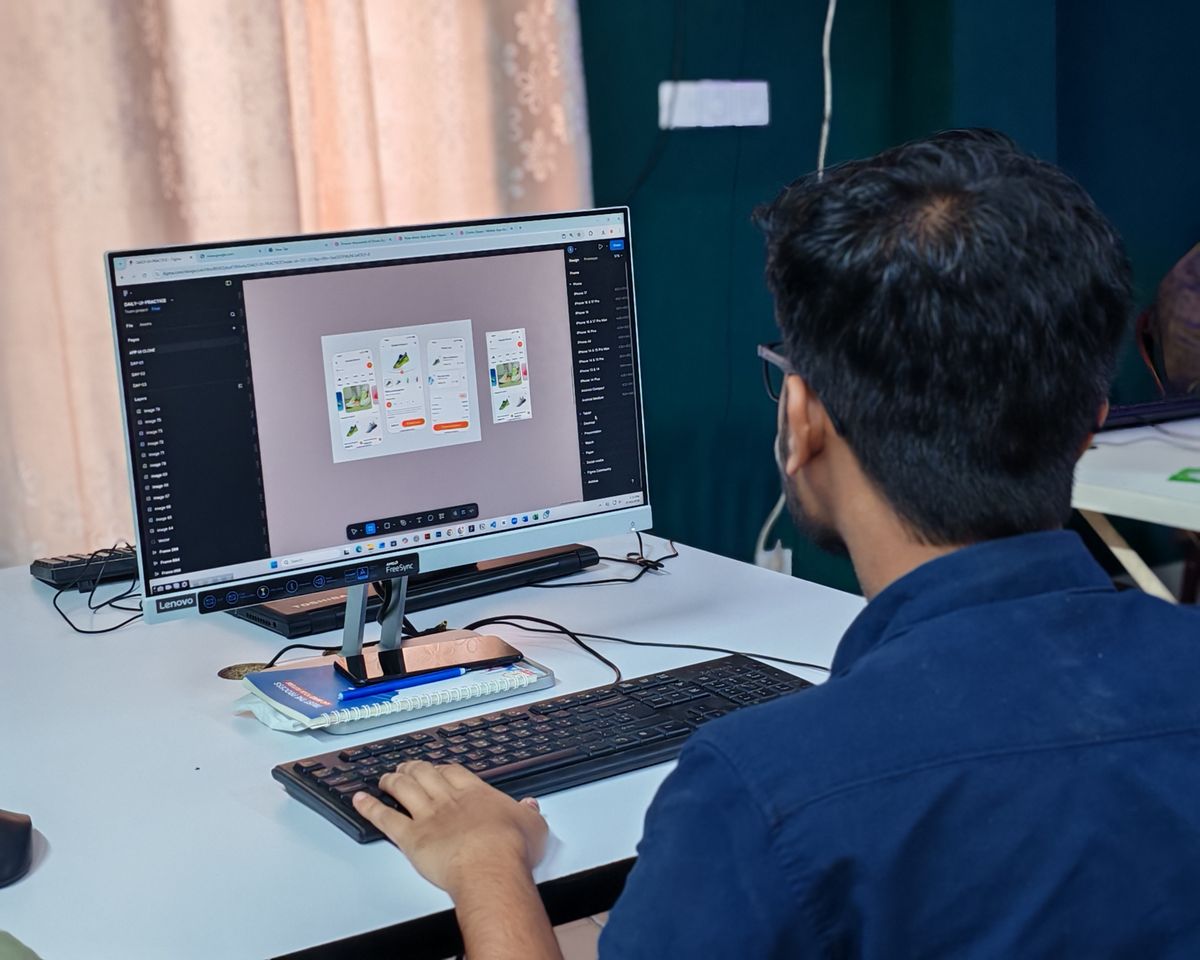
Preparation shows in the details.
Building only with a framework and not knowing the underlying HTML and CSS. Ignoring accessibility entirely. Writing components that work but are not tested. Not asking questions about the team design system or component library during the interview. And failing to mention what you would do differently, which is the question that reveals maturity.
Frequently Asked Questions
Do I need to know TypeScript? It helps and it is increasingly expected, but it is not a blocker for your first role. Learn it after your first project.
Should I learn React or Vue? Check local listings. The framework with more openings in your market is the right starting point.
How important is design skill? Not very, for most frontend roles. You need to implement designs accurately, not create them.
Is CSS really tested in interviews? Yes, and it is where many candidates fail. Practise building layouts from a screenshot without a framework.
Can I get a frontend job without a backend? Yes, many frontend roles are pure client-side. But understanding the API layer makes you far more useful.
Conclusion
Frontend web development jobs reward depth over breadth. Master HTML, CSS, and JavaScript. Learn one framework properly. Build accessible, performant projects and explain every decision. The candidates who get hired are the ones who can make an interface work for everyone and tell you exactly how they did it.
A final note on tooling: learn your browser developer tools thoroughly. Most frontend bugs are found in the network tab, the console, and the elements panel, and interviewers notice when you reach for them instinctively.A useful exercise before any frontend interview is to take a component you built months ago and rewrite it from memory. The parts you cannot remember are the parts you do not actually understand, and they are the parts the interviewer will find first.
One more thing: read the documentation of the framework you use, not just the tutorials. The documentation is where the edge cases live, and edge cases are what separate a working developer from a confident one.One last point: the best frontend developers I have worked with could explain a bug to a non-technical person in plain language. That skill is not a nice-to-have. It is the job.

Reading code carefully prevents most bugs.
Always read the error message twice before changing anything.





Comments 0
Sign in to join the conversation.
No comments yet. Be the first to say something.