

Introduction
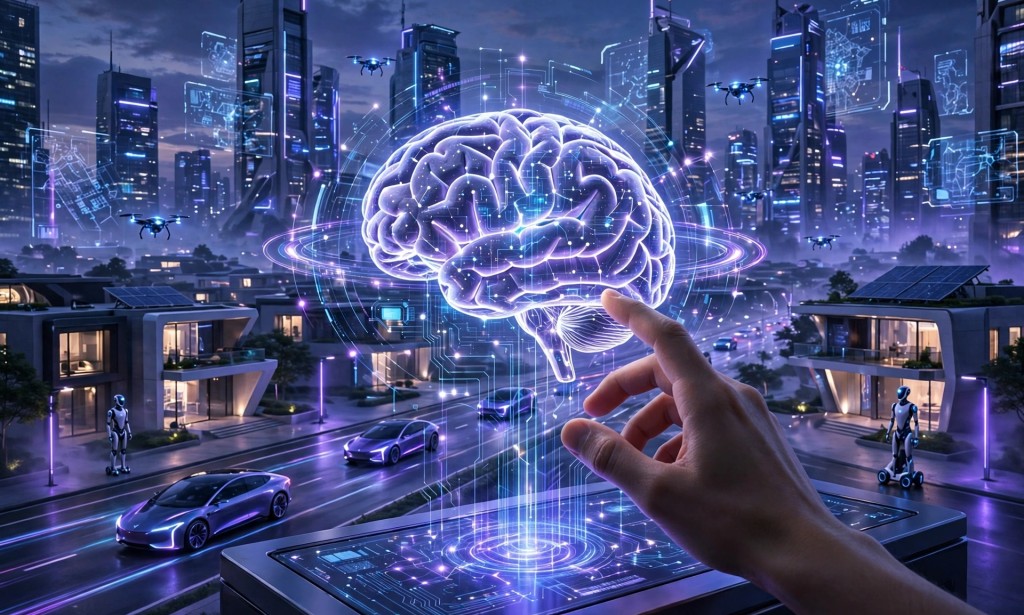
Technology is an important part of life in today’s society. We use so much technology, such as smartphones, computers, smart homes and artificial intelligence. Technology is constantly advancing, meaning we can do things that we couldn’t do in the past. Using artificial intelligence, automation, robotics and smart devices we can create new opportunities.
Technology is helping to make human lives easier, safer, smarter and connecting them more. Technology is helping to create opportunities in healthcare, education, transport and entertainment. Understanding the advancements can help you prepare for the future.
1. Artificial Intelligence: The Beginning of a New Era
Artificial intelligence is one of the most important advances in technology. It involves using computers to complete tasks that would usually need human intelligence such as understanding language, recognising images, problem solving and making predictions.
We can now use AI in our everyday lives. For example, using virtual assistants to give answers, recommendations and help you with your schedule. AI apps are available for translating languages, generating content and analysing vast amounts of information in seconds.
Businesses are using AI to help them become more productive and give customers better service. For example, using AI to suggest products to customers on online shopping sites. Financial institutions are using AI to identify unusual transactions.
In the future, we may see more advanced AI helping scientists discover new medication, helping doctors diagnose illnesses and helping people use technology.
2. Smart Homes: Making Everyday Life Easier

A great example of technology helping in our everyday lives is using smart homes. Smart homes use internet-enabled devices to help control different aspects of your home using your phone, voice commands or automatically.
When you enter your home everything can do something automatically. For example, lights turning on, temperature adjusting and your favourite music playing.
Some popular smart devices are:
• Smart lights: Allow users to control brightness and lighting schedules.
• Smart thermostats: Help manage indoor temperatures efficiently.
• Smart security cameras: Provide remote monitoring and security alerts.
• Smart door locks: Allow convenient access management.
• Voice assistants: Help control connected devices using voice commands.
Smart homes can also help you be more eco-friendly. As your lights and temperature are controlled automatically, you are saving electricity.
You should make sure you have safe devices and keep them updated.
3. Smart Healthcare: Technology Saving Lives
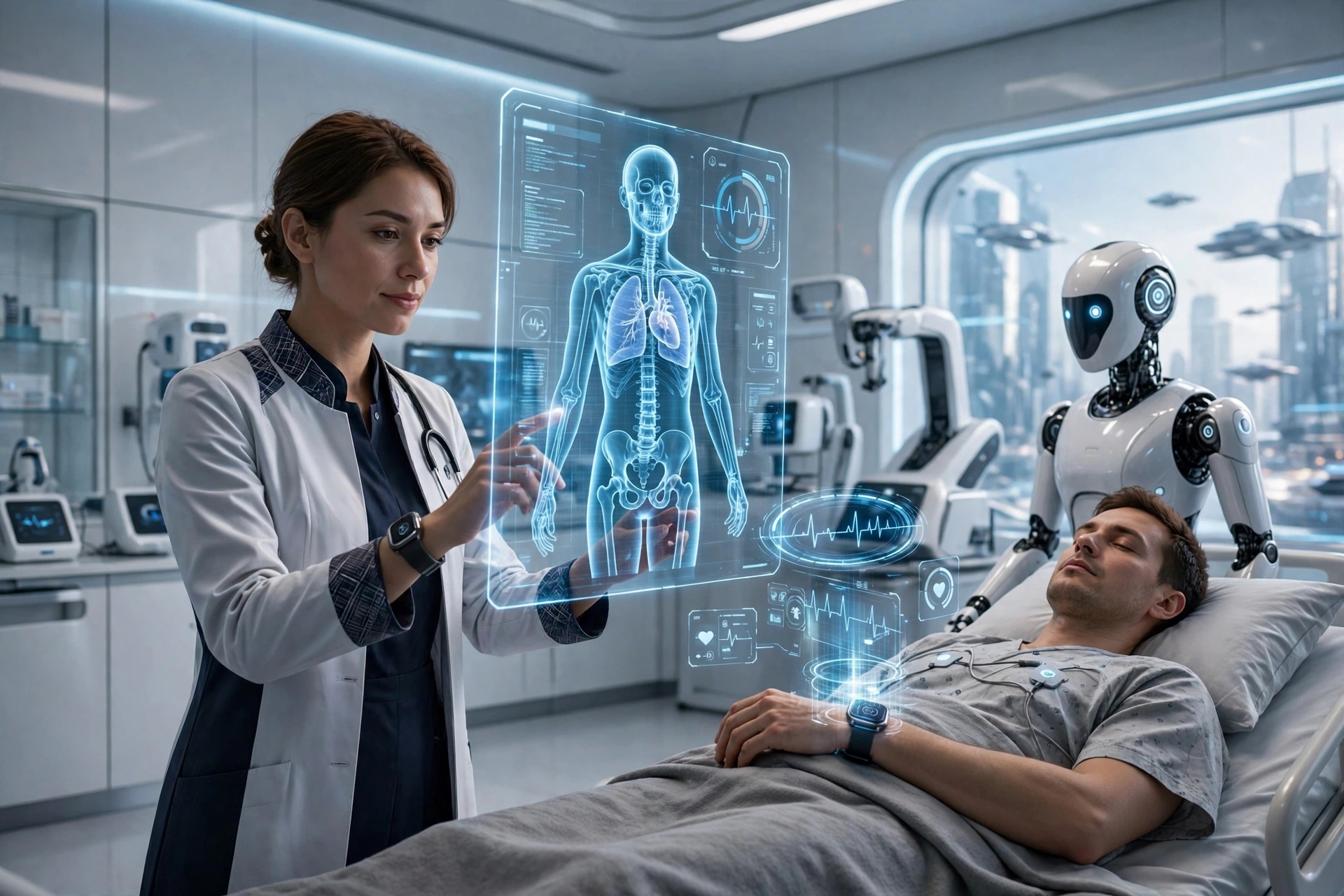
Healthcare is one of the biggest industries that has had some amazing technological advances. Using AI, wearables, robotics and digital technology has improved the services provided by healthcare professionals.
Wearables such as smart watches and Fitbits can help track your heart rate, activity levels, sleep and other factors. This helps people to understand what they’re doing throughout their day.
AI can help medical professionals analyse images, find patterns and help them make decisions. Although this cannot replace qualified doctors, it can be very helpful.
Telemedicine has also advanced. Patients can now communicate with healthcare professionals using an online platform.
In the future, we may see more advanced medical technology helping create more personalised treatments, medical research and help people access healthcare services, especially those living in remote communities.
4. Smart Education: Learning Without Boundaries
Technology is creating exciting new opportunities for education. Students are no longer reliant on going to school, books and traditional teaching methods.
Students can now learn about different subjects using online platforms. Using videos, digital books and apps to help students learn.
AI is helping provide students with personal learning. Using AI in education can help explain complicated topics, provide practice questions and help students understand where they need to improve.
Teachers can use digital resources to create interesting lessons, manage their workload and communicate with students.
Technology should be used to complement education. Teachers are an important part of learning as they can guide, be creative, communicate and think critically.
5. Smart Transportation: Moving Toward the Future
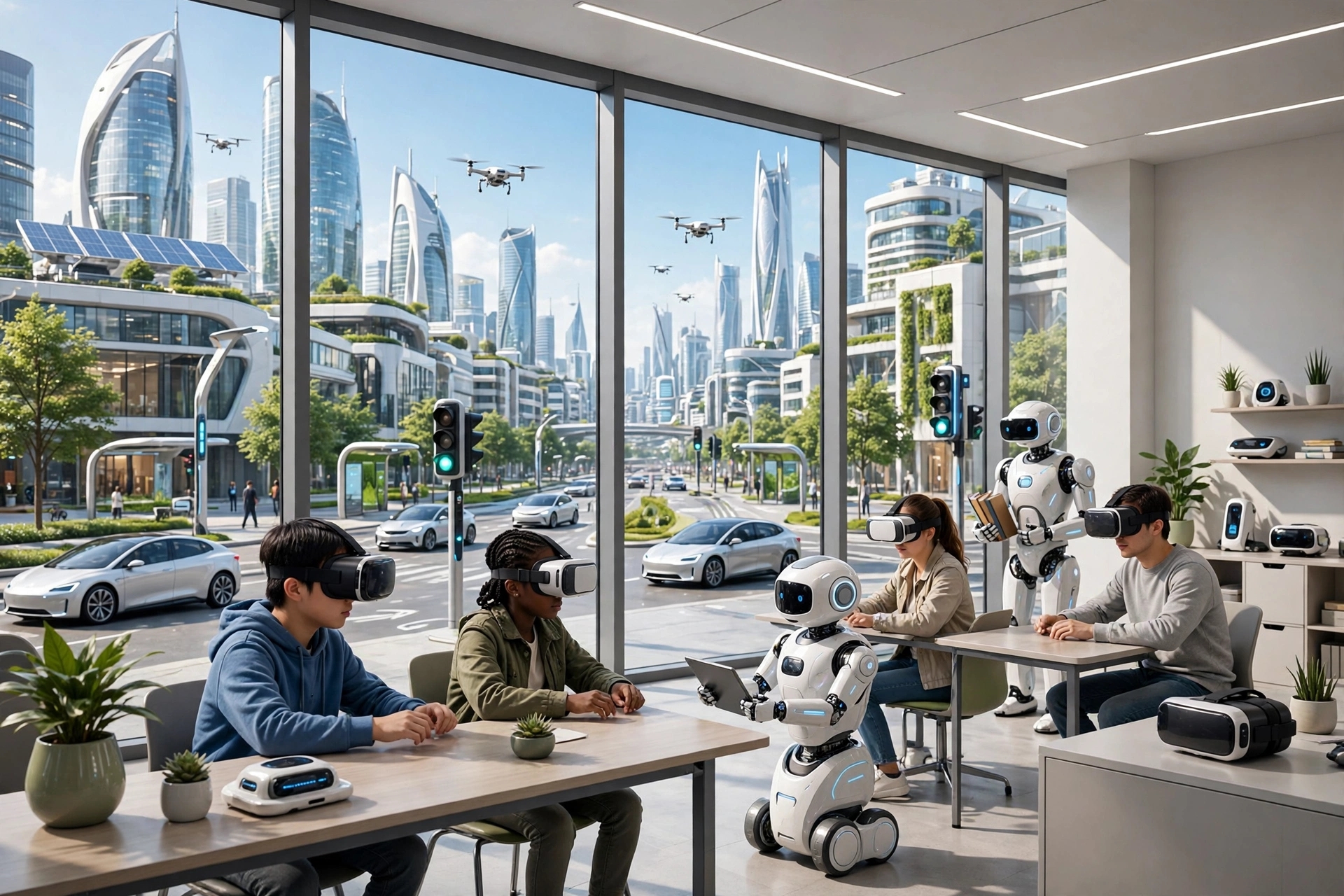
Transport is also receiving some exciting technological advances. Using electric vehicles, smart transport systems and self-driving cars.
Electric vehicles are becoming very popular as they can reduce direct emissions. Improvements in battery technology are also helping to increase range and make it easier to charge.
Smart transport systems can use sensors, cameras and data analysis to monitor roads.
Self-driving cars are also being developed. Using sensors, cameras and AI to understand what is around them and make decisions. Fully self-driving transport still has some issues to overcome but has the potential to change the future.
This could help make transport more efficient, accessible and eco-friendly.
6. Robotics and Automation: Changing the Workplace
Robotics and automation are changing how businesses and industries operate. Robots can be used to complete repetitive, strenuous and precise tasks. They can be used in manufacturing, farming, healthcare and logistics.
Automation in factories helps make products with more consistency and speed. Smart machines can be used in farming to monitor crops, help with irrigation and assist farmers.
Hospitals are using robotics to help with certain surgeries.
However, there are concerns about jobs. Some traditional roles may change or be lost as machines are completing these tasks. However new opportunities are arising in software development, robotics, cyber security and AI management.
Making sure people have the correct education, training and digital skills will become more important.
7. Cybersecurity: Protecting Our Digital World
As technology is becoming more connected it is important to protect our personal and professional information. We use the internet for banking, shopping, communicating, education and business.
However, we can face issues online such as identity theft, fraud, data breaches and hacking.
Cyber security is about keeping our computers, networks, applications and information safe.
Individuals can protect themselves using simple steps such as:
• Use strong and unique passwords.
• Enable two-factor authentication.
• Avoid clicking suspicious links.
• Keep applications and devices updated.
• Never share sensitive information with untrusted sources.
Companies will need to invest in secure systems and train their staff.
For a smart future we need to ensure our privacy and personal information is protected.
8. Challenges of a Technological Future
Whilst technology can provide many benefits, there can also be challenges.
One of the main issues is privacy. Smart devices collect information about you. If this isn’t managed correctly, it can cause serious issues.
Not everybody will have access to reliable internet, modern devices and advanced digital education. This can cause issues for people in underdeveloped communities.
Using AI can cause issues with accuracy, fairness and responsible use. Sometimes AI can give incorrect information and can show bias.
Over-reliance on digital devices can mean we are less active and talking face to face.
Governments, technology companies, education and individuals need to work together to encourage responsible innovation.
9. What Will The Future Of Technology Be Like?
The future of technology will likely involve more connection between AI, robotics, smart devices and humans.
Smart cities may use smart systems to help manage transport, save energy, manage waste and provide better services. Advanced AI assistants can help with complex tasks.
Healthcare may become more personal with intelligent monitoring and advanced medical research. Education may become more interactive with virtual/augmented reality and AI.
Humans will still have value with their creativity, feelings, ethics and decision-making.
The biggest achievement of future technology will be using innovation to help solve real-life issues and improve people’s lives.
Conclusion
Technology is creating an exciting world of opportunities. Smart homes are helping to make our daily lives easier, AI is changing industries, digital education is providing more opportunities and modern healthcare systems are improving medical services.
However, we must balance technological advancement with privacy, security, equality and responsibility. We should aim to learn new digital skills.
Technology is changing our future. However, we should aim to create a world where innovation is helping humans, being creative and making our lives better.
The future is for those who understand technology, are positive and want to create a smarter world.







Comments 0
Sign in to join the conversation.
No comments yet. Be the first to say something.