

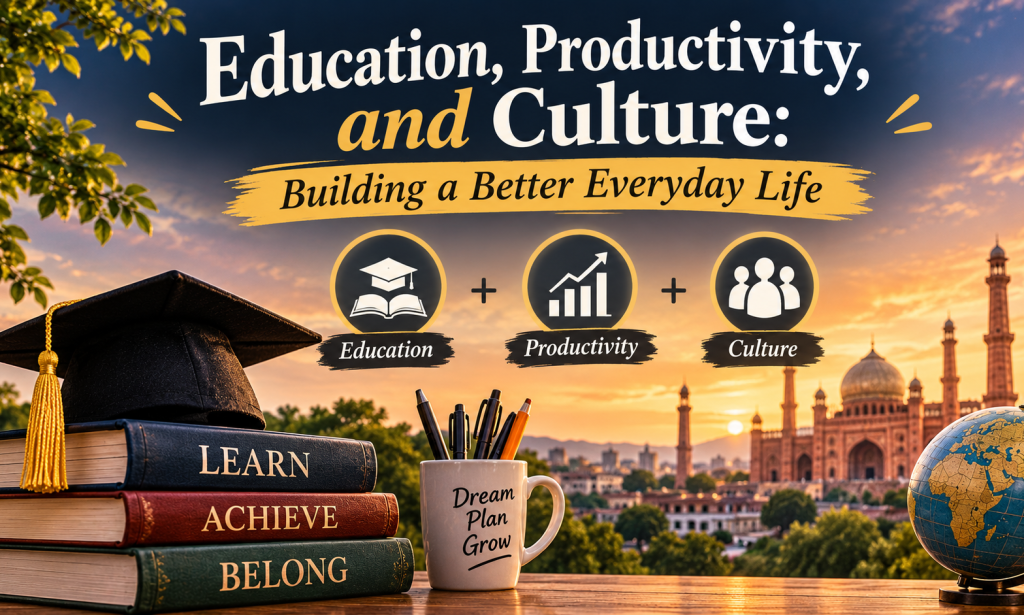

Education, productivity, and culture shape one another. Education gives people knowledge and the ability to question the world. Productivity helps them turn ideas into meaningful action. Culture provides the values, traditions, language, and shared experiences that influence how they learn and work. When these three areas support one another, individuals can grow while communities become more thoughtful, creative, and resilient. Small improvements in these areas can influence not only individual futures but also the character of entire communities.
Education is more than attending classes, passing examinations, or collecting certificates. It is a lifelong process of understanding. A good education teaches people how to think, not simply what to remember. It encourages curiosity, reasoning, communication, and the confidence to ask questions. These abilities matter far beyond school. They help people judge information, solve everyday problems, understand different viewpoints, and make informed decisions.

The role of education is changing as technology develops. Information is easier to find than ever, but having access to information is not the same as understanding it. Students need to learn how to identify reliable sources, recognize misleading claims, and use digital tools responsibly. Teachers remain important, not because they are the only source of knowledge, but because they can guide discussion, explain ideas, and help learners connect facts with real situations. Education works best when classrooms make room for participation rather than relying only on memorization.
Access is important. A student's opportunities can be affected by family income, location, disability, language, and access to the internet. Some learners have quiet rooms, personal devices, and supportive guidance, while others must study in crowded homes or travel long distances to reach school. These differences should not be mistaken for differences in ability or ambition. Fair education requires safe learning spaces, trained teachers, resources, and support for students who face barriers. When more people can learn, society benefits from a wider range of skills and ideas.
What productivity really means
Productivity is often misunderstood as doing as many tasks as possible in the shortest time. That approach can create busy schedules without producing meaningful results. Real productivity is about directing attention toward work that matters and completing it with care. It includes planning, setting realistic priorities, managing distractions, and allowing enough time for rest. A person who works thoughtfully for a few focused hours may achieve more than someone who spends an entire day switching between unfinished tasks.
Education can strengthen productivity by helping people develop practical habits. Students learn to break large assignments into smaller steps, take notes, meet deadlines, and review their progress. These habits are valuable in employment and personal life. However, productivity should not become a measure of someone's worth. People have different responsibilities, energy levels, resources, and circumstances. Rest and family time are not wasted hours. They help people maintain health, relationships, and the motivation needed for sustained effort.
Technology can support productive learning when it is used with purpose. A calendar can organize deadlines, a digital document can make collaboration easier, and an educational video can clarify a complicated topic. Yet constant notifications and endless scrolling can fragment attention. The solution is not to reject technology, but to make deliberate choices about it. Turning off unnecessary alerts, setting a clear study goal, and taking short breaks can make digital tools more helpful. Technology should serve human goals instead of deciding how every moment is spent.
Culture
Culture gives education and productivity their human meaning. It includes visible traditions such as food, clothing, music, festivals, and art, but it also includes less visible habits: how people communicate, treat elders, share responsibilities, respond to disagreement, and define success. Culture is not fixed. It changes as generations meet new ideas, people migrate, and communities respond to social and technological shifts. A living culture can preserve valuable traditions while making room for creativity and change.
Education and culture influence each other in powerful ways. Schools can help young people understand their history, languages, literature, and traditions. They can also introduce students to cultures beyond their own. Learning about different communities does not require abandoning one's identity. Instead, it can deepen self-understanding and reduce fear of unfamiliar customs. Respectful education teaches that people may disagree about beliefs or practices while still deserving dignity and fairness.
Culture also shapes attitudes toward learning and work. In some families, academic achievement is seen as a shared responsibility; in others, practical experience, family duties, or earning an income may take priority. Neither a single school pathway nor one definition of success can fit everyone. Communities become stronger when they value different forms of contribution, including technical skills, caregiving, creative work, research, and public service. Recognizing these contributions allows more people to participate with confidence.
A healthy relationship between education, productivity, and culture begins with balance. Schools should teach knowledge alongside communication, creativity, digital judgment, and practical problem-solving. Workplaces should value thoughtful results rather than constant availability. Families and communities can encourage curiosity, reading, discussion, and respect for different experiences. Public institutions can help by improving access to libraries, learning spaces, reliable internet, and affordable training. These steps may seem ordinary, but together they create conditions in which people can develop their abilities.
Individuals also have a role. A learner can set a small daily goal, ask for help when a subject is difficult, and connect lessons to real life. A worker can plan the most important task before opening a stream of messages. A community member can listen to someone with a different background and take part in cultural activities. Progress rarely comes from one dramatic decision. It is usually built through repeated choices that make learning, attention, and mutual respect part of everyday life.
Ultimately, education expands what people understand, productivity helps them use their abilities, and culture reminds them that they belong to a wider human story. None of these areas should be judged only by grades, output, or tradition. Their deeper value lies in helping people live with purpose, contribute fairly, and remain open to new possibilities. A society that invests in learning, meaningful work, and cultural understanding is better prepared to face change without losing its sense of humanity.
Learn how education, productivity, and culture shape one another, and how small daily habits can build a more thoughtful, balanced community.







Comments 0
Sign in to join the conversation.
No comments yet. Be the first to say something.