

Introduction
Technological advancements have profoundly reshaped nearly every facet of modern existence, including the mechanisms by which individuals manage their finances.Previously, financial transactions such as depositing funds, withdrawing cash, transferring assets, or settling utility bills necessitated physical presence at bank branches.Conversely, the advent of digital banking has rendered many of these once labor-intensive tasks accessible and convenient through the utilization of mobile devices, personal computers, and robust internet connectivity.Digital banking encompasses the utilization of digital platforms, mobile applications, and web interfaces to facilitate access to financial services.This paradigm empowers clients to administer their accounts entirely independently of physical bank branches.As technological capabilities evolve, digital banking has increasingly established itself as a fundamental component of the contemporary financial infrastructure.
This piece delineates the fundamental nature of digital banking, scrutinizes its predominant advantages and inherent obstacles, and offers strategic guidance on ensuring secure utilization.
1.What Is Digital Banking?
Digital banking represents a contemporary paradigm for delivering financial services via electronic devices, enabling clients to interact with their accounts through dedicated mobile applications or official web portals.For instance, individuals can leverage their smartphones to verify account balances, execute fund transfers to other accounts, settle electricity bills, and examine historical transaction records.Contemporary financial institutions increasingly deploy digital platforms that function continuously, thereby enhancing accessibility and convenience for individuals with demanding schedules or those residing in remote locations distant from physical branch networks.Digital banking significantly diminishes the reliance on physical documentation while expediting a broad spectrum of financial transactions.

2.Easy and Convenient Money Management
A paramount advantage of digital banking lies in its unparalleled convenience, empowering customers to administer their financial affairs from virtually any location, thereby eliminating the necessity of physically visiting a branch.
Consequently, an individual employed in an office setting may remit funds to a family member during a midday reprieve.In like manner, parents are able to discharge school tuition and domestic utility obligations via their respective banking applications.Digital banking proves particularly advantageous for individuals with constrained schedules or those residing in regions where physical bank branches lack accessibility.
Furthermore, it empowers users to access their financial data at any required moment.
3.Fast and Simple Transactions
Conventional banking operations frequently necessitate enduring protracted queues, whereas digital banking significantly accelerates the execution of a broad spectrum of financial tasks.
Digital platforms facilitate the transfer of funds, the receipt of payments, and the execution of online transactions for customers.
Consequently, an individual wishing to remit funds to a correspondent in a different municipality may execute the transfer via a mobile banking platform, thereby obviating the necessity of physically visiting a branch.
Across Pakistan, the proliferation of mobile banking applications and the initiative has significantly enhanced the accessibility of digital payment systems.
Nevertheless, the velocity and constraints of transaction processing are contingent upon the specific policies and capabilities of the financial institution or payment service provider in question.
4.Easy Bill Payments
A further significant benefit of digital banking lies in the capacity to settle bills electronically.Banking applications serve as a versatile conduit for settling utility and communication expenses, enabling customers to remit payments for electricity, gas, water, internet services, and mobile phone subscriptions.This service significantly streamlines operations by diminishing the necessity to frequent payment centers, thereby enabling customers to circumvent superfluous travel while simultaneously maintaining comprehensive records of their transactions.Consequently, a household may settle its monthly electricity bill via a mobile application in a matter of minutes. A multitude of digital banking platforms further furnish transaction receipts, enabling clients to archive them for subsequent reference.
5.Better Control Over Spending
Digital banking platforms empower individuals to gain a comprehensive understanding of their expenditure patterns.The vast majority of banking platforms furnish transaction histories that detail deposits, withdrawals, transfers, and payments.By reviewing these records, customers can identify unnecessary expenses and improve their financial habits.For instance, an individual might recognize that excessive expenditures on online retail or food delivery services are undermining their financial stability.Upon pinpointing these specific outlays, they can subsequently establish a rigorous monthly budget, thereby enabling greater capital accumulation.
Additionally, certain applications facilitate simplified financial oversight by furnishing expenditure summaries and issuing account alerts.
6.Access through Banking Services Anytime.
Conventional financial institutions typically confine their operations to prescribed business hours, whereas digital banking empowers clients to leverage a broad spectrum of services at any time.Access to balance inquiries, transaction histories, and specific payment functionalities remains available throughout the night, on weekends, and during holiday periods.This adaptability proves particularly invaluable to individuals navigating rigorous professional obligations, students, entrepreneurs, and households.Nevertheless, certain services may be subject to scheduled maintenance windows, transactional caps, or processing latencies.
7.Digital Banking and Financial Inclusion
Digital banking facilitates expanded access to financial services for a broader demographic.
In certain communities, residents often reside at considerable distances from conventional bank branches.
Journeying to a financial institution often entails substantial time commitments and monetary expenses.Mobile banking and digital payment systems can make financial services easier to access for people in such areas.
Consequently, small business proprietors are able to accept customer payments via electronic means, thereby eliminating the necessity of managing physical cash for each individual transaction.Digital financial services further empower women, youth, and individuals with restricted access to conventional banking institutions.
Nevertheless, the availability of smartphones, internet connectivity, requisite digital competencies, and appropriate identification documents continues to be paramount.
8.Security and Protection in Digital Banking
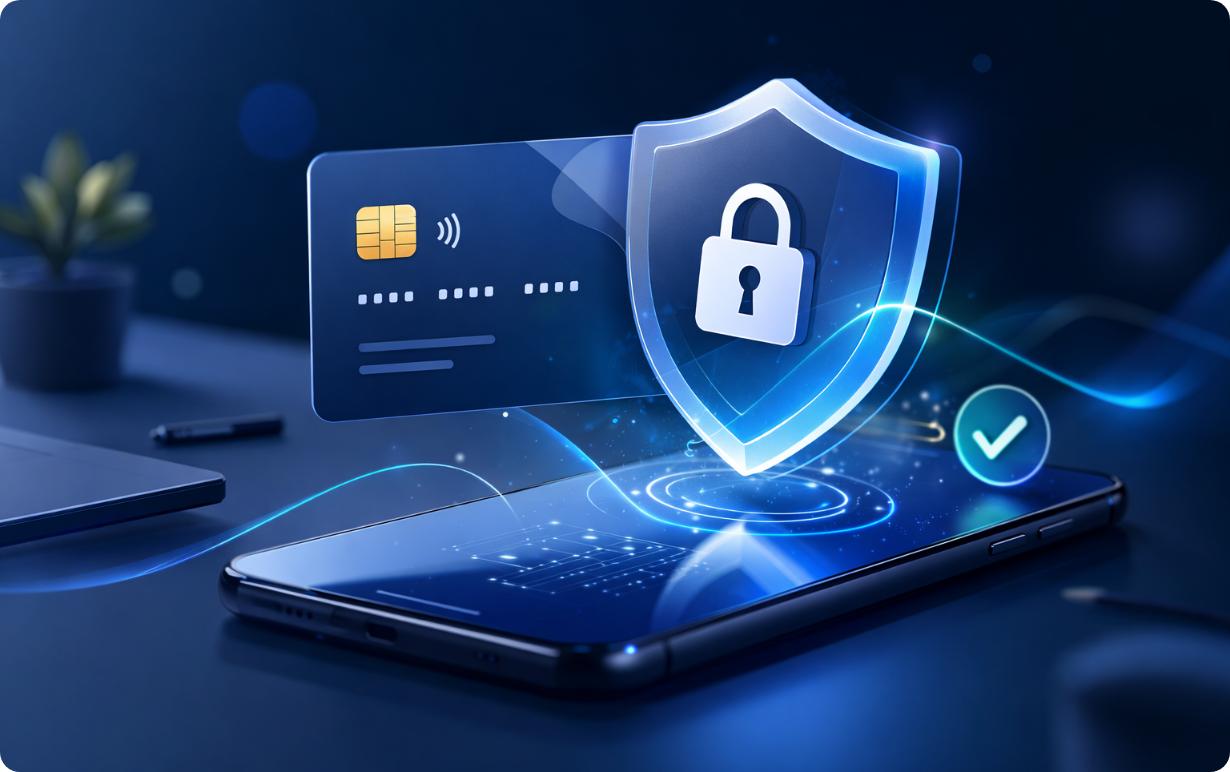
While digital banking offers substantial benefits, security remains a paramount concern.
The prevalence of online fraud, including phishing campaigns, counterfeit applications, and credential theft, poses a significant threat to the financial security and personal data of customers.
Adhering to fundamental security protocols is essential for safeguarding one's accounts.
Some useful safety measures include:
- Use strong and unique passwords.
- Under no circumstances should you disclose your personal identification number (PIN), password, or one-time password (OTP) to anyone.
- Whenever feasible, activate two-factor authentication.
- Download banking applications only from official app stores.
- Refrain from clicking on potentially malicious links embedded within unsolicited messages or electronic correspondence.
- Always ensure the utilization of secure internet connections when gaining access to financial accounts.
- You should consistently monitor transaction notifications.
Upon detecting any unfamiliar transaction, customers are obligated to contact their financial institution forthwith via its designated official channels.
9.Challenges of Digital Banking
Although digital banking offers numerous benefits, it is not without its inherent challenges.Initially, the maintenance of a stable internet connection constitutes a fundamental prerequisite for the utilization of numerous online banking platforms.Consequently, individuals residing in regions characterized by inadequate digital infrastructure are likely to encounter significant operational impediments.
Second, some customers, particularly those who are unfamiliar with technology, may find banking applications difficult to use.
Third, the failure to adhere to essential security protocols exposes users to significant financial peril stemming from cybercrime and online fraud.Banking operations may likewise be subject to temporary disruptions arising from technical failures, application upkeep, or service outages.To cultivate enduring customer confidence, financial institutions are compelled to perpetually refine their technological infrastructure, customer service protocols, and security frameworks.
10.The Future of Digital Banking
The trajectory of digital banking is inextricably linked to the evolution of emerging technologies.
The financial sector is undergoing a profound transformation driven by the convergence of artificial intelligence, biometric authentication, digital payment infrastructures, and the continuous refinement of mobile applications.
Artificial intelligence empowers financial institutions to detect anomalous transactions and elevate the quality of customer service, while biometric authentication methods, including fingerprint and facial recognition, enhance the convenience of accessing accounts.
Over the coming years, the realm of digital banking is poised to evolve into an increasingly sophisticated and universally accessible domain.
Nevertheless, financial institutions must carefully calibrate the advancement of technology against the imperatives of customer privacy, security, and trust
Conclusion
Digital banking has fundamentally reshaped the mechanisms through which individuals access and administer financial services.This evolution delivers unparalleled convenience, expedites transaction processing, streamlines bill settlement, and empowers users with superior oversight of their personal financial portfolios.
Furthermore, it fosters financial inclusion by democratizing access to banking services for individuals who encounter significant barriers in reaching conventional branch locations.
Nevertheless, it is imperative that users comprehend the inherent risks associated with digital security and proactively implement measures to safeguard their financial data.Adopting reliable banking platforms and adhering to rigorous cyber security protocols enables individuals to harness the benefits of digital finance while simultaneously mitigating inherent vulnerabilities.Digital banking transcends its identity as merely a contemporary technological innovation; it represents a pivotal advancement that significantly streamlines financial administration within our increasingly interconnected global landscape.
References
World Bank – Global Findex Database:
https://www.worldbank.org/en/publication/globalfindexConsumer Financial Protection Bureau (CFPB) – Consumer Resources:
https://www.consumerfinance.gov/consumer-tools/
State Bank of Pakistan – Digital Financial Services:
https://www.sbp.org.pk/







Comments 0
Sign in to join the conversation.
No comments yet. Be the first to say something.