

After reading this article, you will understand how artificial intelligence is changing education in Pakistan and beyond. You will learn how to use AI-powered tools for personalized learning, improve academic performance, and develop practical skills. You will also understand the challenges of AI, including privacy concerns, incorrect information, and unequal access to technology.
What you need
A digital device and internet connection: You’ll need a smartphone, tablet, or computer with a stable internet connection to use AI-powered learning platforms.
An AI Learning Tool provides you with an AI assistant or educational app to help you understand concepts, practice problems, and learn on your own.
STEP 1
Discover how standard artificial intelligence can assist schools.

AI is playing a significant role in education in the 21st century. Students can use AI-powered apps to get personalized help with their schoolwork and to understand difficult subjects.
AI could make learning more flexible and accessible for many students in Pakistan who struggle to access school materials.
For example, students can use AI assistants to learn maths, improve their English grammar, enhance their writing, and learn more about scientific ideas.
Artificial intelligence can also help teachers create lesson plans and quizzes and find out which students are having trouble learning.
But students should always compare AI-generated information with trusted educational sources.
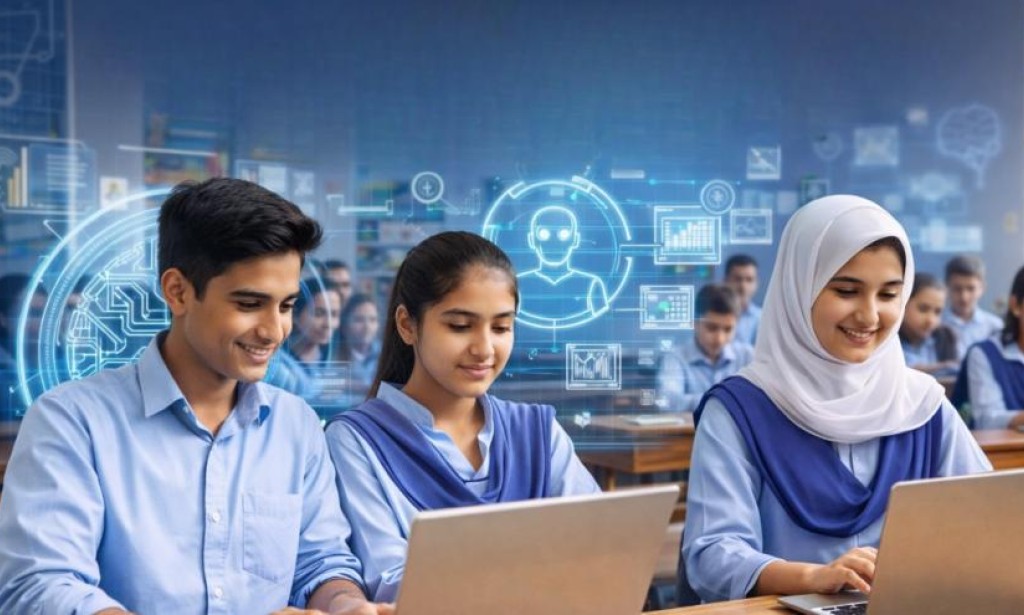
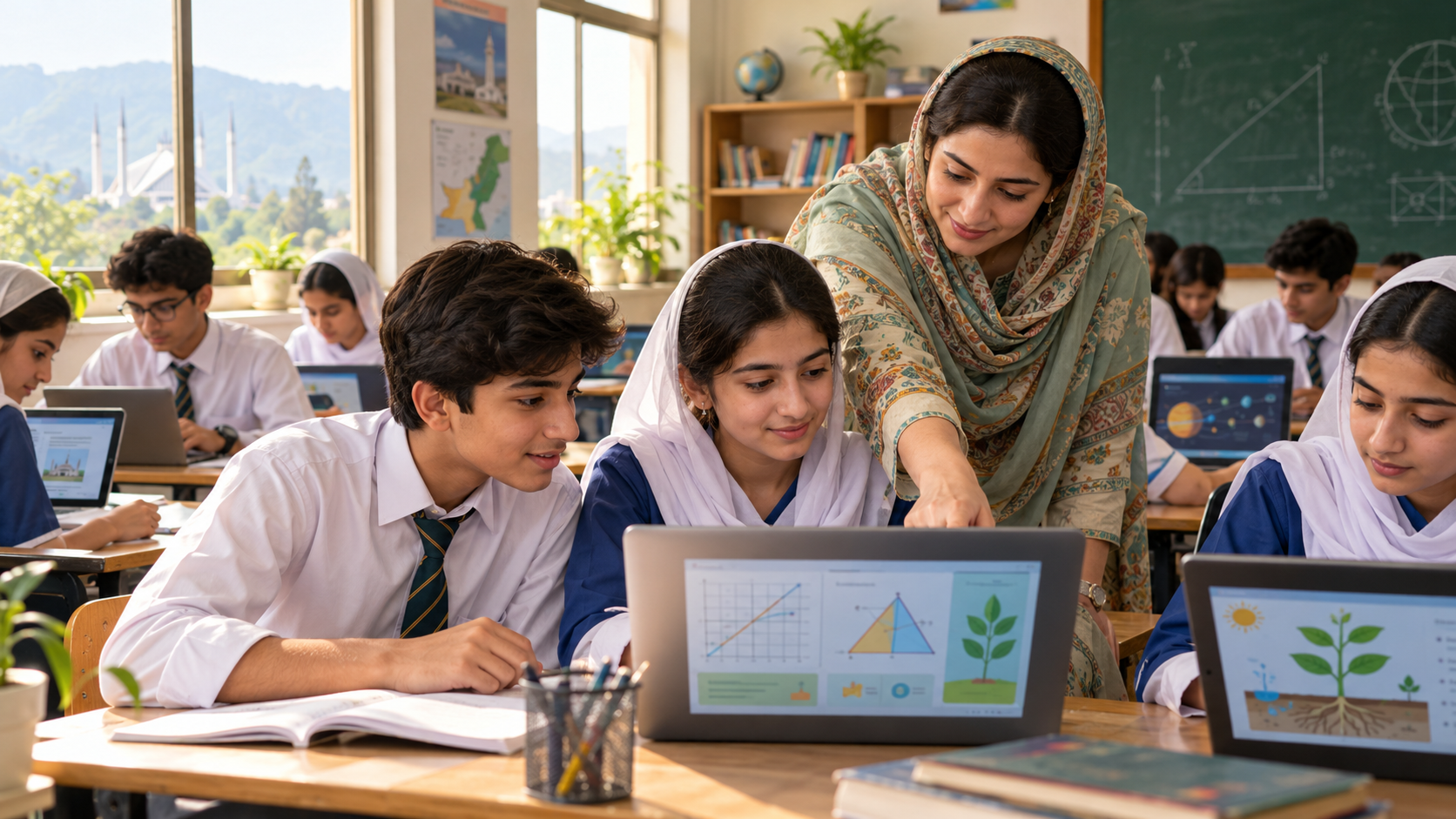
Students in a modern Pakistani classroom are seen using AI-enabled learning tools.
Step 2
Use AI to personalize learning and develop skills.
Each student has their own distinct set of learning needs and abilities. AI-based learning platforms can tailor explanations, exercises, and learning suggestions to each student’s progress.
Students can start by pinpointing the subjects they find challenging, then use AI tools to explore them further through straightforward explanations and real-world examples from everyday life.
For example, a student who struggles with English can use an AI assistant to help them learn new words, improve their grammar, and write better. Tech-savvy students can also look into programming, digital marketing, and data analysis.
AI can provide teachers with feedback that helps them see where students need more help.
These artificial intelligence systems can be helpful, but students should not rely on them too heavily. For education to be useful, students still need to think for themselves, participate in class, get hands-on experience, and have their teachers guide them.
“If Pakistan takes an intelligent approach to AI, it may develop an education system that works better for everyone.
Step 3
Use AI smartly to enhance learning.

AI offers many exciting opportunities for students and teachers, but they must use it intelligently if they want to make real progress in education. AI should not be seen as a replacement for textbooks, teachers, or independent thinking, but as a tool to support students' learning.
AI tools can help people understand difficult ideas, make study notes, improve their English, and learn how to solve problems. For example, students can ask an AI assistant to explain a maths problem step by step, then try similar problems on their own.
Artificial intelligence can also help teachers create interactive exercises, quizzes, and other educational materials. But teachers should vet AI-generated information closely before sharing it with students.
Several important issues must be addressed for the responsible use of AI in Pakistan, including limited internet access, the high cost of digital devices, student privacy, and academic honesty.
“Schools and colleges need to provide students with basic online literacy training so that they can identify fake information and understand how to use technology responsibly.”
Tips on how to use AI smartly:
Cross-verify AI answers with reliable textbooks and other learning resources.
Use AI to understand concepts, not to copy homework.
Safeguard your personal information when using educational apps.
Pair AI-assisted learning with classroom discussions and hands-on activities.
Improve your critical thinking, creativity, and problem-solving skills.
If students follow these rules, they can take full advantage of AI-powered education while staying honest in school and building skills that will help them in the future.
Common mistakes to avoid
Mistakes People Make When Using AI In Schools
Artificial intelligence can help people learn faster, easier, and in more ways. But if teachers and students misuse AI tools, they may not get the results they want. Students can use technology more effectively and responsibly if they know how to avoid common mistakes.1. Relying solely on answers from AI.
“Students often make the mistake of trusting AI-generated information without first verifying that it’s accurate. AI tools may give you wrong answers, explanations, or information that isn't up to date.
How to Avoid It: Always check important facts by looking them up in your textbooks, on reputable school websites, and by asking your teacher for help.2. Copying assignments without understanding
Some students use AI to do their homework without thinking it through or trying to understand what they are doing. This habit can make it harder to think for yourself, be creative, and solve problems.
How to Prevent It: Rather than copy full answers, use AI to help you understand tough concepts, generate practice questions, and improve your own writing.## 3. Sharing Personal Information with AI Tools
Passwords, personal details, school records, or private documents are among the personal information that students may inadvertently share.
**How to avoid it: Do not put private info into AI programs you don’t know much about. Use educational platforms you trust, and read their privacy policies. 4. Disregarding teachers and old-school learning.
Artificial intelligence can provide instant answers and personalized help, but it cannot fully replace the value of human interaction, classroom discussions, and professional teaching experience.
How to Prevent It: Supplement AI-assisted learning with textbooks, practical activities, active participation in class, and regular communication with teachers.5. Using AI without setting defined learning objectives
If you use many AI apps but don’t have a clear study plan, you might make things harder for yourself and waste time. Students may get distracted by information that isn't relevant to their learning and lose sight of their goals.
How to Prevent It: Define clear learning goals, choose appropriate AI tools, and follow a structured study plan. 6. Pakistan’s Digital Divide Ignored.
Not all students in Pakistan have access to computers, the Internet, or reliable, advanced learning software. Students from poor areas may struggle to do well if they rely too much on AI-based platforms.
How to get away from it: #Schools should provide low-cost digital materials, varied learning approaches, and opportunities for students without access to technology. Last Words of Counsel
A balance of technology and self-learning represents the best use of artificial intelligence in education. Students need to learn to think critically, verify information, protect their privacy, and ask teachers for help when they need it.
Students in Pakistan and around the world can benefit from AI-powered learning tools and gain the knowledge, confidence, and useful skills they will need for future success in school and the workplace by avoiding these common mistakes.
Conclusion
The Future of Artificial Intelligence in Pakistan’s Schools
AI will open new doors to improve education in Pakistan and around the world. AI-enabled technologies can help students and teachers in several useful ways, such as personalizing learning, providing immediate feedback, planning lessons, and building professional skills. These tools can be especially useful for students who struggle to access traditional school materials.
But whether artificial intelligence will be successful in education depends on how it is implemented. Some issues need to be addressed, including unequal access to technology, misinformation, privacy concerns, and over-reliance on automated tools. Teachers, schools, and policymakers play a major role in ensuring AI helps people learn in a meaningful way, rather than replacing human guidance.
The future of education lies in combining the latest tech with strong teaching methods, critical thinking, and equal opportunities to learn. With adequate training, affordable digital resources, and responsible policies, Pakistan can harness AI to make its education system more open, innovative, and accessible for future generations.








Comments 0
Sign in to join the conversation.
No comments yet. Be the first to say something.